J' tais pass avant l'an 2000, Golfech. J'en garde le souvenir d'une rue principale triste, aux volets ferm s, avec de nombreux panneaux " vendre". J'y suis retourn le 3 mai 2012 dans le but de pr senter cette commune, sa centrale. Quelle m tamorphose De la verdure, de beaux trottoirs. Un complexe sportif, une piscine chauff e... Bient t les arbres devraient m me totalement masquer les deux tours Je n'ai pas cherch fuir quand une voiture de la gendarmerie s'est arr t e juste derri re moi, alors que je me d salt rais. J'avais t signal ... Quelques jours plus t t Greenpeace s' tait introduit dans une autre centrale nucl aire et nous tions en p riode pr sidentielle... Un reportage, pour l'Histoire, peut- tre, pour faire r fl chir, ce serait d j bien. Parfois les photos en disent plus que de grands paragraphes ou de belles rimes... N anmoins, quelques informations, indications, pour bien situer le contexte... St phane Ternoise. De plus en plus photographe, http: //www.lotois.com
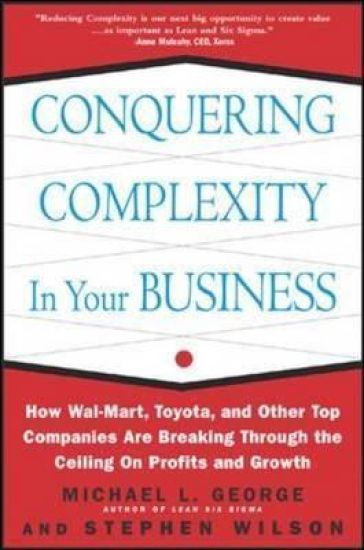
Urging managers to simplify, this unique guide to streamlining uses examples from Toyota, Costco, Martin, and Capital One to illuminate the skills and strategies that effectively combat the tendency toward complexity in any institution or corporation.
Carbon capture and storage is one of the main carbon emissions policy issues globally, yet you may know little about it if you’re outside the academic community. As the global push to address the impact that carbon emissions has on global warming continues, awareness and knowledge of viable solutions must be communicated in layperson terms. Returning Coal and Carbon To Nature breaks across traditional barriers among history, geology, biology and climate change to address the topic from a multidisciplinary, Earth System Science approach. If you’re a policymakeror someone who influences policy, this book will explain carbon capture and storage—a relatively new concept—in easy-to-understand terms. Clearly presented charts, tables and diagrams explain critical concepts, and a range of full-color photographs will help you visualize the carbon capture and storage process and its principles.
In this collection of essays a number of distinguished scholars examine the proletarianization process and its relation to social protest and class formation. The authors consider how the social origins of the industrial work force and the migration patterns that brought workers to industrial areas shaped the workers' developing identity and led them to participate in mass protests. The essays provide an overview of proletarianization in industrializing regions and in several different countries. Although the authors of these articles employ a variety of disciplines--anthropology, history, and sociology--all the essays deal with historical aspects of the process of class formation and the forging of a modern working class. The essays span three continents and two centuries, and the volume includes a comprehensive annotated bibliography of relevant works drawn from the suggestions of the contributors.
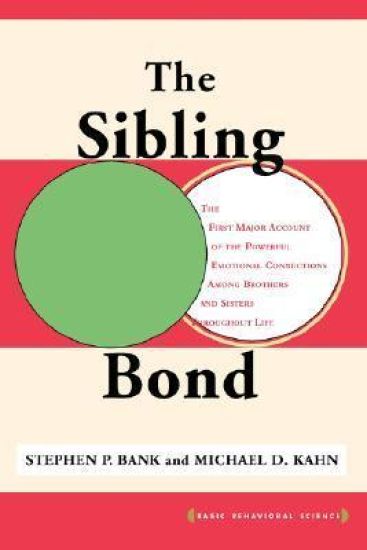
Updated with a new introduction by the authors, this anniversary edition shows the sibling relationship as a distinctive emotional, passionate, painful, and solacing power that shapes who we are and who we become. The relationships among brothers and sisters are infinitely varied-a sibling can be one's worst enemy or closest companion. Though their love or hate, envy or compassion, and closeness or rivalry are formed in childhood, these bonds last throughout life, creating character and affecting behaviour in numerous situations. Strangely, this profound attachment-second only to the parent-child bond-was rarely studied or understood until recently, perhaps because the feelings siblings have about each other are usually both intense and secret.Bank and Kahn chart this unknown territory, offering a theory of the ways in which siblings attach, create each other's identities, and affect the course of each other's lives. Illustrated with poignant portraits of brothers and sisters in childhood, adolescence, and adulthood, this book provides a profound understanding of these complex and enduring relationships, examining the influence of childhood intimacy, parental behaviour, family turmoil, birth order, and gender.Based on more than twenty years of research and clinical evidence, The Sibling Bond fifteenth anniversary edition brings fresh insight to important clinical and theoretical issues, including attachment theory, the development of the self, and the emergence of sexual identity. While Bank and Kahn demonstrate the implications of their findings for both individual and family therapy, they also give readers a vivid opportunity to recognize and reflect on their own sibling relationships.
"Success is often the culmination of a series of lesser known accomplishments." -Stephen A. Ruffa and Michael J. Perozziello In the Muroc, California desert over fifty years ago, a team of contractors and government engineers along with a daring young test pilot named Chuck Yeager achieved the seemingly impossible and broke the sound barrier. It was a brilliant, selfless team effort; one that opened the doors for limitless advances in aviation. Yet, once again, this industry is faced with an apparently insurmountable barrier; not one of performance, but of cost. To break this barrier, a team of manufacturing professionals led by the Department of Defense's Stephen Ruffa-was given unprecedented access by the giants of military and commercial aircraft engines and avionics production. Their mission? Go beyond the age old focus on flying farther, faster, and higher to discover how to effectively and permanently slash the cost of producing aircraft to allow this industry to continue its rapid pace of advancement. The results of their study set the stage for a new approach that will again change the face of this industry. These findings lauded by leaders across the industry and comprehensively explored in Breaking the Cost Barrier prove that production variation, as opposed to more common targets like labor utilization and inventory levels, is the chief cause of escalating production costs. More importantly, they reveal how companies can control spiraling production costs by first controlling the variability that has for too long been considered a necessary evil in manufacturing circles. While much has been written about what "lean production" techniques are, Breaking the Cost Barrier is the first book to explain how to effectively put lean techniques into place. It presents the big picture on how you can understand and adopt the industry proven techniques used in the lean production environment and coordinate the best into one powerhouse variation management program. Case studies and examples showcase how these techniques can be applied to control production variability across industries and requirements. Breaking the Cost Barrier provides far more than just another plug-and-play technique for increasing efficiency. Instead, it tells the step-by-step story of how one team of professionals, guided by the belief that an answer was closer than anyone realized, broke the code on production variability problems and introduced exciting, profitable, and easily adaptable variation management methods to one of the world's most important and noteworthy industries. THE NATIONAL ASSOCIATION OF MANUFACTURERS is the nation's largest broad-based industrial trade association. The NAM is headquartered in Washington, D.C., and has regional offices across the country. For more information on the NAM, call David W. Walker, Vice President, Marketing and Member Services, at (202) 637-3186. The dramatic account of how a team of aerospace professionals attacked production variation to slash costs by 25% Variation Management the identification and control of variation in production processes-is critical to today's cost-conscious aerospace industry. Now, the story of how its underlying framework was discovered by a team of professionals in a cooperative effort with a range of organizations, from McDonnell Douglas and Pratt & Whitney to Westinghouse and even the U.S. government, is chronicled in the innovative and technique-packed Breaking the Cost Barrier. This fast-paced, highly entertaining book gives you a behind-the-scenes look at how you can design and implement a system to successfully control production variability and leverage the power of that system for your own organization. It describes what many of the components of a variability control system are and what goals they should achieve, then demonstrates from the inside out why each comprises an important part in the puzzle.
Providing a balance between principles and practice, this state-of-the-art overview of geophysical methods takes readers from the basic physical phenomena, through the acquisition and processing of data, to the creation of geological models of the subsurface and data interpretation to find hidden mineral deposits. Detailed descriptions of all the commonly used geophysical methods are given, including gravity, magnetic, radiometric, electrical, electromagnetic and seismic methods. Each technique is described in a consistent way and without complex mathematics. Emphasising extraction of maximum geological information from geophysical data, the book also explains petrophysics, data modelling and common interpretation pitfalls. Packed with full-colour figures, also available online, the text is supported by selected examples from around the world, including all the major deposit types. Designed for advanced undergraduate and graduate courses in minerals geoscience, this is also a valuable reference for professionals in the mining industry wishing to make greater use of geophysical methods. In 2015, Dentith and Mudge won the ASEG Lindsay Ingall Memorial Award for their combined effort in promoting geophysics to the wider community with the publication of this title.
The essential, concise and readable guide to the plays of Ibsen, Chekhov and Strindberg.Are you looking for an overview of the major work of these three leading playwrights?Are you going to see a play by Ibsen, Chekhov or Strindberg and want a run-down of the storyline?Do you want to know why these three are considered major writers?A Pocket Guide to Ibsen, Chekhov and Strindberg gives you all this and more:An introduction to each playwrightHistorical and theatrical context to their playsA synopsis for and analysis of each of the major playsDetails of productions around the worldA chronology of plays during the periodHenrik Ibsen (1828-1906), Anton Chekhov (1860-1904) and August Strindberg (1848-1912) are acknowledged masters of their craft. This handy reference book aims to tell you why they should be considered as such, as well as giving you a snapshot view of the plays and a considered view of the writers.Faber's 'Pocket Guide' series includes: A Pocket Guide to Shakespeare's Plays, A Pocket Guide to the 20th Century Theatre, A Pocket Guide to Opera and A Pocket Guide to Alan Ayckbourn's Plays.
The long strange trip begins.It's 2468. Following the economic and natural upheavals of the twenty-first century, the great cataclysm known as Helter-Skelter caused civilization to disintegrate. There are no great nations, no highly organized governments, no telecommunications, no electricity, no internal combustion engines. But you can still get concert tickets on a Saturday night, and Honkweed is cheap and plentiful. Or it was, until recently....
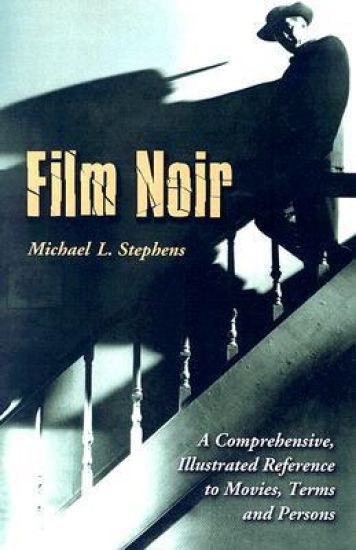
Film noir is a uniquely American genre that has stylistic links to the German expressionist cinema of the 1920s and thematic links to the hard-boiled crime fiction that emerged in the 1930s. Generally the milieu is urban and middle class, and the overall feel is one of repression and fatalism. Whether shot in black and white or color, the style reinforces the overall feel. Films, directors, actors, producers, screenwriters, art directors, themes, plot devices and many other elements are contained in this encyclopedic reference work. Each movie entry includes full filmographic data (studio, running time, production and cast credits, and plot synopsis) along with an analysis of its place in the genre. Biographical entries focus on the person's role in noir and provide a complete filmography of their film noir work. Terms are placed in the context of the genre and relevant examples from films are given.
The conventions of gangster movies have become well known: the gum-chewing moll, the kiss of death, incorruptible G-men and well-dressed gangsters toting machine guns. The genre was first popularized in the silent era and has continued with such contemporary releases as Billy Bathgate and Bugsy. Films, actors, directors, producers, cinematographers, plot devices, themes and more are included in this encyclopedic reference work to gangster films. For people, there are biographical sketches that focus on their work in gangster films. The film entries include year of release, distributor, cast and production credits, and a brief synopsis. Terms are placed in context of the genre, with relevant examples from gangster films given.
Often forgotten among the actors, directors, producers and others associated with filmmaking, art directors are responsible for making movies visually appealing to audiences. As such they sometimes make the difference between a hit and a bomb. This biographical dictionary includes not only the world's great and almost-great artists, but the unjustly neglected film designers of the past and present. Among the more than 300 art directors and designers are pioneers from silent films, designers from Hollywood and Europe's Golden Ages, Asian figures, post-Golden Age personalities, leaders of the European and American New Waves, and many contemporary designers. Each entry consists of biographical information, an analysis of the director's career and important films, and an extensive filmography including mentions of Academy Award nominations and winners.
Seminars by Professor Windy Dryden. See the man live and in action. To find out more and to book your place go to www.cityminds.com ________________________________________ `[This book has] many useful insights for other therapists... make a copy of the competency checklist: if we all scored highly and consistently, there would be no need for talk of "national registration" ' - The Therapist In this volume the authors develop the cognitive-behavioural counselling approach by offering newer conceptualizations of many common client problems. It is suggested that effective interventions will often need to take account of early maladaptive interpretations of situations and of the presence of personality disorders. The specifics of tackling problems as diverse as surviving in a family with a personality disordered member and post-traumatic stress disorder are elaborated, and recent developments in the counselling of clients with anxiety and depression are also incorporated. Hitherto neglected issues such as the use of groups and the assessment of counsellor competence are also highlighted.
Seminars by Professor Windy Dryden. See the man live and in action. To find out more and to book your place go to www.cityminds.com ________________________________________ `[This book has] many useful insights for other therapists... make a copy of the competency checklist: if we all scored highly and consistently, there would be no need for talk of "national registration" ' - The Therapist In this volume the authors develop the cognitive-behavioural counselling approach by offering newer conceptualizations of many common client problems. It is suggested that effective interventions will often need to take account of early maladaptive interpretations of situations and of the presence of personality disorders. The specifics of tackling problems as diverse as surviving in a family with a personality disordered member and post-traumatic stress disorder are elaborated, and recent developments in the counselling of clients with anxiety and depression are also incorporated. Hitherto neglected issues such as the use of groups and the assessment of counsellor competence are also highlighted.
Who Healeth All Thy Diseases is a history of divine healing and 19th-century health reform in the Church of God, one of the earliest and most influential pre-Pentecostal radical holiness movements. The Church of God taught that Wesleyan entire sanctification was creating a visible unity of saints that restored the New Testament church of the apostles. As the movement grew and experimented with the implications of visible sainthood, physical healing—miraculous divine healing and the physical perfectionism of health reform—became integral to the life and theology of the Church of God, shaping everything from proof of membership and evidence of ministerial authority to childrearing practices and acceptable clothing styles. Physical healing manifested and embodied the movement's claim that God was healing the universal church (the Body of Christ) by cleansing individuals from the corruption of inbred sin. By 1902, the prevailing opinion in the Church said that divine healing was an essential aspect of the gospel, use of medicine was sinful, and every minister had to exhibit the gifts of healing. In the early 20th century, the Church's theology and practices of healing became increasingly problematic. Tragic failures of divine healing, epidemics, medical advances, court trials, mandatory inoculations of schoolchildren, and general opprobrium combined to prevent a simplistic equation of the Church of God and the church of the apostles. By 1925, the Church had reversed its radical, anti-medicine doctrines. Church members continued to affirm that Jesus answered prayers for healing, but they no longer claimed to know exactly how he would answer prayers. With that loss of certainty, healing lost its power to serve as evidence of holiness and its central place in the history of the Church of God.
Around 1980, G. Mason announced the classification of a certain subclass of an important class of finite simple groups known as 'quasithin groups'. The classification of the finite simple groups depends upon a proof that there are no unexpected groups in this subclass. Unfortunately Mason neither completed nor published his work. In the "Main Theorem" of this two-part book (Volumes 111 and 112 in the AMS series, "Mathematical Surveys and Monographs") the authors provide a proof of a stronger theorem classifying a larger class of groups, which is independent of Mason's arguments.In particular, this allows the authors to close this last remaining gap in the proof of the classification of all finite simple groups. An important corollary of the Main Theorem provides a bridge to the program of Gorenstein, Lyons, and Solomon (Volume 40 in the AMS series, "Mathematical Surveys and Monographs") which seeks to give a new, simplified proof of the classification of the finite simple groups. Part I (the current volume) contains results which are used in the proof of the Main Theorem.Some of the results are known and fairly general, but their proofs are scattered throughout the literature; others are more specialized and are proved here for the first time. Part II of the work (Volume 112) contains the proof of the Main Theorem, and the proof of the corollary classifying quasithin groups of even type. The book is suitable for graduate students and researchers interested in the theory of finite groups.
Around 1980, G. Mason announced the classification of a certain subclass of an important class of finite simple groups known as 'quasithin groups'. The classification of the finite simple groups depends upon a proof that there are no unexpected groups in this subclass. Unfortunately Mason neither completed nor published his work. In the "Main Theorem" of this two-part book (Volumes 111 and 112 in the AMS series, "Mathematical Surveys and Monographs") the authors provide a proof of a stronger theorem classifying a larger class of groups, which is independent of Mason's arguments.In particular, this allows the authors to close this last remaining gap in the proof of the classification of all finite simple groups. An important corollary of the Main Theorem provides a bridge to the program of Gorenstein, Lyons, and Solomon (Volume 40 in the AMS series, "Mathematical Surveys and Monographs") which seeks to give a new, simplified proof of the classification of the finite simple groups. Part I (Volume 111) contains results which are used in the proof of the Main Theorem.Some of the results are known and fairly general, but their proofs are scattered throughout the literature; others are more specialized and are proved here for the first time. Part II of the work (the current volume) contains the proof of the Main Theorem, and the proof of the corollary classifying quasithin groups of even type. The book is suitable for graduate students and researchers interested in the theory of finite groups.
'I'm not religious, but I am spiritual' is a phrase on the lips of many who never darken the doors of institutionalized religion, while words such as 'spirituality', 'meditation' or 'mindfulness' are almost commonplace among many seeking meaning and purpose to life. Bishop Edward King, in his day, as a spiritual counsellor, teacher and pastor, called the church, the clergy and the laity, to a renewed inner life of the Spirit as a matter of first importance. This exploration of his spirituality, drawn from his teaching and his writings and the example of his own life - although at a time when the church and the world were vastly different from those of today - still speaks with remarkable relevance, not only to those who are ordained with a prime responsibility for the cure of souls and Christian formation, but also to those seeking, as well as giving, spiritual guidance. A renewed commitment to the power of that same inner life of the Spirit, the root and source of all renewed life, caught and taught by clergy and laity alike, is urgently needed today, for without it all reform and reorganization is ineffective. 'Organization, ' said King, 'does not produce life, though new life may produce organization: the secret of the power is the life', - from which everything else follows.Perhaps the Church of England's most loved bishop in any age, Edward King's rich spirituality reaches out to us today and resonates with our deepest needs.