Kirjojen hintavertailu. Mukana 12 016 292 kirjaa ja 12 kauppaa.

Kirjahaku

Etsi kirjoja tekijän nimen, kirjan nimen tai ISBN:n perusteella.

1000 tulosta hakusanalla Mohammad Nehal

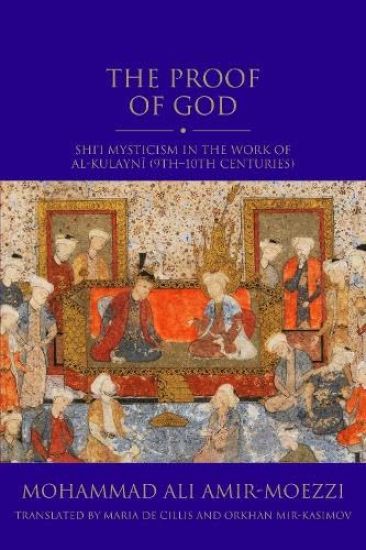
The Proof of God

The Proof of God

Mohammad Ali Amir-Moezzi

BLOOMSBURY PUBLISHING PLC
2023
sidottu
This book is an English translation of the award-winning book by Mohammad Ali Amir-Moezzi on the Book of the Proof (Kitab al-Hujja) part of the Sufficient Book (Kitab al-Kafi), authored by one of the most celebrated religious authorities and a foundational figure of Shi’i Islam, Muhammad ibn Ya'qub al-Kulayni (d. ca. 940 CE). The significance of this source for the formation and development of Shi’i beliefs and doctrines cannot be overestimated. Whilst the field of Shi’i studies is still dominated by works focused on legal, political, or theological aspects of Sh’i Islam, Amir-Moezzi’s approach to the study of the early Shi’i traditions in this work is characterised by a keen interest in its esoteric, mystical aspects. Complemented by detailed analytical comments, Amir-Moezzi’s book demonstrates how al-Kulayni was able to set out an extraordinarily wide-ranging and coherent set of doctrinal and legal traditions derived from the Imams, thus playing a leading role in the unification and, consequently, the consolidation of the Imami faith. More specifically, by elaborating on the nature of the ‘Proof’, which in Shi’i terminology identifies the central figure, i.e., the guide (imam) of mystical spirituality, Amir-Moezzi’s study portrays Shi’i Islam as multifaceted, not merely as the politico-religious ideology of its ‘clergy’, but above all as an inspirational religion. As Amir-Moezzi himself puts it, ‘enriching Muslim thought and spirituality, sometimes with unusual finesse and sophistication’.
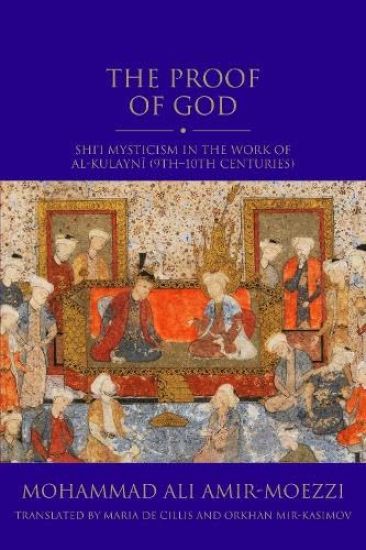
The Proof of God

The Proof of God

Mohammad Ali Amir-Moezzi

BLOOMSBURY PUBLISHING PLC
2023
nidottu
This book is an English translation of the award-winning book by Mohammad Ali Amir-Moezzi on the Book of the Proof (Kitab al-Hujja) part of the Sufficient Book (Kitab al-Kafi), authored by one of the most celebrated religious authorities and a foundational figure of Shi’i Islam, Muhammad ibn Ya'qub al-Kulayni (d. ca. 940 CE). The significance of this source for the formation and development of Shi’i beliefs and doctrines cannot be overestimated. Whilst the field of Shi’i studies is still dominated by works focused on legal, political, or theological aspects of Sh’i Islam, Amir-Moezzi’s approach to the study of the early Shi’i traditions in this work is characterised by a keen interest in its esoteric, mystical aspects. Complemented by detailed analytical comments, Amir-Moezzi’s book demonstrates how al-Kulayni was able to set out an extraordinarily wide-ranging and coherent set of doctrinal and legal traditions derived from the Imams, thus playing a leading role in the unification and, consequently, the consolidation of the Imami faith. More specifically, by elaborating on the nature of the ‘Proof’, which in Shi’i terminology identifies the central figure, i.e., the guide (imam) of mystical spirituality, Amir-Moezzi’s study portrays Shi’i Islam as multifaceted, not merely as the politico-religious ideology of its ‘clergy’, but above all as an inspirational religion. As Amir-Moezzi himself puts it, ‘enriching Muslim thought and spirituality, sometimes with unusual finesse and sophistication’.
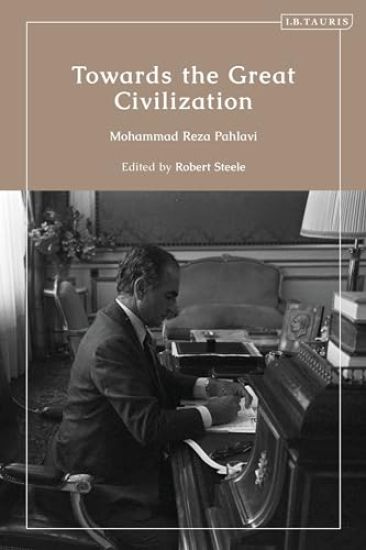
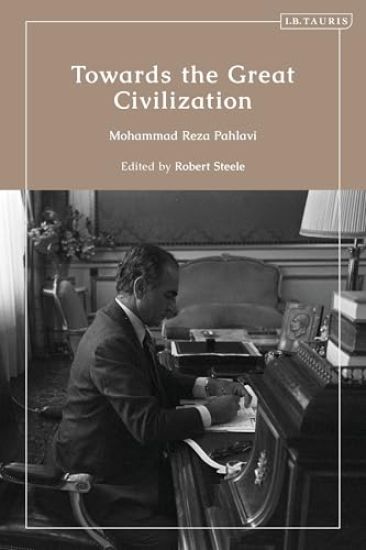
Towards the Great Civilization

Towards the Great Civilization

Mohammad Reza Pahlavi

BLOOMSBURY PUBLISHING PLC
2024
sidottu
The first English-language translation of former Shah of Iran Mohammad Reza Pahlavi’s penultimate book, published in Persian on the eve of the revolution that brought the downfall of the monarchy.In the late 1970s, on the eve of the Islamic Revolution, Shah Mohammad Reza Pahlavi of Iran published his third book. In it, he gave his assessment of the progress of Iran in the 15 years since the launching of his White Revolution in 1963 and his vision for his country for the proceeding years and decades – the march towards, what he termed, Iran’s Great Civilization. An indispensable source for understanding state ideology and domestic and foreign policy in the late Pahlavi period, as well as the shah’s personal philosophy and political thought, this new edition of Towards the Great Civilization is based on the original unpublished English-language translation commissioned by the Pahlavi Library, edited by Robert Steele, with an introduction by Professor Ali Ansari.
Towards the Great Civilization

Towards the Great Civilization

Mohammad Reza Pahlavi

BLOOMSBURY PUBLISHING PLC
2026
nidottu
The first English-language translation of former Shah of Iran Mohammad Reza Pahlavi’s penultimate book, published in Persian on the eve of the revolution that brought the downfall of the monarchy. In the late 1970s, on the eve of the Islamic Revolution, Shah Mohammad Reza Pahlavi of Iran published his third book. In it, he gave his assessment of the progress of Iran in the 15 years since the launching of his White Revolution in 1963 and his vision for his country for the proceeding years and decades – the march towards, what he termed, Iran’s Great Civilization. An indispensable source for understanding state ideology and domestic and foreign policy in the late Pahlavi period, as well as the shah’s personal philosophy and political thought, this new edition of Towards the Great Civilization is based on the original unpublished English-language translation commissioned by the Pahlavi Library, edited by Robert Steele, with an introduction by Professor Ali Ansari.
Readings in Innovative Ideas in Teaching Collegiate Mathematics

Readings in Innovative Ideas in Teaching Collegiate Mathematics

Mohammad H. Ahmadi

University Press of America
2002
nidottu
Readings in Innovative Ideas in Teaching Collegiate Mathematics is a collection of papers contributed by professional mathematicians in the United States and Great Britain. The topics in this volume represent the pros and cons of implementing creative instructional styles such as cooperative learning and educational technology in classrooms. The main objective of this book is to share the implementation and outcomes of these experiments with the teachers of mathematics at all educational levels and help them to learn about different teaching strategies and how they might incorporate them in their classrooms.
The Great Famine and Genocide in Persia, 1917-1919

The Great Famine and Genocide in Persia, 1917-1919

Mohammad Gholi Majd

University Press of America
2003
nidottu
As many as eight to ten million Persians perished because of starvation and disease during the famine of 1917-1919, making it the greatest calamity in Persia's history. In this book, Mohammad Gholi Majd argues that Persia was the greatest victim of World War One and also the victim of possibly the worst genocide of the twentieth century. Using U.S. State Department records, as well as Persian and British sources, Majd describes and documents a veritable holocaust about which practically nothing has been written. It is the first book in Majd's World War I trilogy.
Persia in World War I and Its Conquest by Great Britain

Persia in World War I and Its Conquest by Great Britain

Mohammad Gholi Majd

University Press of America
2003
nidottu
Using U.S. State Department archives, Persian sources, and memoirs of British military officers, Majd provides an outline of military, diplomatic, and political events in Persia during 1914-1918. Persia in World War I and Its Conquest by Great Britain describes Persia's failure to gain recourse at Versailles, alleging that Persia was a loser both in war and peace. It is the second book in Majd's World War I triology.
Record Values Theory and Applications

Record Values Theory and Applications

Mohammad Ahsanullah

University Press of America
2004
sidottu
In this book, Mohammad Ahsanullah provides a detailed description of the general theory and applications of record values. Professor Ahsanullah thoroughly discusses the most useful distributions and inferences based on record values, resulting in conclusions that are not available in previously published works. The book, written on an intermediate level that requires the basic knowledge of calculus, probability theory, and mathematical statistics, can be used as a text for advanced undergraduate or graduate level courses.
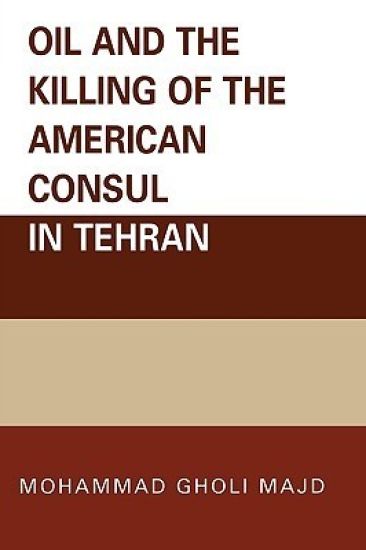
Oil and the Killing of the American Consul in Tehran

Oil and the Killing of the American Consul in Tehran

Mohammad Gholi Majd

University Press of America
2006
nidottu
In the wake of World War I, British attempts to exclude American oil companies from Iraq and Persia caused serious strains in Anglo-American relations. In May 1921 an 'oil entente' was reached that granted American oil companies an 'open door' and 'equal opportunity' in Iraq, and in return America acknowledged British domination of Persia and monopoly of its oil. This entente was soon tested when Persians gave an oil concession to the Sinclair Oil Company of New York and tried to rid themselves of the recently installed Pahlavi dictatorship. It was in the midst of this unrest, in May of 1924, that American Vice-Consul Robert Imbrie arrived in Tehran. Almost immediately after his arrival, Imbrie began sending reports to Washington that were highly critical of the British policies in Persia. On July 18, 1924, Imbrie was brutally murdered in Tehran, supposedly by a mob of religious fanatics. To save face and avoid international complications, the U.S. government accepted the Persian government's version of the killing. In this detailed examination of Anglo-American, American-Persian, and Anglo-Persian relations, author Mohammad Gholi Majd argues that Imbrie was in fact the victim of a conspiracy. Using records of the U.S. Department of State, this text examines how the murder enabled Britain to maintain its monopoly of Persian oil and further consolidate the Pahlavi dictatorship. The killing of Imbrie ultimately facilitated the consummation of the Anglo-American oil entente.
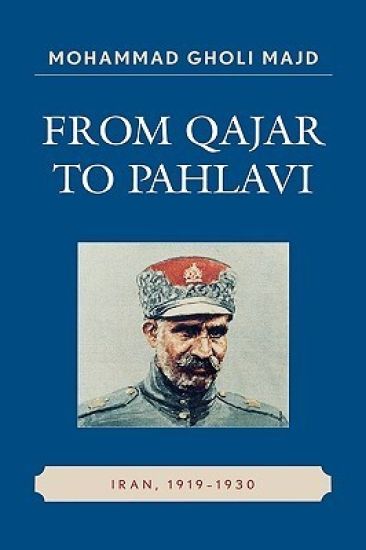
From Qajar to Pahlavi

From Qajar to Pahlavi

Mohammad Gholi Majd

University Press of America
2008
nidottu
The 1920s saw the creation of numerous new monarchies and regimes in the Middle East. This book gives a detailed history of the new regime change in Iran in the 1920s. Using U.S. State Department archives, Mohammad Gholi Majd first describes the overthrow of the Qajar dynasty, which ruled Iran since the 1790s, and its replacement by the Pahlavi monarchy in 1925. He then describes the consolidation of the new regime and suppression of the opposition between 1926 and 1930. By 1931, resistance to the Pahlavi regime and the harsh response thereto set the stage for a long struggle between the Pahlavi monarchy and the Ulama that ended with the Islamic Revolution in 1979. This book is the first detailed and documented history of Iran during 1919-1930 in the English language.
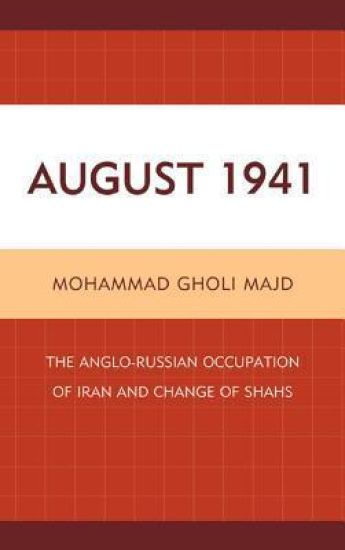
August 1941

August 1941

Mohammad Gholi Majd

University Press of America
2012
sidottu
Coming shortly after the British occupation of Iraq and the German invasion of Russia, the Anglo-Russian occupation of Iran secured a vital route for supplies to Russia and assured British control of the oilfields. To save the Pahlavi regime, Reza Shah was replaced by his son and Iranians were given a “New Deal.” The Allied occupation thus ushered in a brief period of democratic freedoms. Having described the rise of Reza Shah in a previous work, Majd completes the story by describing his downfall. The author has made an extensive search of the widely scattered U.S. diplomatic and military records and these are supplemented by reports in the The New York Times, The Washington Post, and The Chicago Daily Tribune, as well as other press accounts. More than seventy years later, this interesting story has remained untold. August 1941 is the first detailed and documented account of the affair.
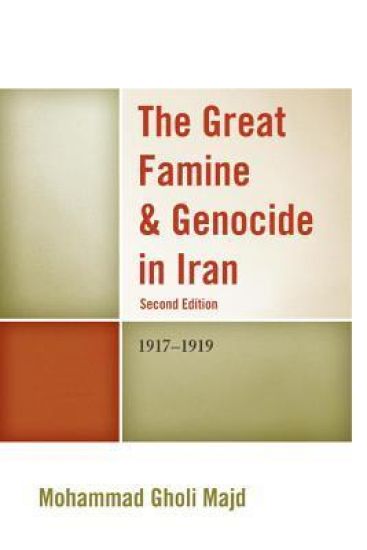
The Great Famine & Genocide in Iran

The Great Famine & Genocide in Iran

Mohammad Gholi Majd

University Press of America
2013
nidottu
At least 8–10 million Iranians out of a population of 18–20 million died of starvation and disease during the famine of 1917–1919. The Iranian holocaust was the biggest calamity of World War I and one of the worst genocides of the 20th century, yet it remained concealed for nearly a century. The 2003 edition of this book relied primarily on US diplomatic records and memoirs of British officers who served in Iran in World War I, but in this edition these documents have been supplemented with US military records, British official sources, memoirs, diaries of notable Iranians, and a wide array of Iranian newspaper reports. In addition, the demographic data has been expanded to include newly discovered US State Department documents on Iran’s pre-1914 population. This book also includes a new chapter with a detailed military and political history of Iran in World War I. A work of enduring value, Majd provides a comprehensive account of Iran’s greatest calamity.
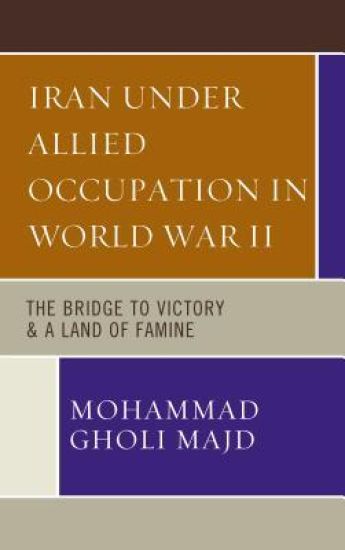
Iran Under Allied Occupation In World War II

Iran Under Allied Occupation In World War II

Mohammad Gholi Majd

University Press of America
2016
sidottu
Occupied Iran in World War II became the most important supply route to Russia and source of fuel to the Allies. Having pledged to meet Iran’s “minimum needs”, the Allies commandeered the means of transport, seized food and fuel, severely restricted imports, forced Iran to print money, brought Polish refugees from Russia, and initially did little to contain the chaos and insecurity. The resulting famine and typhus epidemic of 1942-43 had claimed 4 million lives amounting to a quarter of the population. This was in addition to the 8-10 million lost in the Great Famine of 1917-19. Iran’s 1944 population was the same as 1900, a perfect case of a Malthusian Catastrophe. Having previously described the World War I famine, and using US diplomatic, military, and intelligence records, as well as primary British sources, Majd completes the task by also telling the story of the World War II Iranian famine.
A Victorian Holocaust

A Victorian Holocaust

Mohammad Gholi Majd

Hamilton Books
2017
sidottu
The death by famine of tens of millions of human beings in Asia and Africa during the Victorian era (1837–1901) is “the secret history of the nineteenth century” about which Western history books contain nothing. The Great Famine of 1869–1873 in Iran took 10–12 million lives, or two-thirds of the population, and is part of this secret history. While the famines that ravaged China and India during 1876 to 1902 have received some recent scrutiny, the precursor of these cataclysmic famines, the Great Famine of 1869–1873 in Iran, has remained practically unknown. This study is the first monograph on the subject in the English language. This famine in Iran killed on a scale similar to the 1876–79 famine in China, which has been called the worst to afflict the human species. This study is based on British diplomatic reports and semi-official sources, European travel accounts, Persian documents and writings, British and American newspapers, and the reports by American missionaries who witnessed the famine. These sources enable one to provide a chronological and numerical account of the death and suffering as the famine spread from the southern and central regions to the rest of the country. The population statistics and rich micro-level data on famine losses in rural and urban areas indicate that during the nearly five years of famine, two-thirds of the population had perished. Not until 1910 did Iran come close to recovering its 1869 population. Soon after, Iran was plunged into the Great Famine of 1917–19, which claimed another 8–10 million, and again the 1942–43 famine and typhus epidemic that carried off an additional 4 million persons. In the seventy-five year span of 1869–1944, Iran had suffered three famines that had taken 25 million lives. Iran’s 1944 population of 10–12 million was unchanged from 11 million recorded in 1841, a perfect case of a Malthusian catastrophe. It is difficult to find another country in which a century of population growth had been wiped out by famine. Having previously described and quantified the 1917–19 and 1942–43 famines, Majd does the same for the 1869–73 famine. This book is the third of a trilogy on famines in Iran during the last 150 years.
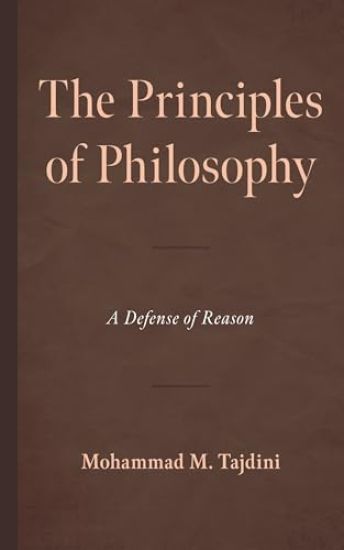
The Principles of Philosophy

The Principles of Philosophy

Mohammad M. Tajdini

UNIVERSITY PRESS OF AMERICA
2026
sidottu
The Principles of Philosophy: A Defense of Reason presents an absolute and universal defense of the rational moral law, also called the principle of justice: don’t do to others what you don’t want them to do to you. It provides an intellectual platform to advocate equal human rights for all human beings. In addition, the book presents a strong and uncompromising criticism of skepticism and relativism. It analyzes several modern currents of thought that, even if implicitly and unintentionally, lead to skepticism or relativism. Specifically, the book includes a detailed criticism of Descartes, Hume, Schopenhauer, Marx, James, Nietzsche, Freud, Russell, and Heidegger. Contrary to what skeptical and relativistic doctrines imply, truth is absolute and human reason can know at least some truths, including the truth of the principle of justice. The book presents an academic and thorough investigation of the problem but in clear and simple language. The main goal of the book is intellectual systematization. Moreover, it discusses the views of both Eastern and Western thinkers, from ancient times to the postmodern era, regarding a significant philosophical issue.
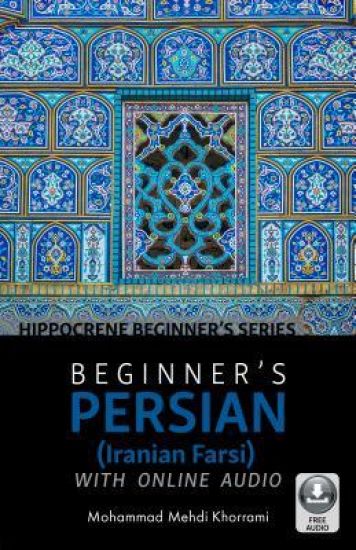
Beginner's Persian (Iranian Farsi) with Online Audio

Beginner's Persian (Iranian Farsi) with Online Audio

Mohammad Mehdi Khorrami

Hippocrene Books Inc.,U.S.
2018
pokkari
Farsi Persian, the official language of Iran, is spoken across the Middle East and Central Asia by a worldwide community of over 60 million people. Farsi’s linguistic and literary legacy is over 2,500 years old, and continues to play a central role in Near Eastern politics, business and culture. Persian is the dominant language of Iran’s international business world and a critical language to understanding the intricacies of Middle Eastern literary, historical and cultural trends. Equally suited to both new students and heritage speakers, Beginner’s Persian with Online Audio includes 10 carefully-paced and practical lessons with dialogues, vocabulary, and expressions; a guide to reading and writing Persian; exercises for each lesson with answer key; Persian-English and English-Persian glossaries; an alphabet and pronunciation guide; and online MP3 audio files for free download featuring pronunciation by native speakers.
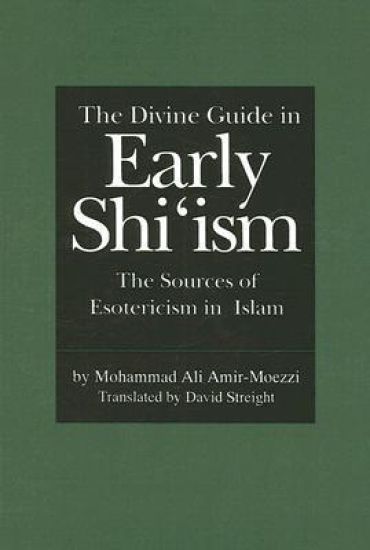
The Divine Guide in Early Shi'ism

The Divine Guide in Early Shi'ism

Mohammad Ali Amir-Moezzi

State University of New York Press
1994
pokkari
The Imam, the Divine Guide, is the central point around which the Shi'ite religion turns. The power of Shi'ism comes from the actions of the Imam. This title is reserved exclusively for the sucessors of the prophets in their mission. The author shows that from the beginning of Shi'ite Islam until the tenth century, the Imam was primarily a master of knowledge with supernatural powers, not a jurist theologian. The Imam is the threshold through which God and the creatures communicate. He is thus a cosmic necessity, the key and the center of the universal economy of the sacred.The author presents Shi'ism as a religion founded on double dimensions where the role of the leader remains constantly central: perpetual initiation into divine secrets and continued confrontation with anti-initiation forces. Without esotericism, exotericism loses its meaning. Early Imamism is an esoteric doctrine. Historically, then, at the beginning of esotericism in Islam, we find an initiatory, mystical, and occultist doctrine. This is the first book to systematically explore the immense literature attributed to the Imams themselves in order to recover the authentic original vision. It restores an essential source of esotericism in the world of Islam.
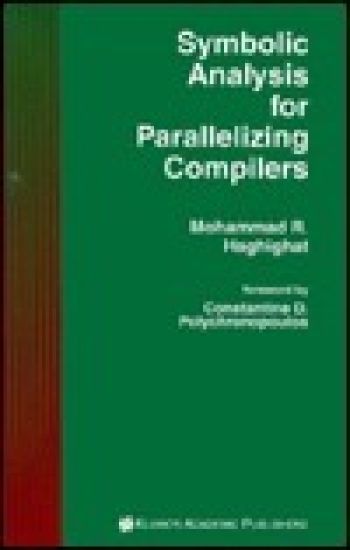
Symbolic Analysis for Parallelizing Compilers
In Symbolic Analysis for Parallelizing Compilers the author presents an excellent demonstration of the effectiveness of symbolic analysis in tackling important optimization problems, some of which inhibit loop parallelization. The framework that Haghighat presents has proved extremely successful in induction and wraparound variable analysis, strength reduction, dead code elimination and symbolic constant propagation. The approach can be applied to any program transformation or optimization problem that uses properties and value ranges of program names. Symbolic analysis can be used on any transformational system or optimization problem that relies on compile-time information about program variables. This covers the majority of, if not all optimization and parallelization techniques. The book makes a compelling case for the potential of symbolic analysis, applying it for the first time - and with remarkable results - to a number of classical optimization problems: loop scheduling, static timing or size analysis, and dependence analysis. It demonstrates how symbolic analysis can solve these problems faster and more accurately than existing hybrid techniques.