Kirjojen hintavertailu. Mukana 12 016 292 kirjaa ja 12 kauppaa.

Kirjahaku

Etsi kirjoja tekijän nimen, kirjan nimen tai ISBN:n perusteella.

1000 tulosta hakusanalla Muhammad Anwar

Mashhoor Shayaron kee Pratinidhi Shayari Muhammad Iqbal

Mashhoor Shayaron kee Pratinidhi Shayari Muhammad Iqbal

Muhammad Iqbal

Prabhakar Prakashan Private Limited
2022
pokkari
आता है याद मुझको गुजरा हुआ ज़माना वो बाग की बहारें वो सब का चहचहाना आजादियाँ कहाँ वो अब अपने घोंसले की अपनी खुशी से आना अपनी खुशी से जाना इकबाल युग निर्माता शायर थे। उनकी शायरी एक विचार के खास निज़ाम से रोशनी ग्रहण करती है। इक़बाल आदमी की महानता के अलमबरदार थे और वो किसी बख्शी हुई जन्नत की बजाय अपने खून-ए-जिगर से स्वयं अपनी जन्नत बनाने की प्रक्रिया को अधिक संभावित और अधिक जीवनदायिनी समझते थे। इसके लिए उसका उपाय तजवीज करते हुए उन्होंने कहा था, "पूरब के राष्ट्रों को ये महसूस कर लेना चाहिए कि ज़िन्दगी अपनी हवेली में किसी तरह का इन्किलाब नहीं पैदा कर सकती जब तक उसकी अंदरूनी गहराईयों में इन्किलाब न पैदा हो और कोई नई दुनिया एक बाहरी अस्तित्व नहीं हासिल कर सकती जब तक उसका वजूद इंसानों के ज़मीर में रूपायित न हो।"" इकबाल की शायरी मूल रूप से सक्रियता व कर्म और निरंतर संघर्ष को बयाँ करती है। यहाँ तक कि उनके यहाँ कभी-कभी ये संघर्ष उद्देश्य प्राप्ति के माध्यम की बजाय खुद मकसद बनती नज़र आती है। - इसी किताब से
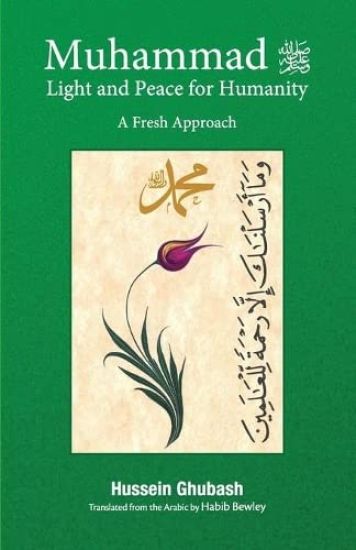
Muhammad Light and Peace for Humanity

Muhammad Light and Peace for Humanity

Hussein Ghubash

ISLAMIC BOOK TRUST
2019
pokkari
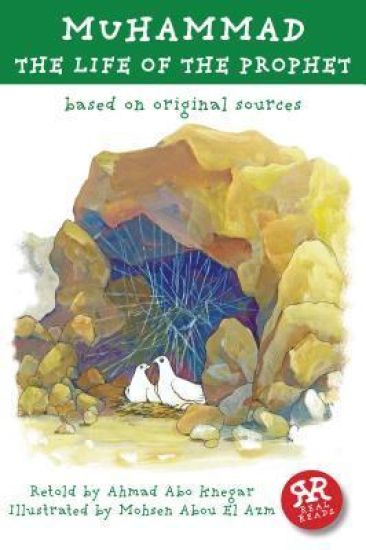
There are many biographies of the Prophet Muhammad (saw) in almost every language of the world, so why write a new one? What can be added to what has already been written? Every age has its own unique language, terminology and readership, and this age is no exception. The language people use and understand has changed, and the majority are no longer equipped to fully understand the classical, historical, narrative-based language used in most works of Sīra. This acts as a barrier to accessing the Muhammadan lessons and spiritual awakenings. This biography is therefore written in as contemporary a style as possible, without being overly simplistic, in order to bring to life these divine lessons and lights.This factor alone-although there are many others-justifies producing a contemporary Sīra that extracts the material from the historical sources and paints in modern terms a true and accurate picture of the life of our noble Prophet that sheds new light on the course of events. In doing so, it aims to be as concise as possible while leaving the divine Muhammadan core intact.Through the Prophet's life and words, the Qur'ān is brought into the world of form, and when sincere Muslims study that life in all its glorious details, relive its events, and return to the source of the pure spring of Islam, their faith is strengthened and purified.Dr. Hussein Ghubash is the author of several books and the U.A.E ambassador to UNESCO. He holds a Ph.D. in political science.
Muhammad Never Ever Was A Prophet: Part Three: Muhammad Is The God - Partner Of Allah
This is book # 3 in the series "Muhammad Never Ever Was A Prophet". Analyzing Sura 4 Al-Nisa. A valuable tool that exposes the untruth of the Quran via biblical scriptures that the Quran claims to stand on. As in Book One and Two, so here in Book Three, this is exhaustive but nonetheless an ordinary analysis of the Quran. Can it verify its own authority and its own authenticity? A simple internal cross examination via cross referencing. If Allah is indeed the true God of this entire universe and the Quran is indeed its final revelation, then all verses must find harmony without regard to chronological order. No contradictions. All must, at least, acquiescence. An example follows: Muhammad is the God -parnter of Allah. Sura 3 (1) A. L. M. (2) There is no God but God, the living, the self-subsisting But also In Sura 3 (31) Say, if ye love God, follow me: then God shall love you, and forgive you your sins; for God is gracious and merciful. (32) Say, Obey God, and his apostle; but if ye go back, verily God loveth not the unbelievers. Sura 4 (46) Surely God will not pardon the giving him an equal, but will pardon any other sin except that to whom he pleaseth; and whoso giveth a companion unto God hath devised a great wickedness. And yet again in Sura 4 (79) Whoever obeyeth the apostle, obeyeth God; and whoever turneth back, we have not sent thee to be a keeper over them.
MUhammad Never Ever Was A Prophet: An Exhaustive Biblical And Topical Analysis Of The Entire Quran
This is a textbook face value exegesis of the first 2 Surahs of Al-quran. It seeks to initiate a mature reconsideration of Al-quran by those who hold it to be the final revelation of Allah. To promote that clear objective, Al-quran is analyzed without regard to time sequence-(An exegetical study mindful of the chronological order of events is neither necessary nor appropriate. This is proved by the helter-skelter subject arrangement of Al-quran)-or geographical location of Allah's revelation to Muhammad via Gabriel. The Quran claims that there is no doubt about it. It insists that it confirms the previously given biblical scriptures. And is supposed to be an exposition of them. Therefore the Quran declares itself to be a continuation of the biblical scriptures. This bold statement shall be tested here. Surah14:4 mentions that Allah sent to every people a message in their own language . Nor is familiarity of the Arabic language necessary. For surely Allah has also brought about the English translation, for Al-quran says in: Surah 14 (4) 'We have sent no apostle but with the language of his people, that he might declare their duty plainly unto them; for God causeth to err whom he pleaseth, and directeth whom he pleaseth; and he is the mighty, the wise'. Now consider diligently the verses quoted below: Surah 30(21) And of his signs are also the creation of the heavens and the earth, and the variety of your languages, and of your complexions: verily herein are signs unto men of understanding. Surah 41(41) Verily they who believe not in the admonition of the Qur n, after it hath come unto them, shall one day be discovered. It is certainly a book of infinite value: (42) vanity shall not approach it, either from before it, or from behind it: it is a revelation from a wise God, whose praise is justly to be celebrated. Surah 12(1) A. L. R. (2) These are the signs of the perspicuous book, which we have sent down in the Arabic tongue, that, peradventure, ye might understand. (3) We relate unto thee a most excellent history, by revealing unto thee this Qur n, whereas thou wast before one of the negligent. Surah 33(40) Muhammad is not the father of any man among you; but the Apostle of God and the seal of the prophets: and God knoweth all things. And a major noticeable curiosity is revealed Every apostle, sent before Muhammad, spoke the language of his hearers. Muhammad spoke in the Arabic language to the Arabs and was the last of the prophets. Therefore it follows that no other prophet will be sent to any other race; and that any people whose language came up after Muhammad is excempt from islamic evengelism. One such language is English. Thus any person whose mother tongue is English, regardless of birthplace, is free from islamic propaganda. Should Al-quran be translated into the English language? Allah's revelation requires its followers to answer 'No'. Another is Gurmukhi in which the sacred book of the Sikhs are written. Sikhism, the 5th largest major religion. About 20-30 million followers are exempt. In fact, anyone whose mother tongue is not Arabic is exemp Note: A second edition, titled THE ARABIC QURAN'S BEGINNINGS, is due to be published in 2026.
Muhammad Never Ever Was A Prophet

Muhammad Never Ever Was A Prophet

Sudhendra Pratap; Gautama Purushottama

Independently Published
2019
pokkari
Muhammad had a distorted time perception. He spoke for his own benefits i.e. he never was a prophet uttering inspired and divine scriptures. He represented himself. Which means that Muhammad is Allah. Allah-Muhammad was bipolar and had nil authority over mankind except by installation of fear. This book analyses Sura 6 and, as the previous four books, seeks to initiate a reconsideration of the Quran by those who hold it to be the final revelation of Allah. To that end, complete chapters or large portions of the biblical books are quoted. Lord of all things? Sura 6 164 Say: Shall I seek another than Allah for Lord, when He is Lord of all things? Each soul earneth only on its own account, nor doth any laden bear another's load. Then unto your Lord is your return and He will tell you that wherein ye differed. Commentary by Maulana Muhammad Ali Quote 164 "Nor does a bearer of burden bear another's burden" are the words in which the Christian doctrine of atonement is rejected by the Holy Qur' n. Elsewhere we have: "That no bearer of burden bears another's burden, and that man can have nothing but what he strives for" (53:38, 39). Every man that is born is called a bearer of burden, not because he is a sinner, but because he starts life with certain responsibilities of his own. It is groundless to assert that Jesus Christ entered into life without any responsibilities of his own. The study of his life shows him as feeling his own responsibilities and as caring for them. Unquote Sura 53:38 That no bearer of burden bears another's burden. 39 And that man can have nothing but what he strives for. Analysis. Bipolarity Each and every human labours without help from another human for approval from Allah. The Quran declares that Allah is the Lord of all things, but mankind, while being held accountable to Allah, is unassisted by the Cherisher of all things. The reason being that Allah selects which human gets help. Obviously Allah is misnamed or Allah suffers from bipolarity. Further proof to the matter, Maulana Muhammad Ali declares that this particular verse rejects the Christian doctrine of atonement, meaning that mankind is not saved by Christ Jesus. This interpretation therefore, also dethrones Allah as being the Lord and Cherisher of all things. Any islamic doctrine of atonement by Allah is void. Thus Allah is not Lord of all, hence not Lord at all.
Muhammad Never Ever Was A Prophet: Part Two: Al-Quran Is Gnostic

Muhammad Never Ever Was A Prophet: Part Two: Al-Quran Is Gnostic

Gautama Purushottama

Independently Published
2018
nidottu
This book, analyzing Surah 3, is Part Two of the series "Muhammad Never Ever Was A Prophet". An invaluable resource tool for Muslim outreach. Sura 3(7) He it is Who has revealed the Book to you; some of its verses are decisive, they are the basis of the Book, and others are allegorical. Then as for those in whose hearts there is perversity, they follow the part of it which is allegorical, seeking to mislead, and seeking to give it (their own) interpretation.And none knows its interpretation except Allah, and those firmly rooted in knowledge. They say: We believe in it, it is all from our Lord. And none do mind except those having understanding. (Maulvi Muhammad Ali) Exegesis These alleged allegorical verses are neither defined nor described in Surah 3 nor anywhere else in the Quran. Not one quranic verse is identified clearly and definitely as allegorical. They remain allegations. Is it not foolishness on the part of Allah to reveal an allegorical verse to mankind that only it can know the location of or understand? The immutable surah verses, including Surah 3(1)-(6) that declare the Quran- from God, composed by God, confirming the previous scripture, an explanation of the scripture, without doubts, from the lord of all creatures, a revelation, a light, directing into the right way, the way of God glorious and written in a table kept in Heaven sent down by the living, subsisting God, confirming that which was revealed before it (law, gospel, distinction between good and evil)- does not acquiesce with Sura 3(7) which declares that there are in Al-quran: some verses clear to be understood are the foundation, others are parabolical, perverse hearts, out of love of schism and a desire of interpretation, will follow the parabolical, yet only God knows the interpretation.
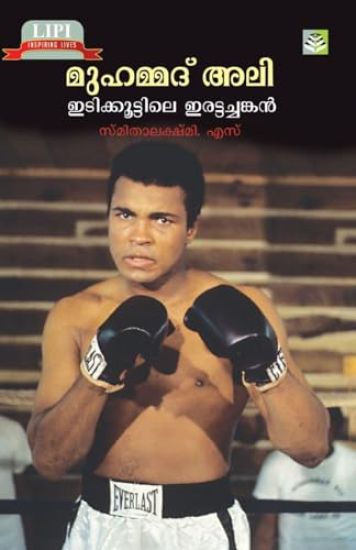
Muhammad Ali

Muhammad Ali

Lipi Publications
2023
pokkari
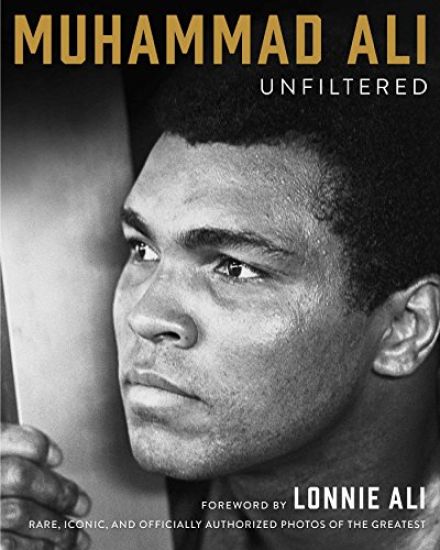
Muhammad Ali: Idikkoottile Irattachankan by Smithalakshmi. S., published by Lipi Publications, stands as a beacon of knowledge and inspiration. With its insightful content and engaging narrative style, this book transcends genres, offering something valuable for every reader.
Muhammad and the Formation of Sacrifice

Muhammad and the Formation of Sacrifice

Gerd Marie Adna

Peter Lang AG
2014
nidottu
Islam has a festival of sacrifice, id al-adha, which is celebrated each year in the month of pilgrimage. Simultaneous to the celebration and the sacrificial ritual in Mecca, during hajj, sheep, camels and cows are slaughtered all over the Muslim world. The story about how Abraham nearly sacrificed his son, Ishaq or Isma’il (Q 37), is important. Also other parts of the Qur’an contribute to the understanding of the id al-adha. Further, texts from the first 500 years after hijra contribute to a new comprehension of the theology of sacrifice in Islam. In this monograph insights from the wider field of religious and anthropological studies (esp. R.A. Rappaport) are applied to the source texts about sacrifices and rituals in pre-Islam and Islam.
Muhammad Reconsidered

Muhammad Reconsidered

Anna Bonta Moreland

University of Notre Dame Press
2026
nidottu
Scholarly attempts to understand Islam in the West over the past several years have failed to take Islamic theology seriously. This book engages Islam from deep within the Christian tradition by addressing the question of the prophethood of Muhammad. Anna Bonta Moreland calls for a retrieval of Thomistic thought on prophecy to view Muhammad within a Christian theology of revelation, without either appropriating the prophet as an unwitting Christian or reducing both Christianity and Islam to a common denominator. This historical recovery leads to a more sophisticated understanding of Islam, one that honors the integrity of the Catholic tradition and, through that integrity, argues for the possibility in principle of Muhammad as a religious prophet. Moreland sets the stage for this inquiry through an intertextual reading of the key Vatican II documents on Islam and on Christian revelation. She then uses Aquinas's treatment of prophecy to address the case of whether Muhammad is a prophet in Christian terms. The book examines the work of several Christian theologians, including W. Montgomery Watt, Hans Küng, Kenneth Cragg, David Kerr, and Jacques Jomier, O.P., and then draws upon the practice of analogical reasoning in the theology of religious pluralism to show that a term in one religion—in this case "prophecy"—can have purchase in another religious tradition. Muhammad Reconsidered not only is a constructive contribution to Catholic theology but also has enormous potential to help scholars reframe and comprehend Christian-Muslim relations.