Kirjojen hintavertailu. Mukana 12 111 367 kirjaa ja 12 kauppaa.

Kirjahaku

Etsi kirjoja tekijän nimen, kirjan nimen tai ISBN:n perusteella.

1000 tulosta hakusanalla Norbert Wolf

On Civilization, Power, and Knowledge

On Civilization, Power, and Knowledge

Norbert Elias

University of Chicago Press
1998
nidottu
Nobert Elias (1897-1990) is described as one of the great sociologists of the 20th century. Born in Germany, Elias earned a doctorate in philosophy and then turned to sociology, working with Max Weber's younger brother, Alfred Weber, and with Karl Mannheim. He later fled the Nazi regime in 1935 and spent most of his life in Britain. He is best known for his book, "The Civilizing Process," wherein he traces the subtle changes in manners among the European upper classes since the Middle Ages, and shows how those seemingly innocuous changes in etiquette reflected profound transformations of power relations in society. He later applied these insights to a wide range of subjects, from art and culture to the control of violence, the sociology of sports, the development of knowledge and the sciences, and the methodology of sociology. This volume is a collection of Elias's most important writings, and includes many of his ideas. The development of Elias's thinking during the course of his long career is traced, along with a discussion of how his work relates to other major sociologists and how the various selections are interconnected.
Economics 2.0

Economics 2.0

Norbert Haring; Olaf Storbeck

Palgrave Macmillan
2009
sidottu
Economics shapes our life, from global policy to how much you pay for a new pair of shoes from China to whether you will survive your bypass surgery. For example, did you know how fitness studios earn most of their money? - From the laziness and irrationality of their customers. Why are women more successful investors? - Because they are more humble and less interested in finance. Featuring recent work from top thinkers in the economic field from around the world, such as Philippe Aghion, Paul Krugman, George Akerlof, Gary Becker, and George Loewenstein, the book includes chapters on the rationality versus the irrationality of financial markets, the subprime crisis, globalization, and the methods marketers are using to sell us products we don't need. Economics 2.0 makes an impressive case for the argument that economics is not a dry science and that economic principles are constantly exerting their influence. Completely without formulas and theoretical ballast, Norbert Haring and Olaf Storbeck present the current findings of prominent economists, helping to expand both our knowledge and our appreciation of the economics that impact and shape our life.
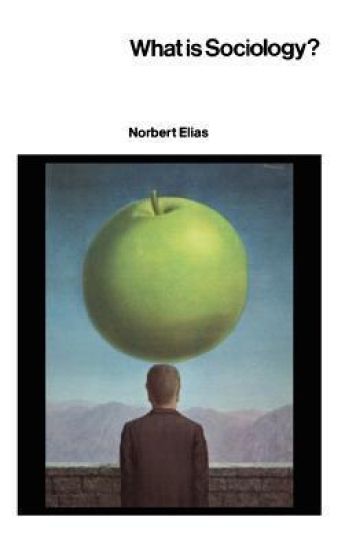
What Is Sociology?

What Is Sociology?

Norbert Elias

Columbia University Press
1984
pokkari
What is Sociology? presents in concise and provocative form the major ideas of a seminal thinker whose work-spanning more than four decades-is only now gaining the recognition here it has long had in Germany and France. Unlike other post-war sociologists, Norbert Elias has always held the concept of historical development among his central concerns; his dynamic theories of the evolution of modern man have remedied the historical and epistemological shortcomings of structualism and ethno-methodology. What is Sociology? refines the arguments that were first found in Elias' massive work on the civilizing process, in which he formulated his major assertions about the interdependence of the making of modern man and modern society. It is Elias' contention that changes in personality structure-embodied in phenomena ranging from table manners and hygiene habits to rites of punishment and courtly love-inevitably reflect and mould patterns of control generated by new political and social instututions. Elias' rejection of a dichotomy between individual and society, and his use of psychoanalysis, political theory, and social history, help restore a fullness of resource to sociology.
Adenauer's Germany and the Nazi Past

Adenauer's Germany and the Nazi Past

Norbert Frei; Fritz Stern

Columbia University Press
2002
sidottu
Of all the aspects of recovery in postwar Germany perhaps none was as critical or as complicated as the matter of dealing with Nazi criminals, and, more broadly, with the Nazi past. While on the international stage German officials spoke with contrition of their nation's burden of guilt, at home questions of responsibility and retribution were not so clear. In this masterful examination of Germany under Adenauer, Norbert Frei shows that, beginning in 1949, the West German government dramatically reversed the denazification policies of the immediate postwar period and initiated a new "Vergangenheitspolitik," or "policy for the past," which has had enormous consequences reaching into the present. Adenauer's Germany and the Nazi Past chronicles how amnesty laws for Nazi officials were passed unanimously and civil servants who had been dismissed in 1945 were reinstated liberally-and how a massive popular outcry led to the release of war criminals who had been condemned by the Allies. These measures and movements represented more than just the rehabilitation of particular individuals. Frei argues that the amnesty process delegitimized the previous political expurgation administered by the Allies and, on a deeper level, served to satisfy the collective psychic needs of a society longing for a clean break with the unparalleled political and moral catastrophe it had undergone in the 1940s. Thus the era of Adenauer devolved into a scandal-ridden period of reintegration at any cost. Frei's work brilliantly and chillingly explores how the collective will of the German people, expressed through mass allegiance to new consensus-oriented democratic parties, cast off responsibility for the horrors of the war and Holocaust, effectively silencing engagement with the enormities of the Nazi past.
Bloodroot

Bloodroot

Norbert Krapf

Indiana University Press
2008
pokkari
Bloodroot showcases poetry from the collected works of Jasper, Indiana, native Norbert Krapf. Spanning 35 years, these poems focus on Krapf's experiences living in southern Indiana and the intersection of his life with his German ancestry. Forty of the poems are published here for the first time. Photographs by David Pierini, inspired by Krapf's work with many taken in and around Dubois County, grace this evocative portrait of a poet and place.
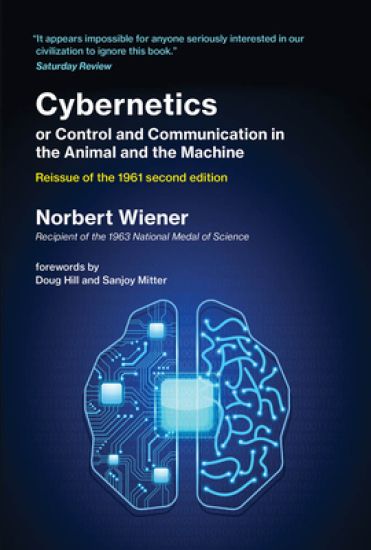
Cybernetics or Control and Communication in the Animal and the Machine

Cybernetics or Control and Communication in the Animal and the Machine

Norbert Wiener; Doug Hill; Sanjoy Mitter

MIT Press
2019
pokkari
A classic and influential work that laid the theoretical foundations for information theory and a timely text for contemporary informations theorists and practitioners.With the influential book Cybernetics, first published in 1948, Norbert Wiener laid the theoretical foundations for the multidisciplinary field of cybernetics, the study of controlling the flow of information in systems with feedback loops, be they biological, mechanical, cognitive, or social. At the core of Wiener's theory is the message (information), sent and responded to (feedback); the functionality of a machine, organism, or society depends on the quality of messages. Information corrupted by noise prevents homeostasis, or equilibrium. And yet Cybernetics is as philosophical as it is technical, with the first chapter devoted to Newtonian and Bergsonian time and the philosophical mixed with the technical throughout. This book brings the 1961 second edition back into print, with new forewords by Doug Hill and Sanjoy Mitter. Contemporary readers of Cybernetics will marvel at Wiener's prescience-his warnings against "noise," his disdain for "hucksters" and "gadget worshipers," and his view of the mass media as the single greatest anti-homeostatic force in society. This edition of Cybernetics gives a new generation access to a classic text.
God & Golem, Inc.

God & Golem, Inc.

Norbert Wiener

MIT Press
1966
pokkari
The new and rapidly growing field of communication sciences owes as much to Norbert Wiener as to any one man. He coined the word for it-cybernetics. In God & Golem, Inc., the author concerned himself with major points in cybernetics which are relevant to religious issues.The first point he considers is that of the machine which learns. While learning is a property almost exclusively ascribed to the self-conscious living system, a computer now exists which not only can be programmed to play a game of checkers, but one which can "learn" from its past experience and improve on its own game. For a time, the machine was able to beat its inventor at checkers. "It did win," writes the author, "and it did learn to win; and the method of its learning was no different in principle from that of the human being who learns to play checkers.A second point concerns machines which have the capacity to reproduce themselves. It is our commonly held belief that God made man in his own image. The propagation of the race may also be interpreted as a function in which one living being makes another in its own image. But the author demonstrates that man has made machines which are "very well able to make other machines in their own image," and these machine images are not merely pictorial representations but operative images. Can we then say: God is to Golem as man is to Machines? in Jewish legend, golem is an embryo Adam, shapeless and not fully created, hence a monster, an automation.The third point considered is that of the relation between man and machine. The concern here is ethical. "render unto man the things which are man's and unto the computer the things which are the computer's," warns the author. In this section of the book, Dr. Wiener considers systems involving elements of man and machine. The book is written for the intellectually alert public and does not involve any highly technical knowledge. It is based on lectures given at Yale, at the Societe Philosophique de Royaumont, and elsewhere.
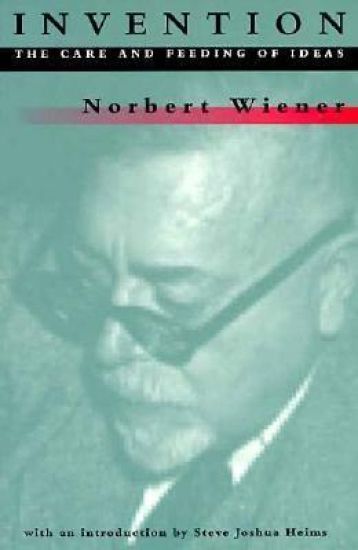
Invention

Invention

Norbert Wiener; Steve Joshua Heims

MIT Press
1994
pokkari
Internationally honored for brilliant achievements throughout his career, author of Cybernetics, ExProdigy, and the essay God and Golem, Inc., which won the National Book Award in 1964, Norbert Wiener was no ordinary mathematician. With the ability to understand how things worked or might work at a very deep level, he linked his own mathematics to engineering and provided basic ideas for the design of all sorts of inventions, from radar to communications networks to computers to artificial limbs. Wiener had an abiding concern about the ethics guiding applications of theories he and other scientists developed. Years after he died, the manuscript for this book was discovered among his papers. The world of science has changed greatly since Wiener's day, and much of the change has been in the direction he warned against. Now published for the first time, this book can be read as a salutary corrective from the past and a chance to rethink the components of an environment that encourages inventiveness.Wiener provides an engagingly written insider's understanding of the history of discovery and invention, emphasizing the historical circumstances that foster innovations and allow their application. His message is that truly original ideas cannot be produced on an assembly line, and that their consequences are often felt only at distant times and places. The intellectual and technological environment has to be right before the idea can blossom. The best course for society is to encourage the best minds to pursue the most interesting topics, and to reward them for the insights they produce. Wiener's comments on the problem of secrecy and the importance of the "free-lance" scientist are particularly pertinent today.Steve Heims provides a brief history of Wiener's literary output and reviews his contributions to the field of invention and discovery. In addition, Heims suggests significant ways in which Wiener's ideas still apply to dilemmas facing the scientific and engineering communities of the 1990s.
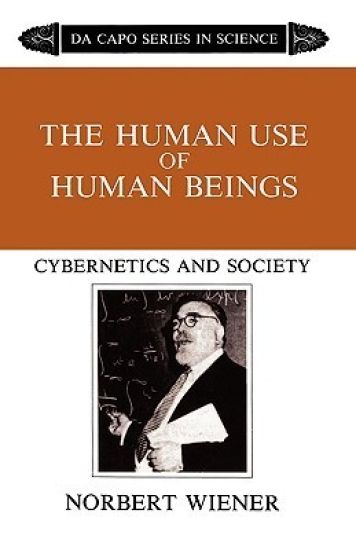
The Human Use Of Human Beings

The Human Use Of Human Beings

Norbert Wiener

Da Capo Press Inc
1988
pokkari
Only a few books stand as landmarks in social and scientific upheaval. Norbert Wiener's classic is one in that small company. Founder of the science of cybernetics,the study of the relationship between computers and the human nervous system,Wiener was widely misunderstood as one who advocated the automation of human life. As this book reveals, his vision was much more complex and interesting. He hoped that machines would release people from relentless and repetitive drudgery in order to achieve more creative pursuits. At the same time he realized the danger of dehumanizing and displacement. His book examines the implications of cybernetics for education, law, language, science, technology, as he anticipates the enormous impact,in effect, a third industrial revolution,that the computer has had on our lives.
The World of Women's Trade Unionism

The World of Women's Trade Unionism

Norbert C. Soldon

Praeger Publishers Inc
1985
sidottu
This book is a timely contribution to the study of the impact of trade unionism on women in the work force and how women have exercised power within trade unions. This collection of essays contains brief yet comprehensive histories of women's trade union movements in many of the principal industrial nations of the world--Britain, France, Germany, Sweden, Japan, Argentina, Italy, and the United States. The authors survey the impact of the cult of true womanhood on the growth of trade unionism. Each author analyzes the relationship between early women's trade unions and guilds, identifies the important leaders, and explains how ideologies affected the expansion of trade unions. Among other subjects treated are the movement's relationship to the feminist movement, the effects of economic depression and rationalization of industry, women's attitudes toward protective legislation and political action, and the effect of the women's liberation movement of the 1960s and 1970s. Finally, the authors assess the advances made as the result of equal-pay legislation and progress in the areas of training, promotion, safety, child-care, maternity leave, and reentry into the work force.
George Gershwin

George Gershwin

Norbert Carnovale

Greenwood Press
2000
sidottu
American composer George Gershwin, an icon of the American Jazz Age, indelibly marked 20th-century music, with many of his works becoming standards in the popular and jazz music repertory, not to mention his world-famous classical works such as Rhapsody in Blue (1924) and Porgy and Bess (1935). This major bibliography includes a brief biography, which examines Gershwin's influence and situates him within the cultural context of his time, a complete cross-reference list of all his compositions, a discography of more than 1,150 items, and a descriptive filmography. The extensive bibliography includes writings by both George and his brother Ira, and more than 2,100 entries about George's compositions.As an exhaustive research tool, this up-to-date bibliographic reference compiles information on George Gershwin from numerous, disparate sources and should appeal to music and theater scholars, cultural historians, and Gershwin enthusiasts alike. The work is divided among seven sections that cross-reference one another. A separate appendix lists itineraries for the Paul Whiteman tours of 1924-1925, and the Leo Reisman tour of 1934, at which Gershwin's music figured prominently, and a comprehensive index completes the volume.
Offender Profiling in the Courtroom

Offender Profiling in the Courtroom

Norbert Ebisike

Praeger Publishers Inc
2008
sidottu
Offender profiling is mainly used by the police to narrow down suspects in cases where no physical evidence was left at a crime scene. Recently, however, this technique has been introduced into the courtroom as evidence, raising questions of its reliability, validity, and admissibility at trial. Because offender profiling was not originally intended to be used in the courtroom, its entrance there has caused both confusion and controversy. Offender Profiling in the Courtroom discusses the use of profiling evidence in criminal trials. Ebisike also covers the history, development, approaches to, and the legal aspects of this crime investigation technique. Several serial crime cases where investigators used offender profiling during the criminal proceedings are discussed, including the case of the New York Mad Bomber, George Metesky, who caused thirty-two bomb explosions in New York City between 1940 and 1956, and the case of Albert DeSalvo, known as the Boston Strangler, who carried out several sexually motivated murders in Boston, Massachusetts between 1962 and 1964. Ebisike demystifies offender profiling and raises awareness about the successes and the pitfalls of the process and its use at trial. Offender profiling is a crime investigation technique where information gathered from the crime scene, witnesses, victims (if alive), autopsy reports, and information about an offender's behavior is used to draw up a profile of the sort of person likely to commit such crime. Offender profiling does not point to a specific offender. It is based, instead, on the probability that someone with certain characteristics is likely to have committed a certain type of crime. In spite of the ever-increasing media interest in the use of offender profiling in criminal trials, this technique is still not well understood by many people, including judges, lawyers, and jurors, who weigh such evidence at trial. Some people see offender profiling as a tried and true method of identifying suspects, and others simply see it as a fiction. Here, the author helps readers understand the true nature of offender profiling and the danger of its admission into criminal cases as evidence.
Foundational Neuroscience

Foundational Neuroscience

Norbert R. Myslinski

ELSEVIER SCIENCE TECHNOLOGY
2023
nidottu
Foundational Neuroscience: An Introduction to the Field is a unique introduction to this complex field. Providing a foundational introduction to complex brain concepts, this volume features almost 30 chapters covering brain function, dysfunction and research. With a focus on anatomy, physiology and pathology, chapters delve into important concepts in brain research, including neuroplasticity, intelligence, memory, emotions, consciousness, vision, hearing, taste, smell, touch, movement and biomedical research. Unique offerings include career guides, suggested readings, Q&As and neuroethics.
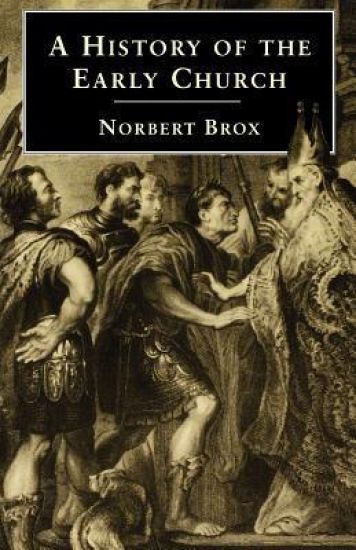
A History of the Early Church

A History of the Early Church

Norbert Brox

SCM Press
2009
nidottu
A standard work for European students, which has already been reprinted four times in the original German, this history is a lucid and highly readable, up-to-date account of the early church from its beginnings to the Council of Chalcedon which offers an illuminating alternative to sometimes more conservative British works.
Another Kind of Evidence

Another Kind of Evidence

Norbert Freedman; Jesse D. Geller; Joan Hoffenberg; Marvin Hurvich; Rhonda Ward

Routledge
2019
sidottu
In our current professional climate, with calls for 'evidenced-based treatment', and in light of the prestige accorded to this emblem, we can ask: for what purpose do we seek evidence? For our students? For the public at large? For an inner sense of feeling supported by science? Most disciplines are concerned with cumulative knowledge, aimed toward self-affirmation and self-definition, that is, establishing a sense of legitimacy. The three parts of this volume are directed toward the goal of affirming a public and private sense of the legitimacy of psychoanalysis, thereby shaping professional identity. In each contribution we adhere to the precepts of 'scientific inquiry', with a commitment to affirming or disconfirming clinical propositions, utilizing consensually agreed upon methods of observation, and arriving at inferences that are persuasive and have the potential to move the field forward. Beyond this, each part of this book describes distinct methodologies that generate evidence pertaining to public health policy, the persuasiveness and integrity of our psychoanalytic concepts, and phenomena encountered in daily clinical practice.
Electricity and Energy Transition in Nigeria
Electricity and Energy Transition in Nigeria provides readers with a detailed account of the dynamics of energy infrastructure change in Nigeria’s electricity sector. The book starts by introducing the basic theories underpinning the politics of energy infrastructure supply and goes on to explore the historical dimensions of the Nigerian energy transition by highlighting the influences and drivers of energy systems change. Edomah also examines the political dynamics at play, highlighting the political actors and institutions that shape energy supply, as well as the impact of consumer politics. The book concludes by considering how all these factors may influence the future of energy in Nigeria. This book will be of great interest to students and scholars of energy transitions, energy technology and infrastructure, and African Studies more generally.
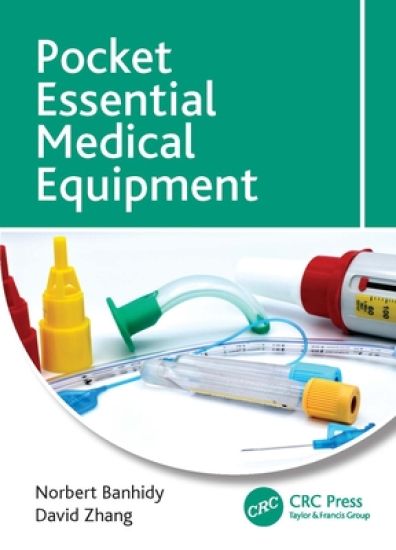
Pocket Essential Medical Equipment

Pocket Essential Medical Equipment

Norbert Banhidy; David Zhang

TAYLOR FRANCIS LTD
2022
nidottu
This genuinely pocket-sized guide to essential medical equipment is ideal for medical students, newly qualified junior doctors and other healthcare professionals seeking a convenient and concise handbook to refer to in busy clinical settings including emergency departments. Clear, concise and systematic, it provides a visual guide to enable readers to identify correctly common medical equipment and use it appropriately without overwhelming or extraneous information.Key Features: Convenient – everything at your fingertips, for speedy access in the emergency department, on the ward and in the clinic Portable – actually fits in a pocket Illustrated – plentiful photographs and explanatory line diagrams support and enhance the text Tailored – written specifically with the less experienced practitioner in mindProviding guidance and answering questions when senior help is not readily available, with this book as your indispensable companion you will be equipped to identify and use equipment with confidence in order to provide safe and effective care for patients.
Pocket Essential Medical Equipment

Pocket Essential Medical Equipment

Norbert Banhidy; David Zhang

TAYLOR FRANCIS LTD
2022
sidottu
This genuinely pocket-sized guide to essential medical equipment is ideal for medical students, newly qualified junior doctors and other healthcare professionals seeking a convenient and concise handbook to refer to in busy clinical settings including emergency departments. Clear, concise and systematic, it provides a visual guide to enable readers to identify correctly common medical equipment and use it appropriately without overwhelming or extraneous information.Key Features: Convenient – everything at your fingertips, for speedy access in the emergency department, on the ward and in the clinic Portable – actually fits in a pocket Illustrated – plentiful photographs and explanatory line diagrams support and enhance the text Tailored – written specifically with the less experienced practitioner in mindProviding guidance and answering questions when senior help is not readily available, with this book as your indispensable companion you will be equipped to identify and use equipment with confidence in order to provide safe and effective care for patients.