Kirjojen hintavertailu. Mukana 12 570 977 kirjaa ja 12 kauppaa.

Kirjahaku

Etsi kirjoja tekijän nimen, kirjan nimen tai ISBN:n perusteella.

1000 tulosta hakusanalla Philo

Philosophy Within Its Proper Bounds

Philosophy Within Its Proper Bounds

Edouard Machery

Oxford University Press
2017
sidottu
In Philosophy Within Its Proper Bounds, Edouard Machery argues that resolving many traditional and contemporary philosophical issues is beyond our epistemic reach and that philosophy should re-orient itself toward more humble, but ultimately more important intellectual endeavors. Any resolution to many of these contemporary issues would require an epistemic access to metaphysical possibilities and necessities, which, Machery argues, we do not have. In effect, then, Philosophy Within Its Proper Bounds defends a form of modal skepticism. The book assesses the main philosophical method for acquiring the modal knowledge that the resolution of modally immodest philosophical issues turns on: the method of cases, that is, the consideration of actual or hypothetical situations (which cases or thought experiments describe) in order to determine what facts hold in these situations. Canvassing the extensive work done by experimental philosophers over the last 15 years, Edouard Machery shows that the method of cases is unreliable and should be rejected. Importantly, the dismissal of modally immodest philosophical issues is no cause for despair - many important philosophical issues remain within our epistemic reach. In particular, reorienting the course of philosophy would free time and resources for bringing back to prominence a once-central intellectual endeavor: conceptual analysis.
Philosophy of Mind

Philosophy of Mind

Barbara Gail Montero

Oxford University Press
2022
nidottu
Philosophy of Mind: A Very Short Introduction probes some of the great philosophical questions about the mind: What is the relationship between mind and matter? Can science unravel the mystery of consciousness? How can our thoughts represent things in the world? Are computers genuinely intelligent? In the book, Barbara Gail Montero highlights key thought experiments used by philosophers to explore the nature of mind and how mind and body relate to each other (the mind-body problem). She leads readers through the strengths and weaknesses of the proposed solutions to the mind-body problem and explores the philosophical conundrums associated with sensation, perception, cognition, and emotion. While keeping an eye on the contemporary philosophical debate, Montero also considers the cross-cultural roots of philosophy of mind, and its connections to psychology, neuroscience, evolutionary biology, and physics. ABOUT THE SERIES: The Very Short Introductions series from Oxford University Press contains hundreds of titles in almost every subject area. These pocket-sized books are the perfect way to get ahead in a new subject quickly. Our expert authors combine facts, analysis, perspective, new ideas, and enthusiasm to make interesting and challenging topics highly readable.
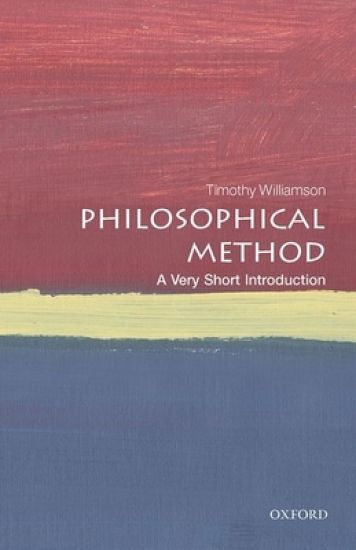
Philosophical Method

Philosophical Method

Timothy Williamson

Oxford University Press
2020
nidottu
What are philosophers trying to achieve? How can they succeed? Does philosophy make progress? Is it in competition with science, or doing something completely different, or neither? Timothy Williamson tackles some of the key questions surrounding philosophy in new and provocative ways, showing how philosophy begins in common sense curiosity, and develops through our capacity to dispute rationally with each other. Discussing philosophy's ability to clarify our thoughts, he explains why such clarification depends on the development of philosophical theories, and how those theories can be tested by imaginative thought experiments, and compared against each other by standards similar to those used in the natural and social sciences. He also shows how logical rigour can be understood as a way of enhancing the explanatory power of philosophical theories. Drawing on the history of philosophy to provide a track record of philosophical thinking's successes and failures, Williams overturns widely held dogmas about the distinctive nature of philosophy in comparison to the sciences, demystifies its methods, and considers the future of the discipline. From thought experiments, to deduction, to theories, this Very Short Introduction will cause you to totally rethink what philosophy is. ABOUT THE SERIES: The Very Short Introductions series from Oxford University Press contains hundreds of titles in almost every subject area. These pocket-sized books are the perfect way to get ahead in a new subject quickly. Our expert authors combine facts, analysis, perspective, new ideas, and enthusiasm to make interesting and challenging topics highly readable. Previously published in hardback as Doing Philosophy
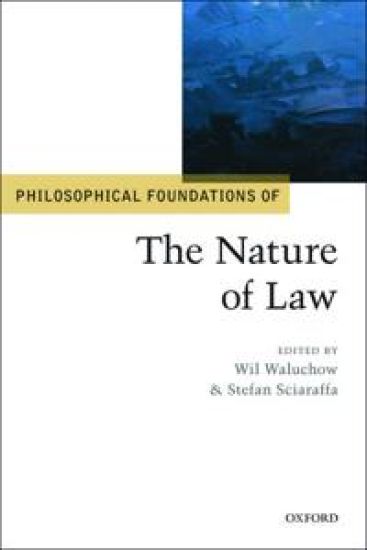
Philosophical Foundations of the Nature of Law
In recent years we have witnessed major developments in philosophical inquiry concerning the nature of law and, with the continuing development of international and transnational legal institutions, in the phenomenon of law itself. This volume gathers leading writers in the field to take stock of current debates on the nature of law and the aims and methods of legal philosophy. The volume covers four broad themes. The essays within the first theme address and develop the traditional debates between legal positivism, natural law theory, and Dworkinian interpretivism. Papers within the second theme focus on the power of coercion, often overlooked in contemporary legal philosophy. The third set of papers addresses the aims and methods of legal theory, and the role of conceptual analysis. The final section explores new methods and issues in the subject, and offers fresh starting points for future work in the field. Gathering many leading and up-and-coming writers in the subject, the volume offers a snapshot of the best current work in general jurisprudence.
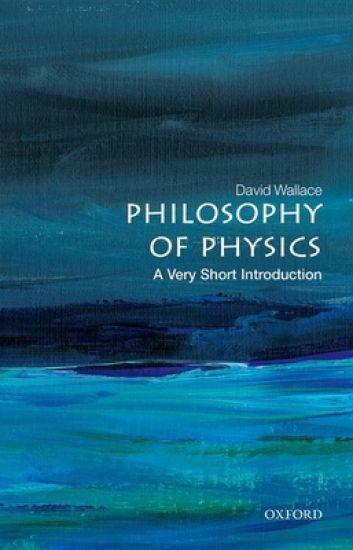
Philosophy of Physics

Philosophy of Physics

David Wallace

Oxford University Press
2021
nidottu
Very Short Introductions: Brilliant, Sharp, Inspiring Philosophy of physics is concerned with the deepest theories of modern physics - notably quantum theory, our theories of space, time and symmetry, and thermal physics - and their strange, even bizarre conceptual implications. A deeper understanding of these theories helps both physics, through pointing the way to new theories and new applications, and philosophy, through seeing how our worldview has to change in the light of what we learn from physics. This Very Short Introduction explores the core topics in philosophy of physics through three key themes. The first - the nature of space, time, and motion - begins by considering the philosophical puzzles that led Isaac Newton to propose the existence of absolute space, and then discusses how those puzzles change - but do not disappear - in the context of the revolutions in our understanding of space and time that came first from special, and then from general, relativity. The second - the emergence of irreversible behavior in statistical mechanics - considers how the microscopic laws of physics, which know of no distinction between past and future, can be compatible with the melting of ice, the cooling of coffee, the passing of youth, and all the other ways in which the large-scale world distinguishes past from future. The last section discusses quantum theory - the foundation of most of modern physics, yet mysterious to this day. It explains just why quantum theory is so difficult to make sense of, how we might nonetheless attempt to do it, and why the question has been highly relevant to the development of physics, and continues to be so. ABOUT THE SERIES: The Very Short Introductions series from Oxford University Press contains hundreds of titles in almost every subject area. These pocket-sized books are the perfect way to get ahead in a new subject quickly. Our expert authors combine facts, analysis, perspective, new ideas, and enthusiasm to make interesting and challenging topics highly readable.
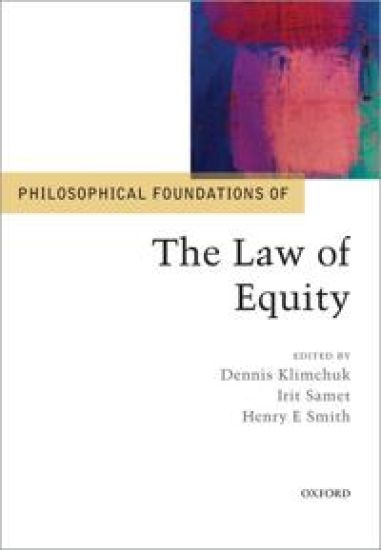
Philosophical Foundations of the Law of Equity
The law of Equity, a latecomer to the field of private law theory, raises fundamental questions about the relationships between law and morality, the nature of rights, and the extent to which we are willing to compromise on the rule of law ideal to achieve social goals. In this volume, leading scholars come together to address these and other questions about underlying principles of Equity and its relationship to the common law: What relationships, if any, are there between the legal, philosophical, and moral senses of 'equity'? Does Equity form a second-order constraint on law? If so, is its operation at odds with the rule of law? Do the various theories of Equity require some kind of separation of law and equity-and, if they do, what kind of separation? The volume further sheds light on some of the most topical questions of jurisprudence that are embedded in the debate around 'fusion'. A noteworthy addition to the Philosophical Foundations series, this volume is an important contribution to an ongoing debate, and will be of value to students and scholars across the discipline.
Philosophy in the Hellenistic and Roman Worlds

Philosophy in the Hellenistic and Roman Worlds

Peter Adamson

Oxford University Press
2018
nidottu
Peter Adamson offers an accessible, humorous tour through a period of eight hundred years when some of the most influential of all schools of thought were formed: from the third century BC to the sixth century AD. He introduces us to Cynics and Skeptics, Epicureans and Stoics, emperors and slaves, and traces the development of Christian and Jewish philosophy and of ancient science. Chapters are devoted to such major figures as Epicurus, Lucretius, Cicero, Seneca, Plotinus, and Augustine. But in keeping with the motto of the series, the story is told 'without any gaps,' providing an in-depth look at less familiar topics that remains suitable for the general reader. For instance, there are chapters on the fascinating but relatively obscure Cyrenaic philosophical school, on pagan philosophical figures like Porphyry and Iamblichus, and extensive coverage of the Greek and Latin Christian Fathers who are at best peripheral in most surveys of ancient philosophy. A major theme of the book is in fact the competition between pagan and Christian philosophy in this period, and the Jewish tradition also appears in the shape of Philo of Alexandria. Ancient science is also considered, with chapters on ancient medicine and the interaction between philosophy and astronomy. Considerable attention is paid also to the wider historical context, for instance by looking at the ascetic movement in Christianity and how it drew on ideas from Hellenic philosophy. From the counter-cultural witticisms of Diogenes the Cynic to the subtle skepticism of Sextus Empiricus, from the irreverent atheism of the Epicureans to the ambitious metaphysical speculation of Neoplatonism, from the ethical teachings of Marcus Aurelius to the political philosophy of Augustine, the book gathers together all aspects of later ancient thought in an accessible and entertaining way.
Philosophy in the Islamic World

Philosophy in the Islamic World

Peter Adamson

Oxford University Press
2018
nidottu
The latest in the series based on the popular History of Philosophy podcast, this volume presents the first full history of philosophy in the Islamic world for a broad readership. It takes an approach unprecedented among introductions to this subject, by providing full coverage of Jewish and Christian thinkers as well as Muslims, and by taking the story of philosophy from its beginnings in the world of early Islam all the way through to the twentieth century. Major figures like Avicenna, Averroes, and Maimonides are covered in great detail, but the book also looks at less familiar thinkers, including women philosophers. Attention is also given to the philosophical relevance of Islamic theology (kalam) and mysticism--the Sufi tradition within Islam, and Kabbalah among Jews--and to science, with chapters on disciplines like optics and astronomy. The book is divided into three sections, with the first looking at the first blossoming of Islamic theology and responses to the Greek philosophical tradition in the world of Arabic learning. This 'formative period' culminates with the work of Avicenna, the pivotal figure to whom most later thinkers feel they must respond. The second part of the book discusses philosophy in Muslim Spain (Andalusia), where Jewish philosophers come to the fore, though this is also the setting for such thinkers as Averroes and Ibn Arabi. Finally, a third section looks in unusual detail at later developments, touching on philosophy in the Ottoman, Mughal, and Safavid empires and showing how thinkers in the nineteenth to the twentieth century were still concerned to respond to the ideas that had animated philosophy in the Islamic world for centuries, while also responding to political and intellectual challenges from the European colonial powers.
Philosophers Take On the World

Philosophers Take On the World

Oxford University Press
2018
nidottu
Every day the news shows us provoking stories about what's going on in the world, about events which raise moral questions and problems. In Philosophers Take On the World a team of philosophers get to grips with a variety of these controversial issues, from the amusing to the shocking, in short, engaging, often controversial pieces. Covering topics from guns to abortion, the morality of drinking alone, hating a sports team, and being rude to cold callers, the essays will make you think again about the judgments we make on a daily basis and the ways in which we choose to conduct our lives. Philosophers Take On the World is based on the blog run by the Uehiro Centre for Practical Ethics at the University of Oxford, one of the world's leading centres for applied ethics.
Philosophical Foundations of the Law of Torts
Contemporary philosophy and tort law have long enjoyed a happy union. Tort theory today is an exceptionally active and wide ranging field within legal philosophy. This volume brings together established and emerging scholars from around the world and from varying disciplines that bring their distinct perspective to the philosophical problems of tort law. These ground breaking essays advance longstanding debates and open up new avenues of enquiry thus deepening and broadening the field. Contributions cover the major problematic areas of tort law, such as the relations between responsibility, fault, and strict liability; the morality of harm, compensation, and repair; and the relationship of tort with criminal and property law among many others.
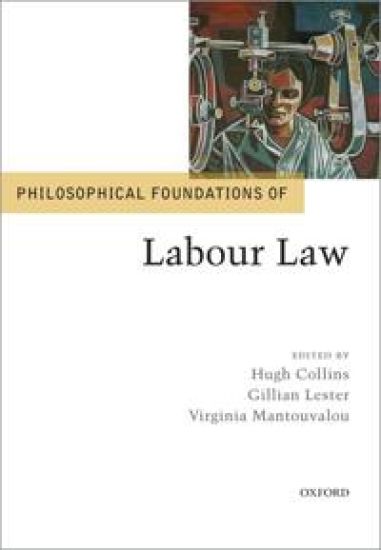
Philosophical Foundations of Labour Law
This collection of essays presents an interdisciplinary investigation by lawyers and philosophers into the philosophical ideas, concepts, and principles that provide the foundation for the field of labour law and employment law. The book addresses the doubts that have been expressed about whether a body of labour law that protects workers is needed at all, what should be regarded as the proper scope of the field in the light of developments such as the integration of work and home life by means of technology, the globalization of the economy, and the precarious kinds of work that thrive in the gig economy. Paying particular attention to political philosophy and theories of justice, the contributions focus on four themes: I. freedom, dignity, and human rights; II. distributive justice and exploitation; III. workplace democracy and self-determination; and IV. social inclusion.
Philosophy Within Its Proper Bounds

Philosophy Within Its Proper Bounds

Edouard Machery

Oxford University Press
2019
nidottu
In Philosophy Within Its Proper Bounds, Edouard Machery argues that resolving many traditional and contemporary philosophical issues is beyond our epistemic reach and that philosophy should re-orient itself toward more humble, but ultimately more important intellectual endeavors. Any resolution to many of these contemporary issues would require an epistemic access to metaphysical possibilities and necessities, which, Machery argues, we do not have. In effect, then, Philosophy Within Its Proper Bounds defends a form of modal skepticism. The book assesses the main philosophical method for acquiring the modal knowledge that the resolution of modally immodest philosophical issues turns on: the method of cases, that is, the consideration of actual or hypothetical situations (which cases or thought experiments describe) in order to determine what facts hold in these situations. Canvassing the extensive work done by experimental philosophers over the last 15 years, Edouard Machery shows that the method of cases is unreliable and should be rejected. Importantly, the dismissal of modally immodest philosophical issues is no cause for despair - many important philosophical issues remain within our epistemic reach. In particular, reorienting the course of philosophy would free time and resources for bringing back to prominence a once-central intellectual endeavor: conceptual analysis.
Philosophy, Rhetoric, and Thomas Hobbes

Philosophy, Rhetoric, and Thomas Hobbes

Timothy Raylor

Oxford University Press
2018
sidottu
Thomas Hobbes claimed to have founded the discipline of civil philosophy (political science). The claim did not go uncontested and in recent years the relationship of philosophical reasoning to rhetorical persuasion in Hobbes's work has become a significant area of discussion, as scholars attempt to align his disparaging remarks about rhetoric with his dazzling practice of it in works like Leviathan. The dominant view is that, having rejected an early commitment to humanism and with it rhetoric when he adopted the 'scientific' approach to philosophy in the late 1630s, Hobbes later came to re-embrace it as an essential aid to or part of philosophy. Philosophy, Rhetoric, and Thomas Hobbes proposes that Hobbes was, from first to last, dubious about the place of rhetoric in civil society, and came to see it as a pernicious presence within philosophy - a position from which he did not retreat. It offers a fresh and expanded picture of Hobbes's humanism by examining his years as a country house tutor; his teaching and his translation of Thucydides, the influence on him of Bacon, and the range of his early natural historical and philosophical interests. In demonstrating the distinctively Aristotelian character of his understanding of rhetoric, the book also revisits the new approach to philosophy Hobbes adopted at the end of the 1630s, clarifying the nature and scope of his concern about the contamination of philosophy and political life by the procedures of rhetorical argumentation.
Philodemus: On Poems, Book 2

Philodemus: On Poems, Book 2

Richard Janko

Oxford University Press
2020
sidottu
The On Poems by Philodemus of Gadara (c.110-35 BC), the Epicurean philosopher and poet who taught Vergil and influenced Horace, is our main source for Hellenistic literary and critical theory, bridging the gap between Aristotle and Horace. In Book 2 Philodemus rebuts two almost unknown critics, Heracleodorus and Pausimachus, who argued, respectively, that the sound arising from the word-order (synthesis) is the source of poetic excellence, regardless of the content and word-choice, and that the pure sound of the vowels and consonants, which vary in quality, is that source. By putting together fragments from both the summary and the rebuttal of these theorists, we can form a full picture of their thought. Philodemus led the Augustan reaction against this invasion of literary criticism by musical theory, arguing that form and content are interrelated, and that well-expressed content, not pretty sound, is what makes poetry worthwhile. Book 2 reveals just how much and how inventively Horace drew on the ideas of all three writers in composing his Ars Poetica. The extensive remains of this scroll, carbonized in the eruption of Vesuvius, were thoroughly jumbled after their rediscovery in the Villa of the Papyri at Herculaneum. This edition painstakingly reconstructs their original sequence according to new methods, while exploiting previously unknown manuscript sources and technologies for ordering and reading the extant pieces. In thus restoring this lengthy aesthetic treatise from antiquity, it makes another major addition to the corpus of classical literature.
Philosophy of Psychedelics

Philosophy of Psychedelics

Chris Letheby

Oxford University Press
2021
sidottu
Recent clinical trials show that psychedelics such as LSD and psilocybin can be given safely in controlled conditions, and can cause lasting psychological benefits with one or two administrations. Supervised psychedelic sessions can reduce symptoms of anxiety, depression, and addiction, and improve well-being in healthy volunteers, for months or even years. But these benefits seem to be mediated by "mystical" experiences of cosmic consciousness, which prompts a philosophical concern: do psychedelics cause psychological benefits by inducing false or implausible beliefs about the metaphysical nature of reality? This book is the first scholarly monograph in English devoted to the philosophical analysis of psychedelic drugs. Its central focus is the apparent conflict between the growing use of psychedelics in psychiatry and the philosophical worldview of naturalism. Within the book, Letheby integrates empirical evidence and philosophical considerations in the service of a simple conclusion: this "Comforting Delusion Objection" to psychedelic therapy fails. While exotic metaphysical ideas do sometimes come up, they are not, on closer inspection, the central driver of change in psychedelic therapy. Psychedelics lead to lasting benefits by altering the sense of self, and changing how people relate to their own minds and lives-not by changing their beliefs about the ultimate nature of reality. The upshot is that a traditional conception of psychedelics as agents of insight and spirituality can be reconciled with naturalism (the philosophical position that the natural world is all there is). Controlled psychedelic use can lead to genuine forms of knowledge gain and spiritual growth-even if no Cosmic Consciousness or transcendent divine Reality exists. Philosophy of Psychedelics is an indispensable guide to the literature for researchers already engaged in the field of psychedelic psychiatry, and for researchers-especially philosophers-who want to become acquainted with this increasingly topical field.
Philosophy Beyond Spacetime

Philosophy Beyond Spacetime

Oxford University Press
2021
sidottu
Quantum gravity seeks a unified theory in which quantum matter is dynamically related to generally relativistic spacetime. Although a continuing work in progress, research programmes in the field such as string theory, loop quantum gravity, and causal set theory make it clear that a successful theory of quantum gravity will raise important challenges to our conceptions of space, time, and matter-perhaps abolishing them altogether as fundamental entities. But just as important, there is good reason to think that some of the problems in finding a theory of quantum gravity are themselves conceptual, in need of philosophical analysis. Philosophy Beyond Spacetime: Implications from Quantum Gravity assembles original papers from philosophers (and one physicist), establishing a definitive statement of the current state of play, on which future research into this area can build. Aiming to expand knowledge and understanding of the philosophy of quantum gravity, it emphasizes how debates in metaphysics--regarding emergence, composition, or grounding for example--shed light on the conceptual questions of quantum gravity. And conversely, how quantum theories of space and time call into question philosophical views grounded in classical spacetime. Furthermore, the philosophy of quantum gravity raises methodological questions, for instance concerning the relation between physics and metaphysics. The essays have been chosen to demonstrate to a wide range of philosophers the significance of the subject, as well as making novel contributions to it.
Philosophical Progress

Philosophical Progress

Daniel Stoljar

Oxford University Press
2019
nidottu
Many people believe that philosophy makes no progress. Members of the general public often find it amazing that philosophers exist in universities at all, at least in research positions. Academics who are not philosophers often think of philosophy either as a scholarly or interpretative enterprise, or else as a sort of pre-scientific speculation. And - amazingly - many well-known philosophers argue that there is little genuine progress in philosophy. Daniel Stoljar arguesargues that this is all a big mistake. When you think through exactly what philosophical problems are, and what it takes to solve them, the pattern of success and failure in philosophy is similar to that in other fields. In philosophy, as elsewhere, there is a series of overlapping topics that determine what the subject is about. In philosophy, as elsewhere, different people in different historical epochs and different cultures ask different big questions about these topics. And in philosophy, as elsewhere, big questions asked in the past have often been solved: Stoljar provides examples. Philosophical Progress presents a strikingly optimistic picture of philosophy - not a radical optimism that says that there is some key that unlocks all philosophical problems, and not the kind of pessimism that dominates both professional and non-professional thinking about philosophy, but a reasonable optimism that views philosophy as akin to other fields.
Philosophical Letters of David K. Lewis

Philosophical Letters of David K. Lewis

David K. Lewis

Oxford University Press
2020
sidottu
David Kellogg Lewis (1941-2001) was one of the most influential philosophers of the twentieth century. He made significant contributions to almost every area of analytic philosophy including metaphysics, philosophy of language, philosophy of mind, and philosophy of science, and set the agenda for various debates in these areas which carry on to this day. In several respects he remains a contemporary figure, yet enough time has now passed for historians of philosophy to begin to study his place in twentieth century thought. His philosophy was constructed and refined not just through his published writing, but also crucially through his life-long correspondence with fellow philosophers, including leading figures such as D.M. Armstrong, Saul Kripke, W.V. Quine, J.J.C. Smart, and Peter van Inwagen. His letters formed the undercurrent of his published work and became the medium through which he proposed many of his well-known theories and discussed a range of philosophical topics in depth. A selection of his vast correspondence over a 40-year period is presented here across two volumes. As metaphysics is arguably where Lewis made his greatest contribution, this forms the focus of Volume 1. Arranged under the broad areas of Causation, Modality, and Ontology, the letters offer an organic story of the origins, development, breadth, and depth of his metaphysics in its historical context, as well as a glimpse into the influence of his many interlocutors. This volume will be an indispensable resource for contemporary metaphysics and for those interested in the Lewisian perspective.
Philosophical Letters of David K. Lewis

Philosophical Letters of David K. Lewis

David K. Lewis

Oxford University Press
2020
sidottu
David Kellogg Lewis (1941-2001) was one of the most influential philosophers of the twentieth century. He made significant contributions to almost every area of analytic philosophy including metaphysics, philosophy of language, philosophy of mind, and philosophy of science, and set the agenda for various debates in these areas which carry on to this day. In several respects he remains a contemporary figure, yet enough time has now passed for historians of philosophy to begin to study his place in twentieth century thought. His philosophy was constructed and refined not just through his published writing, but also crucially through his life-long correspondence with fellow philosophers, including leading figures such as D.M. Armstrong, Saul Kripke, W.V. Quine, J.J.C. Smart, and Peter van Inwagen. His letters formed the undercurrent of his published work and became the medium through which he proposed many of his well-known theories and discussed a range of philosophical topics in depth. A selection of his vast correspondence over a 40-year period is presented here across two volumes. Structured in three parts, Volume 2 explores Lewis' contributions to philosophical questions of mind, language, and epistemology respectively. The letters address Lewis's answer to the mind-body problem, propositional attitudes and the purely subjective character of conscious experience, meaning and reference as well as grammar in language, vagueness, truth in fiction, the problem of scepticism, and Lewis's work on decision theory and rationality, among many other topics. This volume is a testament to Lewis' achievement in these areas and will be an invaluable resource for those exploring contemporary debates concerning mind, language, and epistemology.
Philosophical Foundations of Evidence Law

Philosophical Foundations of Evidence Law

Christian Dahlman; Alex Stein; Giovanni Tuzet

Oxford University Press
2021
sidottu
Philosophy has a strong presence in evidence law and the nature of evidence is a highly debated topic in both general and social epistemology; legal theorists working in the evidence law area draw on different underlying philosophical theories of knowledge, inference and probability. Core evidentiary concepts and principles, such as the presumption of innocence, standards of proof, and others, reply on moral and political philosophy for their understanding and interpretation. Written by leading scholars across the globe, this volume brings together philosophical debates on the nature and function of evidence, proof, and law of evidence. It presents a cross-disciplinary overview of central issues in the theory and methodology of legal evidence and covers a wide range of contemporary debates on topics such as truth, proof, economics, gender, and race. The volume covers different theoretical approaches to legal evidence, including the Bayesian approach, scenario theory and inference to the best explanation. Divided in to five parts, Philosophical Foundations of Evidence Law, covers different theoretical approaches to legal evidence, including the Bayesian approach, scenario theory and inference to the best explanation.