Kirjojen hintavertailu. Mukana 11 717 486 kirjaa ja 12 kauppaa.

Kirjahaku

Etsi kirjoja tekijän nimen, kirjan nimen tai ISBN:n perusteella.

1000 tulosta hakusanalla Randall Calhoun

Finite Volume Methods for Hyperbolic Problems

Finite Volume Methods for Hyperbolic Problems

Randall J. LeVeque

Cambridge University Press
2002
pokkari
This book contains an introduction to hyperbolic partial differential equations and a powerful class of numerical methods for approximating their solution, including both linear problems and nonlinear conservation laws. These equations describe a wide range of wave propagation and transport phenomena arising in nearly every scientific and engineering discipline. Several applications are described in a self-contained manner, along with much of the mathematical theory of hyperbolic problems. High-resolution versions of Godunov's method are developed, in which Riemann problems are solved to determine the local wave structure and limiters are then applied to eliminate numerical oscillations. These methods were originally designed to capture shock waves accurately, but are also useful tools for studying linear wave-propagation problems, particularly in heterogenous material. The methods studied are implemented in the CLAWPACK software package and source code for all the examples presented can be found on the web, along with animations of many of the simulations. This provides an excellent learning environment for understanding wave propagation phenomena and finite volume methods.
Fulbright

Fulbright

Randall Bennett Woods

Cambridge University Press
2006
pokkari
J. William Fulbright is the author of the Fulbright-Connally resolution which committed the United States to participating in the UN. Creator of the exchange programme that bears his name, Fulbright was the longest-serving and most powerful chair of the Senate Foreign Relations Committee. This volume describes the family dynamic, educational process and environments - Arkansas, Oxford, Washington, DC - which produced this remarkable man. It delves into his complex attitude toward race and details Fulbright's role in the civil rights movement. The narrative includes the major international events of the Cold War era - the Suez Crisis, the U-2 incident, the Bay of Pigs, the Missile Crisis, Vietnam, the ABM controversies, the Arab-Israeli conflict - and Fulbright's role in them. Woods explains Fulbright's shift from a champion of executive power in foreign affairs to a defender of congressional prerogatives.
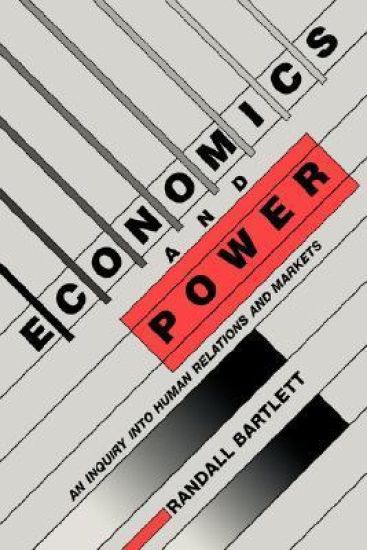
Economics and Power

Economics and Power

Randall Bartlett

Cambridge University Press
2006
pokkari
When a marketplace is considered in isolation, the implicit conclusion is that markets are a sufficient defence against the exercise of power. But market transactions do not occur in isolation: they are defined by rules, property rights, prior events and social values. This book widens the focus of traditional economic analysis to examine the ways in which people may affect each other within and around markets to give rise to real power. Using conventional neoclassical assumptions about human behaviour, the book begins by developing a workable concept of power, allowing for its presence in a variety of forms and degrees. It examines the conditions under which power would necessarily be absent from market transactions and those under which it would be possible. It considers the decision processes of potential exercisers and subjects of power to determine when the exercise and success of power would be rational.
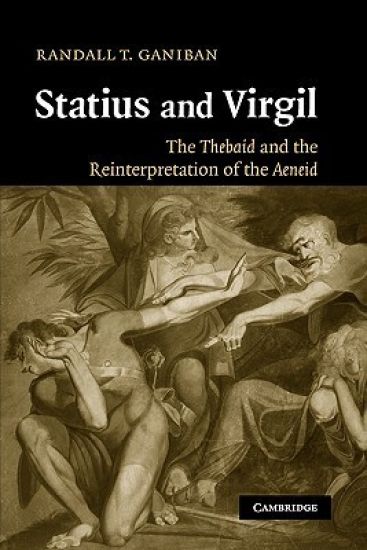
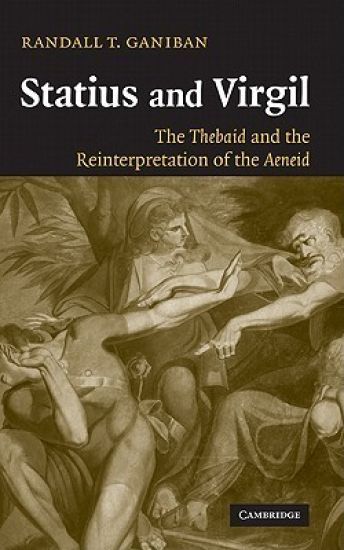
Statius and Virgil

Statius and Virgil

Randall T. Ganiban

Cambridge University Press
2010
pokkari
At the end of the Thebaid, Statius enjoins his epic 'not to compete with the divine Aeneid but rather to follow at a distance and always revere its footprints'. The nature of the Thebaid's interaction with the Aeneid is, however, a matter of debate. This 2007 book argues that the Thebaid reworks themes, scenes, and ideas from Virgil in order to show that the Aeneid's representation of monarchy is inadequate. It also demonstrates how the Thebaid's fascination with horror, spectacle, and unspeakable violence is tied to Statius' critique of the moral and political virtues at the heart of the Aeneid. Professor Ganiban offers both a way to interpret the Thebaid and a largely sequential reading of the poem.
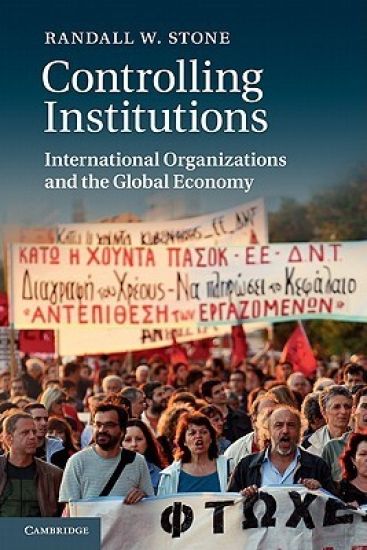
Controlling Institutions

Controlling Institutions

Randall W. Stone

Cambridge University Press
2011
pokkari
How is the United States able to control the IMF with only 17 per cent of the votes? How are the rules of the global economy made? This book shows how a combination of formal and informal rules explains how international organizations really work. Randall W. Stone argues that formal rules apply in ordinary times, while informal power allows leading states to exert control when the stakes are high. International organizations are therefore best understood as equilibrium outcomes that balance the power and interests of the leading state and the member countries. Presenting a new model of institutional design and comparing the IMF, WTO, and EU, Stone argues that institutional variations reflect the distribution of power and interests. He shows that US interests influence the size, terms, and enforcement of IMF programs, and new data, archival documents, and interviews reveal the shortcomings of IMF programs in Mexico, Russia, Korea, Indonesia, and Argentina.
Weberian Sociological Theory

Weberian Sociological Theory

Randall Collins

Cambridge University Press
1986
pokkari
Randall Collins convincingly argues that much of Max Weber’s work has been misunderstood, and that many of his most striking and sophisticated theories have been overlooked. By analysing hitherto little known aspects of Weber’s writings, Professor Collins is able both to offer a new interpretation of Weberian sociology and to show how the more fruitful lines of the Weberian approach can be projected to an analysis of current world issues. Professor Collins begins with Weber’s theory of the rise of capitalism, examining it in the light of Weber’s later writings on the subject and extending the Weberian line of reasoning to suggest a ‘Weberian revolution’ in both medieval Europe and China. He also offers a new interpretation of Weber’s theory of politics, showing it to be a ‘world-system’ model; and he expands this into a theory of geopolitics, using as a particular illustration the prediction of the future decline of Russian world power. Another ‘buried treasure’ in the corpus is Weber’s conflict theory of the family as sex and property, which Professor Collins applies to the historical question of the conditions that led to the initial rise in the status of women. The broad view of Weber’s works shows that Weberian sociology remains intellectually alive and that many of his theories still represent the frontier of our knowledge about large-scale social processes.
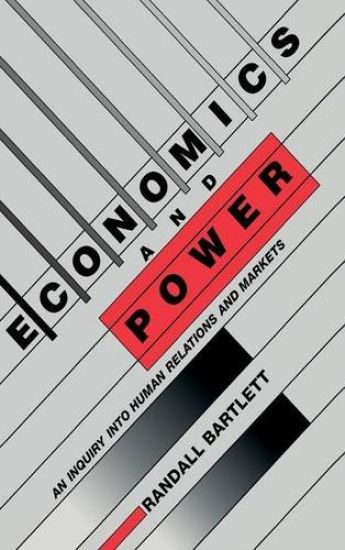
Economics and Power

Economics and Power

Randall Bartlett

Cambridge University Press
1989
sidottu
When a marketplace is considered in isolation, the implicit conclusion is that markets are a sufficient defence against the exercise of power. But market transactions do not occur in isolation: they are defined by rules, property rights, prior events and social values. This book widens the focus of traditional economic analysis to examine the ways in which people may affect each other within and around markets to give rise to real power. Using conventional neoclassical assumptions about human behaviour, the book begins by developing a workable concept of power, allowing for its presence in a variety of forms and degrees. It examines the conditions under which power would necessarily be absent from market transactions and those under which it would be possible. It considers the decision processes of potential exercisers and subjects of power to determine when the exercise and success of power would be rational.
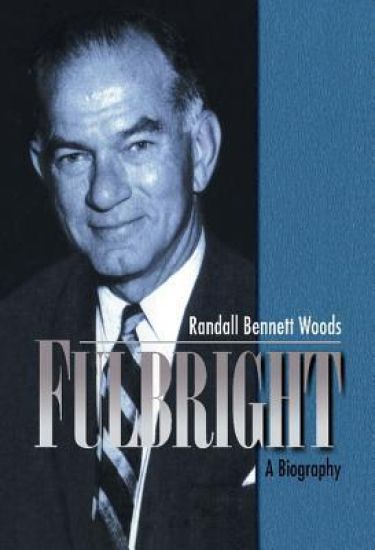
Fulbright

Fulbright

Randall Bennett Woods

Cambridge University Press
1995
sidottu
J. William Fulbright is the second most successful Oxford-educated politician to come from Arkansas. Author of the Fulbright-Connally resolution which committed the United States to participating in the U.N., and creator of the exchange program that bears his name, Fulbright was the longest serving and most powerful chair of the Senate Foreign Relations Committee. This volume describes the family dynamic, educational process, and environments - Arkansas, Oxford, Washington, D.C. - which produced this remarkable man. It delves into his complex attitude toward race and details Fulbright’s role in the civil rights movement. The narrative includes the major international events of the Cold War era - the Suez Crisis, the U-2 incident, the Bay of Pigs, the Missile Crisis, Vietnam, the ABM controversies, the Arab-Israeli conflict - and Fulbright’s role in them. Woods explains Fulbright’s shift from a champion of executive power in foreign affairs to a defender of congressional prerogatives.
Horn and Crescent

Horn and Crescent

Randall L. Pouwels

Cambridge University Press
2002
pokkari
In this first major historical study of Islam among the Swahili, Randall Pouwels shows how Islam and other aspects of coastal civilization have evolved since about AD 1000 as an organic whole. Coastal Africans, he argues, simply adopted Islam as the spiritual vehicle best suited to their expanding intellectual needs and to meeting the opportunities presented by their physical and cultural environment. The culture and religion that developed were strong, rich, supple, self-assured. yet capable of accommodating change where it was unavoidable or preferable. All these characteristics were put to the test in the nineteenth century, when coastal peoples were subjected to intense Arabizing and Westernizing influences. Pouwels demonstrates how local people went on asserting their own traditions while assimilating what they chose from both worlds. East African Muslims, therefore faced the twentieth century divided on issues of local cultural autonomy and the need to conform to external cultural pressures.
Quest for Identity

Quest for Identity

Randall Bennett Woods

Cambridge University Press
2005
pokkari
Quest for Identity is a survey of the American experience from the close of World War II, through the Cold War and 9/11, to the present. It helps students understand postwar American history through a seamless narrative punctuated with accessible analyses. Randall Woods addresses and explains the major themes that punctuate the period: the Cold War, the Civil Rights and Women's Rights movements, and other great changes that led to major realignments of American life. While political history is emphasized, Woods also discusses in equal measure cultural matters and socio-economic problems. Dramatic new patterns of immigration and migration characterized the period as much as the counterculture, the growth of television and the Internet, the interstate highway system, rock and roll, and the exploration of space. The pageantry, drama, irony, poignancy and humor of the American journey since World War II are all here.
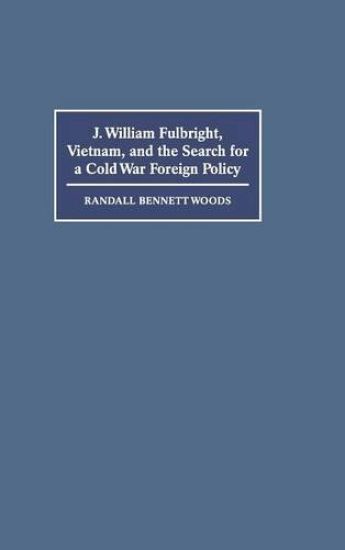
J. William Fulbright, Vietnam, and the Search for a Cold War Foreign Policy
J. William Fulbright was the longest serving and most powerful chair of the Senate Foreign Relations Committee. Both an intellectual and an internationalist, he had great influence over the course of American foreign relations in the 1960s and 1970s. Fulbright was also the most prominent, and the most effective, of the first American critics of the Vietnam War. His criticism was particularly galling and damning to Lyndon Johnson because Fulbright was a principled internationalist who could not be dismissed as an ideologue. Fulbright used hearings by the Foreign Relations Committee as a forum in which to advance his powerful critique of the war, and his writings constitute an ongoing, comprehensive critique of American foreign policy. This abridgement of Woods’ prize-winning biography of J. William Fulbright presents the full story of Fulbright’s role as one of the leading congressional opponents of the Vietnam War.
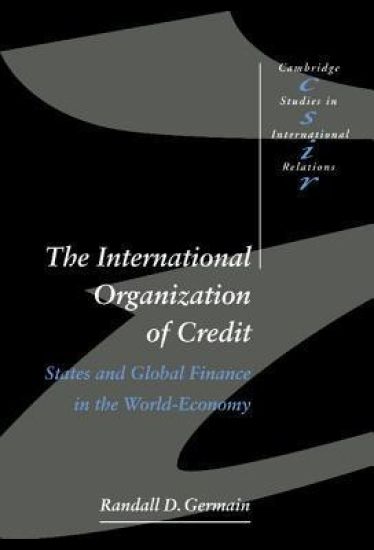
The International Organization of Credit

The International Organization of Credit

Randall D. Germain

Cambridge University Press
1997
sidottu
In this book, Randall Germain explores the international organization of credit in a changing world economy. At the centre of his analysis is the construction of successive international organisations of credit, built around principal financial centres (PFCs) and constituted by overlapping networks of credit institutions, mainly investment, commercial, and central banks. A critical historical approach to international political economy (IPE) allows Germain to stress both the multiple roles of finance within the world economy, and the centrality of financial practices and networks for the construction of monetary order. He argues that the private global credit system which replaced Bretton Woods is anchored unevenly across the world's three principal financial centres: New York, London, and Tokyo. This balance of power is irrevocably fragmented with respect to relations between states, and highly ambiguous in terms of how power is exercised between public authorities and private financial institutions.
The International Organization of Credit

The International Organization of Credit

Randall D. Germain

Cambridge University Press
1997
pokkari
In this book, Randall Germain explores the international organization of credit in a changing world economy. At the centre of his analysis is the construction of successive international organisations of credit, built around principal financial centres (PFCs) and constituted by overlapping networks of credit institutions, mainly investment, commercial, and central banks. A critical historical approach to international political economy (IPE) allows Germain to stress both the multiple roles of finance within the world economy, and the centrality of financial practices and networks for the construction of monetary order. He argues that the private global credit system which replaced Bretton Woods is anchored unevenly across the world's three principal financial centres: New York, London, and Tokyo. This balance of power is irrevocably fragmented with respect to relations between states, and highly ambiguous in terms of how power is exercised between public authorities and private financial institutions.
J. William Fulbright, Vietnam, and the Search for a Cold War Foreign Policy
J. William Fulbright was the longest serving and most powerful chair of the Senate Foreign Relations Committee. Both an intellectual and an internationalist, he had great influence over the course of American foreign relations in the 1960s and 1970s. Fulbright was also the most prominent, and the most effective, of the first American critics of the Vietnam War. His criticism was particularly galling and damning to Lyndon Johnson because Fulbright was a principled internationalist who could not be dismissed as an ideologue. Fulbright used hearings by the Foreign Relations Committee as a forum in which to advance his powerful critique of the war, and his writings constitute an ongoing, comprehensive critique of American foreign policy. This abridgement of Woods' prize-winning biography of J. William Fulbright presents the full story of Fulbright's role as one of the leading congressional opponents of the Vietnam War.
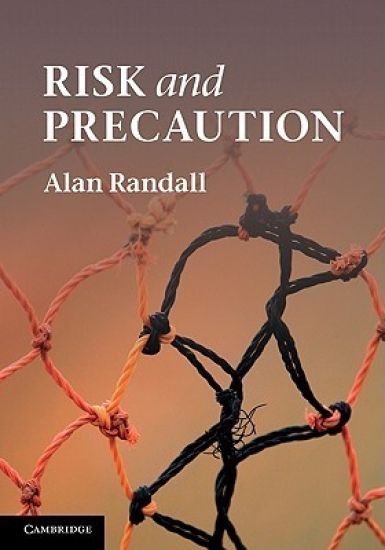
Risk and Precaution

Risk and Precaution

Randall Alan

Cambridge University Press
2011
sidottu
The precautionary principle has been labeled simplistic and the rational approach to decision-making under risk was modeled on well-specified games of chance. How then are we to manage the risks, uncertainties, and 'unknown unknowns' of the real world? In this book, Alan Randall unravels the key controversies surrounding the precautionary principle and develops a new framework that can be taken seriously in policy and management circles. Respecting the complexity of the real world, he defines a justifiable role for the precautionary principle in a risk management framework that integrates precaution with elements of the standard risk management model. This is explained using examples from medicine, pharmacy, synthetic chemicals, nanotechnology, the environment and natural resources conservation. This carefully reasoned but highly accessible book will appeal to readers from a broad range of disciplines, including environmental policy, risk management and cost-benefit analysis.
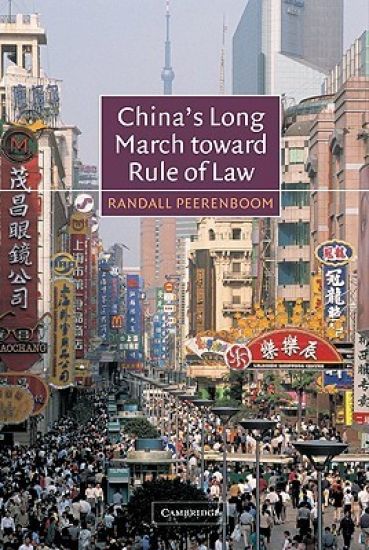
China's Long March toward Rule of Law

China's Long March toward Rule of Law

Randall Peerenboom

Cambridge University Press
2002
sidottu
China has enjoyed considerable economic growth in recent years in spite of an immature, albeit rapidly developing, legal system, a system whose nature, evolution and path of development have been poorly understood by scholars. Drawing on his legal and business experience in China as well as his academic background in the field, Peerenboom provides a detailed analysis of China's legal reforms. He argues that China is in transition from rule by law to a version of rule of law, though most likely not a liberal democratic version as found in economically advanced countries in the West. Maintaining that law plays a key role in China's economic growth, Peerenboom assesses reform proposals and makes his own recommendations. In addition to students and scholars of Chinese law, political science, sociology and economics, this will interest business professionals, policy advisors, and governmental and non-governmental agencies as well as comparative legal scholars and philosophers.
Statius and Virgil

Statius and Virgil

Randall T. Ganiban

Cambridge University Press
2007
sidottu
At the end of the Thebaid, Statius enjoins his epic 'not to compete with the divine Aeneid but rather to follow at a distance and always revere its footprints'. The nature of the Thebaid's interaction with the Aeneid is, however, a matter of debate. This 2007 book argues that the Thebaid reworks themes, scenes, and ideas from Virgil in order to show that the Aeneid's representation of monarchy is inadequate. It also demonstrates how the Thebaid's fascination with horror, spectacle, and unspeakable violence is tied to Statius' critique of the moral and political virtues at the heart of the Aeneid. Professor Ganiban offers both a way to interpret the Thebaid and a largely sequential reading of the poem.
Quest for Identity

Quest for Identity

Randall Bennett Woods

Cambridge University Press
2005
sidottu
Quest for Identity is a survey of the American experience from the close of World War II, through the Cold War and 9/11, to the present. It helps students understand postwar American history through a seamless narrative punctuated with accessible analyses. Randall Woods addresses and explains the major themes that punctuate the period: the Cold War, the Civil Rights and Women's Rights movements, and other great changes that led to major realignments of American life. While political history is emphasized, Woods also discusses in equal measure cultural matters and socio-economic problems. Dramatic new patterns of immigration and migration characterized the period as much as the counterculture, the growth of television and the Internet, the interstate highway system, rock and roll, and the exploration of space. The pageantry, drama, irony, poignancy and humor of the American journey since World War II are all here.
European Legal History

European Legal History

Randall Lesaffer

Cambridge University Press
2009
sidottu
The rediscovery of Roman law and the emergence of classical canon law around AD 1100 marked the beginnings of the civil law tradition in Europe. Between the twelfth and eighteenth centuries, a highly sophisticated legal science of a truly European dimension was developed. Since then the different European States have developed their own national legal systems, but with the exception of England and Ireland they are all heirs to this tradition of the ius commune. This historical introduction to the civil law tradition, from its original Roman roots to the present day, considers the political and cultural context of Europe's legal history. Political, diplomatic and constitutional developments are discussed, and the impacts of major cultural movements, such as scholasticism, humanism, the Enlightenment and Romanticism, on law and jurisprudence are highlighted. This contextual approach makes for a fascinating story, accessible to any reader regardless of legal or historical background.
How to

How to

Randall Munroe

Riverhead Books
2019
sidottu
AN INSTANT #1 NEW YORK TIMES BESTSELLER "How To will make you laugh as you learn...With How To, you can't help but appreciate the glorious complexity of our universe and the amazing breadth of humanity's effort to comprehend it. If you want some lightweight edification, you won't go wrong with How To." --CNET " How To] has science and jokes in it, so 10/10 can recommend." --Simone Giertz The world's most entertaining and useless self-help guide from the brilliant mind behind the wildly popular webcomic xkcd and the bestsellers What If? and Thing Explainer For any task you might want to do, there's a right way, a wrong way, and a way so monumentally complex, excessive, and inadvisable that no one would ever try it. How To is a guide to the third kind of approach. It's full of highly impractical advice for everything from landing a plane to digging a hole. Bestselling author and cartoonist Randall Munroe explains how to predict the weather by analyzing the pixels of your Facebook photos. He teaches you how to tell if you're a baby boomer or a 90's kid by measuring the radioactivity of your teeth. He offers tips for taking a selfie with a telescope, crossing a river by boiling it, and powering your house by destroying the fabric of space-time. And if you want to get rid of the book once you're done with it, he walks you through your options for proper disposal, including dissolving it in the ocean, converting it to a vapor, using tectonic plates to subduct it into the Earth's mantle, or launching it into the Sun. By exploring the most complicated ways to do simple tasks, Munroe doesn't just make things difficult for himself and his readers. As he did so brilliantly in What If?, Munroe invites us to explore the most absurd reaches of the possible. Full of clever infographics and fun illustrations, How To is a delightfully mind-bending way to better understand the science and technology underlying the things we do every day.