Kirjojen hintavertailu. Mukana 12 016 292 kirjaa ja 12 kauppaa.

Kirjahaku

Etsi kirjoja tekijän nimen, kirjan nimen tai ISBN:n perusteella.

1000 tulosta hakusanalla Rashed Hasan Faap

Rashid-al-Din Hamadani

Rashid-al-Din Hamadani

VDM Publishing House
2010
nidottu
Observera att förlaget som ger ut denna produkt baserar innehållet i sina produkter på fria källor som Wikipedia. Boken är med stor sannolikhet endast ett utdrag ur dessa informationskällor, alltså inte en vanlig bok i den bemärkelsen.
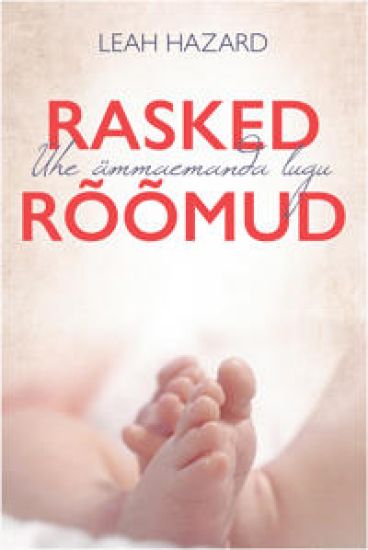
Rasked rõõmud

Rasked rõõmud

Pegasus Kirjastus
2020
nidottu
Rääkisin isale naistest, kes hiljaaegu läbi triaazhiuste olid käinud: esmasünnitajatest, kelle näkku oli kirjutatud sünnitusvalude õudus, naisest, kes kõndis rahulikult vastuvõtulaua juurde, beebi peakumerus läbi pükste paistmas. Rääkisin isale kergetest ja rõõmsatest sünnitustest ning pikkadest piinarikastest sünnitustest, mis minuga päevi kaasas käisid, mu selg nagisemas ja puusadel sinikad."Tõesti," vastas isa. "Inimesed peavad neist naistest teada saama ja peavad teadma, mida teevad ämmaemandad. See on - see on ju imeline."Ämmaemandad on meile toeks kõige keerulisematel, ent erakordselt väekatel ja tähtsatel eluhetkedel. Nad teevad palju rohkem, kui lihtsalt püüavad beebisid kinni. Nii südantlõhestav lein kui ka puhas rõõm vastsündinud lapsest - ämmaemand on näinud kõike. Elu sünnitusosakonna koridorides ja palatites on aga palju ekstreemsem, kui oskate iial ette kujutada.Selles erakordses armastuskirjas emadele ja kolleegidele kõikjal jagab ämmaemand Leah Hazard kogemusi, mis on liigutavad ja täis kaastunnet, ettearvamatud ja humoorikad, ning näitab ilmekalt, et ämmaemandate maailm on palju kummalisem ja meeltlahutavam kui väljamõeldud lood."Kaunilt kirjutatud ja väga isiklik portree erakordsest tööst, mida ämmaemandad iga jumala päev korda saadavad." - Caroline Elton, raamatu "Also Human: the Inner Life of Doctors" autor
A Rushed Quality

A Rushed Quality

David Odell

Punctum Books
2015
pokkari
These fragments collected here (in 2 books, "A Rushed Quality" and "Bodying Forth") belong neither to philosophy nor to poetry - and yet they are for the most part focused on a substantial area of overlap between these two venerable disciplines, vis- -vis the question, "What is it like to be X?" Philosophers like to fill in the X with something exotic like a bat or a dolphin, or even an Artificial Intelligence, while poets tend to fill it with something else, equally exotic, namely themselves. For the diffident and introspective author of A Rushed Quality and Bodying Forth, the X, while definitely human, is perhaps someone in general, equally distant from and equally intimate with both the writer and the reader in the very moment of their eponymous activity.The start of it all was the perception of what was called the "rushed quality," as something persistent and bothersome and of which there was no question of its ever being shed. Rather than evaded or denied, it was welcomed because it seemed for the first time since childhood to mark a structural occurrence presenting a new metaphysical datum. As it happened, this quality proved very elusive in its mature bothersomeness and the inquiry into it soon turned into a sort of quasi-theoretical fascination, which took as its main theme the fate of pure subjectivity - the utterly unfunctional, utterly useless, utterly dispensible feeling of being. The rushed quality is perhaps merely the sense of it draining away, or its long-sustained decrescendo.Leaving the cinema this afternoon after attending a matinee with my children, we drove along a diagonal road straight towards the sun that had emerged from clouds low in the sky. The road was wet and the reflection was such that the entire length before us was a blindingly bright path of white light. Cars ahead of us shimmered and melted in silhouette, seeming to float gently in that no longer retinal space. It was sufficiently unusual to be remembered - not so much portentous in itself as a pointer to some other submerged possibility, another pointing, another pointing indefinitely. How do I begin saying the truth without changing anything, without any sort of position or imposture of knowledge? Everything already said is to be abandoned, yet one does not entrust to the moment but to that which lies far below it.There are a number of ideas that run through many of the fragments, motivating beliefs of the writer, such as the inexhaustability and ungraspability of the moment, the existence of a direct connection to reality which is betrayed in every attempt to formulate it, and a skepticism about the bad infinities latent in the natural attitude. And of course there is a continued dialogue with various more or less identifiable thinkers and positions. But again, this is not philosophy, the arguments are virtual, and the stakes are something entirely different. Each of these pieces emerged in a renewed relation to the blank page. It is hoped that for the reader, apart from any resonances they may set in motion, they retain some of the qualities of silence, expectation, and impossibility that gave birth to them.David Odell was born in Melbourne, Australia in 1951. He has a PhD in Mathematics and graduate degree in Literary Studies. He currently works as a statistician for an insurance-related technology company, providing an entirely fictive relationship to Wallace Stevens, Franz Kafka, and Charles Ives.
Al Rashid Mosque

Al Rashid Mosque

Earle H. Waugh

University of Alberta Press
2018
pokkari
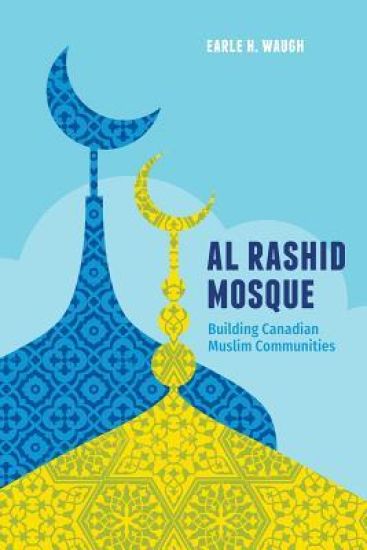
Forty years ago, as a young scholar in Islamic Studies at the University of Alberta, Al Rashid's Muslims welcomed my queries, tolerated my ignorance, and joyfully opened their homes and their hearts. Edmonton's Al Rashid Mosque has played a key role in Islam's Canadian development. Founded by Muslims from Lebanon, it has grown into a vibrant community fully integrated into Canada's cultural mosaic. The mosque continues to be a concrete expression of social good, a symbol of a proud Muslim-Canadian identity. Al Rashid Mosque provides a welcome introduction to the ethics and values of homegrown Muslims. The book traces the mosque's role in education and community leadership, and celebrates the numerous contributions of Muslim Canadians in Edmonton and across Canada. Written to mark the 75th anniversary of the mosque's opening in 1938, Al Rashid Mosque is a timely and important volume of Islamic and Canadian history.
Al Rashid Mosque

Al Rashid Mosque

Earle H. Waugh

University of Alberta Press (CA)
2018
sidottu
Al Rashid Mosque, Canada’s first and one of the earliest in North America, was erected in Edmonton in the depth of the Depression of the 1930s. Over time, the story of this first mosque, which served as a magnet for more Lebanese Muslim immigrants to Edmonton, was woven into the folklore of the local community. —Baha Abu-Laban, Foreword Edmonton’s Al Rashid Mosque has played a key role in Islam’s Canadian development. Founded by Muslims from Lebanon, it has grown into a vibrant community fully integrated into Canada’s cultural mosaic. The mosque continues to be a concrete expression of social good, a symbol of a proud Muslim Canadian identity. Al Rashid Mosque provides a welcome introduction to the ethics and values of homegrown Muslims. The book traces the mosque’s role in education and community leadership and celebrates the numerous contributions of Muslim Canadians in Edmonton and across Canada. Al Rashid Mosque is a timely and important volume of Islamic and Canadian history. "Forty years ago, as a young scholar in Islamic Studies at the University of Alberta, Al Rashid’s Muslims welcomed my queries, tolerated my ignorance, and joyfully opened their homes and their hearts." —Earle H. Waugh Earle H. Waugh has studied Islam in Canada and the Middle East for most of his adult life. He is Professor Emeritus at the University of Alberta and a senior scholar in the areas of religious studies, health and culture, and Indigenous language maintenance.
Battle of Malibu (in Three Parts) 1795: Part One, See Battle. Little Red Corvette.: Umar Rashid 1,000 Piece Puzzle
Did the Battle of Malibu actually happen? Probably not. Ok, definitely not. But also maybe it did? LA based artist Umar Rashid has given the question a lot of thought and decided that it would be cool if it had happened so for all intents and purposes it did. And if the Chumash, Tongva, Gabrielino, and other indigenous LA types had in fact gone on to fight the Spanish, armed with a little red Corvette driven by Black Jesus, then, well, we'd have liked to see that. So here it is. It happened. Included in the puzzle is an interview with Umar Rashid along with additional images of his most recent work. Product Information: * 1,000 piece puzzle * Four page color insert included in box * Completed puzzle size: 26.5x19.25 in (67.30x48.90 cm) * Box size: 10x8x2in (25x20x5cm) * Designed in Brooklyn, NY Printed, assembled, and packed in the USA. * Made with 100% recyclable materials
Al Rashid

Al Rashid

VDM Publishing House
2010
nidottu
Observera att förlaget som ger ut denna produkt baserar innehållet i sina produkter på fria källor som Wikipedia. Boken är med stor sannolikhet endast ett utdrag ur dessa informationskällor, alltså inte en vanlig bok i den bemärkelsen.
Zainal Rashid III of Kedah

Zainal Rashid III of Kedah

VDM Publishing House
2010
nidottu
Observera att förlaget som ger ut denna produkt baserar innehållet i sina produkter på fria källor som Wikipedia. Boken är med stor sannolikhet endast ett utdrag ur dessa informationskällor, alltså inte en vanlig bok i den bemärkelsen.
Oday Rasheed

Oday Rasheed

VDM Publishing House
2010
nidottu
Observera att förlaget som ger ut denna produkt baserar innehållet i sina produkter på fria källor som Wikipedia. Boken är med stor sannolikhet endast ett utdrag ur dessa informationskällor, alltså inte en vanlig bok i den bemärkelsen.
Saeed Rashid

Saeed Rashid

VDM Publishing House
2010
nidottu
Observera att förlaget som ger ut denna produkt baserar innehållet i sina produkter på fria källor som Wikipedia. Boken är med stor sannolikhet endast ett utdrag ur dessa informationskällor, alltså inte en vanlig bok i den bemärkelsen.
The World Rushed in

The World Rushed in

J. S. Holliday

University of Oklahoma Press
2002
nidottu
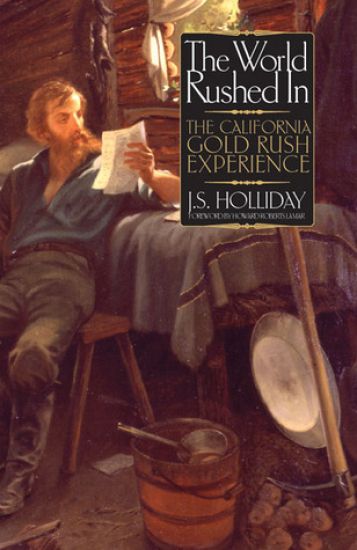
When The World Rushed In was first published in 1981, the Washington Post predicted, ""It seems unlikely that anyone will write a more comprehensive book about the Gold Rush."" Twenty years later, no one has emerged to contradict that judgment, and the book has gained recognition as a classic. As the San Francisco Examiner noted, ""It is not often that a work of history can be said to supplant every book on the same subject that has gone before it.""Through the diary and letters of William Swain--augmented by interpolations from more than five hundred other gold seekers and by letters sent to Swain from his wife and brother back home--the complete cycle of the gold rush is recreated: the overland migration of over thirty thousand men, the struggle to ""strike it rich"" in the mining camps of the Sierra Nevadas, and the return home through the jungles of the Isthmus of Panama. In a new preface, the author reappraises our continuing fascination with the ""gold rush experience"" as a defining epoch in western--indeed, American--history.
Harun al-Rashid & The World Of 1001 Nights
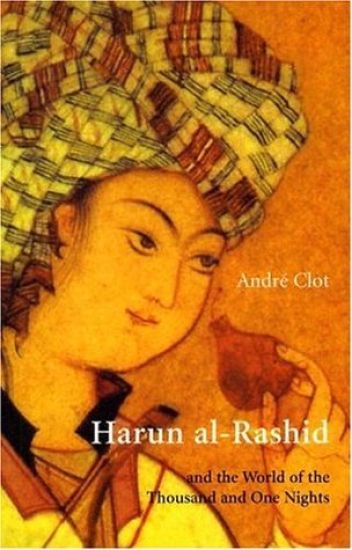
Harun al-Rashid, the legendary caliph portrayed in The Thousand and One Nights, was the son of a Yemenite slave who cleared Harun's path to power, very probably by poisoning her eldest son. Harun reigned for a quarter of a century, his empire spreading over south-west Asia and into north Africa. He waged war on the Byzantine Empire, and dealt ruthlessly with the religious and social insurrections which threatened his kingdom, executing almost the entire Barmakid family when they threatened to become too powerful. As well as being a ruthless soldier and politician Harun was also a great patron of the arts, and highly esteemed by Charlemagne. He turned Baghdad into a brilliant centre of culture and learning, which witnessed unprecedented economic development, its merchants and navigators carrying the caliph's renown to the farthest corners of the known world. Surrounded by his wives, concubines, musicians and learned men in his palace in Baghdad, 'Harun the Good' remains a potent symbol of the fabled Orient. In this remarkable account Andre Clot explores the man behind the legend, revealing his development as a ruler of an empire that was shaken to the core by religious and social revolt.
Harun al-Rashid and the World of The Thousand and One Nights
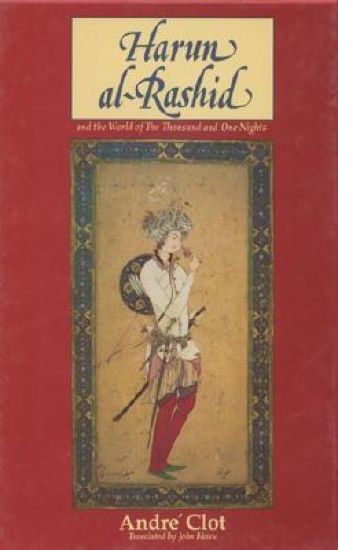
A symbol of the fabled Orient, Harun al Rashid, the caliph portrayed in The Thousand and One Nights, where we see him living grandly his palace in Baghdad, surrounded by his wives, his concubines, musicians, and learned men, is not merely a figure of legend. He was the son of a Yemenite slave who cleared his path to power, very probably by poisoning the reigning caliph, her older son. Harun reigned for a quarter-century, and was the most famous caliph of the Abbasid dynasty. Through Arab chronicles, the author corrects our vision of Harun the Good', and gives a remarkable account of his development as a ruler. Though in Western countries he is remembered for the presents he sent to Charlemagne–notably the famous elephant, Abul Abbas–he was first and foremost a successful soldier who made war on the Byzantines. His empire was shaken by religious and social insurrections, and he did not shrink from annihilating the Barmecides, a powerful family whose wealth and influence he finally found unbearable. As a patron of pets and intellectuals, Harun contributed greatly to the cultural supremacy of Baghdad, whose merchants and navigators spread the name of the caliph throughout the world.
Harun al-Rashid: The Life and Legacy of the Abbasid Caliph during the Islamic Golden Age
*Includes pictures*Includes medieval accounts*Includes online resources and a bibliography for further readingLike many historical figures, Harun al-Rashid's biography has become part reality and part myth. A real individual and the fourth caliph of the Abbasid Caliphate, Harun al-Rashid is best known to many individuals because of his role in famous literature like One Thousand and One Nights, not necessarily because of his policy decisions. This is unusual because Harun al-Rashid was perhaps the most influential of the Abbasid caliphs due to his role in bringing economic prosperity, destroying one of the most powerful Islamic families of the 9th century CE, and ending the Abbasid Dynasty for good.The reputation of Harun al-Rashid is a controversial one over 1,000 years later. Although historians are often loathe to admit it, they understand that history, like other social and cultural subjects, is subject to the opinions and influences of the society in which it was written, and for centuries, numerous cultures in the Western world (primarily Europe, Australasia, North America, and sometimes Latin and South America) insisted that Islamic societies could not possess the intellectual progress and discourse Western society attributed to itself. According to Amira Bennison, "It was a commonplace of the European imperial age that the Islamic world was intellectually backward and that Muslims not only could not have produced the Enlightenment and Industrial Evolution but also required European tutelage." In short, European intellectuals believed Muslims, due to their religious, cultural, and ethnic backgrounds, lacked the capacity to be progressive - as determined by European standards - and were thus intellectually and culturally backwards.This interpretation of Islamic culture and society transcended intellectual barriers and seeped into the history and literature produced by scholars of the Western world, and in time, Harun al-Rashid became the figure through which the Western world applied its ideas of Arabian culture, Islam, and the power of the caliphates. The difficulty for historians and modern audiences, then, is trying to determine what about Harun al-Rashid is fact and what is fiction, produced over time by biased sources or legends. By the 21st century, much of the historical information about him has been distorted by folk tales and the exaggerations of medieval historians of all religions and walks of life. Even with numerous pop culture appearances, the actual history of the Abbasid caliph is difficult to determine because of the wealth of misinformation throughout Eastern and Western media alike. When Harun al-Rashid died in the early 9th century, the Abbasid Caliphate fell into civil war. Harun al-Rashid had chosen his son al-Amin to be the new caliph, but his other son, al-Ma'mun, had similar ambitions. Al-Ma'mun would receive the support of some of the noble families and make a claim for the throne, and after a two-year siege of the capital in Baghdad, al-Amin perished and al-Ma'mun took the throne in 813. He ruled for the following 20 years in relative peace though he was forced to put down local rebellions spurred by the Byzantines. Al-Ma'mun, to repay his allies, would create an autonomous Khorasan region in northeast Persia filled with Persian noble families. While scholars can still debate his legacy, none can argue that while Harun al-Rashid did not politically advance the Abbasid Caliphate and may actually be blamed for its eventual destruction, his emphasis on arts and culture brought the caliphate into the Islamic Golden Age and created the romanticized image of the Arab ruler in folk tales throughout Eastern and Western cultures.
Harun al-Rashid: The Life and Legacy of the Abbasid Caliph during the Islamic Golden Age
*Includes pictures*Includes medieval accounts*Includes online resources and a bibliography for further readingLike many historical figures, Harun al-Rashid's biography has become part reality and part myth. A real individual and the fourth caliph of the Abbasid Caliphate, Harun al-Rashid is best known to many individuals because of his role in famous literature like One Thousand and One Nights, not necessarily because of his policy decisions. This is unusual because Harun al-Rashid was perhaps the most influential of the Abbasid caliphs due to his role in bringing economic prosperity, destroying one of the most powerful Islamic families of the 9th century CE, and ending the Abbasid Dynasty for good.The reputation of Harun al-Rashid is a controversial one over 1,000 years later. Although historians are often loathe to admit it, they understand that history, like other social and cultural subjects, is subject to the opinions and influences of the society in which it was written, and for centuries, numerous cultures in the Western world (primarily Europe, Australasia, North America, and sometimes Latin and South America) insisted that Islamic societies could not possess the intellectual progress and discourse Western society attributed to itself. According to Amira Bennison, "It was a commonplace of the European imperial age that the Islamic world was intellectually backward and that Muslims not only could not have produced the Enlightenment and Industrial Evolution but also required European tutelage." In short, European intellectuals believed Muslims, due to their religious, cultural, and ethnic backgrounds, lacked the capacity to be progressive - as determined by European standards - and were thus intellectually and culturally backwards.This interpretation of Islamic culture and society transcended intellectual barriers and seeped into the history and literature produced by scholars of the Western world, and in time, Harun al-Rashid became the figure through which the Western world applied its ideas of Arabian culture, Islam, and the power of the caliphates. The difficulty for historians and modern audiences, then, is trying to determine what about Harun al-Rashid is fact and what is fiction, produced over time by biased sources or legends. By the 21st century, much of the historical information about him has been distorted by folk tales and the exaggerations of medieval historians of all religions and walks of life. Even with numerous pop culture appearances, the actual history of the Abbasid caliph is difficult to determine because of the wealth of misinformation throughout Eastern and Western media alike. When Harun al-Rashid died in the early 9th century, the Abbasid Caliphate fell into civil war. Harun al-Rashid had chosen his son al-Amin to be the new caliph, but his other son, al-Ma'mun, had similar ambitions. Al-Ma'mun would receive the support of some of the noble families and make a claim for the throne, and after a two-year siege of the capital in Baghdad, al-Amin perished and al-Ma'mun took the throne in 813. He ruled for the following 20 years in relative peace though he was forced to put down local rebellions spurred by the Byzantines. Al-Ma'mun, to repay his allies, would create an autonomous Khorasan region in northeast Persia filled with Persian noble families. While scholars can still debate his legacy, none can argue that while Harun al-Rashid did not politically advance the Abbasid Caliphate and may actually be blamed for its eventual destruction, his emphasis on arts and culture brought the caliphate into the Islamic Golden Age and created the romanticized image of the Arab ruler in folk tales throughout Eastern and Western cultures.
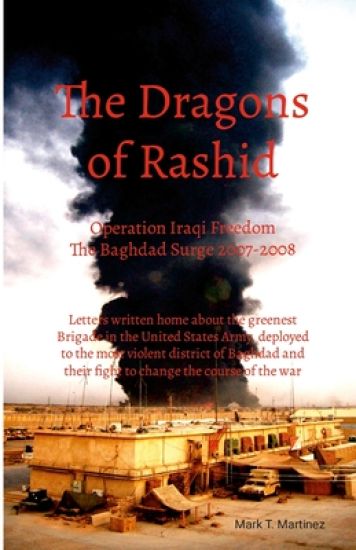
Dragons of Rashid

Dragons of Rashid

Mark T Martinez

Lulu.com
2023
pokkari
"Operation Iraqi Freedom." Letters written home about the greenest Brigade in the United States Army, deployed to the most violent district of Baghdad, and their fight to change the course of the war. In February of 2007, the 4th Brigade (Dragon Brigade) of the 1st Infantry Division was deployed to Baghdad, Iraq as part of the five U.S. "Surge" Brigades. The Dragon Brigade was assigned to the most violent sector of Baghdad known as the Rashid (Rasheed) District, a 68 square mile sector in Southern Baghdad. When the Dragon Brigade returned home after 15 months in combat, the ultimate cost of securing Rashid and re-establishing prosperity was 102 Soldiers KIA and over 700 WIA. This book and these letters written home are a testament to their sacrifices. God Bless everyone of them.
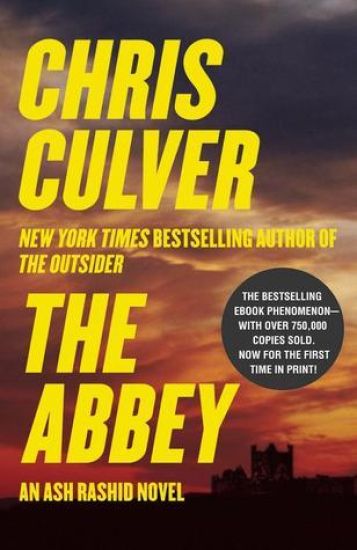
The Abbey: An Ash Rashid Novel

The Abbey: An Ash Rashid Novel

Chris Culver

Grand Central Publishing
2013
nidottu
In this New York Times bestseller with over 1M copies sold, a Muslim detective struggling with sobriety and the violence of his job on the Indianapolis force must solve the murder of his teenage niece. Ash Rashid is a former homicide detective who can't stand the thought of handling another death investigation. In another year, he'll be out of the Indianapolis Metropolitan Police Department completely. That's the plan, at least, until his niece's body is found in the guest home of one of his city's most wealthy citizens. The coroner calls it an overdose, but the case doesn't add up. Against orders, Ash launches an investigation to find his niece's murderer, but the longer he searches, the more entangled he becomes in a case that hits increasingly close to home. If he doesn't solve it fast, his niece won't be the only family member he has to bury.