Fuses historical and psychoanalytic perspectives to offer a provocative and original analysis of Elizabeth Bowen's fictionThe first major analysis of Elizabeth Bowen's fiction to appear since 2004Substantial, in-depth and distinctive interpretation of her novels and short storiesLiterary analysis informed by biographical, cultural and political contextualisationThis book provides a new account of Bowen's fiction that highlights in particular the force and originality of Bowen's virtually psychoanalytic thinking about development, sexuality and gender. Focusing on the relationship between Bowen's work and the socio-political matrix from which it emerges, Coulson presents a pyschoanalytic literary interpretation informed by biographical, cultural and political contextualisation.
This book provides a new account of Bowen's fiction that highlights in particular the force and originality of Bowen's virtually psychoanalytic thinking about development, sexuality and gender. Focusing on the relationship between Bowen's work and the socio-political matrix from which it emerges, Coulson presents a psychoanalytic literary interpretation informed by biographical, cultural and political contextualisation.
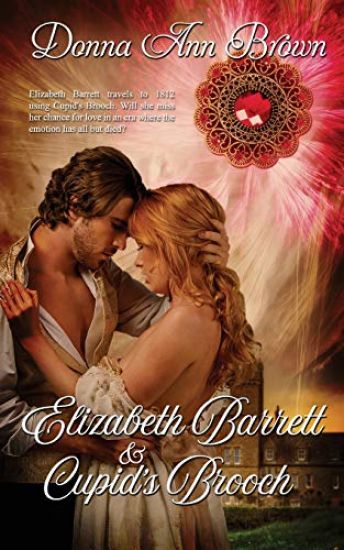
Legend has it Cupid's Brooch sends you to your one true love... Actress Liz Barrett, adored by millions, wields Cupid's Brooch and trades places with Miss Elizabeth Barrett of 1812, a young lady without connections who fears having no choice in whom she must marry. Either Liz's rabid fans have made up this crazy story, while Elizabeth suffers what is surely purgatory, or they've traded places in time and perhaps even fallen into the arms of their one true love. But what will Lord Whittington and Dr. Demfry do if fate is determined to switch them back?
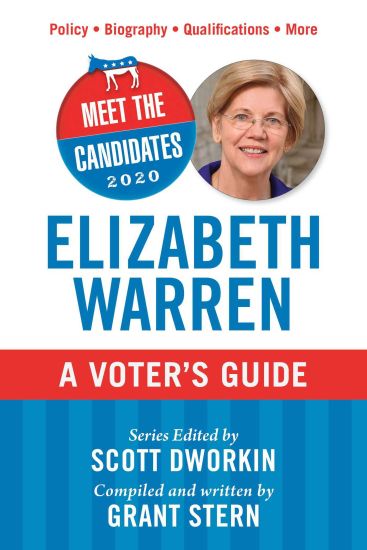
She has a plan Get informed about the policies of Massachusetts Senator turned presidential candidate Elizabeth Warren. This concise guide will help you decide quickly if Warren deserves your vote for the Democratic nomination and to take on Donald Trump. Warren's strong economic background sets her apart; the senator from Massachusetts defines herself as a capitalist first and seeks to make capitalism more equitable for all. She has already proposed sweeping anti-corruption reforms, refused PAC donations to her campaign, rolled out plans for college debt forgiveness and a tax on the super wealthy. Her background as a Harvard economist, author of The Two-Income Trap, and experience as an economic advisor to Barack Obama positions her well to make change happen. Warren's campaign also features popular Democratic talking points--rebuilding the middle class, ending corruption in Washington, making voting laws more democratic, bringing our troops home and stopping endless war--but it's her experience that sets her apart. From working the campaign trial for Hillary Clinton to weathering President Trump's refrain of "Pocahontas" in reference to her claimed Native American heritage, Meet the Candidates 2020: Elizabeth Warren: A Voter's Guide is your complete handbook to Elizabeth Warren's resum , campaign, and what America would look like if she won the presidency in 2020. The Meet the Candidates 2020 series is the informed voter's guide to making a decision in the 2020 Democratic primary and presidential election. Each book gives an unbiased, political insider's analysis of each contender, featuring: candidate interviews; an introduction by campaign advisor, Democratic Coalition co-founder, and Dworkin Report host Scott Dworkin; and compilation and writing by Occupy Democrats Editor at Large Grant Stern. In two hours of reading, you'll understand their defining characteristics, credentials, campaign issues, challenges, presidential chances, and everything else you need to know to decide who should challenge Donald Trump. Whether it's for Elizabeth Warren, Joe Biden, Bernie Sanders, Kamala Harris, Julian Castro, Cory Booker, or another, Meet the Candidates is what you need to make an informed vote for president in 2020.
What if Fitzwilliam Darcy refused to approach Elizabeth Bennet when he observes her upon the grounds of Pemberley? What if Elizabeth permits Mr. Darcy to think her the one ruined by Mr. Wickham? What if love is not enough to bring two souls together?FITZWILLIAM DARCY's pride makes the natural leap to ELIZABETH BENNET's ruination when the lady appears, without notice, upon Pemberley's threshold to plead for Darcy's assistance in locating his long-time enemy, George Wickham. Initially, Darcy cannot look beyond the pain of lost hopes, but when Charles Bingley demands that Darcy act with honor, Darcy assumes the task. Even so, the idea of delivering Miss Elizabeth into the hand of Mr. Wickham leaves Darcy raw with anguish. Yet, Darcy loves Elizabeth Bennet too much to see her brought low. He sets his heartbreak aside to save the woman he loves, but it is not long before Darcy realizes Elizabeth practices a deception, one Darcy permits so he might remain at her side long enough to convince the lady only in each other can they find happiness. Their adventure takes more twists and turns than does the original "Pride and Prejudice," but the reader will enjoy the devotion displayed by Darcy and Elizabeth as they bring Wickham to the line in Lydia Bennnet's defense, as well as their working their way through multiple misconstructions and vulnerabilities. Darcy's final wooing of Elizabeth brings two very private individuals to a very public declaration of their love.
The Last Man in the World She Wishes to Marry is the One Man Who Owns Her Heart ELIZABETH BENNET adamantly refused Fitzwilliam Darcy's proposal, but when Maria Lucas discovers the letter Darcy offers Elizabeth in explanation of his actions, Elizabeth must swallow her objections in order to save her reputation. She follows Darcy to London and pleads for the gentleman to renew his proposal. Yet, even as she does so, Elizabeth knows not what she fears most: being Mr. Darcy's wife or the revenge he might consider for her earlier rebuke. FITZWILLIAM DARCY would prefer that Elizabeth Bennet held him in affection, but he reasons that even if she does not, having Elizabeth at his side is far better than claiming another to wife. However, when a case of mistaken identity causes Darcy not to show at his wedding ceremony, he finds himself in a desperate search for his wayward bride-to-be. Elizabeth, realizing Society will label her as "undesirable" after being abandoned at the altar, sets out on an adventure to mark her future days as the spinster aunt to her sisters' children. However, Darcy means to locate her and to convince Elizabeth that his affections are true, and a second chance will prove him the "song that sets her heart strumming." "Jeffers' books are like a fine banquet in a tasteful location, warmly detailed ambiance, several courses, freshly prepared and appealingly presented, each taste to be savored; each course, complimented, an experience to remember purely for its contents, relished even as, perhaps more as, a single diner." - BCM
Readers will learn about the queen's early years, how her father surprisingly became king, and why she had to take the crown at the young age of 25. This title is complete with simple text, a timeline, and great photographs of Queen Elizabeth from childhood to present times. Aligned to Common Core Standards and correlated to state standards. Abdo Kids Jumbo is an imprint of Abdo Kids, a division of ABDO.
Sylvia's Lovers (1863) is a novel written by Elizabeth Gaskell, which she called "the saddest story I ever wrote".The novel begins in the 1790s in the coastal town of Monkshaven (modeled on Whitby, England) 1] against the background of the practice of impressment during the early phases of the Napoleonic Wars. Sylvia Robson lives happily with her parents on a farm, and is passionately loved by her rather dull Quaker cousin Philip. She, however, meets and falls in love with Charlie Kinraid, a dashing sailor on a whaling vessel, and they become secretly engaged. When Kinraid goes back to his ship, he is forcibly enlisted in the Royal Navy by a press gang, a scene witnessed by Philip. Philip does not tell Sylvia of the incident nor relay to her Charlie's parting message and, believing her lover is dead, Sylvia eventually marries her cousin. This act is primarily prompted out of gratefulness for Philip's assistance during a difficult time following her father's imprisonment and subsequent execution for leading a revengeful raid on press-gang collaborators. They have a daughter. Inevitably, Kinraid returns to claim Sylvia and she discovers that Philip knew all the time that he was still alive. Philip leaves her in despair at her subsequent rage and rejection, but she refuses to live with Kinraid because of her child. Philip joins the army under a pseudonym, and ends up fighting in the Napoleonic wars, where he saves Kinraid's life. Kinraid returns to Britain, and marries. His wife, who knows nothing of their history together, informs Sylvia that her husband is a great military leader. Kinraid's marriage suggests to Sylvia that he was not as faithful to her as she had remained to him, and she then realizes she is actually in love with Philip. Philip, meanwhile horribly disfigured by a shipboard explosion, returns to the small Northumbrian village to try to secretly get a glimpse of his child. He ends up staying with the sister of a servant of Sylvia's deceased parents, and rescues his child when she nearly drowns. He is fatally injured while saving his daughter, but his identity then becomes known and he is reconciled with his wife on his deathbed.......... Elizabeth Cleghorn Gaskell, (n e Stevenson, 29 September 1810 - 12 November 1865), often referred to as Mrs Gaskell, was an English novelist and short story writer. Her novels offer a detailed portrait of the lives of many strata of Victorian society, including the very poor, and are of interest to social historians as well as lovers of literature. Her first novel, Mary Barton, was published in 1848. Gaskell's The Life of Charlotte Bront , published in 1857, was the first biography about Bront . Some of Gaskell's best known novels are Cranford (1851-53), North and South (1854-55), and Wives and Daughters (1865)....... Sir Adolphus William Ward (2 December 2, 1837 in Hampstead, London - June 19, 1924) was an English historian and man of letters.
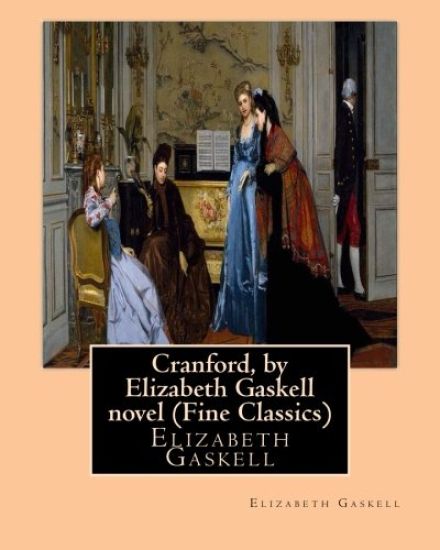
Cranford is one of the better-known novels of the 19th-century English writer Elizabeth Gaskell. It was first published, irregularly, in eight instalments, between December 1851 and May 1853, in the magazine Household Words, which was edited by Charles Dickens. It was then published, with minor revision, in book form in 1853.The first instalment (in Household Words), which became the novel's first two chapters, was originally published "as a self-contained sketch", and the "irregular way" the further seven instalments were published suggests that it took Mrs Gaskell time to think of making this into a book.She was during this period busy writing the three volume novel Ruth, which was published January 1853.Cranford has been described as "practically structurelesss", and given the irregular nature of how it was first published, it is not surprising that it lacks unity.A. W. Ward describes the novel, as a "brief series of sketches, strung together with easy grace".The small country town of Cranford corresponds to Knutsford, Cheshire, where Elizabeth Gaskell had spent much of her childhood and where she returned after she married. However, the story's narrator comes from the nearby industrial city of Drumble, which corresponds to Manchester, where the author lived when writing the novel.There is no real plot, but rather a collection of satirical sketches, which sympathetically portray changing small town customs and values in mid Victorian England. 9] Harkening back to memories of her childhood in the small Cheshire town of Knutsford, Cranford is Elizabeth Gaskell's affectionate portrait of people and customs that were already becoming anachronisms............... Elizabeth Cleghorn Gaskell, (n e Stevenson, 29 September 1810 - 12 November 1865), often referred to as Mrs Gaskell, was an English novelist and short story writer. Her novels offer a detailed portrait of the lives of many strata of Victorian society, including the very poor, and are of interest to social historians as well as lovers of literature. Her first novel, Mary Barton, was published in 1848. Gaskell's The Life of Charlotte Bront , published in 1857, was the first biography about Bront . Some of Gaskell's best known novels are Cranford (1851-53), North and South (1854-55), and Wives and Daughters (1865).Gaskell was born Elizabeth Cleghorn Stevenson on 29 September 1810 at 93 Cheyne Walk, Chelsea. She was the youngest of eight children; only she and her brother John survived infancy. Her father, William Stevenson, was a Scottish Unitarian minister at Failsworth, Lancashire, but resigned his orders on conscientious grounds and moved to London in 1806 with the intention of going to India after he was appointed private secretary to the Earl of Lauderdale, who was to become Governor General of India. That position did not materialise, however, and instead Stevenson was nominated Keeper of the Treasury Records. His wife, Elizabeth Holland, came from a family from the English Midlands that was connected with other prominent Unitarian families, including the Wedgwoods, the Martineaus, the Turners and the Darwins. When she died 13 months after giving birth to her youngest daughter, 1] she left a bewildered husband who saw no alternative for Elizabeth but to be sent to live with her mother's sister, Hannah Lumb, in Knutsford, Cheshire. While she was growing up Elizabeth's future was uncertain, as she had no personal wealth and no firm home, though she was a permanent guest at her aunt and grandparents' house. Her father married Catherine Thomson in 1814 and they had a son, William (born 1815), and a daughter, Catherine (born 1816). Although Elizabeth spent several years without seeing her father and his new family, her older brother John often visited her in Knutsford. John was destined for the Royal Navy from an early age, like his grandfathers and uncles, but he had no entry and had to join the Merchant Navy with the East India Company's fleet.....
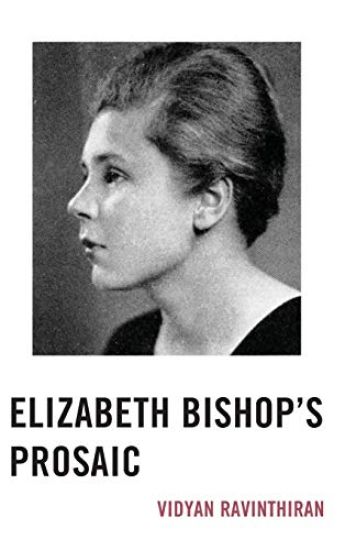
Elizabeth Bishop is now recognized as one of the greatest poets of the twentieth century—a uniquely cosmopolitan writer with connections to the US, Canada, Brazil, and also the UK, given her neglected borrowings from many English authors, and her strong influence on modern British verse. Yet the dominant biographical/psychoanalytical approach leaves her style relatively untouched—and it is vital that an increasing focus on archival material does not replace our attention to the writing itself. Bishop’s verse is often compared with prose (sometimes insultingly); writing fiction, she worried she was really writing poems. But what truly is the difference between poetry and prose—structurally, conceptually, historically speaking? Is prose simply formalized speech, or does it have rhythms of its own? Ravinthiran seeks an answer to this question through close analysis of Bishop’s prose-like verse, her literary prose, her prose poems, and her letter prose. This title is a provocation. It demands that we reconsider the pejorative quality of the word prosaic; playing on mosaic, Ravinthiran uses Bishop’s thinking about prose to approach—for the first time—her work in multiple genres as a stylistic whole. Elizabeth Bishop’s Prosaic is concerned not only with her inimitable style, but also larger questions to do with the Anglo-American shift from closed to open forms in the twentieth century. This study identifies not just borrowings from, but rich intertextual relationships with, writers as diverse as—among others—Gerard Manley Hopkins, W.H. Auden, Virginia Woolf, Flannery O’Connor, and Dorothy Richardson. (Though Bishop criticized Woolf, she in particular is treated as a central and thus far neglected precursor, crucial to our understanding of Bishop as a feminist poet.) Finally, the sustained discussion of how the history of prose frames effects of rhythm, syntax, and acoustic texture—in both Bishop’s prose proper and her prosaic verse—extends a body of research which seeks now to treat literature as a form of cognition. Technique and thought are finely wedded in Bishop’s work—her literary forms evince a historical intelligence attuned to questions of power, nationality, tradition (both literary and otherwise), race, and gender.