Praise for Shared Services A Manager's Journey "In Shared Services: A Manager's Journey, Dan presents the real business cultural challenges along with human factors when taking on such a change in a company's processes. A must-read for any executive, manager, or team member who is considering, decided to, or is already in the process of converting a company from a decentralized organization to a shared services environment." -Katherine M. Ericsson Vice President of Membership, Project Management Institute of South Florida and director of a project management office, in a shared services environment within the distribution industry "A how-to/survival guide for those thinking about entering shared services or beginning the journey...for the rest of us, an entertaining look back at our journey both professionally and personally. A great read!" -Steve K. Stone Senior Vice President and CFO, Newspapers and Shared Services Morris Communications Company "Over the past fifteen years, I've had the pleasure of working directly with hundreds of companies who are implementing shared services. What is striking is how very different 'real experiences' are from the stories spun by consultants or keynote speakers at conferences. Getting to the 'real truth' of how to put the pieces together will help you keep consulting fees low and the probability of success high. This book is a practical guide created by someone who has been there. It is the truth!" -Mike Hostetler Managing Director, Shared Services Roundtable Corporate Executive Board
"One of the ways companies are looking for competitive advantage in this frenetic [business] environment . . . is through the use of a tactical technique called shared services. . . . In this book, we bridge [the] chasm between the theory of how a shared services operation 'ought to' work and the practical issues involved in how to make it work, how to carry out a successful implementation of a shared service operation in your business."-from the Preface. Gaining competitive advantage in today's fierce business environment requires focus throughout the company on value, as measured by quality, cost, speed, and service. In the quest for superior performance, a growing number of companies are now turning to shared services, a tactical technique by which corporations can organize financial and other transaction-oriented activities to reduce costs and provide better service to business unit partners. Written by four authorities, three PricewaterhouseCoopers consultants and the executive who has directed the shared service efforts at Lucent Technologies, this comprehensive resource-the first of its kind-examines shared services from the macro issues that compel senior management to embrace this approach through the design and implementation of a shared services environment that leads to increased customer and shareholder value. Of all the tools available for gaining competitive advantage, why shared services? One of the principal reasons is that it creates, through consolidation of often disparate activities, more of a "one company" feel among business units. The benefits of this are twofold: one, it enables companies to show a consistent face to clients and customers, vendors and suppliers, shareholders and potential shareholders; two, it provides increased flexibility to all of the business' operations, allowing corporate leaders to maintain a global perspective while at the same time allowing business unit leaders to take strong, customer-focused actions. Providing both a domestic and global view, Shared Services addresses the full spectrum of issues, including: * Assessing whether shared services is right for you-issues to consider, goals to be reached. * Getting started-building support, establishing an effective organization, instituting continuous communication. * Setting up the infrastructure-billing shared services to business units, dealing with tax and legal entity issues. * International challenges-complexity, time zone, legal issues, currency stability, and security. * Program and project management-structures, planning, execution, and control. A groundbreaking book that examines a timely and important topic, Shared Services is an accessible and thorough guide to what could be a critical component in achieving long-term business success. This comprehensive resource is the first to introduce, explain, and explore shared services, an innovative business strategy that involves centralizing various business units, including accounting and transactional operations, to reduce costs and increase customer satisfaction. Presenting a practical and easy-to-follow blueprint for the smooth and sound implementation of shared services in your organization, Shared Services: Adding Value to the Business Units covers all the fundamentals, from how to get started to proper management techniques.
"Shared Intelligence," companion catalog to the exhibition of the same name, explores the stimulating and productive relationship between painting and photography in American art. The essays in this beautifully illustrated book describe how this dynamic developed, beginning in the nineteenth century and continuing to the twenty-first - from Thomas Eakins to the Stieglitz circle and Georgia O'Keeffe to contemporary art. This book shows that while the initial proponents of photography were struggling to secure its place among the fine arts, photography's inherent expressiveness was leading painters to use the camera in their work. And as cameras and photographs became part of American culture, photographic seeing - how a photograph freezes, flattens, enlarges, and crops its subject - began to affect artists' visual representations. This gorgeous volume, which also includes interviews with artists Robert Bechtle, Barkley Hendricks, and Sherrie Levine, documents the complex ways in which painting and photography have influenced one another - not to undermine each's originality, but to celebrate the deep, continuing connections between them.
This 1987 volume brought together for the first time a range of essays on the anthropology of food in Oceania and Southeast Asia. The essays reflect research in the field, primarily that undertaken by Australian scholars. The volume focuses on four main concerns: factors that influence the production of food and dietary behaviour; the way in which people think and speak about diet and nutrition, including concepts of hunger and the classification of foods; infant feeding practice, including the promotion of bottle feeding; and the roles of government agencies and multinational corporations. The regional focus of the volume also allows for discussion of common trends, especially those that have arisen as a result of societies in the region having been incorporated into the world economy. Applicable elsewhere in the world, the volume offers a basis for a comparative analysis of food in culture and society.
Most large companies worldwide today have some kind of shared services concept in place. Over half of the medium and large companies are currently engaged in some kind of shared service project activity. The investment in shared services is always calculated in millions. In other words, the costs of getting it right (or getting it wrong) can be huge. Tom Bangemann's book is a concise blueprint for identifying, assessing, designing, implementing and improving the process for shared services in the finance and accounting function. The author focuses on critical success factors, the people issues involved, and learning from other people's big mistakes. The book includes a variety of real life examples and real benchmarking data, performance metrics and best practices. The section on implementation is based on a proven five-phase methodology and explains the steps and activities involved as well as showing examples of the deliverables and the results you can expect. Any CEO, MD, CFO, Finance Director and senior finance people will find this book a 'must-have' guide to the process before they start and an excellent benchmark against which to measure the performance of any existing shared service operation.
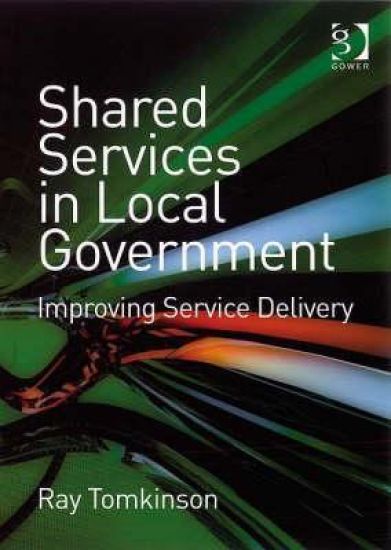
Despite the pressure for local councils to follow the lead of the private sector and develop shared service and partnership arrangements, the barriers in terms of culture, differences in priorities across councils and lack of experience are formidable - yet this is the most likely source of meeting government targets for reduced overheads and improved organizational effectiveness. By using extensive case studies drawn from across local councils in England, Ray Tomkinson explains the implications of sharing service delivery, addresses concerns about loss of control and accountability, and demonstrates the potential advantages. He shows how to set up collaborative ventures, formal partnerships, shared service centres or special purpose vehicles, while pointing out possible pitfalls, thus enabling senior managers to follow all the necessary project steps to create an appropriate shared service. It seeks to examine the evidence of the cost, effectiveness and quality improvements achieved from sharings. This ground-breaking book has been written for everyone in local government; it explores the political and cultural barriers, and legislative/legal framework for joint workings, explains how to find an appropriate governance vehicle, and how to gain the commitment of partners. It deals with political and managerial concerns, risk aversion and parochial issues, and the possible impact on the reputation and performance of both sharers. Shared Services in Local Government is the only comprehensive study for the UK and it will ensure any public sector organization pursuing this route is able to approach the task of creating a shared service with a real understanding of the issues involved.
Shared Heart Journal is meant to help you create a deeper, more satisfying intimate relationship with the one you love through reflection, self–expression and sharing. You may wonder what makes this book different from other relationship journals or activity books. Shared Heart Journal is meant to be different! It is unique for it has been created specifically for two people in a loving relationship. A shared journal from the heart, this can be used whether you are together or apart, near of far. Follow the path into the heart of your intimate relationship using this thoughtful journal as your guide. Your shared journey inside includes: —Creation of a safe sharing place —Reflective topics —Thoughtful meditative questions —Journal activities from the heart —Willingness steps towards deeper intimacy and loving change —A sharing agreement
This book analyzes newly collected data on crime and social development up to age 70 for 500 men who were remanded to reform school in the 1940s. Born in Boston in the late 1920s and early 1930s, these men were the subjects of the classic study Unraveling Juvenile Delinquency by Sheldon and Eleanor Glueck (1950). Updating their lives at the close of the twentieth century, and connecting their adult experiences to childhood, this book is arguably the longest longitudinal study of age, crime, and the life course to date. John Laub and Robert Sampson's long-term data, combined with in-depth interviews, defy the conventional wisdom that links individual traits such as poor verbal skills, limited self-control, and difficult temperament to long-term trajectories of offending. The authors reject the idea of categorizing offenders to reveal etiologies of offending--rather, they connect variability in behavior to social context. They find that men who desisted from crime were rooted in structural routines and had strong social ties to family and community.By uniting life-history narratives with rigorous data analysis, the authors shed new light on long-term trajectories of crime and current policies of crime control.
Ministry is enriched when its practitioners are involved in a serious process of peer reflection on their ministry. Case study, the method advocate here, is one significant way for such reflection to take place. Readers will learn techniques for writing case studies and how to use imagination ad analogy to provoke theological reflection.
New, practical approaches to confronting today’s most daunting global issuesFighting climate change, saving democracy, and eradicating poverty are urgent global challenges, yet the world’s leaders continue to pursue outdated policies that focus on one while worsening the tradeoffs between each of them. Shared Prosperity in a Fractured World shows how the nations of the world can achieve all three objectives.Dani Rodrik provides a bold new vision of globalization, one in which we accelerate the green transition to achieve a sustainable planet, shore up the middle class to restore democracy’s foundations, and hasten economic revitalization in the developing world to put an end to poverty. The rising tide of authoritarianism has demonstrated our inability to alleviate economic anxieties. Economic nationalism has raised the specter of increased protectionism and deteriorating prospects for economic growth. And automation and other new technologies have undercut the advantages of low-cost, unskilled labor in manufacturing and export-oriented industrialization. Rodrik reveals how we can restore prosperity through new forms of collaborative public-private action—to promote renewables and green industries, middle-class jobs, and enhanced productivity in labor-absorbing services—even in the absence of global cooperation. He explains why this new kind of globalization must also recognize the legitimate desire of governments to pursue their economic, social, and security interests autonomously.Turning conventional economic wisdom on its head, Shared Prosperity in a Fractured World builds on practices that work while radically transforming those that don’t, presenting a grounded, clear-eyed approach to tackling the problems that affect us all, at home and around the world.
Shared Values-Shared Results is the follow-up to the influential 2009 business philosophy book Zero Trends: Health as a Serious Economic Strategy. Taking workplace wellness to the next level, involves a vision of shared values that bring shared results for both employees and organizations. The book combines supporting research and science with practical solutions for implementing positive health as an organizational strategy. It's time to launch a committed, collaborative effort to create a workplace culture that emphasizes the health and wellbeing of everyone. This win-win strategy is a valuable tool for recruitment and retention of talent and increased revenue through enhanced job satisfaction and improved performance. Shared Values-Shared Results is addressed to multiple audiences that represent all segments of the organization. Everyone is encouraged to see himself or herself as a leader playing an important role in improving health and well-being in the organization. For management and leadership, the authors suggest taking a more active role in supporting positive organizational health. For employees, the recommendation is a move toward positive individual health. And for all stakeholders, this book shows how, by embracing these goals as an effective collaborative business strategy, they can increase engagement, energy, and creative possibilities for everyone.