Kirjojen hintavertailu. Mukana 11 425 274 kirjaa ja 12 kauppaa.

Kirjahaku

Etsi kirjoja tekijän nimen, kirjan nimen tai ISBN:n perusteella.

1000 tulosta hakusanalla Sharon Stuart

The Dream-Maker's Magic

The Dream-Maker's Magic

Sharon Shinn

Speak
2008
nidottu
Kellen's mother has always insisted that her only child was born male, not female--so Kellen has been raised as a boy. At school, she meets Gryffin, whose mind is as strong as his legs are damaged, and the two become friends and allies. A few years later, the two get jobs working at an inn nearby. When it is discovered that Gryffin is the kingdom's new Dream-Maker--someone whose mere presence can help dreams come true--he is whisked away to the castle, leaving Kellen behind. By now, their friendship is shading into something more. Will it endure?
What Your ADHD Child Wishes You Knew

What Your ADHD Child Wishes You Knew

Sharon Saline; Laura Markham

J.P.Tarcher,U.S./Perigee Bks.,U.S.
2018
nidottu
A veteran psychologist presents a proven roadmap to help ADHD kids succeed in school and life You've read all the expert advice, but despite countless efforts to help your child cope better and stay on track, you're still struggling with everyday issues like homework, chores, getting to soccer practice on time, and simply getting along without pushback and power struggles. What if you could work with your child, motivating and engaging them in the process, to create positive change once and for all? In this insightful and practical book, veteran psychologist Sharon Saline shares the words and inner struggles of children and teens living with ADHD--and a blueprint for achieving lasting success by working together. Based on more than 25 years of experience counseling young people and their families, Dr. Saline's advice and real-world examples reveal how parents can shift the dynamic and truly help kids succeed. Topics include: * Setting mutual goals that foster cooperation* Easing academic struggles* Tackling everyday challenges, from tantrums and backtalk to staying organized, building friendships, and more. With useful exercises and easy-to-remember techniques, you'll discover a variety of practical strategies that really work, creating positive change that will last a lifetime.
Bowled Over

Bowled Over

Sharon Greenaway

Cengage Learning Australia
2002
nidottu
Callum is surprised when he finds Pa has learned to use a computer, and they begin a correspondence by email. Callum is worried that he is hopeless at sport, but with Pas encouragement, he discovers he is good at ten-pin bowling. He shows up the class bully, and makes a new friend.
Puppet Show

Puppet Show

Sharon Greenaway

Cengage Learning Australia
2004
nidottu
Ken and Kath head off to the annual fair. When handed a flyer about making puppets they are so interested that they investigate all the aspects of puppets, from the actual making to the history and the performances. Ken and Kath put on their own puppet show. I wonder if you would be able to organise a puppet show.
The Innovation Complex

The Innovation Complex

Sharon Zukin

Oxford University Press Inc
2020
sidottu
You hear a lot these days about "innovation and entrepreneurship" and about how "good jobs" in tech will save our cities. Yet these common tropes hide a stunning reality: local lives and fortunes are tied to global capital. You see this clearly in metropolises such as San Francisco and New York that have emerged as "superstar cities." In these cities, startups bloom, jobs of the future multiply, and a meritocracy trained in digital technology, backed by investors who control deep pools of capital, forms a new class: the tech-financial elite. In The Innovation Complex, the eminent urbanist Sharon Zukin shows the way these forces shape the new urban economy through a rich and illuminating account of the rise of the tech sector in New York City. Drawing from original interviews with venture capitalists, tech evangelists, and economic development officials, she shows how the ecosystem forms and reshapes the city from the ground up. Zukin explores the people and plans that have literally rooted digital technology in the city. That in turn has shaped a workforce, molded a mindset, and generated an archipelago of tech spaces, which in combination have produced a now-hegemonic "innovation" culture and geography. She begins with the subculture of hackathons and meetups, introduces startup founders and venture capitalists, and explores the transformation of the Brooklyn waterfront from industrial wasteland to "innovation coastline." She shows how, far beyond Silicon Valley, cities like New York are shaped by an influential "triple helix" of business, government, and university leaders--an alliance that joins C. Wright Mills's "power elite," real estate developers, and ambitious avatars of "academic capitalism." As a result, cities around the world are caught between the demands of the tech economy and communities' desires for growth--a massive and often--insurmountable challenge for those who hope to reap the rewards of innovation's success.
The Marsh Builders

The Marsh Builders

Sharon Levy

Oxford University Press Inc
2018
sidottu
Swamps and marshes once covered vast stretches of the North American landscape. The destruction of these habitats, long seen as wastelands that harbored deadly disease, accelerated in the twentieth century. Today, the majority of the original wetlands in the US have vanished, transformed into farm fields or buried under city streets. In The Marsh Builders, Sharon Levy delves into the intertwined histories of wetlands loss and water pollution. The book's springboard is the tale of a years-long citizen uprising in Humboldt County, California, which led to the creation of one of the first U.S. wetlands designed to treat city sewage. The book explores the global roots of this local story: the cholera epidemics that plagued nineteenth-century Europe; the researchers who invented modern sewage treatment after bumbling across the insight that microbes break down pollutants in water; the discovery that wetlands act as efficient filters for the pollutants unleashed by modern humanity. More than forty years after the passage of the Clean Water Act launched a nation-wide effort to rescue lakes, rivers and estuaries fouled with human and industrial waste, the need for revived wetlands is more urgent than ever. Waters from Lake Erie and Chesapeake Bay to China's Lake Taihu are tainted with an overload of nutrients carried in runoff from farms and cities, creating underwater dead zones and triggering algal blooms that release toxins into drinking water sources used by millions of people. As the planet warms, scientists are beginning to design wetlands that can shield coastal cities from rising seas. Revived wetlands hold great promise for healing the world's waters.
Climate Change and the People's Health

Climate Change and the People's Health

Sharon Friel

Oxford University Press Inc
2019
sidottu
Climate change and social inequity are both sprawling, insidious forces that threaten populations around the world. It's time we start talking about them together. Climate Change and the People's Health offers a brave and ambitious new framework for understanding how our planet's two greatest existential threats comingle, complement, and amplify one another -- and what can be done to mitigate future harm. In doing so it posits three new modes of thinking: · That climate change interacts with the social determinants of health and exacerbates existing health inequities · The idea of a "consumptagenic system" -- a network of policies, processes, governance and modes of understanding that fuel unhealthy, and environmentally destructive production and consumption · The steps necessary to move from denial and inertia toward effective mobilization, including economic, social, and policy interventions With insights from physical science, social science, and humanities, this short book examines how climate change and social inequity are indelibly linked, and considering them together can bring about effective change in social equity, health, and the environment.
An Impossible Dream?

An Impossible Dream?

Sharon A. Stanley

Oxford University Press Inc
2017
sidottu
Contemporary scholarly and popular debate over the legacy of racial integration in the United States rests between two positions that are typically seen as irreconcilable. On one side are those who argue that we must pursue racial integration because it is an essential component of racial justice. On the other are those who question the ideal of integration and suggest that its pursuit may damage the very population it was originally intended to liberate. In An Impossible Dream? Sharon A. Stanley shows that much of this apparent disagreement stems from different understandings of the very meaning of integration. In response, she offers a new model of racial integration in the United States that takes seriously the concerns of longstanding skeptics, including black power activists and black nationalists. Stanley reformulates integration to de-emphasize spatial mixing for its own sake and calls instead for an internal, psychic transformation on the part of white Americans and a radical redistribution of power. The goal of her vision is not simply to mix black and white bodies in the same spaces and institutions, but to dismantle white supremacy and create a genuine multiracial democracy. At the same time, however, she argues that achieving this model of integration in the contemporary United States would be extraordinarily challenging, due to the poisonous legacy of Jim Crow and the hidden, self-reinforcing nature of white privilege today. Pursuing integration against a background of persistent racial injustice might well exacerbate black suffering without any guarantee of achieving racial justice or a worthwhile form of integration. Given this challenge, pessimism toward integration is a defensible position. But while the future of integration remains uncertain, its pursuit can neither be prescribed as a moral obligation nor rejected as intrinsically indefensible. In An Impossible Dream? Stanley dissects this vexing moral and political quandary.
Catherine Littlefield

Catherine Littlefield

Sharon Skeel

Oxford University Press Inc
2020
sidottu
While she is best remembered today as founder of the Philadelphia Ballet and the director and driving force behind the famous Littlefield School of Ballet, from which Balanchine drew the nucleus for his School of American Ballet, Catherine Littlefield (1905-51) and her oeuvre were in many ways emblematic of the full representation of dance throughout entertainments of the first half of the 20th century. From her early work as a teenager dancing for Florenz Ziegfeld to her later work in choreographing extravagant ice skating shows, a remarkable dance with 90 bicyclists for the 1940 World's Fair, and on television as resident choreographer for The Jimmy Durante Show, Littlefield was amongst the first choreographers to bring concert dance to broader venues, and her legacy lives on today in her enduring influence on generations of American ballet dancers. As the first biography of Littlefield, Catherine Littlefield: A Life in Dance traces her life in full from birth through childhood experiences dancing on the Academy of Music's grand stage, and from her foundation of the groundbreaking Philadelphia Ballet Company in 1935 to her later work in television and beyond. Littlefield counted among her many glamorous friends and colleagues writer Zelda Fitzgerald, conductor Leopold Stokowski, and composer Kurt Weill. This biography also provides an engrossing portrait of the remarkable Littlefield family, many of whom were instrumental to Catherine's success. With the unflagging support of her generous husband and indomitable mother, Littlefield gave shape to the course of American ballet in the 20th century long before Balanchine arrived in the United States.
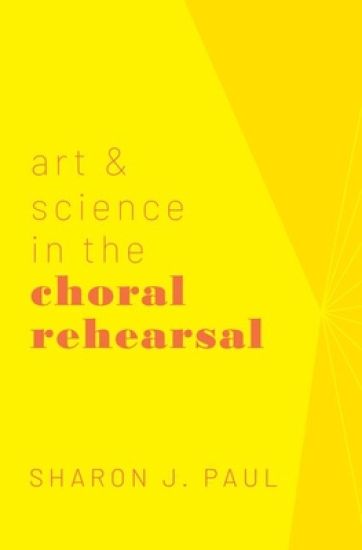
Art & Science in the Choral Rehearsal

Art & Science in the Choral Rehearsal

Sharon J. Paul

Oxford University Press Inc
2020
sidottu
In recent decades, cognitive neuroscience research has increased our understanding of how the brain learns, retains, and recalls information. At the same time, social psychologists have developed insights into group dynamics, exploring what motivates individuals in a group to give their full effort, or conversely, what might instead inspire them to become free loaders. Art and Science in the Choral Rehearsal explores the idea that choral conductors whobetter understand how the brain learns, and how individuals within groups function, can lead more efficient, productive, and enjoyable rehearsals. Armed with this knowledge, conductors can create rehearsal techniques which take advantage of certain fundamental brain and social psychology principles. Through suchapproaches, singers will become increasingly engaged physically and mentally in the rehearsal process. Art and Science in the Choral Rehearsal draws from a range of scientific studies to suggest and encourage effective, evidence-based techniques, and can help serve to reset and inspire new approaches toward teaching. Each chapter outlines exercises and creative ideas for conductors and music teachers, including the importance of embedding problem solving into rehearsal, the use of multiple entry points for newly acquired information, techniques to encourage an emotional connection tothe music, and ways to incorporate writing exercises into rehearsal. Additional topics include brain-compatible teaching strategies to complement thorough score study, the science behind motivation, the role imagination plays in teaching, the psychology of rehearsal, and conducting tips and advice. All of thesebrain-friendly strategies serve to encourage singers' active participation in rehearsals, with the goal of motivating beautiful, inspired, and memorable performances.
Art & Science in the Choral Rehearsal

Art & Science in the Choral Rehearsal

Sharon J. Paul

Oxford University Press Inc
2020
nidottu
In recent decades, cognitive neuroscience research has increased our understanding of how the brain learns, retains, and recalls information. At the same time, social psychologists have developed insights into group dynamics, exploring what motivates individuals in a group to give their full effort, or conversely, what might instead inspire them to become free loaders. Art and Science in the Choral Rehearsal explores the idea that choral conductors whobetter understand how the brain learns, and how individuals within groups function, can lead more efficient, productive, and enjoyable rehearsals. Armed with this knowledge, conductors can create rehearsal techniques which take advantage of certain fundamental brain and social psychology principles. Through suchapproaches, singers will become increasingly engaged physically and mentally in the rehearsal process. Art and Science in the Choral Rehearsal draws from a range of scientific studies to suggest and encourage effective, evidence-based techniques, and can help serve to reset and inspire new approaches toward teaching. Each chapter outlines exercises and creative ideas for conductors and music teachers, including the importance of embedding problem solving into rehearsal, the use of multiple entry points for newly acquired information, techniques to encourage an emotional connection tothe music, and ways to incorporate writing exercises into rehearsal. Additional topics include brain-compatible teaching strategies to complement thorough score study, the science behind motivation, the role imagination plays in teaching, the psychology of rehearsal, and conducting tips and advice. All of thesebrain-friendly strategies serve to encourage singers' active participation in rehearsals, with the goal of motivating beautiful, inspired, and memorable performances.
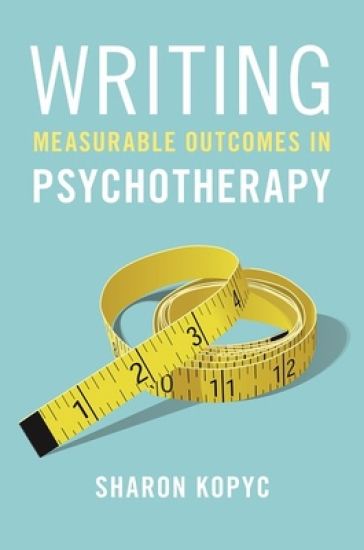
Writing Measurable Outcomes in Psychotherapy

Writing Measurable Outcomes in Psychotherapy

Sharon Kopyc

Oxford University Press Inc
2020
nidottu
Writing Measurable Outcomes in Psychotherapy is an accessible and critical text for mental health counselors, clinical social workers, psychiatric nurses and others in behavioral health who write measureable objectives in treatment planning. Undergraduate and graduate students as well as those working in the field will find this an essential companion for writing meaningful and measurable goals and objectives for treatment plan outcomes. The key component in this text is the presentation of the CDRS (Cognitive Domain Rating Scale), an efficient and logical model that is presented as key to writing measurable objectives. The CDRS, based on Bloom's Taxonomy of Six Cognitive Domains, is rooted in cognitive psychology. It is a method to "situate client's thinking about their problem" and quickly identifies action(s) for creating measurable outcomes. This text is keen for neophyte and veteran therapists with illustrations of case examples and treatment plans and includes a discussion of Evidence Based Practices. It is a succinct text that integrates three key elements significant for successful psychotherapy: the therapeutic alliance, a person-centered approach and feedback by using outcome rating scales. . Case examples, dialogue and treatment plans are included and is aimed at future counselors, social workers, and psychologists as well as those already practicing in the field.
African-American Art

African-American Art

Sharon F. Patton

Oxford University Press
1998
nidottu
African-American art has made an increasingly vital contribution to the art of the United States from the time of its origins in early-eighteenth-century slave communities. Folk and decorative arts such as ceramics, furniture, and quilts are discussed alongside fine art -- sculpture, painting, and photography -- produced by African Americans, both enslaved and free, throughout the nineteenth century. Twentieth-century developments are given full coverage, particularly the New Negro Movement of the 1920s, the Era of Civil Rights and Black Nationalism through the 1960s and 1970s, and the emergence of new black artists and theorists in the 1980s and 1990s. New evidence has provided an exciting myriad of perspectives about African-American art, confirming that it represents the culture and society from which it emerges. Professor Patton explores significant issues such as the relationship of art and politics, the influence of galleries and museums, the growth of black universities, critical theory, the impact of artists' collectives, and the assortment of art practices since the 1960s. African-American Art shows that in its cultural diversity and synthesis of cultures it mirrors those in American society as a whole. `African-American Art should be read by teachers, students, and writers, and on the shelves of every library. Professor Patton begins this impressive book with the slave ships that brought Africans to this country and gives evidence of the fine metalworking, carving, carpentry, basketry, weaving, and clay building skills passed from Africa through the works of valued but nameless slave-artisans. She tells how we learned accidentally about a few named artists like the slave, Scipio Moorhead, who in 1773 engraved the only surviving image of poet, Phyllis Wheatley. She describes the portraitists, furniture makers and highly skilled artisans. Sharon Patton follows a path leading from great African formal styles, which, mixed with the powerful expressive force of struggle and opposition, led to distinctive new ideasfrom the quilts of Harriet Powers in the late 1800s to the paintings of Jean Michel Basquiat in the 1980s. She helps the reader to think and search for the evidence of the art-making skills that not only survived the Middle Passage, but the many erasings of the auction block and racism's lack, little and denial. In a fine survey of contemporary African-American art and ideas complete with words from the artists themselvesPatton takes us first through its foundations and the through the movements, people and ideas that surrounded and generated this art. An art historian, curator, and scholar, Patton has produced a volume which, like no other, can be used both as an unusual reference book and a good read on an important part of American art. The illustrations are a special treat.' Emma Amos, Artist Professor of Art, Rutgers University `For a long period of time there has been an acknowledged need for a comprehensive text that integrates the full range of African American artistry, the building crafts, slave craftsmanship, the decorative and the fine arts tradition into one scholarly document. Professor Patton has brought those elements of history into her text that are often omitted in the available texts on the subject of African-American art and much of what she has written is primary information not previously recorded outside the context of social history. The cultural context in which Professor Patton has written accounts of the artistry of African-American artists and craftsmen from the period of American slavery to the present is illuminating, analytically sound, and well documented. She has brought to the attention of the reader a number of topics such as 'Art Institutions and the Artist's Groups' that have not been thoroughly discussed in previous texts on the subject. A subject such as 'The Plantation House', the place where many decorative arts originated in the slave society is a welcomed addition to Professor Patton's historical overview.' David Driskell, Artist Distinguished University Professor of Art, University of Maryland `Sharon Patton has written a much needed text which surveys the broad scope of the history of African-American art from slavery to the present. She has followed a different tack, tracing art themes and their development throughout the history, rather than the influences of specific artists or periods. Thus, she shows how ideas such as crafts, formal painting and sculpture, or architecture, co-existed with equal importance to the culture from the times of the Colonies. In so doing, she breaks down the barrier between folk and formal art, and articulates an interrelationship of both concepts to African-American people and their culture. Her book expands the framework for the visual arts in the United States in the last two centuries.' Professor Keith Morrison, Dean, College of Creative Arts, San Francisco State University
Patrons, Brokers, and Clients in Seventeenth-Century France

Patrons, Brokers, and Clients in Seventeenth-Century France

Sharon Kettering

Oxford University Press Inc
1986
sidottu
A bold new study of politics and power in 17th-century France, this book argues that the French Crown centralized its power nationally by changing the way it delegated its royal patronage in the provinces. During this period, the royal government of Paris gradually extended its sphere of control by taking power away from the powerful and potentially disloyal provincial governors and nobility and instead putting it in the hands of provincial power brokers--regional notables who cooperated with the Paris ministers in exchange for their patronage. The new alliances between the Crown's ministers and loyal provincial elites functioned as political machines on behalf of the Crown, leading to smoother regional-national cooperation and foreshadowing the bureaucratic state that was to follow.
Strategic Management for Nonprofit Organizations

Strategic Management for Nonprofit Organizations

Sharon M. Oster

Oxford University Press Inc
1995
sidottu
Nonprofit organizations in the U.S. earn more than $100 billion annually, and number over a million different organizations. They face increasing competition for donor's dollars and many of the issues they confront are similar to those confronted by for-profit organizations. This book applies powerful concepts of strategic management developed originally in the for-profit sector to the management of nonprofits. It describes the preparation of a strategic plan consistent with the resources available; it analyses the operational tasks in executing the plan; and describes the ways in which nonprofits need to change in order to remain competitive. The book draws clear distinctions between the different challenges encountered by nonprofits operating in different industries. It will be useful for managers in such diverse organizations as the Santa Fe Opera, the Salvation Army, and the National Football League.
Clinical Social Work Practice

Clinical Social Work Practice

Sharon B. Berlin

Oxford University Press Inc
2002
sidottu
Although social workers have been using cognitive methods of intervention for decades, the use of cognitive therapy in social work settings often requires difficult, on-the-spot juggling. In these cases, it is the social worker's job to relate cognitive therapy's internally focused explanations and interventions to the client's particular social situation, which often encompasses severe environmental demands and deprivations. Clinical Social Work Practice: A Cognitive-Integrative Perspective presents a comprehensive cognitive perspective on social work clinical practice that emphasises the role of the environment in shaping personal meaning. This perspective combines cognitive psychology's internal focus on how people think about themselves with a look outward toward the environment. It draws on a number of theoretical approaches to explain how the mind works and integrates these perspectives within a framework that suggests that people operate according to their sense of what things mean. The theoretical grounding for this cognitive-integrative approach is drawn from a range of neurological, social, psychological, and social work theories. It is laid out clearly and carefully and balanced with a generous offering of detailed clinical examples and practice guidelines. By acknowledging the influence of the larger environment on personal problems, this book offers a framework that is likely to be welcomed by social workers. It will also have strong appeal to a range of other helping professionals who see the need for this kind of conceptual bridge to guide therapeutic work along the interactive dimensions of personal meanings and environmental realities. Clinical Social Work Practice: A Cognitive-Integrative Perspective is a perfect introduction to cognitive therapy for both social work students in advanced social work practice courses and practising social work therapists.
Modern Competitive Analysis

Modern Competitive Analysis

Sharon M. Oster

Oxford University Press Inc
1999
sidottu
This book shows that combining a sound understanding of economic and managerial principles can make a striking difference in the quality of the strategic planning of an organization and provide guidelines for effective corporate strategies. Covering new and important areas in economics not treated in other management and strategic planning books, Modern Competitive Analysis is a fundamental resource to the managers of today and tomorrow. The Third Edition includes new material in game theory, added value analysis and strategic intent. Examples are drawn from modern network industries and more attention is paid to newly deregulated markets.
Convictions of the Soul

Convictions of the Soul

Sharon Erickson Nepstad

Oxford University Press Inc
2004
sidottu
Many U.S. Christians were profoundly moved by the liberation struggles in Central America in the 1980s. Most learned about the situation from missionaries who had worked in the area and witnessed the repression firsthand. These missionaries, Sharon Erickson Nepstad shows, employed the church's institutional resources and the symbolic capital of Christianity to seize the attention of American congregations and remind them of the moral obligations of their faith. Drawing on in-depth interviews with fifty activists in eight separate solidarity organizations around the country, Nepstad offers a rich analysis of the experiences of religious leaders and church members in the solidarity movement. Shedding new light on the genesis and evolution of this important activist movement, Convictions of the Soul will be of interest to students and scholars of social movements, religion, and politics.
Flat Broke with Children

Flat Broke with Children

Sharon Hays

Oxford University Press Inc
2004
nidottu
Hailed as a great success, welfare reform resulted in a dramatic decline in the welfare rolls--from 4.4 million families in 1996 to 2 million in 2003. But what does this "success" look like to the welfare mothers and welfare caseworkers who experienced it? In Flat Broke With Children, Sharon Hays tells us the story of welfare reform from inside the welfare office and inside the lives of welfare mothers, describing the challenges that welfare recipients face in managing their work, their families, and the rules and regulations of welfare reform. Welfare reform, experienced on the ground, is not a rosy picture. The majority of adult welfare clients are mothers--over 90 percent--and the time limits imposed by welfare reform throw millions of these mostly unmarried, desperate women into the labor market, where they must accept low wages, the most menial work, the poorest hours, with no benefits, and little flexibility. Hays provides a vivid portrait of their lives--debunking many of the stereotypes we have of welfare recipients--but she also steps back to explore what welfare reform reveals about the meaning of work and family life in our society. In particular, she argues that an inherent contradiction lies at the heart of welfare policy, which emphasizes traditional family values even as its ethic of "personal responsibility" requires women to work and leave their children in childcare or at home alone all day long. Hays devoted three years to visiting welfare clients and two welfare offices, one in a medium-sized town in the Southeast, another in a large, metropolitan area in the West. Drawing on this hands-on research, Flat Broke With Children is the first book to explore the impact of welfare reform on motherhood, marriage, and work in women's lives, and the first book to offer us a portrait of how welfare reform plays out in thousands of local welfare offices and in millions of homes across the nation.
Families Across Time: A Life Course Perspective: Readings

Families Across Time: A Life Course Perspective: Readings

Sharon J. Price; Patrick C. McKenry; Megan J. Murphy

Oxford University Press
2000
nidottu
Using a consistent theoretical orientation, Families Across Time explores the "life course" approach to family life--including parent-child, spousal, and sibling relationships. It reflects the diversity represented in contemporary families as they grapple with changes and transitions in family relationships during the life cycle. This volume of seventeen original essays is unique in its integration of research, theory, and application in a variety of topic areas related to family life. The contributors to this volume, which include prominent and established scholars as well as young professionals, address a diversity of family forms as well as all stages of family life--in contrast to the traditional emphasis on early stages. The essays in this book represent a breadth of content and scholarship; at the same time, they are student-friendly and highly readable. Extensive case scenarios and other examples augment the content of each essay, serving as examples to enhance the reader's ability to understand the challenges families face over the life course. The book's approach emphasizes transitions and tasks in lieu of focusing on the characteristics of stages associated with family development. Different aspects of family life are examined up-close and across the life span for each topic covered. Editors Sharon J. Price, Patrick C. McKenry, and Megan J. Murphy offer introductions to each section, which frame each set of essays and provide context for the reader. Discussion questions are included at the end of each chapter.