Kirjojen hintavertailu. Mukana 12 016 292 kirjaa ja 12 kauppaa.

Kirjahaku

Etsi kirjoja tekijän nimen, kirjan nimen tai ISBN:n perusteella.

1000 tulosta hakusanalla Sheldon 1834- Jackson

From Disarmament to Rearmament

From Disarmament to Rearmament

Sheldon A. Goldberg

Ohio University Press
2017
sidottu
At the end of World War II, the Allies were unanimous in their determination to disarm the former aggressor Germany. As the Cold War intensified, however, the decision whether to reverse that policy and to rearm West Germany as a bulwark against the Soviet threat led to disagreements both within the US government and among members of the nascent NATO alliance. The US military took the practical view that a substantial number of German troops would be required to deter any potential Soviet assault. The State Department, on the other hand, initially advocated an alternative strategy of strengthening European institutions but eventually came around to the military's position that an armed West Germany was preferable to a weak state on the dividing line between the Western democracies and the Soviet satellite states. Sheldon A. Goldberg traces the military, diplomatic, and political threads of postwar policy toward West Germany and provides insights into the inner workings of alliance building and the roles of bureaucrats and military officers as well as those of diplomats and statesmen. He draws on previously unexamined primary sources to construct a cogent account of the political and diplomatic negotiations that led to West Germany's accession to NATO and the shaping of European order for the next forty years.

Enumerative Geometry And String Theory

Enumerative Geometry And String Theory

Sheldon Katz

Amer Mathematical Society
2006
pokkari
Perhaps the most famous example of how ideas from modern physics have revolutionized mathematics is the way string theory has led to an overhaul of enumerative geometry, an area of mathematics that started in the eighteen hundreds. Century-old problems of enumerating geometric configurations have now been solved using new and deep mathematical techniques inspired by physics!The book begins with an insightful introduction to enumerative geometry. From there, the goal becomes explaining the more advanced elements of enumerative algebraic geometry. Along the way, there are some crash courses on intermediate topics which are essential tools for the student of modern mathematics, such as cohomology and other topics in geometry. The physics content assumes nothing beyond a first undergraduate course. The focus is on explaining the action principle in physics, the idea of string theory, and how these directly lead to questions in geometry. Once these topics are in place, the connection between physics and enumerative geometry is made with the introduction of topological quantum field theory and quantum cohomology.
Transnational Chinese Cinemas

Transnational Chinese Cinemas

Sheldon Hsiao-Peng Lu

University of Hawai'i Press
1997
nidottu
With the increasing popularity of the Chinese film industry, a large amount of foreign captial has been invested in the productions. Internationalization on this scale at both the production and consumption levels has raised the question of what constitutes ""Chinese cinema"". In this book the authors discuss the central topic of a national cinema and analyze the emergence of ""transnational cinema"" in Chinese film studies. Applying different methodologies and approaches, they explore the interrelations of national cinematic style, global capitalism, the evolution of the modern nation-state, cultural politics, censorship and gender identity. Among the film artists discussed are Cai Chusheng, Xie Jin, Chen Kaige, Zhang Yimou, Ang Lee and Jackie Chan. The volume opens with essays tracing the early decades of the 20th century, through to the Mao era and the age of transnational capitalism. Other essays consider what have been the peripheral and marginalized traditions in relation to mainstream Chinese cinema.
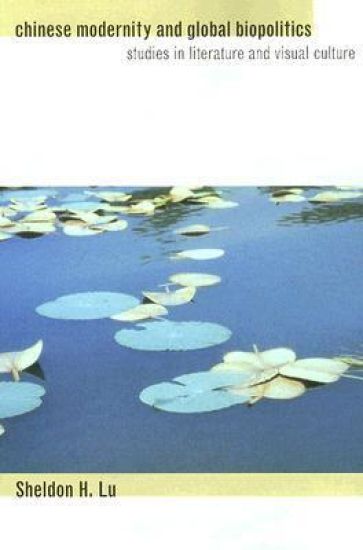
Chinese Modernity and Global Biopolitics

Chinese Modernity and Global Biopolitics

Sheldon Hsiao-Peng Lu

University of Hawai'i Press
2007
sidottu
This ambitious work is a multimedia, interdisciplinary study of Chinese modernity in the context of globalization from the late nineteenth century to the present. Sheldon Lu draws on Chinese literature, film, art, photography, and video to broadly map the emergence of modern China in relation to the capitalist world-system in the economic, social, and political realms. Central to his study is the investigation of biopower and body politics, namely, the experience of globalization on a personal level. Lu first outlines the trajectory of the body in modern Chinese literature by focusing on the adventures, pleasures, and sufferings of the male (and female) body in the writings of selected authors. He then turns to avant-garde and performance art, tackling the physical self more directly through a consideration of work that takes the body as its very theme, material, and medium. In an exploration of mass visual culture, Lu analyzes artistic reactions to the multiple, uneven effects of globalization and modernization on both the physical landscape of China and the interior psyche of its citizens. This is followed by an inquiry into contemporary Chinese urban space in popular cinema and experimental photography and art. Examples are offered that capture the daily lives of contemporary Chinese as they struggle to make the transition from the vanishing space of the socialist lifestyle to the new capitalist economy of commodities. Lu reexamines the history and implications of China's belated integration into the capitalist world system before closing with a postscript that traces the genealogy of the term ""postsocialism"" and points to the real relevance of the idea for the investigation of everyday life in China in the twenty-first century.
Chinese Modernity and Global Biopolitics

Chinese Modernity and Global Biopolitics

Sheldon Hsiao-Peng Lu

University of Hawai'i Press
2007
nidottu
This ambitious work is a multimedia, interdisciplinary study of Chinese modernity in the context of globalization from the late nineteenth century to the present. Sheldon Lu draws on Chinese literature, film, art, photography, and video to broadly map the emergence of modern China in relation to the capitalist world-system in the economic, social, and political realms. Central to his study is the investigation of biopower and body politics, namely, the experience of globalization on a personal level. Lu first outlines the trajectory of the body in modern Chinese literature by focusing on the adventures, pleasures, and sufferings of the male (and female) body in the writings of selected authors. He then turns to avant-garde and performance art, tackling the physical self more directly through a consideration of work that takes the body as its very theme, material, and medium. In an exploration of mass visual culture, Lu analyzes artistic reactions to the multiple, uneven effects of globalization and modernization on both the physical landscape of China and the interior psyche of its citizens. This is followed by an inquiry into contemporary Chinese urban space in popular cinema and experimental photography and art. Examples are offered that capture the daily lives of contemporary Chinese as they struggle to make the transition from the vanishing space of the socialist lifestyle to the new capitalist economy of commodities. Lu reexamines the history and implications of China's belated integration into the capitalist world system before closing with a postscript that traces the genealogy of the term ""postsocialism"" and points to the real relevance of the idea for the investigation of everyday life in China in the twenty-first century.
The Outdoor Museum

The Outdoor Museum

Sheldon Harnick; Margery Gray Harnick; Mike Nichols

Beaufort Books
2012
nidottu
Margery and Sheldon Harnick love New York. It's a place that has both nurtured and applauded them, Sheldon as a renowned Pulitzer Prize-winning Broadway lyricist (Fiorello!, Fiddler on the Roof, She Loves Me) and Margery as an accomplished actress, dancer, painter, and photographer. Together, they bring their abundant talent and wit to this homage to their beloved city. The Harnicks began to construct their own virtual museum as they regularly walked the city streets. Looking past the landmarks and cultural icons, they came upon more fascinating and less regarded urban marvels: puddle reflections, subway tiles, sleeping swans, fireworks, public sculptures, store mannequins, and so much more. Margery snapped pictures and Sheldon scribbled verses on a pad.The Outdoor Museum is a singular trophy by two New Yorkers who have contributed to and been touched by the city's magic. The wonders of their collaboration are contained between the covers of this book of photographs with delightful, humorous, and at times deeply touching verse, a Harnick love letter to New York.
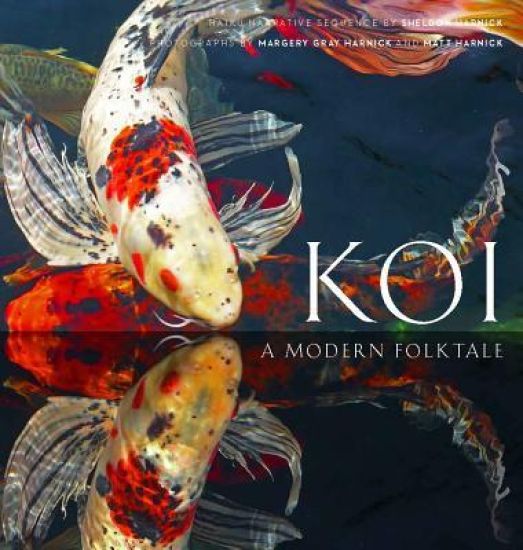
Koi

Koi

Sheldon Harnick; Margery Gray Harnick; Matt Harnick

Beaufort Books
2017
sidottu
Koi are unusually beautiful creatures. Perhaps because of their unusual beauty, koi have inspired a variety of legends. The recurrent theme in these legends is that koi, because of their endurance and perseverance, have become symbolic of overcoming adversity and fulfilling one's destiny. In one of the more celebrated versions of this legend, koi are rewarded for their endurance and perseverance by being transformed into dragon fish.In their book KOI, Margery and Sheldon Harnick have created their own version of this legend in photographs and verses. In their version, koi are rewarded for a reason other than endurance and perseverance. Though the years, the gods have noted how much pleasure men and women have derived simply from observing the prismatic beauty of the koi. For this gift to mankind, the gods decided to transform the most beautiful koi into majestic and powerful dragons.Margery Harnick's photographs not only show this transformation taking place but also capture the remarkable beauty of these creatures in ways that most people have never seen. (Additional photographs by Matt Harnick portray the gods and the dragons.) And since koi are Asian in origin, Sheldon Harnick has chosen to deliver the narrative in the form of haiku verses. The union of photographs and verses makes a charming and artistically satisfying combination.
Schools for Scandal

Schools for Scandal

Sheldon Anderson

UNIVERSITY OF MISSOURI PRESS
2024
sidottu
For well over a century, big-time college sports has functioned as a business enterprise, one that serves to undermine the mission of institutions of higher education. This book chronicles the long and tortured history of the NCAA’s attempt to maintain the myth of amateurism and the student-athlete, along with the attendant fiction that the players’ academic achievement is the top priority of Division-I athletic programs. It is an indictment of the current system, making the case that big-time college sports cannot continue its connection to universities without undermining the mission of higher education. It concludes with bold proposals to separate big-time college sports from the university, transforming them into on-campus business operations.
Medicine and Business: Bridging the Gap

Medicine and Business: Bridging the Gap

Sheldon Rovin

Aspen Publishers Inc.,U.S.
2000
nidottu
With an emphasis on practical knowledge and implementation, Medicine and Business: Bridging the Gap, helps physicians make sound business and managerial decisions amid today's health care reality of unbalance, complexity, and unending change. This text is written from a business management perspective - instead of a medical practice management viewpoint - to give physicians the knowledge, vocabulary, and tools they need to work with business, finance, and managed care plan professionals with greater understanding and confidence.
The Glace Bay Miners' Museum

The Glace Bay Miners' Museum

Sheldon Currie

Goose Lane Editions
2001
cd
Margaret McNeil has lost a father and a brother to the coal mines of Cape Breton. Her grandfather's as good as gone with the black lung, and her mother carries so much bitterness she might as well be buried alongside the lot of them. In this powerful love story set against the darkness and disasters of mining life, Margaret MacNeil tells the joyful, heart-scalding story of her hard-handed family and her rebellious love for Neil Currie, a miner by trade and a bagpiper for the joy of it. The Glace Bay Miners' Museum has been adapted both for stage and for film. The film adaptation, released in 1996 as Margaret's Museum, starring Helena Bonham Carter, Clive Russel, and Kate Nelligan, won critical acclaim and a fistful of awards, including a "two thumbs up" from Siskel and Ebert.
Environmental Hazards

Environmental Hazards

Sheldon Krimsky; Alonzo Plough

Praeger Publishers Inc
1988
sidottu
This substantive, insightful book demonstrates the growing importance of risk communication as both a technical and cultural phenomenon. The authors discuss the various processes used to communicate risk to citizens; explore how the public responds to risk messages; and examine how social, economic, historical, and political factors can influence the success or failure of risk communication. Cases presented in this volume demonstrate the diversity of risk communication approaches and activities, including public activism, federal and state agency responses, private sector response, and media coverage.
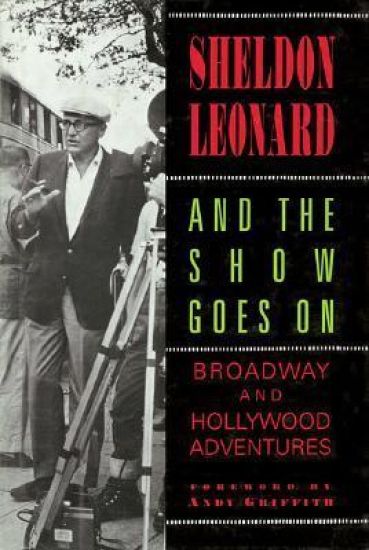
And the Show Goes On

And the Show Goes On

Sheldon Leonard

Limelight Editions
1995
sidottu
(Limelight). From Booklist: Actor-director-producer Leonard has a real gift for storytelling that he displays to the fullest in a breezy, readable memoir of his life in show business. Starting out as an actor in 1930s New York in such forgotten hit plays as Hotel Alimony, Fly Away Home, and Kiss the Boys Goodbye, Leonard had the foresight and financial need to leap first to radio and movies, then to television, in which he created or produced such rerun perennials as Make Room for Daddy, The Andy Griffith Show, and the controversial (for its time) I Spy . Along the way, Leonard met lots and lots of fascinating people--John Garfield, Jack Benny, Danny Thomas, Carl Reiner, and Bill Cosby, to mention a few of the dozens about whom Leonard has a funny story or three to tell. Some of these stories are well known, such as those of the closeness of the writers, actors, and staff of The Dick Van Dyke Show; others are not, such as those of Leonard's various, sometimes dangerous, adventures around the world while filming I Spy . Jack Helbig
Getting From Here to There

Getting From Here to There

Sheldon Bach

Analytic Press,U.S.
2006
sidottu
It is clinical work with the most difficult patients - those with severe narcissistic, sadomasochistic, and borderline disorders - that poses the greatest challenge to the therapist's guiding assumptions about clinical process; indeed, such work often leads therapists to question beliefs and expectations that formerly seemed self-evident. In Getting From Here to There: Analytic Love, Analytic Process, Sheldon Bach elaborates the holistic vision that guides him in work with just such patients. He dwells especially on the "attentive presence" through which the analyst effects a "meeting" with patients that invites the latter's trust in the analyst and in the therapeutic process. And he writes of love - of patient for analyst and of analyst for patient - that grows out of this mutual trust and sustains therapeutic process. For Bach, analytic therapy aims at understanding the person as a mind-body unity that manifests particular states of consciousness.This holistic vision of treatment sustains a flexible clinical orientation that enables the analyst to "meet" states of consciousness in order to bring them into a system of which the analyst forms a part. Bach thoughtfully explores the clinical issues that enter into this taxing process, among them the establishment and maintenence of basic trust; the patient's or the therapist's presence in the other's mind; and the shifts in agency between patient and therapist. And he describes at length the frequently exhausting, even demoralizing, transference-countertransference struggles that enter into this type of analytic work.Throughout, Bach is guided by the conviction that work with extremely challenging patients promotes the psychological growth and increased self-knowledge of patient and analyst alike. And he is admirably clear that the "mutual living through" of such treatments nurtures a kind of love between patient and analyst.Getting From Here to There not only records the clinical lessons learned by an unusually gifted analyst; it also chronicles the movement of psychoanalysis itself from the dissection of love into component parts to a synthetic grasp of its vital role in psychoanalytically informed treatment.
Functions, Data, and Models

Functions, Data, and Models

Sheldon P. Gordon; Florence S. Gordon

Mathematical Association of America
2010
sidottu
This is a college algebra-level textbook written to provide the kind of mathematical knowledge and experiences that students will need for courses in other fields, such as biology, chemistry, business, finance, economics, and other areas that are heavily dependent on data either from laboratory experiments or from other studies. The focus is on the fundamental mathematical concepts and the realistic problem-solving via mathematical modeling rather than the development of algebraic skills that might be needed in calculus.Functions, Data, and Models presents college algebra in a way that differs from almost all college algebra books available today. Rather than going over material covered in high school courses the Gordons teach something new. Students are given an introduction to data analysis and mathematical modeling presented at a level that students with limited algebraic skills can understand. The book contains a rich set of exercises, many of which use real data. Also included are thought experiments or what if questions that are meant to stretch the student s mathematical thinking.
No Surrender

No Surrender

Sheldon Krasowski; Winona Wheeler

University of Regina Press
2019
nidottu
Between 1869 and 1877 the government of Canada negotiated Treaties One through Seven with the Indigenous peoples of the Great Plains. Many historians argue that the negotiations suffered from cultural misunderstandings between the treaty commissioners and Indigenous chiefs, but newly uncovered eyewitness accounts show that the Canadian government had a strategic plan to deceive over the "surrender clause" and land sharing. According to Sheldon Krasowski's research, Canada understood that the Cree, Anishnabeg, Saulteaux, Assiniboine, Siksika, Piikani, Kainaa, Stoney and Tsuu T'ina nations wanted to share the land with newcomers—with conditions—but were misled over governance, reserved lands, and resource sharing. Exposing the government chicanery at the heart of the negotiations, No Surrender demonstrates that the land remains Indigenous.
No Surrender

No Surrender

Sheldon Krasowski; Winona Wheeler

University of Regina Press
2019
sidottu
Between 1869 and 1877 the government of Canada negotiated Treaties One through Seven with the Indigenous peoples of the Great Plains. Many historians argue that the negotiations suffered from cultural misunderstandings between the treaty commissioners and Indigenous chiefs, but newly uncovered eyewitness accounts show that the Canadian government had a strategic plan to deceive over the "surrender clause" and land sharing. According to Sheldon Krasowski's research, Canada understood that the Cree, Anishnabeg, Saulteaux, Assiniboine, Siksika, Piikani, Kainaa, Stoney and Tsuu T'ina nations wanted to share the land with newcomers—with conditions—but were misled over governance, reserved lands, and resource sharing. Exposing the government chicanery at the heart of the negotiations, No Surrender demonstrates that the land remains Indigenous.