
Kirjahaku
Etsi kirjoja tekijän nimen, kirjan nimen tai ISBN:n perusteella.
1000 tulosta hakusanalla Society Promoting Christian Knowledge
Society and Economy—a work of exceptional ambition by the founder of modern economic sociology—is the first full account of Mark Granovetter’s ideas about the diverse ways in which society and economy are intertwined.The economy is not a sphere separate from other human activities, Granovetter writes. It is deeply embedded in social relations and subject to the same emotions, ideas, and constraints as religion, science, politics, or law. While some actions can be understood in traditional economic terms as people working rationally toward well-defined ends, much human behavior is harder to fit into that simple framework. Actors sometimes follow social norms with a passionate faith in their appropriateness, and at other times they conform without conscious thought. They also trust others when there is no obvious reason to do so. The power individuals wield over one another can have a major impact on economic outcomes, even when that power arises from noneconomic sources.Although people depend on social norms, culture, trust, and power to solve problems, the guidance these offer is often murky and complicated. Granovetter explores how problem solvers improvise to assemble pragmatic solutions from this multitude of principles. He draws throughout on arguments from psychology, social network studies, and long-term historical and political analysis and suggests ways to maneuver back and forth among these approaches. Underlying Granovetter’s arguments is an attempt to move beyond such simple dualisms as agency/structure to a more complex and subtle appreciation of the nuances and dynamics that drive social and economic life.
A deepening interest in both social and interior experience was a distinguishing feature of the cultural life of eighteenth-century Britain, influencing writers in all genres from fiction to philosophy. Focusing on this interplay of ideas and genres, Mark Phillips explores the ways in which writers and readers of history, memoir, biography and related literatures responded to the social and sentimental concerns of a modern, commercial society. He shows that the writing of history, which once concentrated exclusively on political events, widened its horizons in ways that often paralleled better-known developments in the contemporary novel. Ultimately, Phillips proposes a new model for the study of historiographical narrative. Countering tropological readings identified with Hayden White, he offers a more historically nuanced approach that stresses questions of genre and reception as a guide to understanding how narratives were reshaped by new audiences and new social needs. Drawing inspiration from both the social analysis of the Scottish Enlightenment and the sentimental aesthetics of the contemporary novel, historical writing began to explore the areas of social experience and private life for which there was no place in classical historiography. The consequence, Phillips argues, was a significant reframing of historical thought that expressed itself through new themes, including the histories of commerce, manners, literature, and women, and through some lively experiments in narrative form. This book offers a rich picture of historiography that will interest students of history and fiction alike.

Society and Economy in Colonial Connecticut
Jackson Turner Main
Princeton University Press
2014
pokkari
A pioneer in American social history, Jackson Turner Main presents the first continuous and detailed picture of the economic and social structure of an American colony from its founding up to the Revolution. Originally published in 1985. The Princeton Legacy Library uses the latest print-on-demand technology to again make available previously out-of-print books from the distinguished backlist of Princeton University Press. These editions preserve the original texts of these important books while presenting them in durable paperback and hardcover editions. The goal of the Princeton Legacy Library is to vastly increase access to the rich scholarly heritage found in the thousands of books published by Princeton University Press since its founding in 1905.
Over 5,000 high-school students of different social, religious, and national backgrounds were studied to show the effects of family experience, neighborhoods, minority groups, etc. on their self-image and response to society. Originally published in 1965. The Princeton Legacy Library uses the latest print-on-demand technology to again make available previously out-of-print books from the distinguished backlist of Princeton University Press. These editions preserve the original texts of these important books while presenting them in durable paperback and hardcover editions. The goal of the Princeton Legacy Library is to vastly increase access to the rich scholarly heritage found in the thousands of books published by Princeton University Press since its founding in 1905.

Society and Economy in Colonial Connecticut
Jackson Turner Main
Princeton University Press
2016
sidottu
A pioneer in American social history, Jackson Turner Main presents the first continuous and detailed picture of the economic and social structure of an American colony from its founding up to the Revolution. Originally published in 1985. The Princeton Legacy Library uses the latest print-on-demand technology to again make available previously out-of-print books from the distinguished backlist of Princeton University Press. These editions preserve the original texts of these important books while presenting them in durable paperback and hardcover editions. The goal of the Princeton Legacy Library is to vastly increase access to the rich scholarly heritage found in the thousands of books published by Princeton University Press since its founding in 1905.
Over 5,000 high-school students of different social, religious, and national backgrounds were studied to show the effects of family experience, neighborhoods, minority groups, etc. on their self-image and response to society. Originally published in 1965. The Princeton Legacy Library uses the latest print-on-demand technology to again make available previously out-of-print books from the distinguished backlist of Princeton University Press. These editions preserve the original texts of these important books while presenting them in durable paperback and hardcover editions. The goal of the Princeton Legacy Library is to vastly increase access to the rich scholarly heritage found in the thousands of books published by Princeton University Press since its founding in 1905.



Society, Politics and Economics in Mazandaran, Iran 1848-1914
Mohammad Ali Kazembeyki
RoutledgeCurzon
2002
sidottu
This book is the first major study of provincial history in the Qajar period. Drawing extensively on unpublished Iranian and British documents, it explores the history of Mazandaran, a province in the Caspian region, during 1848-1914, when the province as a part of Iran was exposed to the policies of rival great powers, particularly Tzarist Russia. While showing socio-economic characteristics of Mazandaran and its potential for development, the book examines in detail the transformation of the traditional provincial community and economy in the course of the 19th and early 20th centuries.

In Society as a Department Store Ryszard Legutko wrestles with the emancipatory ideology promulgated by postmodernists, libertarians, and liberal thinkers. Legutko argues that modern Western liberals have embraced a revolutionary ethic; they have turned their backs on their own cultural heritage, and used its political and ideological apparatus to destroy classical metaphysics and epistemology. The book considers the paradoxical implications of this state of affairs for Eastern European intellectuals arguing that, with the triumph of liberalism over communism, these intellectuals feel compelled to digest an ideology that shares many elements with the oppressive system from which they just liberated themselves. Based on hubris rather than genuine humane concerns, Legutko mourns not simply the loss of faith in classical Western culture, but the way in which that loss is becoming a central point of identity.
Society, History, and the Global Human Condition
Lexington Books
2010
sidottu
This Festschrift for Irving M. Zeitlin honors a scholar whose work has influenced and continues to influence sociology, particularly classical sociological theory, sociology of religion, and historical sociology. Irving M. Zeitlin's scholarship and mentoring has also influenced and inspired a new generation of sociologists. The essays presented here address a wide range of topics that include classical sociological theory, globalization, bureaucracy, genocide, resistance, ethnic diversity, the intifada, anti-Semitism, democracy, geopolitical theory, war literature, science, and national culture. The contributions span a wide range of geographical areas that include Korea, China, India, Poland, Spain, Germany, the ex-Soviet Union, Canada, and the United States. These essays by eminent scholars located in many parts of the world affirm the incredibly broad range of expertise and learning that Irving M. Zeitlin's work has engaged with. The contributions to this volume also serve to highlight the contemporary relevance of the classical sociological tradition in making sense of the global human condition.
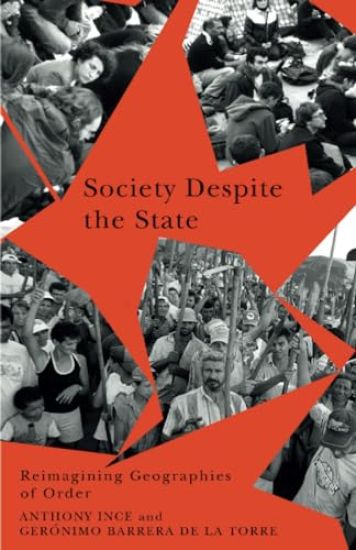
'An accessible, expansive and beautifully written intervention in critical social theory' Alex Prichard, Associate Professor of International Political Theory, University of Exeter The logic of the state has come to define social and spatial relations, embedding itself into our understandings of the world and our place in it. Anthony Ince and Gerónimo Barrera de la Torre challenge this logic as the central pivot around which knowledge and life orbit, by exposing its vulnerabilities, contradictions and, crucially, alternatives. Society Despite the State disrupts the dominance of state-centred ways of thinking by presenting a radical political geography approach inspired by anarchist thought and practice. The book draws on a broad range of voices that have affinities with Western anarchism but also exceed it. This book challenges radicals and scholars to confront and understand the state through a way of seeing and a set of intellectual tools that the authors call 'post-statism' In de-centring the state’s logics and ways of operating, the authors incorporate a variety of threads to identify alternative ways to understand and challenge statism’s effects on our political imaginations.
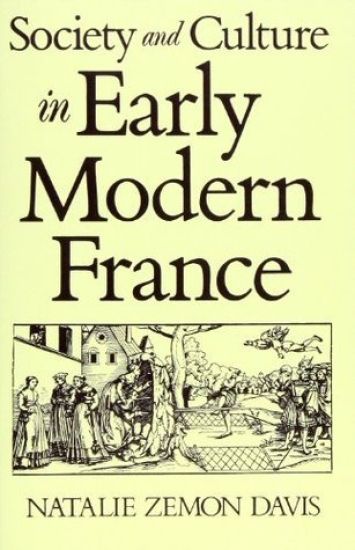
This classic collection of essays has already established itself as a rich source of material for students of sixteenth and seventeenth-century France. Natalie Davis focuses on the lower social orders - peasants, artisans, the poor generally - and in a series of brilliantly penetrating cast-studies throws fresh light on some of the great issues of social change: the impact of printing, the rise of protestantism, the role of women, power-relations between groups and classes'.
Society and Nature is a lively and highly accessible introduction to the sociology of the environment. The book provides a comprehensive guide to contemporary issues and current debates – including society, nature and the enlightenment, industry and environmental transformation, commodification, consumption, the network society and human identity, human biology, citizenship and new social movements. Combining insights from contemporary sociology, politics, developmental biology and psychology, Peter Dickens suggests that environmental degradation is largely due to humanity’s narcissistic demand that the environment be made into a commodity to be consumed. Meanwhile, human biology is also being modified: people’s bodies are being rebuilt in ways that reflect their class positions. People and their surroundings have always adapted according to the demands of society. But modern capitalist society is changing the environment and its people in profound, potentially catastrophic, ways, shaping both human and non-human nature in its own image. The book contains a number of student features to interest and guide the reader as well as an attractive and clear layout. It will be particularly useful for students and teachers of sociology, human ecology, environmental studies and social theory. Dickens' insight won his work the American Sociological Association's Outstanding Publication Award 2006, in the Environment and Technology section.
A comprehensive guide to contemporary issues and current debates including society, nature and the enlightenment, industry and environmental transformation, commodification, consumption, the network society and human identity, human biology, citizenship and new social movements.
Society is under siege – under attack on two fronts: from the global frontier-land where old structures and rules do not hold and new ones are slow to take shape, and from the fluid, undefined domain of life politics. The space between these two fronts, until recently ruled by the sovereign nation-state and identified by social scientists as ‘society' is ever more difficult to conceive of as a self-enclosed entity. And this confronts the established wisdom of the social sciences with a new challenge: sovereignty and power are becoming separated from the politics of the territorial nation-state but are not becoming institutionalized in a new space. What are the consequences of this profound transformation of social life? What kind of world will it create for the twenty-first century? This remarkable book – by one of the most original social thinkers writing today – attempts to trace this transformation and to assess its consequences for the life conditions of ordinary individuals. The first part of the book is devoted to the new global arena in which, thanks to the powerful forces of globalization, there is no 'outside', no secluded place to which one can retreat and hide away, and where the territorial wars of the past have given way to a new breed of 'reconnaissance wars'. The second part deals with settings in which life politics has taken hold and flourished. Bauman argues that the great challenge facing us today is whether we can find new ways to reforge the human diversity that is our fate into the vocation of human solidarity.
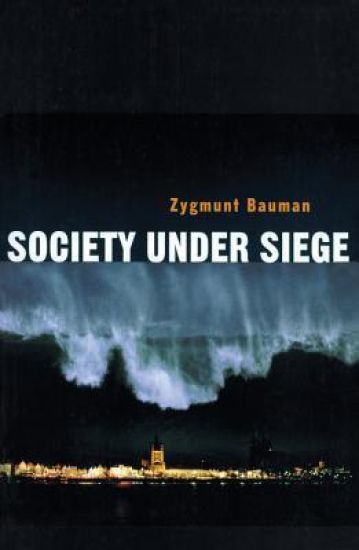
Society is under siege – under attack on two fronts: from the global frontier-land where old structures and rules do not hold and new ones are slow to take shape, and from the fluid, undefined domain of life politics. The space between these two fronts, until recently ruled by the sovereign nation-state and identified by social scientists as ‘society' is ever more difficult to conceive of as a self-enclosed entity. And this confronts the established wisdom of the social sciences with a new challenge: sovereignty and power are becoming separated from the politics of the territorial nation-state but are not becoming institutionalized in a new space. What are the consequences of this profound transformation of social life? What kind of world will it create for the twenty-first century? This remarkable book – by one of the most original social thinkers writing today – attempts to trace this transformation and to assess its consequences for the life conditions of ordinary individuals. The first part of the book is devoted to the new global arena in which, thanks to the powerful forces of globalization, there is no 'outside', no secluded place to which one can retreat and hide away, and where the territorial wars of the past have given way to a new breed of 'reconnaissance wars'. The second part deals with settings in which life politics has taken hold and flourished. Bauman argues that the great challenge facing us today is whether we can find new ways to reforge the human diversity that is our fate into the vocation of human solidarity.
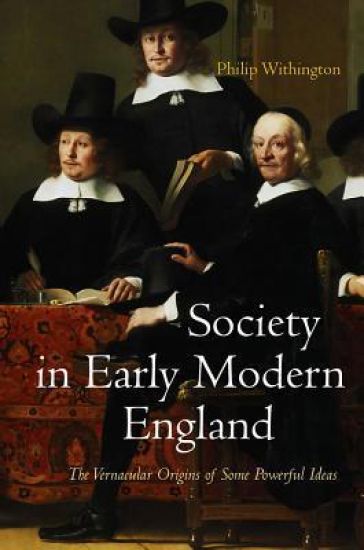
The sixteenth and seventeenth centuries have traditionally been regarded by historians as a period of intense and formative historical change, so much so that they have often been described as ‘early modern' - an epoch separate from ‘the medieval' and ‘the modern'. Paying particular attention to England, this book reflects on the implications of this categorization for contemporary debates about the nature of modernity and society. The book traces the forgotten history of the phrase 'early modern' to its coinage as a category of historical analysis by the Victorians and considers when and why words like 'modern' and 'society' were first introduced into English in the sixteenth and seventeenth centuries. In so doing it unpicks the connections between linguistic and social change and how the consequences of those processes still resonate today. A major contribution to our understanding of European history before 1700 and its resonance for social thought today, the book will interest anybody concerned with the historical antecedents of contemporary culture and the interconnections between the past and the present.