

Kirjahaku
Etsi kirjoja tekijän nimen, kirjan nimen tai ISBN:n perusteella.
1000 tulosta hakusanalla Steven J. Howell

In the award-winning* tale "Process of Elimination," an eccentric writer takes drastic measures to cure a bad case of writer's block.In "The Lift," Anthony Sykes faces a choice between loyalty to the Mob and personal freedom. In "Levinson Road," Hugh Cummings finds himself trapped in a time-loop, marooned on a country road in the dead of night. A small, frightened boy on the side of the road may be his only source of clues, and his only way off the never-ending road. In "On a Covered Bridge," a young boy learns an ugly truth about a stranger he encounters while fishing - and worries he may become the stranger's next victim. Firmly rooted in the tradition of psychological suspense, most of the stories gathered in this ample collection focus on a lone protagonist at war with his own mind. PITCH BLACK is Hitchcock meets THE TWILIGHT ZONE meets Stephen King, all with its own unique blend of terror. * 1st Honorable Mention, Sci-Fi/Horror Category, 2012 WV Writers Competition

Remembering the Space Age: Proceedings of the 50th Anniversary Conference
Steven J. Dick
Createspace Independent Publishing Platform
2009
nidottu


Unmanned combat air vehicles, or in common parlance 'drones', have become a prominent instrument in US efforts to counter an objective (and subjective) cross-border terrorist threat with lethal force. As a result, critical questions abound on the legitimacy of their use. In a series of multidisciplinary essays by scholars with an extensive knowledge of international norms, this book explores the question of legitimacy through the conceptual lenses of legality, morality and efficacy, it then closes with the consideration of a policy proposal aimed at incorporating all three indispensable elements. The importance of this inquiry cannot be overstated. Non-state actors fully understand that attacking the much more powerful state requires moving the conflict away from the traditional battlefield where they are at an enormous disadvantage. Those engaging in terrorism seek to goad the ruling government into an overreaction, or abuse of power, to trigger a destabilization via an erosion of its legitimacy. Thus defending the target of legitimacy”in this case, insuring the use of deadly force is constrained by valid limiting principles”represents an essential strategic interest. This book seeks to come to grips with the new reality of drone warfare by exploring if it can be used to preserve, rather than eat away at, legitimacy. After an extensive analysis of the three key parameters in twelve chapters, the practical proposition of establishing a 'Drone Court' is put forward and examined as a way of pursuing the goal of integrating these essential components to defend the citizenry and the legitimacy of the government at the same time.

A study of the US infantry's struggle to wrest control of Normandy, the Siegfried Line and the Ardennes from their German opponents, offering a glimpse into close-quarters infantry combat of World War 2.The Allied airborne and amphibious landings on D-Day opened up the long-awaited Second Front against Nazi Germany, but after overcoming the German coastal defenses at Utah and “Bloody Omaha,” the US Army found itself having to contest every hedgerow and street in a nightmarish battle of attrition.It was the humble infantrymen of both sides who would play a vital role in taking and holding key objectives. Battles across Europe tested both sides to the limit, from the close-quarters warfare around Cherbourg in June 1944 to the struggle for the Scharnhorst Line in October and the brutal cold-weather fighting in the Ardennes that December.Featuring full-color artwork, specially drawn maps, and archive photographs, this study offers key insights into the tactics, leadership, and combat performance of the US and German infantrymen pitched into three pivotal actions at the height of World War II.
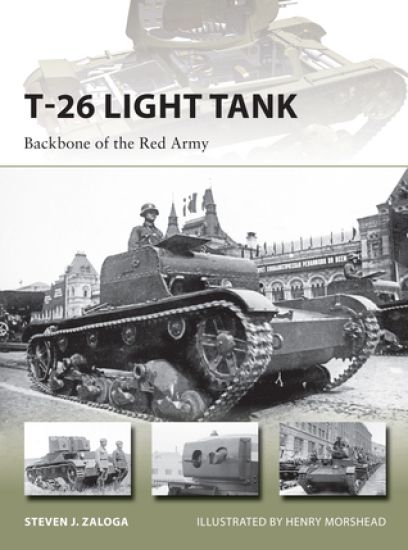
The T-26 was the first major Soviet armour program of the 1930s, beginning as a license-built version of the British Vickers 6-ton export tank. Although the T-26 retained the basic Vickers hull and suspension, the Red Army began to make extensive changes to the turret and armament, starting with the addition of a 45mm tank gun in 1933. The T-26 was built in larger numbers than any other tank prior to World War II. Indeed, more T-26 tanks were manufactured than the combined tank production of Germany, France, Britain, and the United States in 1931–40. This book surveys the development of the T-26 as well as its combat record in the Spanish Civil War, the war in China, the border wars with Poland and Finland in 1939–40, and the disastrous battles of 1941 during Operation Barbarossa.

An in-depth illustrated study of the T-64 Battle Tank, the Soviet Union's most secret and controversial Cold War weapon.The T-64 tank was the most revolutionary design of the whole Cold War, designed to provide the firepower and armour protection of a heavy tank in a medium-weight design. It pioneered a host of new technologies including laminate armour, stereoscopic tank rangefinders, opposed-piston engines, smooth-bore tank guns with discarding sabot ammunition, and gun-fired guided projectiles. These impressive features meant that the Russians were loath to part with the secrets of the design, and the T-64 was the only Soviet tank type of the Cold War that was never exported. Written by an armour expert, this detailed technical history sheds light on the secrets behind the Cold War’s most controversial tank, revealing how its highly advanced technologies proved to be both a blessing and a curse.
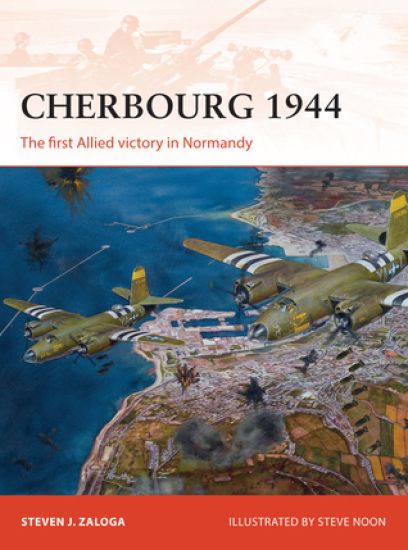
A rigorous and absorbing study of the first major Allied operation in Normandy after the D-Day landings.Blending expert analysis, specially commissioned artwork and illustrative maps, this book tells the story of the bitter struggle to capture this vital point. Cherbourg was recognized by both the German and Allied High commands as crucial to the Allied foothold in Normandy – it was the nearest major port and was desperately needed by the Allies for major logistical operations to support their forces on long stretches of open beach. Hitler, on the other hand, declared Cherbourg to be a 'Festung' (fortress), a designation everyone knew to mean that its defenders were to fight to the last man.After a grueling struggle that involved several distinct tactical phases to overcome the different elements of Cherbourg's defence, the campaign resulted in a bittersweet Allied victory, the drama and significance of which are explained in full in this work.

As the Allies attempted to break out of Normandy, it quickly became apparent that there would be no easy victory over the Germans, and that every scrap of territory on the way to Berlin would have to be earned through hard fighting. This study concentrates on the ferocious battles between the German Panzer IV and US Sherman that were at the heart of this decisive phase of World War II. The two types were among the most-produced tanks in US and German service and were old enemies, having clashed repeatedly in the Mediterranean theater. Throughout their long service careers, both had seen a succession of technical developments and modifications, as well as an evolution in their intended roles – but both remained at the forefront of the fighting on the Western Front.Written by an expert on tank warfare, this book invites the reader into the cramped confines of these armoured workhorses, employing vivid technical illustrations alongside archive and contemporary photography to depict the conditions for the crewmen within.
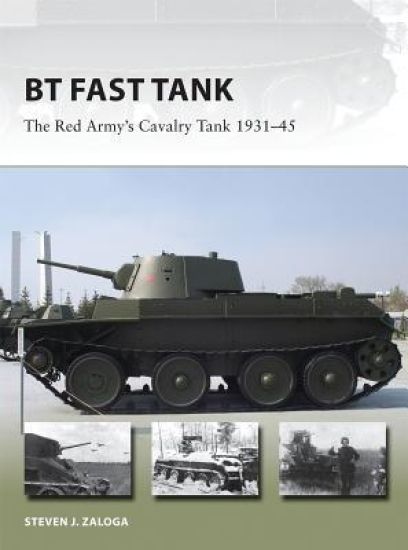
When the Red Army needed to mechanize its cavalry branch in the 1930s, the BT fast tank was its solution. Based on the American Christie high-speed tank, the Red Army began a program to adapt the design to its own needs. Early versions were mechanically unreliable and poorly armed but by the mid-1930s, the BT-5 emerged, armed with an excellent dual-purpose 45mm gun. It saw its combat debut in the Spanish Civil War in 1937 and was later used in the border battles with the Japanese Kwangtung Army in the late 1930s. The final production series, the BT-7, was the most refined version of the family.One of the most common types in Red Army service in the first years of the Second World War, BT tanks saw extensive combat in Poland, Finland, and the opening phases of Operation Barbarossa in 1941 and latterly during the 1945 campaign against the Japanese in Manchuria – this is the story of their design and development history.

World War II marked the zenith of railway gun development. Although many of the railway guns deployed at the start of the conflict were of World War I vintage, Germany's ambitious development programme saw the introduction of a number of new classes, including the world's largest, the 80cm-calibre Schwerer Gustav and Schwerer Dora guns, which weighed in at 1,350 tons and fired a huge 7-ton shell.This book provides an overview of the types of railway guns in service during World War II, with a special focus on the German railway artillery used in France, Italy and on the Eastern Front, and analyzes why railway guns largely disappeared from use following the end of the war.
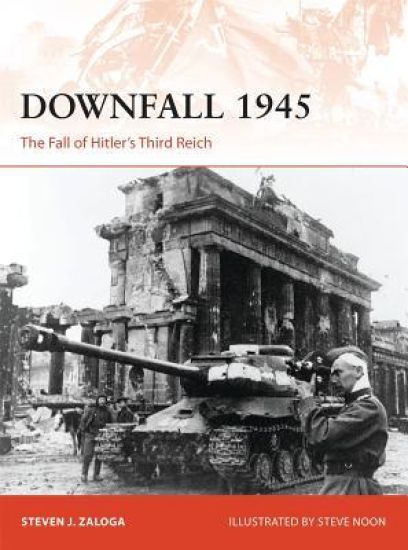
A highly illustrated account of the many and complex operations in the final months of World War II in Europe, detailing the behind-the-scenes political machinations.As the final month of fighting in Europe in 1945 dawned the Allies embarked upon a series of mopping up operations, destroying the last centres of German resistance as the essentially defeated Wehrmacht fought on in increasingly desperate conditions, driven on by the explicit no surrender order issued by Hitler.Yet at the same time, the Allied alliance was already on shaky ground, as German resistance was crushed the Allies began to eye each other nervously across a battletorn Europe, with the politically driven military decisions to have a huge impact on the future of the continent.This book traces the final operations of the war, from the liberation of Denmark, the Allied drive towards the Baltic straits, incursions in Yugoslavia, Hungary, Czechoslovakia and engagements in Eastern and Western Germany, whilst also analyzing how the Allied strategies in the final days of the war were a hint of the future difficulties that would drive the Cold War.
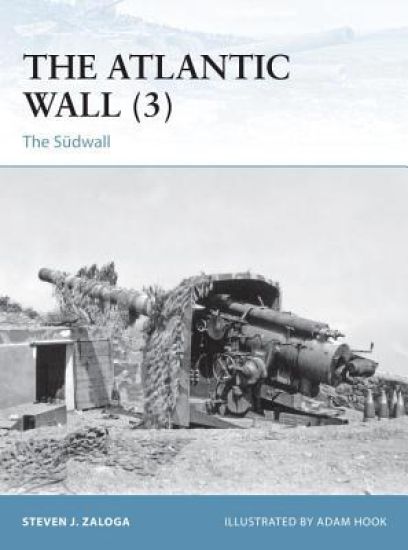
This book completes the story of one of the most formidable defensive lines in Europe in World War II, looking at the lesser known Mediterranean extension and describing how it was conceived of, built and used.After the alarming collapse of Italy in 1943, the Germans launched a crash building program and the ‘Sudwall’ (South Wall) sprang up quickly along the French Mediterranean coast and the neighbouring Italian coast around Genoa. The new defenses were bolstered by existing French fortifications of key port towns such as Marseilles and Toulon – many of them bristling with heavy artillery.Whilst describing the wall’s physical design features, this book also recounts the defenses’ role in the Allied invasion of Southern France; Operation Dragoon – ‘The Second D-Day’. As the Germans’ worst fears became a reality, the southern Atlantic Wall would face its ultimate test.

World War II saw tanks assume a dominant role in warfare, capable of tearing through the enemy lines if left unchecked.To combat the threat posed by these armoured behemoths the United States developed the M1 Anti-Tank Rocket Launcher, better known as the Bazooka. First employed in combat during 1942, the weapon required a great deal of skill and courage to use effectively. By late 1944 it was a mainstay of the US infantry's anti-tank capabilities, alongside towed weapons, anti-tank grenades and other longer-established measures.Focusing on the savage close-quarters fighting between Germany's armoured divisions and the US infantry during the Battle of the Bulge, Steven Zaloga's absorbing study compares and assesses the strengths and limitations of the cutting-edge technology used by both sides. Featuring specially commissioned full-colour artwork and explosive battle reports, this volume casts new light on the evolving nature of infantry-versus-tank combat in the closing months of World War II.

Carl Gustaf Emil Mannerheim is a legendary figure, whose life and career were deeply influential in Finnish and European history.He is viewed by many as the father of modern Finland after leading the ‘White’ faction to victory and independence in the Finnish Civil War of 1918. He then commanded his country's forces in a sequence of bitter clashes in the ice and snow, in the build-up to, and during, World War II: the Winter War in 1939–40, the Continuation War in 1941–44 and the Lapland War in 1944–45.This study provides a fascinating insight into Mannerheim’s career, analysing his traits, his biggest victories and his key enemies. Complete with uniform artwork and detailed tactical maps, it is a comprehensive guide to one of the 20th century's most capable military leaders and statesmen.

A highly illustrated study of the attritional fighting in the bocage country for the vital crossroads of St Lô, for any enthusiast of land warfare in World War II.Following the D-Day landings on 6 June 1944, the First US Army engaged in a six-week struggle to break out of the Normandy beach-head. The hedgerow country of lower Normandy, called the Bocage, presented unanticipated tactical problems since it proved to be ideal for German infantry defense. This book examines the brutal attritional struggle in June-July 1944 to overcome the determined German defense and secure St Lô. The city was the site of a crucial cross-roads and was thus a vital target for the invading Allied forces; the initial bombing attacks were so severe that the journalist and poet Samuel Beckett would later report that it had been 'bombed out of existence in one night'. The attack by ground forces turned into a brutal attritional struggle to overcome the determined German defense.Using full-colour artwork, photographs and maps, this is the engaging story of one of the key engagements in the Battle of Normandy.

During World War II, the two pre-eminent mechanized infantry forces of the conflict, the German Panzergrenadier arm and the US Army’s armoured infantrymen, clashed in France and Belgium after the Normandy landings.These engagements went on to profoundly influence the use of mechanized infantry in the post-war world. Drawing upon a variety of sources, this book focuses on three key encounters between July and December 1944 including during Operation Cobra and the Battle of the Bulge, and examines the origins, equipment, doctrine and combat record of both forces.With specially commissioned full-colour artwork and maps, this study sheds light on the evolving nature of mechanized warfare at the height of World War II.

The tank battles in the Soviet Union during the summer of 1941 were the largest in World War II, exceeding even the more famous Prokhorovka encounter during the Kursk campaign. Indeed, they were the largest tank battles ever fought. This book examines two evenly matched competitors in this conflict, the German Panzer 38(t) and the Soviet BT-7. Both were of similar size, armed with guns of comparable firepower, and had foreign roots – the Panzer 38(t) was a Czechoslovak design and the BT-7 was an evolution of the American Christie tank. With full-colour artwork and archive and present-day photography, this absorbing study assesses the strengths and limitations of these two types against the wider background of armoured doctrine in the opening stages of Operation Barbarossa.
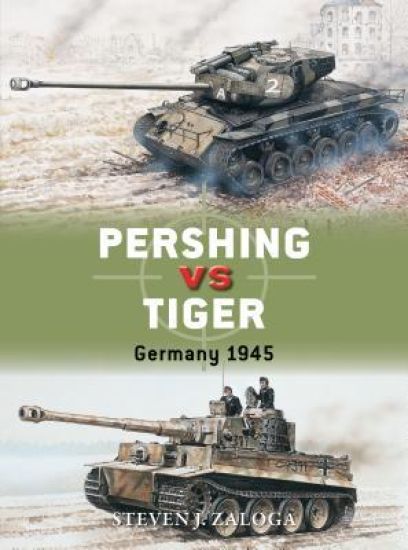
During the final battles on World War II’s Western Front, the legendary German Tiger I heavy tank clashed with the brand-new M26 Pershing fielded by the United States. The Tiger I had earned a formidable reputation by the end of 1944, although its non-sloped armour and poor mobility meant it was being superseded by the Tiger II or 'King Tiger'. While the Tiger I had been in the front lines since 1942, the US Pershing first entered combat in late February 1945, and more than 20 Pershings would see action before war’s end.This book examines the dramatic Tiger/Pershing duel at Elsdorf in Germany, and also assesses the clashes between German armour and the sole 'Super Pershing' deployed to Europe. Featuring full-colour artwork, carefully chosen photographs and specially commissioned maps, this is the story of the first US heavy tanks in combat with the fearsome Tiger I during the last months of World War II in Europe.