Kirjojen hintavertailu. Mukana 12 016 292 kirjaa ja 12 kauppaa.

Kirjahaku

Etsi kirjoja tekijän nimen, kirjan nimen tai ISBN:n perusteella.

1000 tulosta hakusanalla THOMAS LECHFORD

The Works of Thomas Campion

The Works of Thomas Campion

Thomas Campion

W. W. Norton Company
1970
pokkari
This volume is the first edition of the works of Thomas Campion since Percival Vivian's edition of 1909. In addition to a new and improved text of Campion's English works--songs, masques, and treatises--it contains prose translations of selected Latin panegyrics, elegies, and epigrams, accompanied by the Latin text, and musical settings for some of Campion's best-known songs.
The Prose of Sir Thomas Browne

The Prose of Sir Thomas Browne

Thomas Browne

WW NORTON CO
1972
nidottu
This edition of his works, with Introduction, Notes, Comments, and Bibliography, includes all Browne's major pieces and selections from his minor papers and letters. The Notes are designed to help the student understand Browne's references, and the Introduction provides an account of his life and an analysis of his baroque style against the background of seventeenth-century literature.
Thomas Jefferson

Thomas Jefferson

Fawn M. Brodie

WW Norton Co
2010
nidottu
With a novelist’s skill and a scholar’s meticulous detail, Fawn M. Brodie portrays Thomas Jefferson as he wrestled with the great issues of his time: revolution, religion, power, race, and love—ambivalences that exerted a subtle but powerful influence on his political ideas and his presidency. Far advanced for its time, Brodie’s biography was the first to set forth a convincing case that Thomas Jefferson was the father of children by his slave Sally Hemings. In a new introduction, Annette Gordon-Reed, the Pulitzer Prize–winning author of The Hemingses of Monticello, explores the impact of Brodie’s groundbreaking book and explains why it is still such a powerful account of one of our greatest and most elusive presidents.
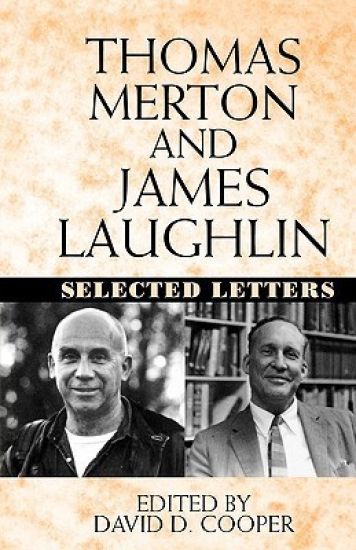
Thomas Merton and James Laughlin

Thomas Merton and James Laughlin

James Laughlin; Thomas Merton

WW NORTON CO
1997
nidottu
Thomas Merton may have seemed an unlikely candidate for a best-selling author. Cloistered in a remote Kentucky monastery, Merton struggled as a young man to reconcile the contemplative life he sought as a monk and his very public passion for writing. Publisher James Laughlin saw Merton's talent and played the muse, encouraging him with the poems, essays, and diaries of other writers and publishing nearly everything Merton sent in return. Ironically, the very society Merton rejected upon entering the monastery embraced his work, bringing him publishing success only dreamed of by more eager authors. Soon Merton discovered he had a podium, a voice, and a responsibility that weighed as heavily on him as his previous quest for silence. Laughlin's encouragement remained constant throughout, as political ally, publishing adviser, and supporting friend. Nearly thirty years of rich correspondence documents this strong literary and personal relationship and traces the remarkable development of Merton's vision: from an early focus on matters internal and religious, to a tremendous world view encompassing issues of race, politics, war, and the spiritual decay of modern society.
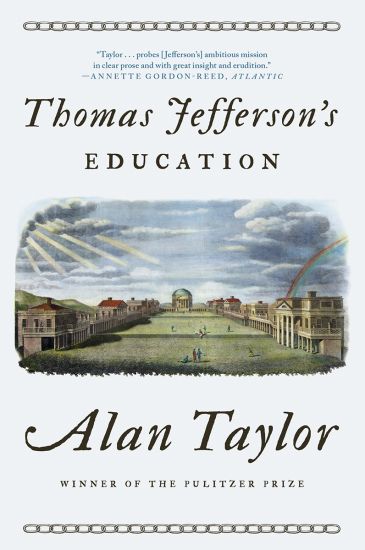
Thomas Jefferson's Education

Thomas Jefferson's Education

Alan Taylor

WW Norton Co
2020
nidottu
By turns entertaining and tragic, this beautifully crafted history reveals the origins of a great university in the dilemmas of Virginia slavery. Thomas Jefferson shares centre stage with his family and fellow planters, all dependent on the labour of enslaved black families. With a declining Virginia yielding to commercially vibrant northern states, in 1819 Jefferson proposed to build a university to educate and improve the sons of the planter elite. He hoped they might one day lead a revitalised Virginia free of slavery—and free of the former slaves. Jefferson’s campaign was a contest for the future of a state and the larger nation. Although he prevails, Jefferson’s vision of reform through education is hobbled by the actions of genteel students with a defiant sense of honour derived from owning slaves. It is the women of this hypermasculine society who redeem the best elements of his legacy.
Thomas Jefferson's Education

Thomas Jefferson's Education

Alan Taylor

WW Norton Co
2019
sidottu
By turns entertaining and tragic, this beautifully crafted history reveals the origins of a great university in the dilemmas of Virginia slavery. Thomas Jefferson shares centre stage with his family and fellow planters, all dependent on the labour of enslaved black families. With a declining Virginia yielding to commercially vibrant northern states, in 1819 Jefferson proposed to build a university to educate and improve the sons of the planter elite. He hoped they might one day lead a revitalised Virginia free of slavery—and free of the former slaves. Jefferson’s campaign was a contest for the future of a state and the larger nation. Although he prevails, Jefferson’s vision of reform through education is hobbled by the actions of genteel students with a defiant sense of honour derived from owning slaves. It is the women of this hypermasculine society who redeem the best elements of his legacy.
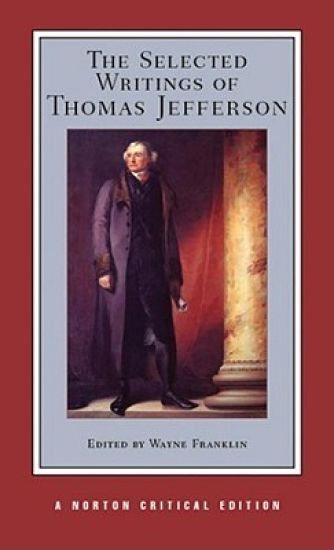
The Selected Writings of Thomas Jefferson

The Selected Writings of Thomas Jefferson

Thomas Jefferson

WW Norton Co
2010
nidottu
This Norton Critical Edition seeks to give readers a full understanding of Thomas Jefferson’s importance to the intellectual development of the United States, particularly in political theory and scientific learning; of Jefferson’s role in the expansion of the territory and sovereignty of the United States; and of Jefferson’s controversial relation to slavery and race as key issues in American history. The editor has selected Jefferson’s most important published texts—A Summary View of the Rights of British America, the Declaration of Independence, and Notes on the State of Virginia—along with An Appendix to the Notes on Virginia Relative to the Murder of Logan’s Family and his Message to Congress on the Lewis and Clark Expedition. In addition, more than one hundred of Jefferson’s letters (1760–1826) have been judiciously selected from his rich body of correspondence, allowing readers to see Jefferson as a person as well as a public figure. All texts are accompanied by detailed explanatory annotations. “Contexts” reprints contemporary documents that place Jefferson and his writings within the early American Republic, including works by Thomas Paine, John Adams, François-Jean de Beauvoir, and Luther Martin. Also included are diverse and early responses to Jefferson and his writings by, among others, John Quincy Adams, William Cullen Bryant, Washington Irving, James Fenimore Cooper, and Elizabeth Cady Stanton. "Criticism" provides representative works of modern interpretation and analysis that confirm Jefferson's continuing relevance. Included are twelve thought-provoking assessments from several disciplinary perspectives by, among others, Annette Gordon Reed, Peter Onuf, and Douglas L. Wilson. A Selected Bibliography is also included.
New and Selected Poems of Thomas Lux

New and Selected Poems of Thomas Lux

Thomas Lux

Houghton Mifflin (Trade)
1999
nidottu
One of the New York Public Library's 25 "Books to Remember" in 1997 Lux comments on the absurd, the pathetic, and the commonplace in our culture, writing with compassion as well as satire. He is "singular among his peers in his ability to convey with a deceptive lightness the paradoxes of human emotion," says Publishers Weekly, and Robert Hass, in the Washington Post Book World, takes special note of Lux's "bitter wit, the kind of irony that comes with a quick, impatient intelligence."
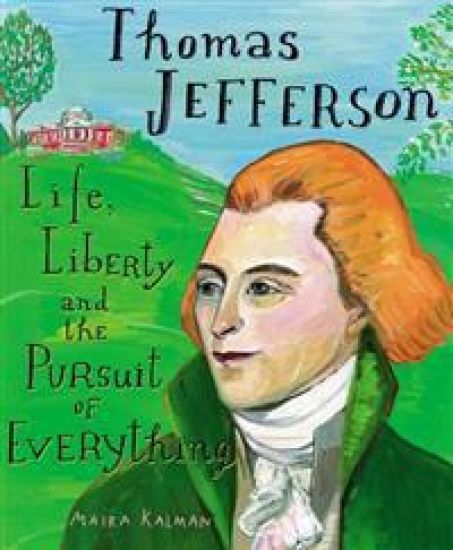
Thomas Jefferson: Life, Liberty and the Pursuit of Everything
Renowned artist Maira Kalman sheds light on the fascinating life and interests of the Renaissance man who was our third president. Thomas Jefferson is perhaps best known for writing the Declaration of Independence--but there's so much more to discover. This energetic man was interested in everything. He played violin, spoke seven languages and was a scientist, naturalist, botanist, mathematician and architect. He designed his magnificent home, Monticello, which is full of objects he collected from around the world. Our first foodie, he grew over fifteen kinds of peas and advocated a mostly vegetarian diet. And oh yes, as our third president, he doubled the size of the United States and sent Lewis and Clark to explore it. He also started the Library of Congress and said, "I cannot live without books." But monumental figures can have monumental flaws, and Jefferson was no exception. Although he called slavery an "abomination," he owned about 150 slaves. As she did in Looking at Lincoln, Maira Kalman shares a president's remarkable, complicated life with young readers, making history come alive with her captivating text and stunning illustrations.
Thomas Hobbes
Thomas Hobbes is arguably the greatest of all English philosophers. In the second half of the twentieth century, he has been subject to sustained critical attention. He was capable of powerful argument on virtually any plane, whether logical, scriptural or historical. And he has attracted attention in all these areas and more - to do with questions of historical method, language and linguistics, metaphysics, ethics, law, politics, science and religion.Hobbes has been attended to from a great variety of perspectives - as an ethical positivist and a deontologist, as a bourgeois advocate and a supporter of the aristocracy, as an absolutist and a proponent of parliamentary government, as a `conservative' and a `modern', as an atheist and a believer. The periodical literature on Hobbes is accordingly very rich, but it is also difficult of access. The four volumes of these critical assessments conveniently assemble an important array of material. This ready availability will prove immensely helpful to all students of Hobbes.
Thomas Chatterton: Early Sources and Responses
The revival of interest in medieval life and literature during the 18th century led to a fanatical search for antiquarian literary treasures - forgers such as James Macpherson, William Henry Ireland and Thomas Chatterton provided them to their willing and eager patrons. Chatterton wrote on scraps of old parchment and posed it as the work of Thomas Rowley and others. The publication of Thomas Tyrwhitt's first collection of Rowley poems in 1777 gave rise to a heated literary controversy regarding their authenticity. This is a collection of the major contemporary contributions to this controversy - all of them extremely rare.
Thomas Chalmers (1780-1847)
Rev Dr Thomas Chalmers (1780-1847), eminent churchman and political economist, was a keen social reformer and played an instrumental role in the voluntary principle in Scottish poor relief during the changes associated with industrialization and urbanization of the early nineteenth century.Chalmers was also pioneer of a comprehensive vision of society so organized that, in the midst of the changes of his age, it would recover a sense of individual and communal responsibility. The selections from his writings included in this set illustrate both his role as a social theorist and a practical exponent of innovative programmes of social reform.
Thomas Wyatt

Thomas Wyatt

Routledge
1995
sidottu
The Critical Heritage gathers together a large body of critical sources on major figures in literature. Each volume presents contemporary responses to a writer's work, enabling students and researchers to read for themselves, for example, comments on early performances of Shakespeare's plays, or reactions to the first publication of Jane Austen's novels. The carefully selected sources range from landmark essays in the history of criticism to journalism and contemporary opinion, and little published documentary material such as letters and diaries. Significant pieces of criticism from later periods are also included, in order to demonstrate the fluctuations in an author's reputation. Each volume contains an introduction to the writer's published works, a selected bibliography, and an index of works, authors and subjects. The Collected Critical Heritage set will be available as a set of 68 volumes and the series will also be available in mini sets selected by period (in slipcase boxes) and as individual volumes.
Thomas Hardy

Thomas Hardy

Routledge
1995
sidottu
The Critical Heritage gathers together a large body of critical sources on major figures in literature. Each volume presents contemporary responses to a writer's work, enabling students and researchers to read for themselves, for example, comments on early performances of Shakespeare's plays, or reactions to the first publication of Jane Austen's novels. The carefully selected sources range from landmark essays in the history of criticism to journalism and contemporary opinion, and little published documentary material such as letters and diaries. Significant pieces of criticism from later periods are also included, in order to demonstrate the fluctuations in an author's reputation. Each volume contains an introduction to the writer's published works, a selected bibliography, and an index of works, authors and subjects. The Collected Critical Heritage set will be available as a set of 68 volumes and the series will also be available in mini sets selected by period (in slipcase boxes) and as individual volumes.
Thomas Carlyle
The Critical Heritage gathers together a large body of critical sources on major figures in liteature. Each volume presents contemporary responses on a writer's work, enabling student and researcher to read the material themselves.
Thomas Robert Malthus
Malthus' Essay on the Principles of Population was one of the most controversial books ever published. Going through six editions in the author's lifetime, it cast a long shadow down the nineteenth century, with nearly all of the century's leading thinkers - from Hazlitt and Ricardo to Marx and Darwin - feeling compelled to comment on it.
Thomas Paine: Life and Works
Thomas Paine was a hugely influential revolutionary pamphleteer, whose writings were instrumental in bringing about some of the greatest political changes the world has seen. Paine's enduring importance lies not so much in the depth of his political philosophy as in his great abilities as a communicator of political ideas. Conway's Writings was the first complete critical collection of Paine's works, and his Life was the first account to show Paine in a positive light.