Kirjojen hintavertailu. Mukana 12 390 323 kirjaa ja 12 kauppaa.

Kirjahaku

Etsi kirjoja tekijän nimen, kirjan nimen tai ISBN:n perusteella.

1000 tulosta hakusanalla Tom Keymer

Tom Symons

Tom Symons

University of Ottawa Press
2011
sidottu
Tom Symons: A Canadian Life is a compelling portrait of one of Canada's pre-eminent educational and cultural statesmen of the twentieth century. An outstanding public figure, Symons was a leader in many areas of Canadian life, including as the founding president of Trent University, as a pioneer in Canadian and Aboriginal studies, as an architect of national unity and French-language education in Ontario, as a champion of human rights, and as the chief policy advisor to the federal Progressive Conservative party in the 1960s and 1970s. The volume's contributors are as remarkable as its subject. They include Madam Justice Rosalie Silberman Abella of the Supreme Court of Canada; the Honourable Tom McMillan, former federal Minister of the Environment; the Honourable Charles Beer, former Ontario Cabinet Minister; Ivan Fellegi, former Chief Statistician of Canada; John Fraser, one of Canada's most distinguished journalists; and Denis Smith, award-winning biographer of John Diefenbaker, among others. Tom Symons: A Canadian Life is a study in leadership. It brings to light the unique human and personal qualities that allowed Symons to lead in such a wide range of areas and to exercise such deep and lasting influence on so many Canadian institutions -- contributions that continue to be meaningful and relevant for Canada today.
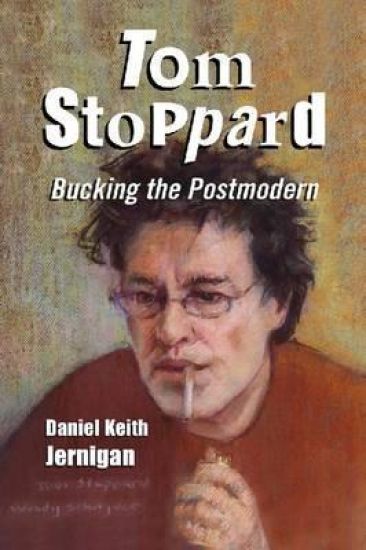
Tom Stoppard

Tom Stoppard

Daniel Keith Jernigan

McFarland Co Inc
2012
pokkari
Tom Stoppard is justly famous for his innovative theatrical techniques. Daniel Jernigan argues that while much of Tom Stoppard's early work (Rosencrantz and Guildenstern Are Dead and The Real Inspector Hound, for instance) is postmodern, the remainder of his career essentially tracks backward from there--becoming "late modernist" in the 1970s (Travesties) and fully modernist in the 80s and 90s (The Real Thing and Arcadia). This pattern also makes sense of Stoppard's recent and uncharacteristic foray into dramatic realism with The Coast of Utopia (2002) and Rock 'n' Roll (2006), at which point the playwright seems to embrace the more straightforward rhetorical advantages of literary realism.
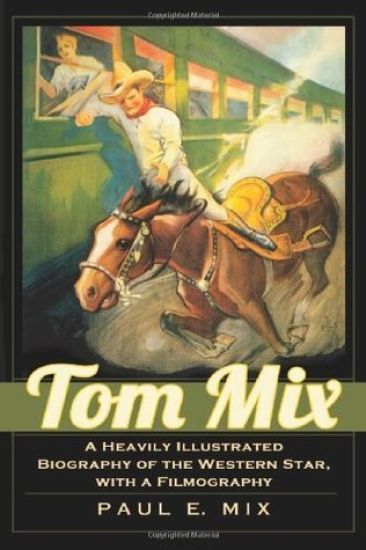
Tom Mix

Tom Mix

Paul E. Mix

McFarland Co Inc
2011
pokkari
Tom Mix became a major star in the 1920s, earning over $900,000 for his movie work in 1921. Fox refused, however, to renew his contract in 1927, and that, coupled with the stock market crash of 1929, left him virtually penniless. In 1932 Mix resumed his movie career, making Destry Rides Again, his first "talkie." Later he became a circus owner and star. This is the story of Mix's life and career; it includes a comprehensive filmography of his work.
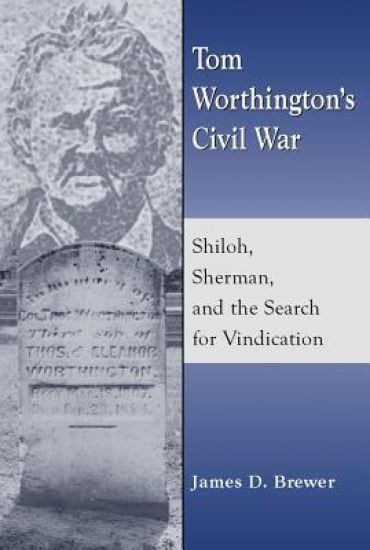
Tom Worthington's Civil War

Tom Worthington's Civil War

James D. Brewer

McFarland Co Inc
2013
pokkari
In 1807, Thomas Worthington was born into a wealthy and powerful Ohio family. Though his path in life should have led to fortune and prestige, he died alone and penniless, having spent his life and his fortune trying to remove the stain of shame from his reputation and name. This is the previously untold story of Worthington, West Point graduate, leader of men in both the Mexican War and War Between the States, and bitter enemy of the man who would ruin his life--General William Tecumseh Sherman. As commander of the 46th Ohio Volunteer Infantry, Worthington valiantly led his men into battle at Shiloh, but his knowledge of Sherman's blunders, both before and during the battle, resulted in his being illegally court-martialed and cashiered out of the Army. The last twenty years of his life were spent in a desperate quest to tell his side of the story, the true events of Shiloh as he saw them. Colonel Worthington's story is one of war, both public and personal, honor, and a quest for vindication. Photographs and maps illustrate Worthington's dramatic life and struggle.
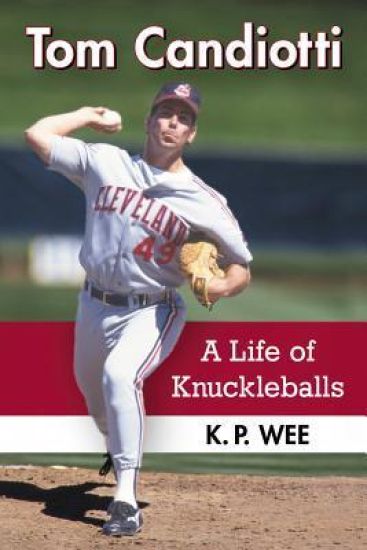
Tom Candiotti

Tom Candiotti

K.P. Wee

McFarland Co Inc
2014
pokkari
Most baseball fans know Tom Candiotti as a knuckleballer but he began his career as a conventional pitcher in 1983--after becoming just the second player to appear in the major leagues following Tommy John surgery, at a time when only Tommy John himself had ever come back from the operation. Candiotti, whose arm recovered, threw fastballs and curveballs in his first two years in the majors before switching over to the knuckleball for the 1986 season. He would then go on to use primarily the knuckleball for the rest of his career, though he threw a good enough curveball to get hitters out. This biography is based on the recollections of Candiotti himself, his former teammates and managers, newspaper and periodical accounts, and archival resources.
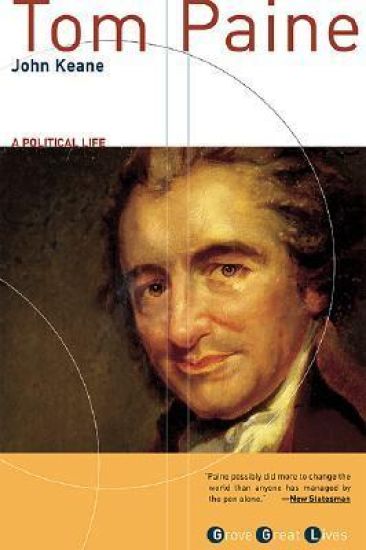
Tom Paine

Tom Paine

John Keane

Black Cat
2003
nidottu
Portrays the life of one of democracy's greatest champions--a soldier, diplomat, and pamphleteer of the American Revolution who helped draft the French Constitution.
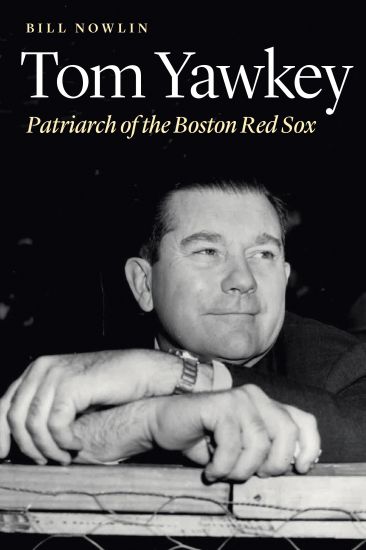
Tom Yawkey

Tom Yawkey

Bill Nowlin

University of Nebraska Press
2018
sidottu
2019 SABR Baseball Research Award Few people have influenced a team as much as did Tom Yawkey (1903–76) as owner of the Boston Red Sox. After purchasing the Red Sox for $1.2 million in 1932, Yawkey poured millions into building a better team and making the franchise relevant again. Although the Red Sox never won a World Series under Yawkey’s ownership, there were still many highlights. Lefty Grove won his three hundredth game; Jimmie Foxx hit fifty home runs; Ted Williams batted .406 in 1941, and both Williams and Carl Yastrzemski won Triple Crowns. Yawkey was viewed by fans as a genial autocrat who ran his ball club like a hobby more than a business and who spoiled his players. He was perhaps too trusting, relying on flawed cronies rather than the most competent executives to run his ballclub. One of his more unfortunate legacies was the accusation that he was a racist, since the Red Sox were the last Major League team to integrate, and his inaction in this regard haunted both him and the team for decades. As one of the last great patriarchal owners in baseball, he was the first person elected to the Baseball Hall of Fame who hadn’t been a player, manager, or general manager. Bill Nowlin takes a close look at Yawkey’s life as a sportsman and as one of the leading philanthropists in New England and South Carolina. He also addresses Yawkey’s leadership style and issues of racism during his tenure with the Red Sox.
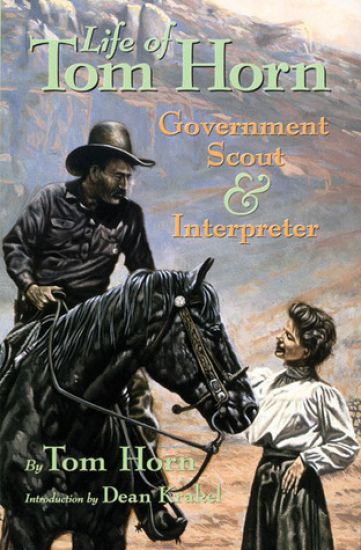
Life of Tom Horn

Life of Tom Horn

Tom Horn

University of Oklahoma Press
1973
nidottu
On November 20, 1903, Tom Horn was hanged in Cheyenne, Wyoming, for the murder of a fourteen-year-old nester boy. Horn-army scout and interpreter for Generals Willcox, Crook, and Miles in the Apache wars, Pinkerton operative, cattle detective, and ""King of Cowboys""-was hanged like a common criminal, many think mistakenly.His own account of his life, written while he was in prison and first published in 1904, is not really a vindication, says Dean Krakel in his introduction. ""While the appendix is spiked with interesting letters, testimonials, and transcripts, they don't really add up to anything in the way of an explanation of what really happened.""Regardless of Horn's guilt or innocence, his story, beginning when he was a runaway Missouri farm boy, provides a firsthand look at scout Al Sieber in action, at the military both great and small, at the wily Geronimo, the renegade Natchez, and old Chief Nana of the Apaches.
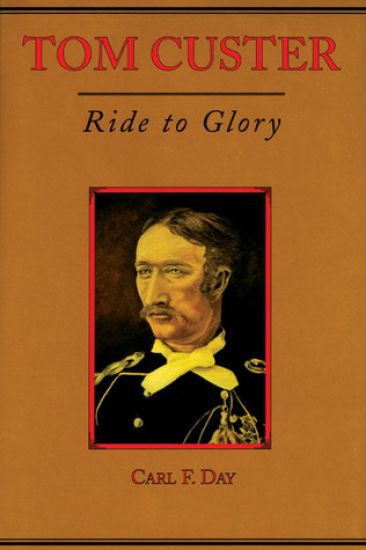
Tom Custer

Tom Custer

Carl F. Day

University of Oklahoma Press
2005
nidottu
In this biography - the first to document the life of Tom Custer - Carl F. Day reveals the public and private life of a distinguished American soldier. Although his life has been overshadowed by his more famous, or infamous, older brother, George Armstrong Custer, Tom Custer was a notable figure in his own right. At the end of his service in the Civil War, Tom Custer received the Medal of Honor twice - the first man in American history and the only Federal soldier in the Civil War to do so. He went on to participate in the Battle of the Washita, Stanley's Yellowstone Expedition, the Black Hills expedition, and the final march to the Little Bighorn, where along with his brother George he met his death in 1876.
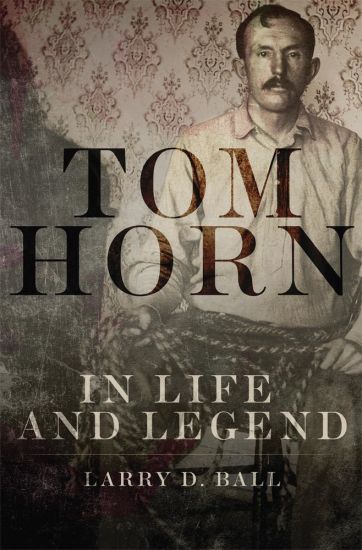
Tom Horn in Life and Legend

Tom Horn in Life and Legend

Larry D. Ball

University of Oklahoma Press
2015
nidottu
Some of the legendary gunmen of the Old West were lawmen, but more, like Billy the Kid and Jesse James, were outlaws. Tom Horn (1860-1903) was both. Lawman, soldier, hired gunman, detective, outlaw, and assassin, this darkly enigmatic figure has fascinated Americans ever since his death by hanging the day before his forty-third birthday. In this masterful historical biography, Larry Ball, a distinguished historian of western lawmen and outlaws, presents the definitive account of Horn's career.Horn became a civilian in the Apache wars when he was still in his early twenties. He fought in the last major battle with the Apaches on U.S. soil and chased the Indians into Mexico with General George Crook. He bragged about murdering renegades, and the brutality of his approach to law and order foreshadows his controversial career as a Pinkerton detective and his trial for murder in Wyoming. Having worked as a hired gun and a range detective in the years after the Johnson County War, he was eventually tried and hanged for killing a fourteen-year-old boy. Horn's guilt is still debated.To an extent no previous scholar has managed to achieve, Ball distinguishes the truth about Horn from the numerous legends. Both the facts and their distortions are revealing, especially since so many of the untruths come from Horn's own autobiography. As a teller of tall tales, Horn burnished his own reputation throughout his life. In spite of his services as a civilian scout and packer, his behavior frightened even his lawless companions. Although some writers have tried to elevate him to the top rung of frontier gun wielders, questions still shadow Horn's reputation.Ball's study concludes with a survey of Horn as described by historians, novelists, and screenwriters since his own time. These portrayals, as mixed as the facts on which they are based, show a continuing fascination with the life and legend of Tom Horn.
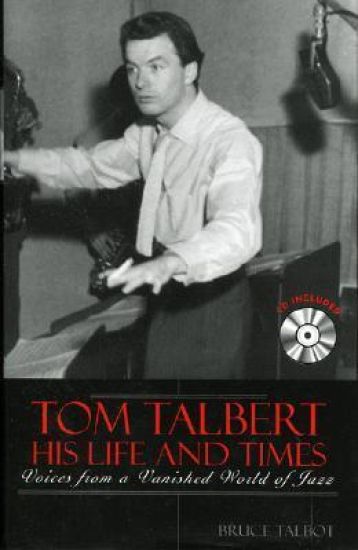
Tom Talbert D His Life and Times

Tom Talbert D His Life and Times

Bruce Talbot

Scarecrow Press
2004
muu
"A jazz classicist, schooled in the past, with a yen for the future, Tom Talbert is a romantic who shuns the cliche. He is a technician who trusts the heart. Even when he's being clever his notes are warm and tender." Budd Schulberg wrote these words in 1957. Almost 50 years later they still apply. A contemporary of Gerry Mulligan, Shorty Rogers, Gil Evans, Bill Holman, and Ralph Burns, Tom Talbert is a composer, arranger, bandleader, and pianist. In the late 1940s he led his own big band in Los Angeles, featuring star artists like Art Pepper, Warne Marsh, and Claude Williamson. In New York in the 1950s he wrote for Charlie Burnet, Buddy Rich, Claude Thornhill, Marian McPartland, Kai Winding, Machito, and conceived and Scored two of the most strikingly original albums in the history of jazz recording. Tom Talbert returned to Los Angeles in 1975 and has continued to record his own innovative, impressionistic, and subtly swinging music using the finest players, even to this day. In this account of his life and career, Bruce Talbot paints a vivid portrait of Tom Talbert and his world. Utilizing first-hand accounts, the book is crammed with memories of Los Angeles in the 40s, road tours of the Mid-West, a rare glimpse of the Twin Cities jazz scene during World War II, and a portrait of New York City in the 50s when it was truly the jazz capital of the world. The book includes a complete discography of Tom Talbert's work and a CD containing fourteen of his most important and representative recordings.
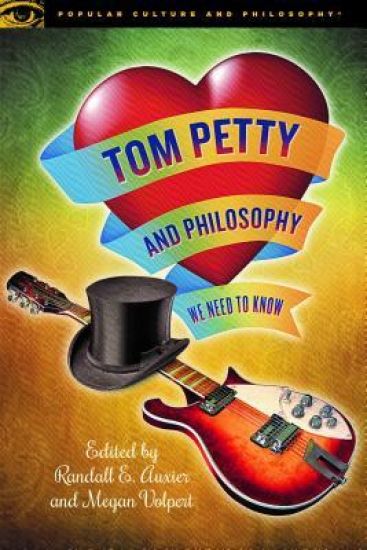
Tom Petty and Philosophy

Tom Petty and Philosophy

Open Court Publishing Co ,U.S.
2019
pokkari
"Seventeen curious, well-tuned writers (they’re fans, too) turn their philosophical attention to Tom Petty in this intellectually rigorous and wildly fun ‘little box set of big ideas’. In his hits, deep cuts, and videos they find complexity, ideas, and plenty of questions—plus some answers—about the human condition. I need to know, Petty once sang. These writers are really listening.” —JOE BONOMO, author of Field Recordings from the Inside (2017) and editor of Conversations with Greil Marcus (2012) “A great song has worlds inside of it. And Tom Petty wrote a lot of them. But too often we don’t stop to explore, question, consider, knock on a few of the doors that appear down a great song’s corridors. In this collection, some thoughtful writers have come together to show us how they did it. It stands as a testament both to the strength of Petty’s songwriting and record-making and the possibilities that remain as regards writing about music.” —WARREN ZANES, author of Petty: The Biography (2015) “Maybe because he simply made it all look easy, Tom Petty never received the unanimous critical glory bestowed upon more obvious geniuses. But now that his career is complete, the world is gradually awakening to what his fans have known all along: Tom was plugged directly into the original juice of rock’n’roll, injecting that authenticity into everything he ever touched. This collection of deeply thoughtful, dimensional chapters goes a long way in setting the record straight. In each, the author bears witness to the profound impact of Tom's music on our lives, and also our thoughts.” —PAUL ZOLLO, author of Conversations with Tom Petty “Tom Petty would have hated this book. And that’s why it’s necessary—to give new context to songs and an oeuvre that defied his own explanation.” —NEIL STRAUSS, contributing editor, Rolling Stone “This is a fun appraisal of Tom Petty’s masterful musical works as viewed through the framework of both classical and modern philosophical theory. Tom Petty and Philosophy is recommended for both the fan and the student of rock.” —NICK THOMAS, author of Tom Petty: An American Rock and Roll Story (2014) “Just as no single musical genre easily ensnares Petty’s musical catalogue, this book is—thankfully—not easily pigeonholed. It spans a wide range of topics. From whether Tom Petty was a feminist to whether the album Echo displays a situation of distress in Nietzsche’s sense, there’s something here for all Petty fans to ruminate and debate for years to come.” —CLAY CALVERT, University of Florida professor teaching “Tom Petty 101” For the first time, serious thinkers explore the work of this towering genius of rock music. For fans of Tom Petty, this volume is an eye-opener, with fourteen music-savvy philosophers looking at different facets of Petty’s artistic contribution. They examine not only Tom Petty’s thoughts but also the thoughts we have while we listen. The authors, all Petty fans, come from every philosophical viewpoint: classical, analytic, postmodernist, phenomenological, and Nietzschean. Tom Petty’s body of work exists on a continuum between Folk and Rock, between New Wave and Americana, between Southern simplicity and West Coast chic. There is the legacy left to his main backing band, the Heartbreakers, but also bookended by Mudcrutch and his collaborations with his elders, such as Bob Dylan, George Harrison, Roy Orbison, and Johnny Cash. Tom Petty’s songs hook and they captivate, but they are often profound in their understatement, their stark minimalism. His insight into the human condition conveys a powerful philosophical anthropology with a metaphysics of tragedy, gravity, and levity. Tom Petty’s ethics focuses on dilemmas of the outcast, downtrodden, and heartbroken with a view to the fallen and the sinful as our redeemable antiheroes of the everyday. His political thinking is that of the artist, enlivened by Southern hostilities and Californian futilities, culminating in a personal ethic that puts duty to the fans first. Petty’s theory of knowledge is psychological and interpersonal, both deeply meditative and delightfully skeptical. The dialectic of love and hate, abuse and recovery, poverty and power, triumph and loss provide the genuine objects of knowledge. Above all, Petty’s songs are the confessions of a poetic mind interpreting a wounded soul. Petty lived his life the way he wrote and the way he played. It was grit, drive, and just enough finesse, to make things nice, where they need to be nice. On stage, he put the schau in Anschauung. Petty stood up to corporate assholes in a number of precedent-setting legal maneuvers and album concepts, risking his career and fortune, but never backing down. He was the center of a musical community that endured over four decades. His ability to cultivate new generations of listeners while connecting himself backward to the heroes of his own youth have made him universally respected by the widest range of music fans.
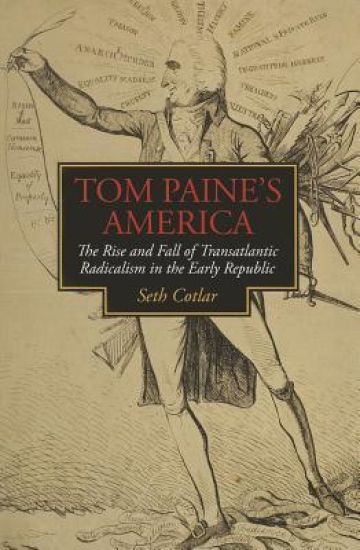
Tom Paine's America

Tom Paine's America

Seth Cotlar

University of Virginia Press
2014
nidottu
Tom Paine’s America explores the vibrant, transatlantic traffic in people, ideas, and texts that profoundly shaped American political debate in the 1790s. In 1789, when the Federal Constitution was ratified, “democracy” was a controversial term that very few Americans used to describe their new political system. That changed when the French Revolution - and the wave of democratic radicalism that it touched off around the Atlantic World - inspired a growing number of Americans to imagine and advocate for a wide range of political and social reforms that they proudly called “democratic.”One of the figureheads of this new international movement was Tom Paine, the author of Common Sense. Although Paine spent the 1790s in Europe, his increasingly radical political writings from that decade were wildly popular in America. A cohort of democratic printers, newspaper editors, and booksellers stoked the fires of American politics by importing a flood of information and ideas from revolutionary Europe. Inspired by what they were learning from their contemporaries around the world, the evolving democratic opposition in America pushed their fellow citizens to consider a wide range of radical ideas regarding racial equality, economic justice, cosmopolitan conceptions of citizenship, and the construction of more literally democratic polities.In Europe such ideas quickly fell victim to a counter-Revolutionary backlash that defined Painite democracy as dangerous Jacobinism, and the story was much the same in America’s late 1790s. The Democratic Party that won the national election of 1800 was, ironically, the beneficiary of this backlash; for they were able to position themselves as the advocates of a more moderate, safe vision of democracy that differentiated itself from the supposedly aristocratic Federalists to their right and the dangerously democratic Painite Jacobins to their left.
Tom Waits' Swordfishtrombones

Tom Waits' Swordfishtrombones

David Smay

Continuum International Publishing Group Ltd.
2008
nidottu
Two entwined narratives run through the creation of "Swordfishtrombones" and form the backbone of this book. As the 1970s ended, Waits felt increasingly constrained and trapped by his persona and career. Bitter and desperately unhappy, he moved to New York in 1979 to change his life. It wasn't working. But at his low point, he got the phone call that changed everything: Francis Ford Coppola asked Tom to write the score for "One From the Heart". Waits moved back to Los Angeles to work at Zoetrope's Hollywood studio for the next eighteen months. He cleaned up, disciplined himself as a songwriter and musician, collaborated closely with Coppola and met a script analyst named Kathleen Brennan - his "only true love".They married within two months at the Always and Forever Yours Wedding Chapel at 2am. "Swordfishtrombones" was the first thing Waits recorded after his marriage, and it was at Kathleen's urging that he made a record that conceded exactly nothing to his record label, or the critics, or his fans. There aren't many love stories where the happy ending sounds like a paint can tumbling in an empty cement mixer!Kathleen Brennan was sorely disappointed by Tom's record collection. She forced him out of his comfortable jazzbo pocket to take in foreign film scores, German theatre and Asian percussion. These two stories of a man creating that elusive American second act, and also finding the perfect collaborator in his wife give this book a natural forward drive."Thirty-Three and a Third" is a series of short books about critically acclaimed and much-loved albums of the past 40 years. By turns obsessive, passionate, creative and informed, the books in this series demonstrate many different ways of writing about music.
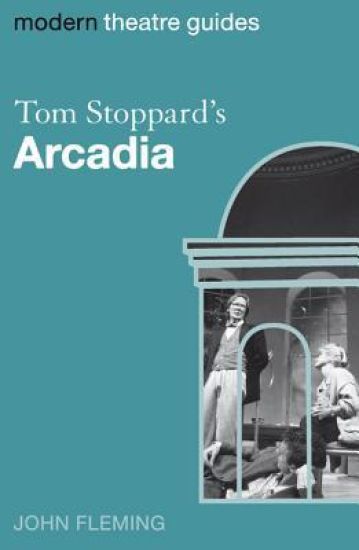
Tom Stoppard's Arcadia

Tom Stoppard's Arcadia

John Fleming

Continuum International Publishing Group Ltd.
2009
sidottu
This title provides an accessible and informative critical introduction to Tom Stoppard's "Arcadia" - a play commonly studied at undergraduate level.Tom Stoppard is widely regarded as one of the leading contemporary British playwrights, a writer who has earned an intriguing mix of both critical and commercial success. "Arcadia" is considered by many critics to be Stoppard's masterpiece, a work that weds his early career love for words and ideas with his later career emphasis on storytelling and emotional engagement.With its engaging alteration between past and present, "Arcadia" offers a comedic and entertaining exploration of chaos theory, entropy, the Second Law of thermodynamics, iterated algorithms, fractals, and other concepts culled the realms of math and science. This guide provides a comprehensive critical introduction to the play, giving students a much-needed overview of the play's background and context including Stoppard's source material as well as full discussion of the text and its performance history to date."Continuum Modern Theatre Guides" offer concise, accessible and informed introductions to the key plays of modern times. Each book is carefully structured to offer a systematic study of the play in its biographical, historical, social and political context, an in-depth study of the text, an overview of the work's production history including screen adaptations, and practical workshopping exercises. They also include a timeline and suggestions for further reading which highlight key critical approaches. This will enable students to develop their understanding of playwrights and theatre-makers, as well as inspiring them to broaden their studies.
Tom Stoppard's Arcadia

Tom Stoppard's Arcadia

John Fleming

Continuum International Publishing Group Ltd.
2009
nidottu
This is an accessible and informative critical introduction to Tom Stoppard's "Arcadia" - a play commonly studied at undergraduate level.Tom Stoppard is widely regarded as one of the leading contemporary British playwrights, a writer who has earned an intriguing mix of both critical and commercial success. "Arcadia" is considered by many critics to be Stoppard's masterpiece, a work that weds his early career love for words and ideas with his later career emphasis on storytelling and emotional engagement.With its engaging alteration between past and present "Arcadia" offers a comedic and entertaining exploration of chaos theory, entropy, the Second Law of thermodynamics, iterated algorithms, fractals, and other concepts culled the realms of math and science. This guide provides a comprehensive critical introduction to the play, giving students a much-needed overview of the play's background and context including Stoppard's source material as well as full discussion of the text and its performance history to date."Continuum Modern Theatre Guides" offer concise, accessible and informed introductions to the key plays of modern times. Each book is carefully structured to offer a systematic study of the play in its biographical, historical, social and political context, an in-depth study of the text, an overview of the work's production history including screen adaptations, and practical workshopping exercises. They also include a timeline and suggestions for further reading which highlight key critical approaches. This will enable students to develop their understanding of playwrights and theatre-makers, as well as inspiring them to broaden their studies.