Kirjojen hintavertailu. Mukana 11 627 220 kirjaa ja 12 kauppaa.

Kirjahaku

Etsi kirjoja tekijän nimen, kirjan nimen tai ISBN:n perusteella.

1000 tulosta hakusanalla Torrence Davis

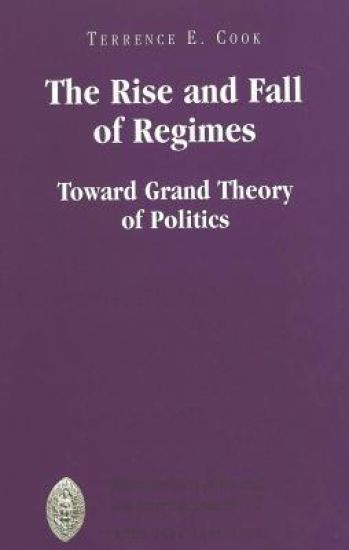
The Rise and Fall of Regimes

The Rise and Fall of Regimes

Terrence E. Cook

Peter Lang Publishing Inc
2000
sidottu
A contribution toward grand theory of political change, "The Rise and Fall of Regimes" describes three kinds of "rule systems": (1) "pragmatic," or opportunistic, Machiavellian; (2) "informal normative," or moral; and (3) "formal normative," such as laws and treaties. Changing relative ascendencies of these rule systems define six ideal-typical stages in the development and decline of both states and international regimes. As implicit in Martin Wight, these stages of distinctive rules climates may in development move -Machiavellian-, to -Grotian-, to -Kantian-, and then reverse these in the three stages of decline. In describing each stage, the author explores the dynamic mechanisms, which accent shifting kinds of "problems" as these relate to "coalitions" that form or fall apart behind political communities, regimes, or specific leaders. The last chapter suggests relevance to understanding "systems of power" and the practical goal of predicting and preventing wars."
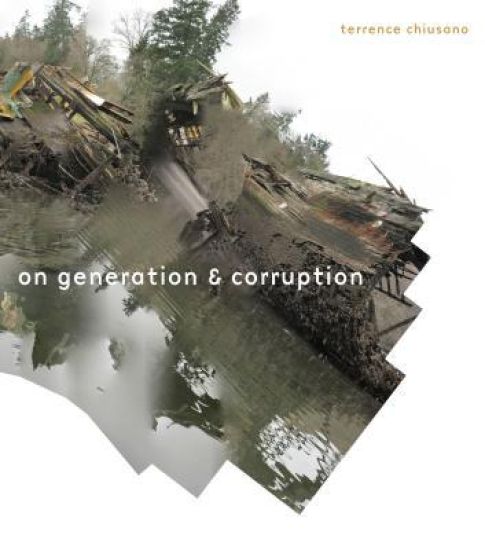
On Generation & Corruption

On Generation & Corruption

Terrence Chiusano

Fordham University Press
2015
sidottu
Composed of several distinct yet inter-woven long poems, On Generation & Corruption is structured around the conceits of location and dislocation, as it deconstructs a picture-postcard American town. Its title is a clue: in printer's terms, each "generation" reproduced is more "corrupt" than the last. Through this metaphor, Chiusano alludes to the distance from confessional speech that the book embodies in its complex tales and Escher-like syntax. from "daybook" JULY 1 Bog. Spillway. River bank. Cow shit. Shade pools. Boot prints. Tadpoles. Reed beds. Shallows. Eddies. Snags. Cottonmouths. Cobwebs. JULY 2 The stare stares behind-the-back, bright, between butt-crack and thigh. The stare widens into a paddle, wide and flat enough to make a draft when it flaps. The stare picks its nose. The stare halfway wonders why the closet door is only half-closed. * * * When ecstasy is parted from its practice, when rapture is forced to choose, that's me: the first efforts, independent principalities. JULY 3 If I draw a hand, say, or a foot, I tow it into view. If I name, a slender ankle, a napping neck, I pull it like a dove out of a derby, pigeon out of a porkpie hat.
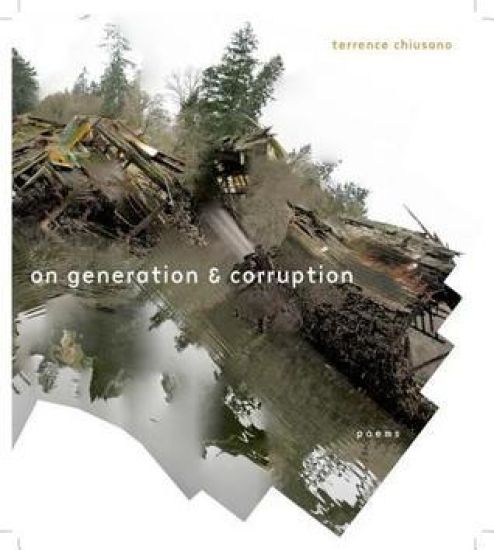
On Generation & Corruption

On Generation & Corruption

Terrence Chiusano

Fordham University Press
2015
pokkari
Composed of several distinct yet inter-woven long poems, On Generation & Corruption is structured around the conceits of location and dislocation, as it deconstructs a picture-postcard American town. Its title is a clue: in printer's terms, each "generation" reproduced is more "corrupt" than the last. Through this metaphor, Chiusano alludes to the distance from confessional speech that the book embodies in its complex tales and Escher-like syntax. from "daybook" JULY 1 Bog. Spillway. River bank. Cow shit. Shade pools. Boot prints. Tadpoles. Reed beds. Shallows. Eddies. Snags. Cottonmouths. Cobwebs. JULY 2 The stare stares behind-the-back, bright, between butt-crack and thigh. The stare widens into a paddle, wide and flat enough to make a draft when it flaps. The stare picks its nose. The stare halfway wonders why the closet door is only half-closed. * * * When ecstasy is parted from its practice, when rapture is forced to choose, that's me: the first efforts, independent principalities. JULY 3 If I draw a hand, say, or a foot, I tow it into view. If I name, a slender ankle, a napping neck, I pull it like a dove out of a derby, pigeon out of a porkpie hat.
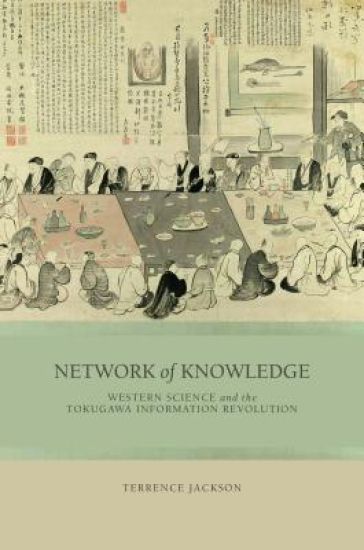
Network of Knowledge

Network of Knowledge

Terrence Jackson

University of Hawai'i Press
2016
sidottu
Nagasaki during the Tokugawa (1603–1868) was truly Japan's window on the world with its Chinese residences and Deshima island, where Western foreigners, including representatives of the Dutch East India Company, were confined. In 1785 ?tsuki Gentaku (1757–1827) journeyed from the capital to Nagasaki to meet Dutch physicians and the Japanese who acted as their interpreters. Gentaku was himself a physician, but he was also a Dutch studies (rangaku) scholar who passionately believed that European science and medicine were critical to Japan's progress. Network of Knowledge examines the development of Dutch studies during the crucial years 1770–1830 as Gentaku, with the help of likeminded colleagues, worked to facilitate its growth, creating a school, participating in and hosting scholarly and social gatherings, and circulating books. In time the modest, informal gatherings of Dutch studies devotees (rangakusha), mostly in Edo and Nagasaki, would grow into a pan-national society.Applying ideas from social network theory and Bourdieu's conceptions of habitus, field, and capital, this volume shows how Dutch studies scholars used networks to grow their numbers and overcome government indifference to create a dynamic community. The social significance of rangakusha, as much as the knowledge they pursued in medicine, astronomy, cartography, and military science, was integral to the creation of a Tokugawa information revolution—one that saw an increase in information gathering among all classes and innovative methods for collecting and storing that information. Although their salons were not as politically charged as those of their European counterparts, rangakusha were subversive in their decision to include scholars from a wide range of socio-economic backgrounds. They created a cultural society of civility and play in which members worked toward a common cultural goal. This insightful study reveals the strength of the community's ties as it follows rangakusha into the Meiji era (1868–1912), when a new generation championed values and ambitions similar to those of Gentaku and his peers.Network of Knowledge offers a fresh look at the cultural and intellectual environment of the late Tokugawa that will be welcomed by scholars and students of Japanese intellectual and social history.
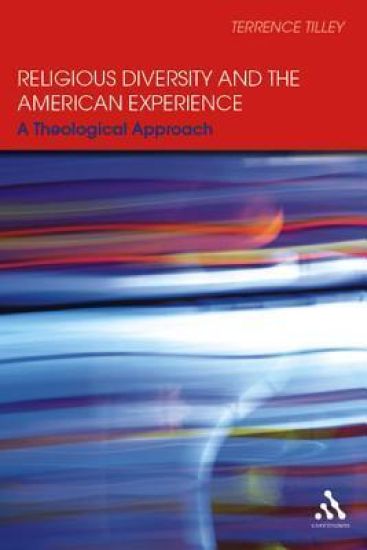
Religious Diversity and the American Experience

Religious Diversity and the American Experience

Terrence W. Tilley

Continuum International Publishing Group Ltd.
2007
sidottu
This book surveys the 8 basic approaches to religious pluralism, ranging from exclusivism (evangelical right) through classic inclusivism (Rahner), revised inclusivism (DuPuis), particularism (Paul Griffith), radical diversity (S. Mark Heim), pluralism (Knitter), comparative theologies (Frank Clooney), and dual belonging (Raimundo Panikkar). The unique contribution of this book is the ability to situate the issue of pluralism in the cultural site in the US (here relying on "thick" cultural analyses of Robert Wuthnow, Vincent Miller, and others) and in the religious site of Roman Catholicism (as offering mainstream Christian responses to religious diversity).
Religious Diversity and the American Experience

Religious Diversity and the American Experience

Terrence W. Tilley

Continuum International Publishing Group Ltd.
2007
nidottu
This book surveys the 8 basic approaches to religious pluralism, ranging from exclusivism (evangelical right) through classic inclusivism (Rahner), revised inclusivism (DuPuis), particularism (Paul Griffith), radical diversity (S. Mark Heim), pluralism (Knitter), comparative theologies (Frank Clooney), and dual belonging (Raimundo Panikkar). The unique contribution of this book is the ability to situate the issue of pluralism in the cultural site in the US (here relying on "thick" cultural analyses of Robert Wuthnow, Vincent Miller, and others) and in the religious site of Roman Catholicism (as offering mainstream Christian responses to religious diversity).
Worship, Community and the Triume God of Grace

Worship, Community and the Triume God of Grace

Torrance James B.

Inter-Varsity Press,US
1997
nidottu
This book explodes the notion that the doctrine of the Trinity may be indispensable for the creed but remote from life and worship. Firmly rooted in Scripture and theology, alive with pastoral counsel and anecdote, Torrance's work shows us just why real trinitarian theology is the very fiber of Christian confession.
The Office of Science and Technology Policy Blue Ribbon Panel on the Threat of Biological Terrorism Directed Against Livestock

The Office of Science and Technology Policy Blue Ribbon Panel on the Threat of Biological Terrorism Directed Against Livestock

Terrence K. Kelly; Peter Chalk; James Bonomo; John Parachini; Brian A. Jackson; Gary Cecchine

RAND
2004
pokkari
Focuses on the nation's emergency management infrastructure and prioritises a future research and development portfolio for thwarting potential terrorist bio-attacks against U.S. livestock and related produce. Motivated by the growing threat of terrorism to the nation's homeland, the Office of Science and Technology, in conjunction with the RAND Science and Technology Policy Institute, organized and convened a Blue Ribbon Panel in early December 2003 to prioritize a future research and development agenda for combating biological acts of agro-terrorism directed against U.S. livestock and related produce. This report contains the papers submitted for the two-day conference, provides an overview of the findings and recommendations of the forum's breakout groups, and discusses the wider threat contingencies related to agro-terrorism.
The U.S. Scientific and Technical Workforce

The U.S. Scientific and Technical Workforce

Terrence K. Kelly; William P. Butz; Stephen Carroll; David M. Adamson; Gabrielle Bloom

RAND
1995
pokkari
One-liner: Presents a conference convened to address questions about the adequacy on science and technology manpower in the United States. 450-character abstract: Concerns about the size and adequacy of the U.S. scientific, technical, engineering, and mathematics workforce have been voiced repeatedly over the years, though surpluses have been more common than shortages. The Rand Corporation convened conference documented here worked to explore the limitations of existing data and to uncover possible improvements. This volume presents the papers delivered and discussed at the workshop, as well as Rand's synthesis of workforce data needs and opportunities for meeting those needs.
Stabilization and Reconstruction Staffing

Stabilization and Reconstruction Staffing

Terrence K. Kelly; Ellen E. Tunstall; Thomas S. Szayna; Deanna Weber Prine

RAND
2008
pokkari
This book uses the Office of Personnel Management's Human Capital Assessment and Accountability Framework, which advocates strategic alignment, workforce planning and development, and leadership and knowledge management, to assess the U.S. civilian personnel and staffing requirements for stability and reconstruction operations.It presents a framework for improving U.S. civilian personnel and staffing programs for stability and reconstruction operations.
A Stability Police Force for the United States
This study considers the creation of a high-end police force for use in stability operations, examining its ideal size, how responsive it needs to be, where in the government to locate it, its needed capabilities, its proper staffing, and its cost. A 6,000-person force created in the U.S. Marshals Service and whose officers are seconded to domestic police agencies when not deployed would be the most effective of the options considered."
Security Cooperation Organizations in the Country Team: Options for Success

Security Cooperation Organizations in the Country Team: Options for Success

Terrence M. Kelly; Jefferson P. Marquis; Cathryn Quantic Thurston; Jennifer D. P. Moroney; Charlotte Lynch

RAND
2010
pokkari
Security assistance and security cooperation are interrelated missions that rely on military staffs in U.S. embassies in partner countries. In countries threatened by insecurity or instability, actions may be required that are not easily accomplished under current systems. This report examines three options for improving current approaches to security assistance and cooperation. They range from changes in current practices to options requiring new policies, procedures, organizations, or authorities.
Security Force Assistance in Afghanistan: Identifying Lessons for Future Efforts
Security force assistance (SFA) is a central pillar of the counterinsurgency campaign being waged by U.S. and coalition forces in Afghanistan. This monograph analyzes SFA efforts in Afghanistan over time, documents U.S. and international approaches to building the Afghan force from 2001 to 2009, and provides observations and recommendations that emerged from extensive fieldwork in Afghanistan in 2009 and their implications for the U.S. Army. This title analyzes security force assistance efforts in Afghanistan, focusing on lessons and themes that emerged from extensive fieldwork in Afghanistan in 2009 and their implications for the U.S. Army.
Employing Land-Based Anti-Ship Missiles in the Western Pacific

Employing Land-Based Anti-Ship Missiles in the Western Pacific

Terrence K. Kelly; Anthony Atler; Todd Nichols; Lloyd Thrall

RAND
2013
pokkari
Land-based anti-ship missiles (ASMs) feature prominently in the capabilities of many island nations in the Western Pacific, but the United States currently lacks such systems. This report illustrates the potential strategic advantages of the United States working with partners to build a coalition ASM capability, particularly in the event of a conflict with China, and includes an assessment of logistical challenges and positioning approaches.
An Assessment of the Army's Tactical Human Optimization, Rapid Rehabilitation and Reconditioning Program

An Assessment of the Army's Tactical Human Optimization, Rapid Rehabilitation and Reconditioning Program

Terrence K. Kelly; Ralph Masi; Brittian A. Walker; Steven A. Knapp; Kristin J. Leuschner

RAND
2013
pokkari
U.S. Army Special Operations Command asked RAND Arroyo Center to determine whether its Tactical Human Optimization, Rapid Rehabilitation and Reconditioning (THOR3) program is effectively utilizing the resources provided and to identify opportunities for improvement in the program s planning and implementation, staffing, leader development and education, facility and equipment requirements, and ability to support participating personnel."
The U.S. Army in Asia, 2030-2040

The U.S. Army in Asia, 2030-2040

Terrence K. Kelly; James Dobbins; David A. Shlapak; David C. Gompert; Eric Heginbotham; Peter Chalk; Lloyd Thrall

RAND
2015
pokkari
Looking to the 2030 2040 time frame, U.S. policy and military strategy will need to strike a balance among maintaining a cooperative relationship with China, deterring Chinese aggression in regional disputes, and preparing for the possibility that China could become more assertive. The U.S. Army will have an important role to play in preparing for these developments and for protecting and furthering U.S. interests in the region."
Smarter Power, Stronger Partners, Volume I
The proliferation of anti-access and area denial capabilities threatens to undermine the viability of offensive force projection. Thus, certainty that the United States could decisively defeat any state in all circumstances could be eroding. This research examined trends in military capabilities among potential U.S. adversaries and proposes an alternative way for the United States and its allies to secure their interests.
Science and Litigation

Science and Litigation

Terrence F. Kiely

CRC Press Inc
2002
sidottu
The question "what is science" has been one of the most vigorously contested legal questions as to what is legally acceptable scientific foundation for the submission of expert opinion in a wide variety of cases, especially in products liability cases. The answer usually lies in the outcomes of past cases as well as objective scientific literature. But how do we relate past decisions to biotechnology, bioinformatics, in-silico biology, genome mapping, and other new scientific developments? And just how valid are peer-reviewed studies when they are performed in house or funded by companies with a stake in the product? Science and Litigation: Products Liability in Theory and Practice addresses these and many other questions involving the relationship between the physical and biological sciences and the civil justice system. First, it reviews scientific legal theory by highlighting landmark cases, analyzing the scientific peer-review process, and examining the relationship between scientific causal theory and legal causation rules. Then the book addresses the practical issues involved in prosecuting or defending the science-based case, from pretrial discovery to choosing an expert witness. Products liability litigation can be a long and arduous task for everyone involved. This practical guide makes it a little easier. Taking you from research to courtroom, Science and Litigation: Products Liability in Theory and Practice provides information about the admissibility of scientific ideas and leads both expert witness and attorney through the necessary steps to be successful in litigation.