Kirjahaku
Etsi kirjoja tekijän nimen, kirjan nimen tai ISBN:n perusteella.
1000 tulosta hakusanalla Tracey Bateman
Chocolate chip cookies, bursting with melted bits of chocolate, are the perennial favourite of many Americans. For this compilation, Zabar has reached out to the celebrated icons of the baking world to collect an amazing array of user-friendly recipes beyond the classic cookie. There are the signature creations of such top restaurants as Manhattan s Daniel, Gramercy Tavern, and Betony, and California s the French Laundry, while others are treasured family recipes. Chefs such as Jacques Torres, Daniel Boulud, Lidia Bastianich, Dominique Ansel, and Sherry Yard share such classics as shortbread cookies and angel food cake studded with chips. Some reinterpret the cookie and make giant variations, such as Florian Bellanger s Jumbo Chocolate Chip Cookies, while others include add-ins like fresh fruit and nuts, or fold in pretzels and candied orange rind. Puddings, pies, ice-cream sandwiches, cakes, doughnuts, brownies, marshmallows, and waffles, oozing with chocolate, are part of the mix. In this beautifully photographed volume, Zabar discusses how to bake with the variety of flavourful chocolate bits available ranging from traditional chips and pistoles (or coins) to pearls. Chocolate Chip Sweets will appeal to discriminating chocolate chip lovers who crave this satisfying taste sensation.

Sweet Little Cakes from Mrs. Zabar’s Bakeshop
Tracey Zabar; Ellen Silverman
RIZZOLI INTERNATIONAL PUBLICATIONS
2026
sidottu
From original twists on time-honored classics to intriguing new flavor combinations, these recipes will suit every palate. They range from tiny Bundts to fanciful mini cakes. Included are small babkas, snack cakes, chocolate delights, and much more. The recipes are organized seasonally when fresh ingredients are at their peak. Tracey Zabar has scaled down traditional cake recipes so that there is just enough to enjoy in one sitting, serving two to six people. There are even directions on how to scale up a recipe for a crowd and pro tips on baking equipment and techniques specific to making small cakes. Dazzle your dinner guests with a beautifully frosted layer cake adorned with edible flowers atop a small cake stand. For a great dessert table, impress your guests by offering enticing miniature cupcakes and an assortment of baked treats for creating individual tasting plates. With inspirational photos of each cake, easy-to-follow recipes, and delightful icing and topping options, Sweet Little Cakes is the baking book you ll want to turn to often.
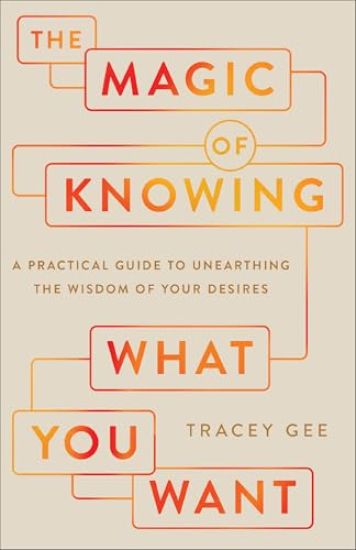
"A comprehensive toolkit designed to help you navigate the intricate paths of ambition and self-doubt. . . an invaluable companion."--Jennifer Alvarez, SVP of Brand and Chief Creative Officer of the Miami HeatCreate the fully aligned, purposeful life you were made to live What do you really want? It's an uncomplicated question until you try to answer it meaningfully. Whether prompted by transition, disruption, or curiosity about how to live more aligned with your values, we've all been there, feeling frozen, stuck, or lost in the fog of competing, half-baked desires, unsure how to move forward.In The Magic of Knowing What You Want, leadership coach Tracey Gee walks you through a proven framework of identifying, clarifying, and embodying your desires. With interactive exercises, relatable case studies, and thoughtful questions, Gee helps you discover what you really want, teaches you how to turn those desires into action, and shows you that a thriving, abundant life is closer than you think.
The historical development of dentistry as a profession in Ontario from the late nineteenth century to the end of the First World War is used as a case study to explore the significance of gender, particularly masculinity, in the formation of professions. Adams argues that gender was central to the establishment of the dental profession. Over time, dentistry developed from being a trade to garnering professional status. The early dentists worked to recruit, and indeed structured the profession in such a way as to recruit, middle-class white men into the profession. Gender and class divisions were drawn upon both to define and legitimate professional roles and claims to professional status; by definition, a professional was a gentleman. "A Dentist and a Gentleman" uses historical documents including dental journals and dental board and association meeting minutes to detail both the key events in the establishment of the dental profession and the efforts of professional leaders to define and structure their profession to meet the gentlemanly ideal. "A Dentist and a Gentleman" is a fascinating social history for anyone interested in profession creation and gender and professions.
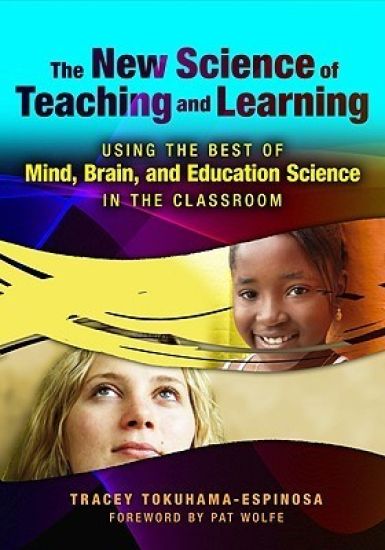
The New Science of Teaching and Learning
Tracey Tokuhama-Espinosa
Teachers' College Press
2010
nidottu
This book offers a definitive, scientifically grounded guide for better teaching and learning practices. Drawing from thousands of documents and the opinions of recognized experts worldwide, it explains in straight talk the new Mind, Brain, and Education Science--a field that has grown out of the intersection of neuroscience, education, and psychology. While parents and teachers are often bombarded with promises of ""a better brain,"" this book distinguishes true, applicable neuroscience from the popular neuromyths that have gained currency in education. Each instructional guideline presented in the book is accompanied by real-life classroom examples to help teachers envision the direct application of the information in their own schools. The authors offer essential tools for evaluating new information as it flows from research and adds to what we know. Written by a teacher for teachers, this easy-to-use resource: Documents the findings of the top experts in the field of neuroscience, psychology, and education; Addresses the confusion around the misuse of concepts in brain-based education; Applies well-substantiated findings about the brain to classroom practice and teaching.
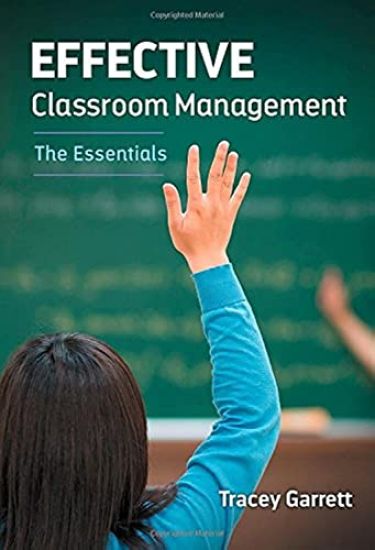
This user-friendly resource will help K–12 teachers become more effective classroom managers. Tracey Garrett provides a new perspective that has been well received by thousands of preservice, novice, and veteran teachers. Each chapter of the book concentrates on a key area (physical design, rules and routines, relationships, engaging instruction, and discipline) and focuses on the importance of that particular area in relation to a teacher’s overall classroom management plan. Examples of specific techniques and strategies are presented through three classroom teachers, each representing a different grade level. In addition, four students share their beliefs and experiences related to the different aspects of classroom management and provide unique insight into the lived experience of students in real classrooms in a variety of contexts, including urban and suburban schools. Effective Classroom Management is a concise guide designed to prevent problems that require active discipline before they arise. Book features include classroom examples, case studies, and study questions.
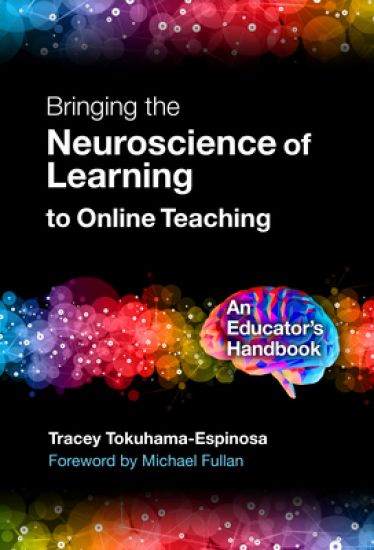
Bringing the Neuroscience of Learning to Online Teaching
Tracey Tokuhama-Espinosa
Teachers' College Press
2021
nidottu
This practical resource draws on the best of neuroscience to inform decision-making about digital learning. We live in unprecedented times that have pushed schools to make many decisions that have been postponed for years. For the first time since the inception of public education, teachers have been invited to redesign the learning landscape by integrating an intelligent selection of digital educational resources and changing pedagogical approaches based on information from the learning sciences. This handbook will help teachers make the most of this opportunity by showing them how to use digital tools to differentiate learning, employ alternative options to standardized testing, personalize learning, prioritize social-emotional skills, and inspire students to think more critically. The author identifies some gems in quality teaching that are amplified in online contexts, including 40 evidence-informed pedagogies from the learning sciences. This book will help all educators move online teaching and learning to new levels of confidence and success.Book Features:Provides quick references to key planning tools like decision-trees, graphics, app recommendations, and step-by-step directions to help teachers create their own online learning courses.Guides teachers through a 12-step model for instructional design that meets both national and international standards.Shows educators how to use an all-new Digital Resource Taxonomy to select resources, and how to research and keep them up to date.Explains why good instructional design and educational technology are complementary with best practices in learning sciences like Mind, Brain, and Education Science.Shares ways teachers can leverage technology to create more time for the personalized aspects of learning. Shows educators how to design online courses with tools that let all students begin at their own starting points and how to differentiate homework.Offers evidence-informed pedagogies to make online intimate and authentic for students.
Bringing the Neuroscience of Learning to Online Teaching
Tracey Tokuhama-Espinosa
Teachers' College Press
2021
sidottu
This practical resource draws on the best of neuroscience to inform decision-making about digital learning. We live in unprecedented times that have pushed schools to make many decisions that have been postponed for years. For the first time since the inception of public education, teachers have been invited to redesign the learning landscape by integrating an intelligent selection of digital educational resources and changing pedagogical approaches based on information from the learning sciences. This handbook will help teachers make the most of this opportunity by showing them how to use digital tools to differentiate learning, employ alternative options to standardized testing, personalize learning, prioritize social-emotional skills, and inspire students to think more critically. The author identifies some gems in quality teaching that are amplified in online contexts, including 40 evidence-informed pedagogies from the learning sciences. This book will help all educators move online teaching and learning to new levels of confidence and success.Book Features:Provides quick references to key planning tools like decision-trees, graphics, app recommendations, and step-by-step directions to help teachers create their own online learning courses.Guides teachers through a 12-step model for instructional design that meets both national and international standards.Shows educators how to use an all-new Digital Resource Taxonomy to select resources, and how to research and keep them up to date.Explains why good instructional design and educational technology are complementary with best practices in learning sciences like Mind, Brain, and Education Science.Shares ways teachers can leverage technology to create more time for the personalized aspects of learning. Shows educators how to design online courses with tools that let all students begin at their own starting points and how to differentiate homework.Offers evidence-informed pedagogies to make online intimate and authentic for students.
Great teachers will tell you that you can learn a lot about students from the questions they ask. This book shares 400 of the most important questions kids ask about their brains, along with answers that can be shared with students from ages 3 to 18. What hidden talents do I have? Where does our inner voice come from? How many things can we think of at the same time? Where does the brain keep memories? Why are some people more creative than others? Each of these questions tells teachers a little story about how their students think which can be used to inform classroom practice and improve learning outcomes. The book is grouped into two parts. Part I addresses how your brain makes you who you are (identity, structure, growth, function, emotions and feelings). Part II is about how to optimize its function (memory, attention, and executive functions; learning, excelling and roadblocks). Questions are followed by Big Ideas, which are key understandings of how the brain functions. Integrated throughout the book are more than 60 Implications For Teaching that spell out the usable knowledge from each section. Each chapter ends with a list of resources to reinforce the Big Ideas with students, and the closing chapter suggests specific activities to help students embrace this information for themselves. Whether you are a teacher, counselor, college student, parent, or kid, the information in this book will help you love and admire your own brain and feel empowered to improve it every day.Book Features:A window into students' thoughts and concerns about themselves as learners and beings in today's complex world.A special chapter for classroom teachers with activities and guidance for integrating the information into P–12 lessons.Big Ideas for readers looking for solutions they can quickly implement in their classroom.Detailed answers, along with QR codes to the research articles behind them, for readers looking for more in-depth knowledge about learning and the brain.Insights from a year-long international study in 21 countries that asked kids what they wanted to know about their own brains.
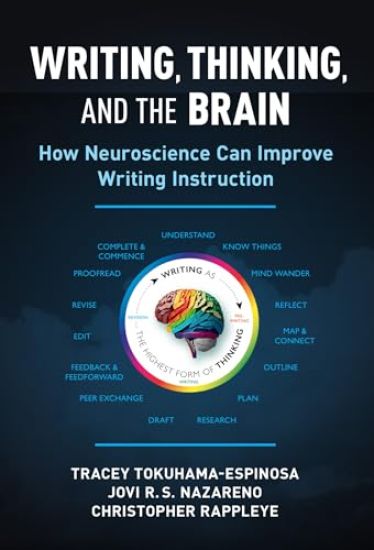
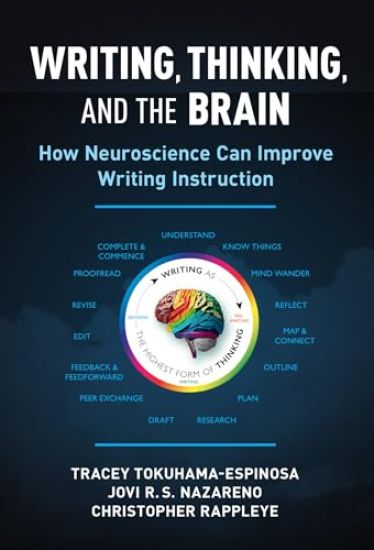
Writing, Thinking, and the Brain
Tracey Tokuhama-Espinosa; Jovi R. S. Nazareno; Christopher Rappleye
TEACHERS' COLLEGE PRESS
2024
nidottu
Writing is the highest form of thinking, as evidenced by neuroimaging which shows that more neural networks are activated simultaneously during writing than during any other cognitive activity. This book will help teachers understand how the brain learns to write by unveiling 15 stages of thinking that underpin the writing process, along with targeted ways to stimulate them to maximize each individual's writing potential. This one-of-kind resource is constructed on the premise that everyone has the potential to be a great writer. Many people learn to write in school settings according to a product-based structure in which they get feedback or a grade on an outline, draft, or final version of their work; few are coached on the many hours of thinking that go into that writing process. This book celebrates the invisible thinking behind the products, explains the brain's way of making sense of writing assignments even in light of generative AI, and offers new tools to become a better writer and to assess the writing process. By exposing the invisible thinking behind the writing, Writing, Thinking, and the Brain helps both the teacher and the learner identify personal learning trajectories for better outcomes.Book Features:Spans all literary genres and all age groups and is complementary to any curriculum.Builds on the firm foundation of writing practices of the past with insight from the learning sciences.Practical and accessible examples and illustrations throughout.Written in the voice of a supportive, knowledgeable colleague.Linked directly to Mind, Brain, and Education goals.Leverages Universal Design for Learning (UDL) principles.Offers teacher activities at all 15 stages of thinking with guidelines to support student learning.
Writing, Thinking, and the Brain
Tracey Tokuhama-Espinosa; Jovi R. S. Nazareno; Christopher Rappleye
TEACHERS' COLLEGE PRESS
2024
sidottu
Writing is the highest form of thinking, as evidenced by neuroimaging which shows that more neural networks are activated simultaneously during writing than during any other cognitive activity. This book will help teachers understand how the brain learns to write by unveiling 15 stages of thinking that underpin the writing process, along with targeted ways to stimulate them to maximize each individual's writing potential. This one-of-kind resource is constructed on the premise that everyone has the potential to be a great writer. Many people learn to write in school settings according to a product-based structure in which they get feedback or a grade on an outline, draft, or final version of their work; few are coached on the many hours of thinking that go into that writing process. This book celebrates the invisible thinking behind the products, explains the brain's way of making sense of writing assignments even in light of generative AI, and offers new tools to become a better writer and to assess the writing process. By exposing the invisible thinking behind the writing, Writing, Thinking, and the Brain helps both the teacher and the learner identify personal learning trajectories for better outcomes.Book Features:Spans all literary genres and all age groups and is complementary to any curriculum.Builds on the firm foundation of writing practices of the past with insight from the learning sciences.Practical and accessible examples and illustrations throughout.Written in the voice of a supportive, knowledgeable colleague.Linked directly to Mind, Brain, and Education goals.Leverages Universal Design for Learning (UDL) principles.Offers teacher activities at all 15 stages of thinking with guidelines to support student learning.
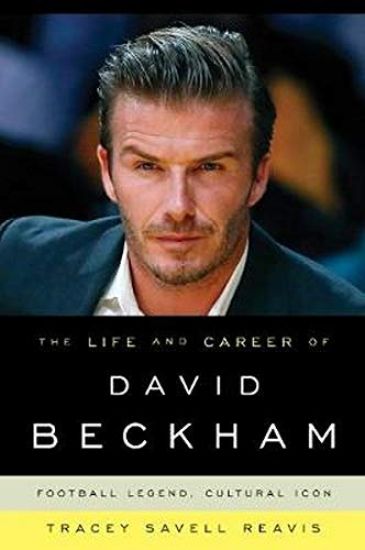
The Life and Career of David Beckham
Tracey Savell Reavis
Rowman Littlefield Publishers
2017
nidottu
David Beckham is an English soccer player whose popularity extends beyond the field and into international celebrity. He has played for some of the best clubs in the world, including Manchester United, Real Madrid, and AC Milan, and is known worldwide for his free kick expertise and spectacular long-range shots. His singular dedication to becoming a renowned soccer player has been an inspiration to teammates and fans alike. In The Life and Career of David Beckham: Football Legend, Cultural Icon, Tracey Savell Reavis delivers an up-to-date and refreshing look at one of soccer’s most-recognized athletes. Drawing on extensive research and in-depth interviews, Reavis brings an outside perspective to Beckham’s life in order to reveal his profound impact on the sport in the United States and worldwide. From his birth in Leytonstone, London and his celebrated playing career to his role in bringing the 2012 Olympic Games to London and his retirement from soccer in 2013, Reavis examines the influences that shaped Beckham into the legend he is today. Featuring photographs and original interviews, this book illuminates Beckham’s status as a soccer star, husband, father, fashion icon, and cultural phenomenon. The first biography since his retirement, The Life and Career of David Beckham will not only appeal to soccer fans, but also to anyone who wants to know more about this international icon.
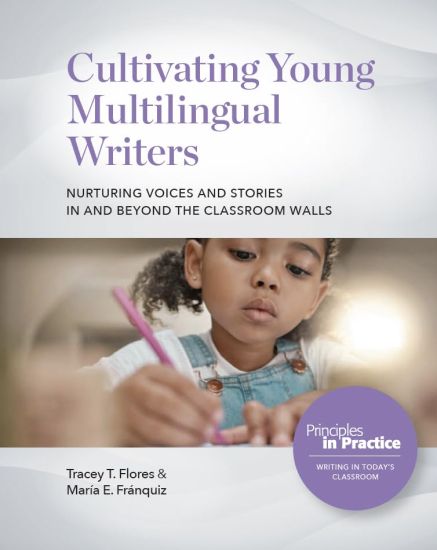
Cultivating Young Multilingual Writers: Nurturing Voices and Stories in and Beyond the Classroom Walls: Nurturing Voices and Stories in and Beyond the
Tracey T. Flores; María E. Fránquiz
National Council of Teachers of English (Ncte
2023
nidottu
This book is written for K-5 educators who are interested in cultivating young writers by designing and facilitating writing instruction that begins with the resources that students bring to the classrooms from their families, homes, and communities. This kind of asset-based and individualized instruction is designed to meet the unique writing needs of each young writer. K-5 educators teaching in shifting contexts encounter an array of challenges daily, from restrictive language policies and mandates to heightened accountability measures that often dictate the design of their writing time and instruction. This book focuses on elementary school teachers working with young writers in varying educational contexts, including dual language, bilingual, and English Only contexts, and in particular students who come from culturally and linguistically diverse settings. Part of the Principles in Practice series.Part of the Principles in Practice series, this book also includes a robust list of resources for writing teachers, as well as helpful insights for: Getting multilingual students writing beyond the classroom wallsDesigning a writing community that works for all your learnersUsing writing conferences as a social practiceInviting the use of all linguistic, cultural, and experiential resources
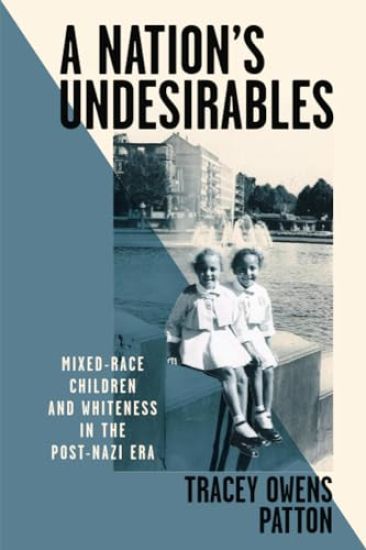
In a moving blend of family history and cutting-edge scholarship, Tracey Owens Patton's A Nation's Undesirables synthesizes work in rhetorical postmemory studies, critical adoption studies, Afrofuturism, and more to tell the story of her mother and aunt, Lore and Lilli. Two of thousands of children born to white German women and Black American men after World War II, the twins moved to the United States at age seven, where their mother renounced her parental rights and put them into the adoption system. They did not see her again for fifty-two years. Patton takes up the twins' story and their reckoning with their mixed-race, Black German identity to disrupt standard narratives around World War II, Black experience in Germany, and race and adoption. Combining family interviews, historical artifacts, and autoethnographic reflection, Patton composes a new narrative of women and Black German children in the postwar era. In examining the systemic racism of Germany's efforts to move children like Lore and Lilli out of the country-and the suppression of German women's bodily autonomy-Patton amplifies the once unacknowledged identities of these Black German children to broaden our understanding of citizenship, racism, and sexism after World War II.
Professional Supervision is a core component of maintaining professional practice and accreditation for many professions particularly in the community and human services sector. Professions such as Social Workers, Occupational Therapists, Physiotherapists, Teachers, Nurses, Midwives, Doctors, Counsellors and Psychologists are encouraged to access regular professional supervision as part of maintaining professional standards in their role; engage self care; promote ongoing growth and development; and meet organisational requirements. Throughout her career, Tracey Harris had had a passion for the role that professional and operational supervision has in the workplace. She has developed a systematic framework that ensures supervision remains effective and sustainable over time. As part of the supervision platform and system, Tracey has developed a range of unique resources, tools and documents for beginning supervisory practitioners to assist them to develop the necessary skills to feel confident and supported in their new role. She has developed seven integrated supervision models that provide a common language framework for all roles in the organizational and business context. Developing Supervisory Excellence: A Practice Guide for the New Professional Supervisor is the first text of its kind to integrate the existing frameworks of supervision into a comprehensive model of practice, providing new supervisors with a clear procedural and practice guide for conducting professional and operational supervision. In addition, it provides new supervisors with a range of resources to support, record, track, and evaluate the supervision process and outcomes.This book: Outlines the different types of supervision and provides reflective questions to encourage new supervisors to reflect on what supervision is, its purpose, what it hopes to achieve and explores what inadequate supervision looks like.Provides new supervisors with a guide on what to look for in quality training, what key topics are useful in training and concludes with reflective questions for new supervisors to consider when thinking about engaging in training.Provides a detailed analysis of the benefits of providing and engaging in professional supervision.Provides key information for new supervisors about how to set up supervision and build rapport in the supervisory relationship.Explores how to maintain professional boundaries and the process of providing and receiving helpful feedback.Outlined and provides examples of relevant documents to use in supervision given the ethical and industrial nature of supervision.Discusses the value of evaluating professional supervision and includes reflective questions for supervisors to consider as they develop a framework for evaluation.Discusses the core differences between the supervision styles and how to manage the dual role of line and professional supervisor.Outlines an example framework for assessing competency and capability for new supervisors.
Becoming a Health Psychologist
Tracey A. Revenson; Patrice G. Saab; Peggy M. Zoccola; Lara N. Traeger
CRC Press Inc
2019
sidottu
Becoming a Health Psychologist provides an overview of the different training paths students can take to prepare themselves for graduate school and careers in the field of health psychology. You’ll find tips on how to choose and apply for graduate programs as well as numerous practical examples such as emails to potential advisors and questions to ask during interviews. Throughout, the authors provide examples of different health psychology careers, along with references, resources, and first-hand experiences. It details what is involved in becoming a health psychologist, what a health psychology career entails, and how to reach that goal. The inclusion of tips from a diverse group of successful students, early career, and senior health psychologists makes this book an invaluable resource for anyone looking to start their career or for advisors who are counselling students about career choices. For many readers, this book may serve as "the mentor they never had".