Kirjojen hintavertailu. Mukana 12 290 406 kirjaa ja 12 kauppaa.

Kirjahaku

Etsi kirjoja tekijän nimen, kirjan nimen tai ISBN:n perusteella.

1000 tulosta hakusanalla Tracey Sinclair

Breakfast on the Farm (6)

Breakfast on the Farm (6)

Tracey elliot reep

Shortland Publications (USA) Incorporated
2001
nidottu
Factual Narrative. Ideal for Guided reading and writing. Also for independent reading and writing. Suitable as take home readers. Interactive books. Good for children who are high-interest, lower ability. Age range: 4-11 years. Provides thorough coverage of literacy strategy for Foundation (P1) through to Year 6 (P7). Can also be used with Year 7+ (S1+). Book banded. Teacher's Notes available separately on CD-ROM. Size: 16cm tall x 19cm wide. Published 1998. 16 pages.
One Sweet Cookie

One Sweet Cookie

Tracey Zabar

Universe Publishing
2015
sidottu
A delectable collection of cookie recipes from New York's best chefs, pastry chefs, and bakers. Cookies are the perfect end to a wonderful meal. One-bite meringues and macaroons melt in your mouth, while linzers and tuiles are the ultimate fanciful confections. Tracey Zabar has selected distinctly original cookie recipes from seventy-five of the very best culinary talents in Manhattan. Some are the chefs' personal recipes, while others are the signature creations of top restaurants-Le Cirque, Eleven Madison Park, Gramercy Tavern, Artisanal, City Bakery, Felidia, Daniel, and Blue Hill at Stone Barns are included in this scrumptious mix. This irresistible array of more than ninety confectionary recipes for the home baker includes butterscotch and oatmeal cowboy cookies from Chef Mario Batali and his son Benno; coconut macaroons from master baker Sarabeth Levine; a chocolate chip cookie invented by Chef Todd English of Olives that combines his children's favorite chocolate flavors with walnuts; Chef Jason Weiner of Almond's rugelach; and Eli Zabar's tempting buttery sugar cookies. There are also international cookies-Jammy Dodgers from England, wedding cookies from Puerto Rico, Kipferl from Austria, and Lamingtons from Australia. And chefs Francois Payard, Andre Soltner, and Daniel Boulud have added artful creations to the plate. This beautifully photographed book will not only appeal to discriminating dessert lovers but also to fans of New York City's culinary scene, the cookie-swap aficionado, and the bake-sale maven.
Chocolate Chip Sweets

Chocolate Chip Sweets

Tracey Zabar

Rizzoli International Publications
2017
sidottu
Chocolate chip cookies, bursting with melted bits of chocolate, are the perennial favourite of many Americans. For this compilation, Zabar has reached out to the celebrated icons of the baking world to collect an amazing array of user-friendly recipes beyond the classic cookie. There are the signature creations of such top restaurants as Manhattan s Daniel, Gramercy Tavern, and Betony, and California s the French Laundry, while others are treasured family recipes. Chefs such as Jacques Torres, Daniel Boulud, Lidia Bastianich, Dominique Ansel, and Sherry Yard share such classics as shortbread cookies and angel food cake studded with chips. Some reinterpret the cookie and make giant variations, such as Florian Bellanger s Jumbo Chocolate Chip Cookies, while others include add-ins like fresh fruit and nuts, or fold in pretzels and candied orange rind. Puddings, pies, ice-cream sandwiches, cakes, doughnuts, brownies, marshmallows, and waffles, oozing with chocolate, are part of the mix. In this beautifully photographed volume, Zabar discusses how to bake with the variety of flavourful chocolate bits available ranging from traditional chips and pistoles (or coins) to pearls. Chocolate Chip Sweets will appeal to discriminating chocolate chip lovers who crave this satisfying taste sensation.
Sweet Little Cakes from Mrs. Zabar’s Bakeshop

Sweet Little Cakes from Mrs. Zabar’s Bakeshop

Tracey Zabar; Ellen Silverman

RIZZOLI INTERNATIONAL PUBLICATIONS
2026
sidottu
From original twists on time-honored classics to intriguing new flavor combinations, these recipes will suit every palate. They range from tiny Bundts to fanciful mini cakes. Included are small babkas, snack cakes, chocolate delights, and much more. The recipes are organized seasonally when fresh ingredients are at their peak. Tracey Zabar has scaled down traditional cake recipes so that there is just enough to enjoy in one sitting, serving two to six people. There are even directions on how to scale up a recipe for a crowd and pro tips on baking equipment and techniques specific to making small cakes. Dazzle your dinner guests with a beautifully frosted layer cake adorned with edible flowers atop a small cake stand. For a great dessert table, impress your guests by offering enticing miniature cupcakes and an assortment of baked treats for creating individual tasting plates. With inspirational photos of each cake, easy-to-follow recipes, and delightful icing and topping options, Sweet Little Cakes is the baking book you ll want to turn to often.
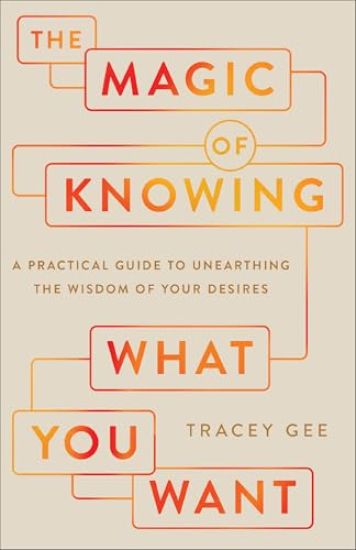
The Magic of Knowing What You Want

The Magic of Knowing What You Want

Tracey Gee

BAKER PUBLISHING GROUP
2025
nidottu
"A comprehensive toolkit designed to help you navigate the intricate paths of ambition and self-doubt. . . an invaluable companion."--Jennifer Alvarez, SVP of Brand and Chief Creative Officer of the Miami HeatCreate the fully aligned, purposeful life you were made to live What do you really want? It's an uncomplicated question until you try to answer it meaningfully. Whether prompted by transition, disruption, or curiosity about how to live more aligned with your values, we've all been there, feeling frozen, stuck, or lost in the fog of competing, half-baked desires, unsure how to move forward.In The Magic of Knowing What You Want, leadership coach Tracey Gee walks you through a proven framework of identifying, clarifying, and embodying your desires. With interactive exercises, relatable case studies, and thoughtful questions, Gee helps you discover what you really want, teaches you how to turn those desires into action, and shows you that a thriving, abundant life is closer than you think.
A Dentist and a Gentleman

A Dentist and a Gentleman

Tracey L Adams

University of Toronto Press
2000
sidottu
The historical development of dentistry as a profession in Ontario from the late nineteenth century to the end of the First World War is used as a case study to explore the significance of gender, particularly masculinity, in the formation of professions. Adams argues that gender was central to the establishment of the dental profession. Over time, dentistry developed from being a trade to garnering professional status. The early dentists worked to recruit, and indeed structured the profession in such a way as to recruit, middle-class white men into the profession. Gender and class divisions were drawn upon both to define and legitimate professional roles and claims to professional status; by definition, a professional was a gentleman. "A Dentist and a Gentleman" uses historical documents including dental journals and dental board and association meeting minutes to detail both the key events in the establishment of the dental profession and the efforts of professional leaders to define and structure their profession to meet the gentlemanly ideal. "A Dentist and a Gentleman" is a fascinating social history for anyone interested in profession creation and gender and professions.
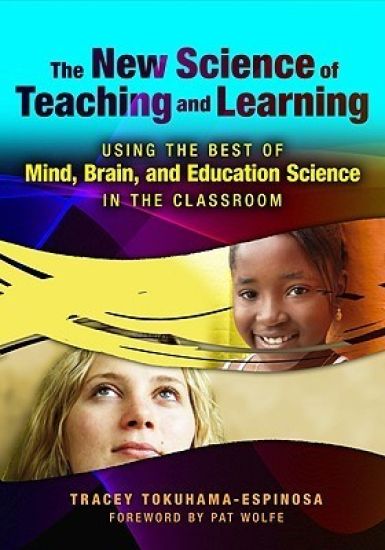
The New Science of Teaching and Learning

The New Science of Teaching and Learning

Tracey Tokuhama-Espinosa

Teachers' College Press
2010
nidottu
This book offers a definitive, scientifically grounded guide for better teaching and learning practices. Drawing from thousands of documents and the opinions of recognized experts worldwide, it explains in straight talk the new Mind, Brain, and Education Science--a field that has grown out of the intersection of neuroscience, education, and psychology. While parents and teachers are often bombarded with promises of ""a better brain,"" this book distinguishes true, applicable neuroscience from the popular neuromyths that have gained currency in education. Each instructional guideline presented in the book is accompanied by real-life classroom examples to help teachers envision the direct application of the information in their own schools. The authors offer essential tools for evaluating new information as it flows from research and adds to what we know. Written by a teacher for teachers, this easy-to-use resource: Documents the findings of the top experts in the field of neuroscience, psychology, and education; Addresses the confusion around the misuse of concepts in brain-based education; Applies well-substantiated findings about the brain to classroom practice and teaching.
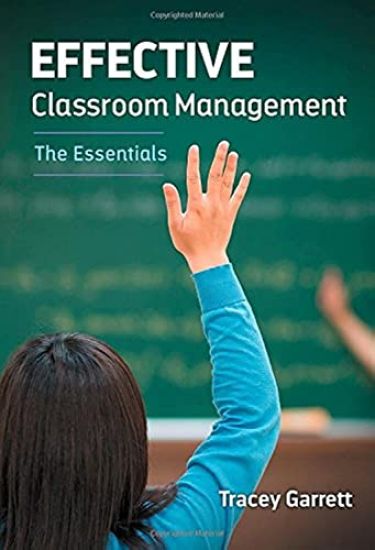
Effective Classroom Management

Effective Classroom Management

Tracey Garrett

Teachers' College Press
2014
nidottu
This user-friendly resource will help K–12 teachers become more effective classroom managers. Tracey Garrett provides a new perspective that has been well received by thousands of preservice, novice, and veteran teachers. Each chapter of the book concentrates on a key area (physical design, rules and routines, relationships, engaging instruction, and discipline) and focuses on the importance of that particular area in relation to a teacher’s overall classroom management plan. Examples of specific techniques and strategies are presented through three classroom teachers, each representing a different grade level. In addition, four students share their beliefs and experiences related to the different aspects of classroom management and provide unique insight into the lived experience of students in real classrooms in a variety of contexts, including urban and suburban schools. Effective Classroom Management is a concise guide designed to prevent problems that require active discipline before they arise. Book features include classroom examples, case studies, and study questions.
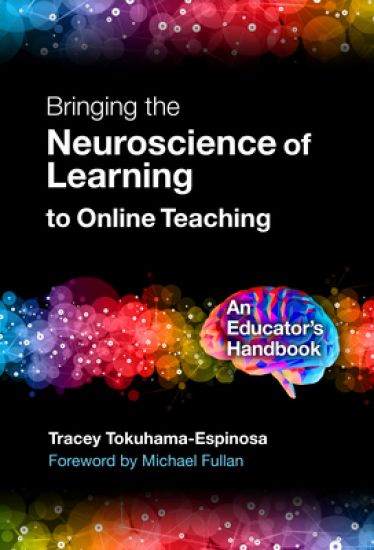
Bringing the Neuroscience of Learning to Online Teaching

Bringing the Neuroscience of Learning to Online Teaching

Tracey Tokuhama-Espinosa

Teachers' College Press
2021
nidottu
This practical resource draws on the best of neuroscience to inform decision-making about digital learning. We live in unprecedented times that have pushed schools to make many decisions that have been postponed for years. For the first time since the inception of public education, teachers have been invited to redesign the learning landscape by integrating an intelligent selection of digital educational resources and changing pedagogical approaches based on information from the learning sciences. This handbook will help teachers make the most of this opportunity by showing them how to use digital tools to differentiate learning, employ alternative options to standardized testing, personalize learning, prioritize social-emotional skills, and inspire students to think more critically. The author identifies some gems in quality teaching that are amplified in online contexts, including 40 evidence-informed pedagogies from the learning sciences. This book will help all educators move online teaching and learning to new levels of confidence and success.Book Features:Provides quick references to key planning tools like decision-trees, graphics, app recommendations, and step-by-step directions to help teachers create their own online learning courses.Guides teachers through a 12-step model for instructional design that meets both national and international standards.Shows educators how to use an all-new Digital Resource Taxonomy to select resources, and how to research and keep them up to date.Explains why good instructional design and educational technology are complementary with best practices in learning sciences like Mind, Brain, and Education Science.Shares ways teachers can leverage technology to create more time for the personalized aspects of learning. Shows educators how to design online courses with tools that let all students begin at their own starting points and how to differentiate homework.Offers evidence-informed pedagogies to make online intimate and authentic for students.
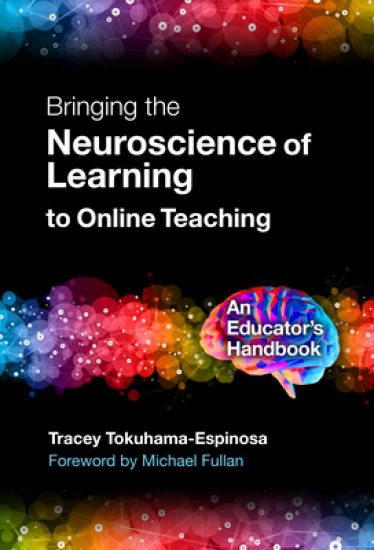
Bringing the Neuroscience of Learning to Online Teaching

Bringing the Neuroscience of Learning to Online Teaching

Tracey Tokuhama-Espinosa

Teachers' College Press
2021
sidottu
This practical resource draws on the best of neuroscience to inform decision-making about digital learning. We live in unprecedented times that have pushed schools to make many decisions that have been postponed for years. For the first time since the inception of public education, teachers have been invited to redesign the learning landscape by integrating an intelligent selection of digital educational resources and changing pedagogical approaches based on information from the learning sciences. This handbook will help teachers make the most of this opportunity by showing them how to use digital tools to differentiate learning, employ alternative options to standardized testing, personalize learning, prioritize social-emotional skills, and inspire students to think more critically. The author identifies some gems in quality teaching that are amplified in online contexts, including 40 evidence-informed pedagogies from the learning sciences. This book will help all educators move online teaching and learning to new levels of confidence and success.Book Features:Provides quick references to key planning tools like decision-trees, graphics, app recommendations, and step-by-step directions to help teachers create their own online learning courses.Guides teachers through a 12-step model for instructional design that meets both national and international standards.Shows educators how to use an all-new Digital Resource Taxonomy to select resources, and how to research and keep them up to date.Explains why good instructional design and educational technology are complementary with best practices in learning sciences like Mind, Brain, and Education Science.Shares ways teachers can leverage technology to create more time for the personalized aspects of learning. Shows educators how to design online courses with tools that let all students begin at their own starting points and how to differentiate homework.Offers evidence-informed pedagogies to make online intimate and authentic for students.
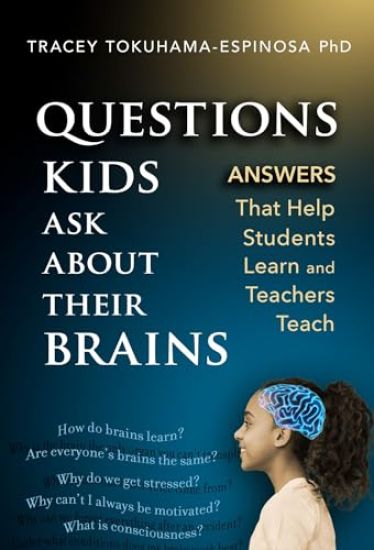
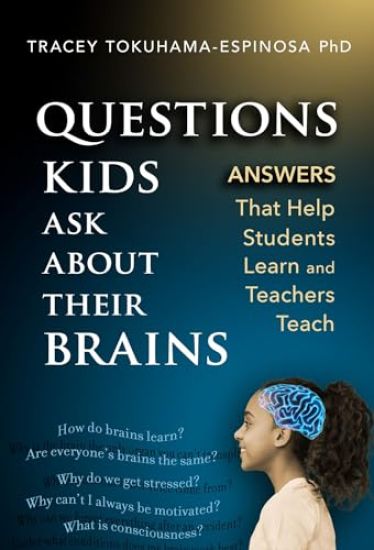
Questions Kids Ask About Their Brains

Questions Kids Ask About Their Brains

Tracey Tokuhama-Espinosa

TEACHERS' COLLEGE PRESS
2024
nidottu
Great teachers will tell you that you can learn a lot about students from the questions they ask. This book shares 400 of the most important questions kids ask about their brains, along with answers that can be shared with students from ages 3 to 18. What hidden talents do I have? Where does our inner voice come from? How many things can we think of at the same time? Where does the brain keep memories? Why are some people more creative than others? Each of these questions tells teachers a little story about how their students think which can be used to inform classroom practice and improve learning outcomes. The book is grouped into two parts. Part I addresses how your brain makes you who you are (identity, structure, growth, function, emotions and feelings). Part II is about how to optimize its function (memory, attention, and executive functions; learning, excelling and roadblocks). Questions are followed by Big Ideas, which are key understandings of how the brain functions. Integrated throughout the book are more than 60 Implications For Teaching that spell out the usable knowledge from each section. Each chapter ends with a list of resources to reinforce the Big Ideas with students, and the closing chapter suggests specific activities to help students embrace this information for themselves. Whether you are a teacher, counselor, college student, parent, or kid, the information in this book will help you love and admire your own brain and feel empowered to improve it every day.Book Features:A window into students' thoughts and concerns about themselves as learners and beings in today's complex world.A special chapter for classroom teachers with activities and guidance for integrating the information into P–12 lessons.Big Ideas for readers looking for solutions they can quickly implement in their classroom.Detailed answers, along with QR codes to the research articles behind them, for readers looking for more in-depth knowledge about learning and the brain.Insights from a year-long international study in 21 countries that asked kids what they wanted to know about their own brains.
Questions Kids Ask About Their Brains

Questions Kids Ask About Their Brains

Tracey Tokuhama-Espinosa

TEACHERS' COLLEGE PRESS
2024
sidottu
Great teachers will tell you that you can learn a lot about students from the questions they ask. This book shares 400 of the most important questions kids ask about their brains, along with answers that can be shared with students from ages 3 to 18. What hidden talents do I have? Where does our inner voice come from? How many things can we think of at the same time? Where does the brain keep memories? Why are some people more creative than others? Each of these questions tells teachers a little story about how their students think which can be used to inform classroom practice and improve learning outcomes. The book is grouped into two parts. Part I addresses how your brain makes you who you are (identity, structure, growth, function, emotions and feelings). Part II is about how to optimize its function (memory, attention, and executive functions; learning, excelling and roadblocks). Questions are followed by Big Ideas, which are key understandings of how the brain functions. Integrated throughout the book are more than 60 Implications For Teaching that spell out the usable knowledge from each section. Each chapter ends with a list of resources to reinforce the Big Ideas with students, and the closing chapter suggests specific activities to help students embrace this information for themselves. Whether you are a teacher, counselor, college student, parent, or kid, the information in this book will help you love and admire your own brain and feel empowered to improve it every day.Book Features:A window into students' thoughts and concerns about themselves as learners and beings in today's complex world.A special chapter for classroom teachers with activities and guidance for integrating the information into P–12 lessons.Big Ideas for readers looking for solutions they can quickly implement in their classroom.Detailed answers, along with QR codes to the research articles behind them, for readers looking for more in-depth knowledge about learning and the brain.Insights from a year-long international study in 21 countries that asked kids what they wanted to know about their own brains.