Kirjojen hintavertailu. Mukana 12 390 323 kirjaa ja 12 kauppaa.

Kirjahaku

Etsi kirjoja tekijän nimen, kirjan nimen tai ISBN:n perusteella.

1000 tulosta hakusanalla ART WIEDERHOLD

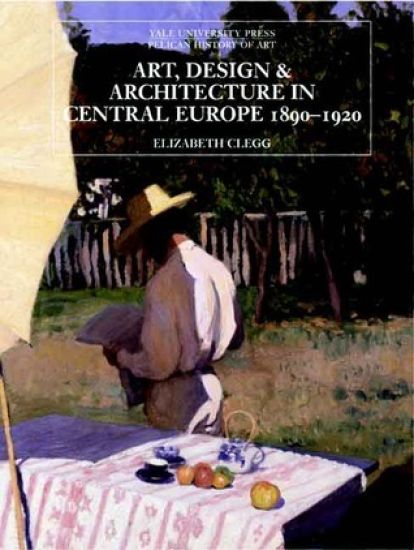
Art, Design, and Architecture in Central Europe 1890-1920
In this unprecedentedly wide-ranging account of art, design, and architecture in the complex Central Europe of the Austro-Hungarian Empire during its momentous last decades, Elizabeth Clegg achieves a forceful integration of political and cultural developments. Comparing the situation in eight cities—among them Vienna, Prague, Budapest, Cracow, and Zagreb—the author highlights contrasts, rivalries, parallels, and interconnections across this colorful and important region. The book deals with all the chief ethnic/national categories of Austria-Hungary and embraces all the visual arts. Focusing on their public display, appraisal, and consumption, Clegg shows how the harmonious/antagonistic coexistence of institutions, publications, and events gave rise to the dynamic art life of a period that would end in a turning point for Central Europe. As vividly revealed, this was a time and place marked by a simultaneous fear and celebration of ethnic, linguistic, and cultural diversity that has enormous international resonance a century later.
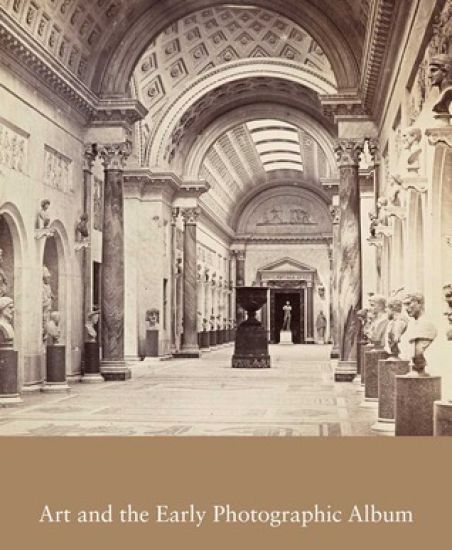
Art and the Early Photographic Album
One of the most prized categories of early photography was the reproduction of artworks, a role in which photographs largely replaced engravings in book imagery during the mid-19th century. Photographs of paintings, sculptures, and other works were compiled in albums, ranging from surveys of museum collections and catalogues of works by single artists to illustrated travel guides and archaeological reports. While such albums have often been valued for documentary purposes, their broader role in the institutional development of art has, until now, been overlooked. The first book on the subject, this collection of twelve essays explores topics such as how the acclaim of artists like Rubens grew because their paintings reproduced so well in photographs, how Michelangelo's Sistine Chapel frescoes were given a new public identity by the photographer's choice of striking details never explored in traditional prints, and other important ways in which photographically illustrated publications influenced the experience and the history of art. Published by the National Gallery of Art, Center for Advanced Study in the Visual Arts/Distributed by Yale University Press
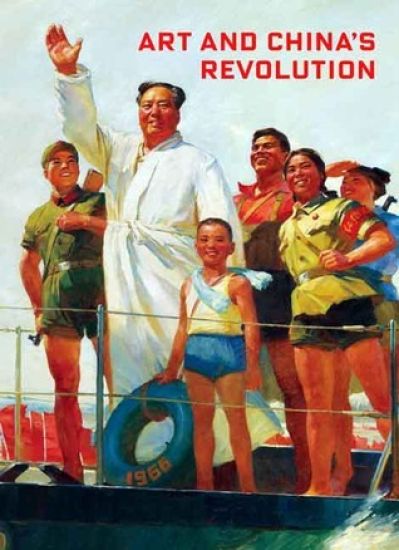
Art and China's Revolution

Art and China's Revolution

Melissa Chiu

Yale University Press
2008
sidottu
A groundbreaking look at art made in China during the Cultural Revolution Although numerous books on the Cultural Revolution have been published, they do not analyze the profound shift in aesthetic values that occurred in China after the Communists took power. This fascinating book is the first to focus on artwork produced from the 1950s to the 1970s, when Mao Zedong was in leadership, and argues that important contributions were made during this period that require fuller consideration in Chinese art history, especially with relevance to the contemporary world. Previously, historians have tended to dismiss the art of the Cultural Revolution as pure propaganda. The authors of this volume (historians, art historians, and artists) argue that while much art produced during this time was infused with politics, and individual creativity and displays of free thought were sometimes stifled and even punished, it is short sighted to overlook the aesthetic sophistication, diversity, and accessibility of much of the imagery. Bringing together more than 200 extraordinary artworks, including oil paintings, ink scroll paintings, artist sketchbooks, posters, and objects from daily life, as well as primary documentation that has not been published outside of China or seen since the mid-20th century, this invaluable volume sheds new light on one of the most controversial and critical periods in history.Published in association with the Asia Society MuseumExhibition Schedule:Asia Society Museum (September 5, 2008 – January 4, 2009)
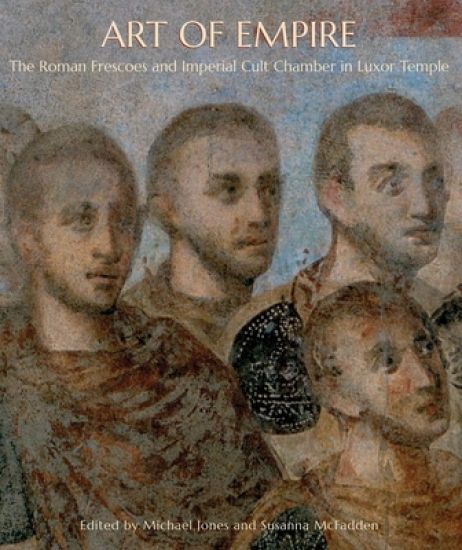
Art of Empire

Art of Empire

Michael Jones; Susanna McFadden

Yale University Press
2015
sidottu
The Luxor Temple of Amun-Re, built to commemorate the divine power of the pharaohs, is one of the iconic monuments of New Kingdom Egypt. In the 4th century C.E., the Roman Imperial government, capitalizing on the site’s earlier significance, converted the temple into a military camp and constructed a lavishly painted cult chamber dedicated to the four emperors of the Tetrarchy. These frescoes provide fascinating insight into the political landscape of the late Roman Empire and, as the only surviving wall paintings from the tetrarchic period, into the history of Roman art. The culmination of a groundbreaking conservation project, this volume brings together scholars across disciplines for a comprehensive look at the frescoes and their architectural, archaeological, and historical contexts. More than 150 stunning illustrations present the paintings for the first time in their newly conserved state, along with a selection of 19th-century documentary watercolors. This remarkable publication illustrates how physical context, iconography, and style were used to convey ideology throughout Rome’s provinces.Published in association with the American Research Center in Egypt, Inc.
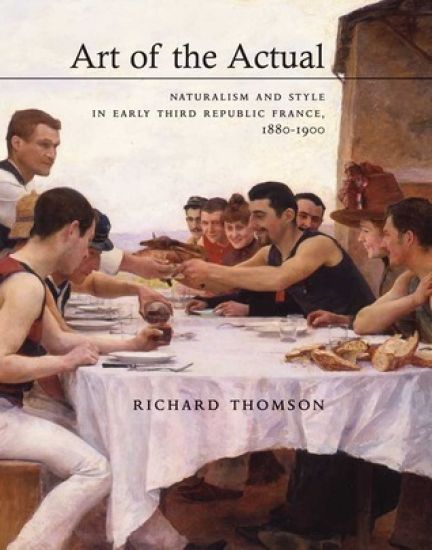
Art of the Actual

Art of the Actual

Richard Thomson

Yale University Press
2012
sidottu
The French Republic—with its rallying cry for liberty, equality, and fraternity—emerged in 1870, and by 1880 had developed a coherent republican ideology. The regime pursued secular policies and emphasized its commitment to science and technology. Naturalism was an ideal aesthetic match for the republican ideology; it emphasized that art should be drawn from the everyday world, that all subjects were worthy of treatment, and that there should be flexibility in representation to allow for different voices.Art of the Actual examines the use of naturalism in the 19th-century. It explores how pictures by artists such as Roll, Lhermitte, and Friant could be read as egalitarian and republican, assesses how well-known painters including Degas, Monet, and Toulouse-Lautrec situated their painting vis-à-vis the dominant naturalism, and opens up new arguments about caricatural and popular style. By illuminating the role of naturalism in a broad range of imagery in late 19th-century France, Richard Thomson provides a new interpretation of the art of the period.
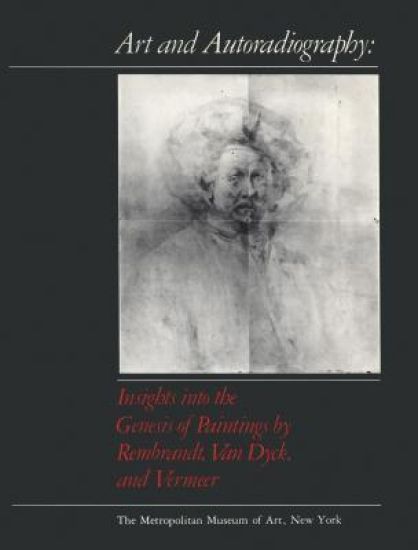
Art and Autoradiography

Art and Autoradiography

New York (COR) Metropolitan Museum of Art

Metropolitan Museum of Art
2012
pokkari
This book reports the most significant results of a scientific study of thirty-nine paintings in The Metropolitan Museum of Art. The works under investigation are by seventeenth-century Dutch and Flemish artists, mainly Rembrandt and his school. Art and Autoradiography publishes for the first time data obtained by the use of a new technique, neutron activation autoradiography. Through this method, it is now possible to study the substructure of paintings, their genesis, and their condition in far greater detail than had been possible with the conventional techniques or X-ray radiography and infrared photography. As a result, an artist's creative process can now be studied very closely. Autoradiography provides significant information for resolving questions about an artist's oeuvre and about workshop variations, attribution, dating, and even doubted authenticity. For example, Rembrandt's preliminary sketching on the canvas, the authenticity of some of his paintings, and previous restorations of others have now been established or clarified; a self-portrait of Van Dyck was discovered under his own painting.In addition, the material presented here represents an interdisciplinary approach. The collaboration of two art historians (Maryan Wynn Ainsworth and Egbert Haverkamp-Begemann), a paintings conservator (John Brealey), a physical scientist (Pieter Meyers), and their colleagues has resulted in a full and rich interpretation of the autoradiographs. (This title was originally published in 1981/82.)
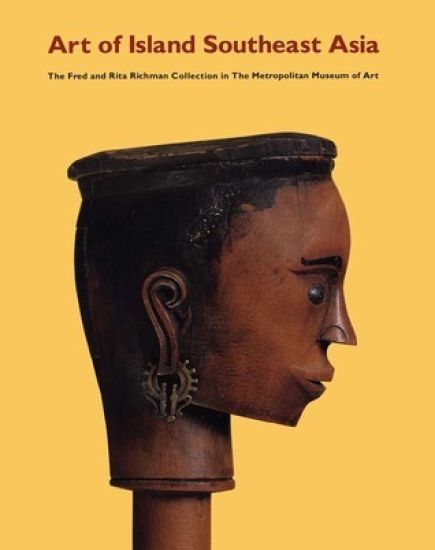
Art of Island Southeast Asia

Art of Island Southeast Asia

Florina H. Capistrano-Baker; Paul Michael (INT) Taylor

Metropolitan Museum of Art
2012
pokkari
The sprawling geographic region that is Island Southeast Asia comprises more than seventeen hundred islands, including the modern nations of the Philippines, Indonesia, Brunei, and eastern Malaysia. A common language and culture may at an early time have unified the peoples of this vast region, and in spite of the impact of colonialism and extensive contact with four of the world's great religions, a commonality remains. The visual arts powerfully illustrate this tenacious unity. The Fred and Rita Richman Collection in The Metropolitan Museum of Art, New York, is an impressive assemblage of the art of these myriad islands. Many of the art forms represented no longer survive, and those that do are seldom created in their original social and religious context,making the work a valuable record of an irretrievable past. Made in the late nineteenth and early twentieth century, the art in the collection represents a dynamic period in Southeast Asia's history, during which mercantile exploits gave rise to social, political, and economic changes. The art of Island Southeast Asia is thus one of continuous change.Nevertheless, because of shared ethnic, linguistic, and cultural sources, different forms of artistic expression remain formally and conceptually related, and while the meanings given to similar art forms and their stylistic renderings vary, the concepts they reflect are universal. Broadly stated, the art addresses two fundamental concerns, fertility and protection. Four important images evoke these themes: the seated human figure, the omega-shaped mamuli ornament, the water buffalo, and the naga serpent-dragon. The works, many rendered powerful by natural and supernatural forces, visually conjoin spirit worlds and island realms. (This title was originally published in 1993/94.)
Art History in the Wake of the Global Turn
With globalization steadily reshaping the cultural landscape, scholars have long called for a full-scale reassessment of art history's largely Eurocentric framework. This collection of case studies and essays, the latest in the Clark Studies in the Visual Arts series, brings together voices from various disciplinary and theoretical backgrounds, each proposing ways to remap, decenter, and reorient what is often assumed to be a unified field. Rather than devise a one-size-fits-all strategy for what has long been a divided and disjointed terrain, these authors and artists reframe the inherent challenges of the global—most notably geographic, political, aesthetic, and linguistic differences—as productive starting points for study. As the book demonstrates, approaching art history from such alternative perspectives rewrites some of the most basic narratives, from the origins of representation to the beginnings of the “modern” to the very history of globalization and its effects.
Art in Britain 1660¿1815

Art in Britain 1660¿1815

Solkin David H.

Yale University Press
2015
sidottu
Art in Britain 1660–1815 presents the first social history of British art from the period known as the long 18th century, and offers a fresh and challenging look at the major developments in painting, drawing, and printmaking that took place during this period. It describes how an embryonic London art world metamorphosed into a flourishing community of native and immigrant practitioners, whose efforts ultimately led to the rise of a British School deemed worthy of comparison with its European counterparts. Within this larger narrative are authoritative accounts of the achievements of celebrated artists such as Peter Lely, William Hogarth, Thomas Gainsborough, and J.M.W. Turner. David H. Solkin has interwoven their stories and many others into a critical analysis of how visual culture reinforced, and on occasion challenged, established social hierarchies and prevailing notions of gender, class, and race as Britain entered the modern age. More than 300 artworks, accompanied by detailed analysis, beautifully illustrate how Britain’s transformation into the world’s foremost commercial and imperial power found expression in the visual arts, and how the arts shaped the nation in return.
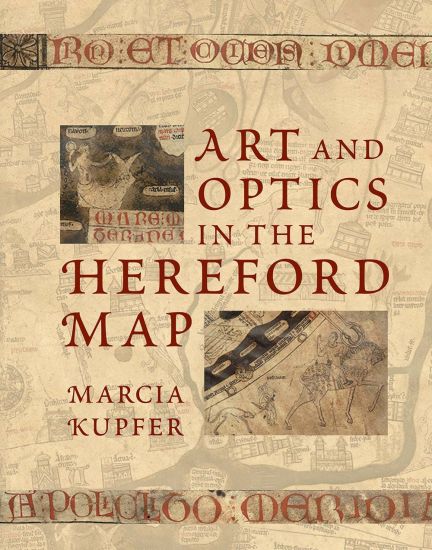
Art and Optics in the Hereford Map

Art and Optics in the Hereford Map

Marcia Kupfer

Yale University Press
2016
sidottu
A single, monumental mappa mundi (world map), made around 1300 for Hereford Cathedral, survives intact from the Middle Ages. As Marcia Kupfer reveals in her arresting new study, this celebrated testament to medieval learning has long been profoundly misunderstood. Features of the colored and gilded map that baffle modern expectations are typically dismissed as the product of careless execution. Kupfer argues that they should rightly be seen as part of the map’s encoded commentary on the nature of vision itself. Optical conceits and perspectival games formed part of the map’s language of vision, were central to its commission, and shaped its display, formal design, and allegorical fabric. These discoveries compel a sweeping revision of the artwork’s intellectual and art-historical genealogy, as well as its function and aesthetic significance, shedding new light on the impact of scientific discourses in late medieval art. Published for the Paul Mellon Centre for Studies in British Art
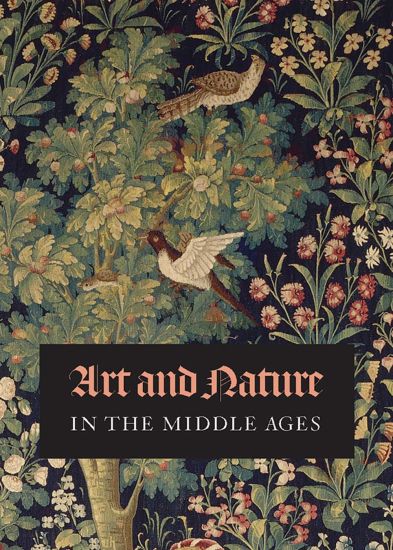
Art and Nature in the Middle Ages
This splendidly illustrated book explores the universal and multifaceted theme of nature as manifested in Western European art of the Middle Ages. Fascinating essays consider the concept in the context of medieval philosophy, theology, and poetry. The masterpieces highlighted here, from the distinguished collection of the Musée de Cluny, span the 12th through the 16th centuries and include an impressive array of objects destined for both religious and secular purposes---from exquisite stained glass and carved capitals to spectacular enameled jewelry, illuminated manuscripts, and woven tapestries. Art and Nature in the Middle Ages provides an essential understanding of the symbolism and significance of motifs taken from the natural world, as well as the technical mastery of the medieval artisans who produced these remarkable objects. Distributed for the Dallas Museum of Art
Art Deco Chicago

Art Deco Chicago

Yale University Press
2018
sidottu
An expansive take on American Art Deco that explores Chicago's pivotal role in developing the architecture, graphic design, and product design that came to define middle-class style in the twentieth century Frank Lloyd Wright’s lost Midway Gardens, the iconic Sunbeam Mixmaster, and Marshall Field’s famed window displays: despite the differences in scale and medium, each belongs to the broad current of an Art Deco style that developed in Chicago in the first half of the twentieth century. This ambitious overview of the city’s architectural, product, industrial, and graphic design between 1910 and 1950 offers a fresh perspective on a style that would come to represent the dominant mode of modernism for the American middle class. Lavishly illustrated with 325 images, the book narrates Art Deco’s evolution in 101 key works, carefully curated and chronologically organized to tell the story of not just a style but a set of sensibilities. Critical essays from leading figures in the field discuss the ways in which Art Deco created an entire visual universe that extended to architecture, advertising, household objects, clothing, and even food design. Through this comprehensive approach to one of the 20th century’s most pervasive modes of expression in America, Art Deco Chicago provides an essential overview of both this influential style and the metropolis that came to embody it.Distributed for the Chicago Art Deco SocietyExhibition Schedule:Chicago History Museum (10/27/18–­­12/02/19)
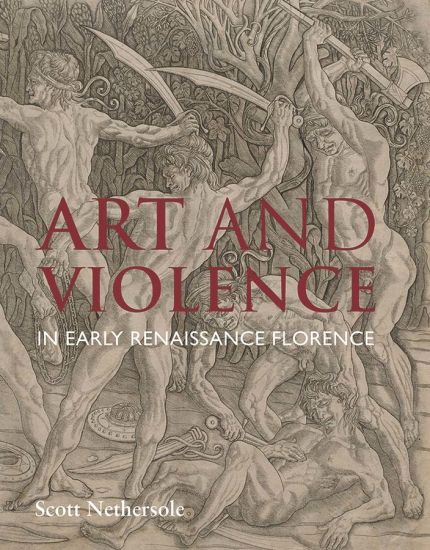
Art and Violence in Early Renaissance Florence

Art and Violence in Early Renaissance Florence

Scott Nethersole

Yale University Press
2018
sidottu
This study is the first to examine the relationship between art and violence in 15th-century Florence, exposing the underbelly of a period more often celebrated for enlightened and progressive ideas. Renaissance Florentines were constantly subjected to the sight of violence, whether in carefully staged rituals of execution or images of the suffering inflicted on Christ. There was nothing new in this culture of pain, unlike the aesthetic of violence that developed towards the end of the 15th century. It emerged in the work of artists such as Piero di Cosimo, Bertoldo di Giovanni, Antonio del Pollaiuolo, and the young Michelangelo. Inspired by the art of antiquity, they painted, engraved, and sculpted images of deadly battles, ultimately normalizing representations of brutal violence. Drawing on work in social and literary history, as well as art history, Scott Nethersole sheds light on the relationship between these Renaissance images, violence, and ideas of artistic invention and authorship.
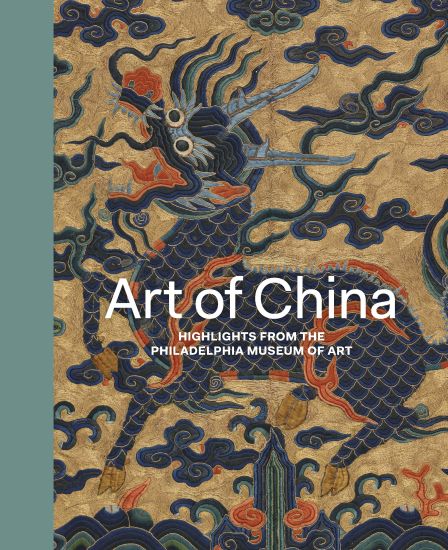
Art of China

Art of China

Yale University Press
2018
sidottu
This sumptuous presentation of the Philadelphia Museum of Art’s wide-ranging collection of Chinese art features one hundred works in various media spanning antiquity to the present day—including Ming gold vessels, a 15th-century Buddhist temple ceiling, imperial court robes, and an 18th-century bookcase made in Canton for a Dutchman. With striking new photography and engaging and informative discussions of individual works of sculpture, painting, furniture, textiles, ceramics, metalwork, and architecture, this volume provides a fascinating look into the breadth and diversity of Chinese artistic experience and material culture. An introductory essay by Hiromi Kinoshita delves into the history of the Philadelphia Museum’s Chinese collection—begun after the 1876 World’s Fair and continuing today with acquisitions of contemporary works by Ai Weiwei and Zhang Huan—weaving together stories of intrepid and dedicated collectors, curators, and dealers. Both accessible to general readers and of interest to scholars, this book is a valuable resource for those captivated by the many manifestations of art from China.Published in association with the Philadelphia Museum of Art
Art’s Biggest Stage

Art’s Biggest Stage

Brian Sholis

Yale University Press
2019
sidottu
A survey of a unique archive of ephemera from one of the art world’s splashiest events Since 2007, the library of the Clark Art Institute in Williamstown, Massachusetts, has built an unparalleled archival collection related to the Venice Biennale—a global celebration of contemporary art, complete with national pavilions and thematic exhibitions in grand villas. In Art’s Biggest Stage: Collecting the Venice Biennale, 2007–2019, readers can experience these art extravaganzas through related ephemera from the Clark’s holdings: artist editions, books, posters, publicity materials, and miscellany (as diverse as pop-up books, tote bags, and wallpaper), much of it illustrated with new photography. By publishing this fascinating and ever-growing trove of memorabilia for the first time, Art’s Biggest Stage will serve as an on-going companion to the Biennale and a resource on the Clark’s collection. In addition, it uses the objects at the Clark as a lens to explore the same questions of nationhood, identity, and spectacle that are central to the experience of the Biennale itself.Distributed for the Clark Art InstituteExhibition Schedule:Clark Art Institute (July 4–October 14, 2019)
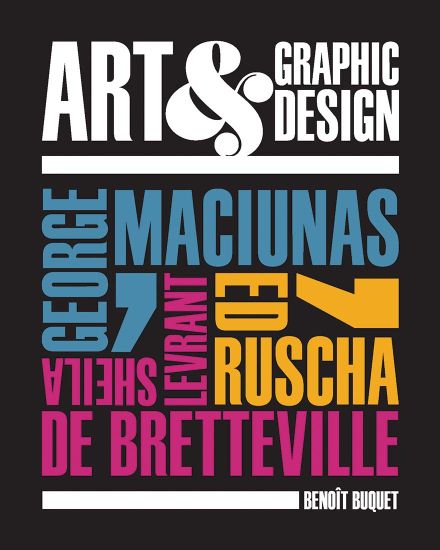
Art & Graphic Design

Art & Graphic Design

Benoit Buquet

Yale University Press
2021
sidottu
An innovative exploration of the intersection of graphic design and American art of the 1960s and 1970s This fascinating study of the role that graphic design played in American art of the 1960s and 1970s focuses on the work of George Maciunas, Ed Ruscha, and Sheila Levrant de Bretteville. Examining how each of these artists utilized typography, materiality, and other graphic design aesthetics, Benoît Buquet reveals the importance of graphic design in creating a sense of coherence within the disparate international group of Fluxus artists, an elusiveness and resistance to categorization that defined much of Ruscha’s brand of Pop Art, and an open and participatory visual identity for a range of feminist art practices. Rigorous and compelling scholarship and a copious illustration program that presents insightful juxtapositions of objects—some of which have never been discussed before—combine to shed new light on a period of abundant creativity and cultural transition in American art and the intimate, though often overlooked, entwinement between art and graphic design.
Art and Faith

Art and Faith

Makoto Fujimura; N. T. Wright

Yale University Press
2021
sidottu
From a world-renowned painter, an exploration of creativity’s quintessential—and often overlooked—role in the spiritual life “Makoto Fujimura’s art and writings have been a true inspiration to me. In this luminous book, he addresses the question of art and faith and their reconciliation with a quiet and moving eloquence.”—Martin Scorsese “[An] elegant treatise. . . . Fujimura’s sensitive, evocative theology will appeal to believers interested in the role religion can play in the creation of art.”—Publishers Weekly Conceived over thirty years of painting and creating in his studio, this book is Makoto Fujimura’s broad and deep exploration of creativity and the spiritual aspects of “making.” What he does in the studio is theological work as much as it is aesthetic work. In between pouring precious, pulverized minerals onto handmade paper to create the prismatic, refractive surfaces of his art, he comes into the quiet space in the studio in a discipline of awareness, waiting, prayer, and praise. Ranging from the Bible to T. S. Eliot, Mark Rothko, and Japanese Kintsugi technique, he shows how, unless we are making something, we cannot know the depth of God’s being and God’s grace permeating our lives. This poignant and beautiful book offers the perspective of, in Christian Wiman’s words, an “accidental theologian,” one who comes to spiritual questions always through the prism of art.
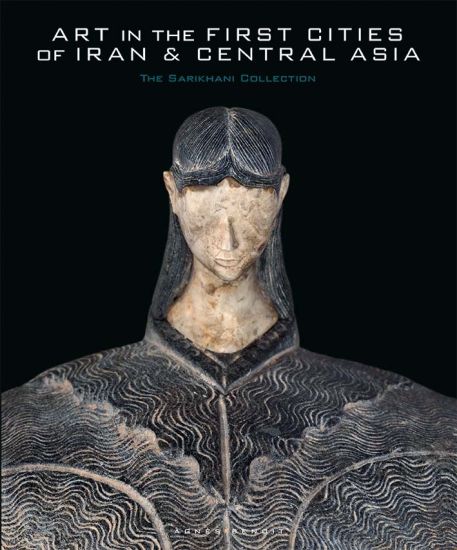
Art in the First Cities of Iran and Central Asia

Art in the First Cities of Iran and Central Asia

Agnes Benoit

Yale University Press
2021
sidottu
A beautifully illustrated book exploring the art of Iran and Central Asia from the 5th to the 2nd Millennium BC This richly illustrated book explores the art of ancient Iran and Central Asia between the 5th and 2nd millenniums BC, a time that proved to be one of the region’s most prolific periods. Over this period, the first cities arise, strengthen their power and multiply, and undergo continuous innovation. To serve this new world, items are invented and artistry flourishes—jars for storage and transportation of goods, prestigious weapons, jewellery, ceremonial vessels and statuary. Exquisite photography and illustrations throughout the book demonstrate the skilful design and wealth of materials used to create such objects. Ancient Iran was rich in minerals, while Central Asia had precious commodities such as lapis lazuli, gold and tin. Showcasing the distinctive artistic output of the region, magnificent objects from the Sarikhani Collection and other collections come together in this illuminating book.Distributed for the Sarikhani Collection
Art Can Help

Art Can Help

Robert Adams

Yale University Press
2021
pokkari
A collection of inspiring essays by the photographer Robert Adams, who advocates the meaningfulness of art in a disillusioned society In Art Can Help, the internationally acclaimed American photographer Robert Adams offers over two dozen meditations on the purpose of art and the responsibility of the artist. In particular, Adams advocates art that evokes beauty without irony or sentimentality, art that “encourages us to gratitude and engagement, and is of both personal and civic consequence.” Following an introduction, the book begins with two short essays on the works of the American painter Edward Hopper, an artist venerated by Adams. The rest of this compilation contains texts—more than half of which have never before been published—that contemplate one or two works by an individual artist. The pictures discussed are by noted photographers such as Julia Margaret Cameron, Emmet Gowin, Dorothea Lange, Abelardo Morell, Edward Ranney, Judith Joy Ross, John Szarkowski, and Garry Winogrand. Several essays summon the words of literary figures, including Virginia Woolf and Czeslaw Milosz. Adams’s voice is at once intimate and accessible, and is imbued with the accumulated wisdom of a long career devoted to making and viewing art. This eloquent and moving book champions art that fights against disillusionment and despair.Distributed for the Yale University Art Gallery