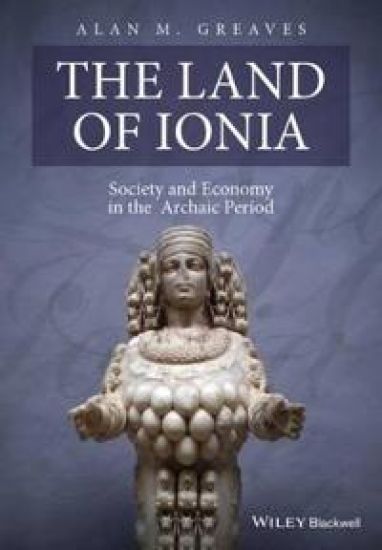
Incorporating over a century of archaeological research, Greaves offers a reassessment of Archaic Ionia that attempts to understand the region within its larger Mediterranean context and provides a thematic overview of its cities and people. Seeks to balance the Greek and Anatolian cultural influences at work in Ionia in this important period of its history (700BC to the Battle of Lade in 494BC)Organised thematically, covering landscape, economy, cities, colonisation, warfare, cult, and artAccesses German and Turkish scholarship, presenting a useful point of entry to the published literature for academics and students
Separation Process Essentials provides an interactive approach for students to learn the main separation processes (distillation, absorption, stripping, and solvent extraction) using material and energy balances with equilibrium relationships, while referring readers to other more complete works when needed. Membrane separations are included as an example of non-equilibrium processes.This book reviews and builds on material learned in the first chemical engineering courses such as Material and Energy Balances and Thermodynamics as applied to separations. It relies heavily on example problems, including completely worked and explained problems followed by "Try This At Home" guided examples. Most examples have accompanying downloadable Excel spreadsheet simulations. The book also offers a complementary website, http://separationsbook.com, with supplementary material such as links to YouTube tutorials, practice problems, and the Excel simulations.This book is aimed at second and third year undergraduate students in Chemical engineering, as well as professionals in the field of Chemical engineering, and can be used for a one semester course in separation processes and unit operations.
At the end of the twentieth century, international business functioned in an environment dominated by the triad of economic power formed by the USA, Japan and the European Community. Multinational corporate strategies had to be formulated within the context of intense global competition between these three economic blocs. This book, first published in 1990, analyses the interplay between the trade policies adopted by the major powers and the competitive strategies of international corporations. With particular reference to trade relations between Canada and the USA, the effects of Japanese multinational dominance and the implications of European economic integration, this volume throws new light on the interaction between international business and government trade policies.
At the end of the twentieth century, international business functioned in an environment dominated by the triad of economic power formed by the USA, Japan and the European Community. Multinational corporate strategies had to be formulated within the context of intense global competition between these three economic blocs. This book, first published in 1990, analyses the interplay between the trade policies adopted by the major powers and the competitive strategies of international corporations. With particular reference to trade relations between Canada and the USA, the effects of Japanese multinational dominance and the implications of European economic integration, this volume throws new light on the interaction between international business and government trade policies.
Practical guidance on how to apply process control fundamentals to solve real-world control problems Practical Process Control Design with Industrial Applications presents process control essentials and control strategy design fundamentals for modern-day DCS work environments. It uses a unique instructional approach—a process analysis and process understanding framework that enables readers to better understand and more effectively use process control fundamentals. Process analysis, operating objectives, and business drivers guide the identification of control objectives and facilitate control strategy designs of realistic control applications for real-world unit operations. Filling a gap in the literature, coverage includes: Merging process analysis, process understanding, and real-world plant operations with process control essentials and design fundamentalsDetailed discussion of real-world design issues and realistic process-specific control strategies Methods used to ensure acceptable control performance continues when various “what if” issues ariseHow process control design fundamentals are applied in important unit-specific control strategiesHow best to apply specific control attributes (control direction), control options (PID proportional action), standard DCS functionality (algorithms and/or function blocks), and corporate or site standards (input signal validation) to develop control strategies that achieve control objectives with acceptable control performance. Practical Process Control Design with Industrial Applications is an essential reference for control engineers and process engineers who support process control activities in an operating plant, DCS vendor control application specialists, and EPC company project engineers who support process control activities in capital projects.
Incorporating over a century of archaeological research, Greaves offers a reassessment of Archaic Ionia that attempts to understand the region within its larger Mediterranean context and provides a thematic overview of its cities and people. Seeks to balance the Greek and Anatolian cultural influences at work in Ionia in this important period of its history (700BC to the Battle of Lade in 494BC)Organised thematically, covering landscape, economy, cities, colonisation, warfare, cult, and artAccesses German and Turkish scholarship, presenting a useful point of entry to the published literature for academics and students
"This resource brings together an incredible blend of leading educational thinkers. Their diverse experiences, perspectives, and wisdom will stimulate in leaders the 'deep work' of the heart, mind, and soul essential for creating schools that continuously improve teaching, learning, and relationships in ways that benefit all members of the school community."—Dennis Sparks, Emeritus Executive DirectorNational Staff Development CouncilA concise volume packed with research and innovative ideas from today's key thinkers! Professional learning communities have become a significant factor in improving instructional effectiveness and student achievement. In the third volume of The Soul of Educational Leadership series, educators and leaders will discover key concepts and strategies for sustaining the critically important work of these communities. Contributions from Shirley M. Hord, Maurice J. Elias, Karen Seashore Louis, Andy Hargreaves, Stephanie A. Hirsh, and other nationally known educators highlight:Leadership teams and a collaborative culture The National Board for Professional Teaching Standards Multiple approaches for supporting social-emotional learning in schools Leadership, real-world challenges, and moral choices A thought-provoking collection from educational visionaries, Sustaining Professional Learning Communities is essential reading for all school leaders committed to strengthening learning environments.
"This resource brings together an incredible blend of leading educational thinkers. Their diverse experiences, perspectives, and wisdom will stimulate in leaders the 'deep work' of the heart, mind, and soul essential for creating schools that continuously improve teaching, learning, and relationships in ways that benefit all members of the school community."—Dennis Sparks, Emeritus Executive DirectorNational Staff Development CouncilA concise volume packed with research and innovative ideas from today's key thinkers! Professional learning communities have become a significant factor in improving instructional effectiveness and student achievement. In the third volume of The Soul of Educational Leadership series, educators and leaders will discover key concepts and strategies for sustaining the critically important work of these communities. Contributions from Shirley M. Hord, Maurice J. Elias, Karen Seashore Louis, Andy Hargreaves, Stephanie A. Hirsh, and other nationally known educators highlight:Leadership teams and a collaborative culture The National Board for Professional Teaching Standards Multiple approaches for supporting social-emotional learning in schools Leadership, real-world challenges, and moral choices A thought-provoking collection from educational visionaries, Sustaining Professional Learning Communities is essential reading for all school leaders committed to strengthening learning environments.
Excellence Through Equity is an inspiring look at how real-world educators are creating schools where all students are able to thrive. In these schools, educators understand that equity is not about treating all children the same. They are deeply committed to ensuring that each student receives what he or she individually needs to develop their full potential and succeed.To help educators with what can at times be a difficult and challenging journey, Blankstein and Noguera frame the book with five guiding principles of Courageous Leadership:Getting to your core.Making organizational meaning.Ensuring constancy and consistency of purpose.Facing the facts and your fears.Building sustainable relationships.They further emphasize that the practices are grounded in three important areas of research that are too often disregarded: (1) child development, (2) neuroscience, and (3) environmental influences on child development and learning.You'll hear from Carol Corbett Burris, Michael Fullan, Marcus J. Newsome, Paul Reville, Susan Szachowicz, and other bold practitioners and visionary thinkers who share compelling and actionable ideas, strategies, and experiences for closing the achievement gap in your classrooms and school.Ensuring that all students receive an education that cultivates their talents and potential is in all our common interest. As Andy Hargreaves writes in the coda: ""The opportunity for all Americans is to articulate and believe in an inspiring vision of educational change that is about what the next generation of America and Americans should become, not about a target or ranking that the nation should attain.""From the Foreword by Archbishop Desmond Tutu:""Letting go of a system of winners and losers in favor of what is proposed in this book is a courageous leap forward that we all must take together. Let this bold, practical book be a guide; and may you travel into this new exciting vista, in which every child can succeed.
Helping students develop a good understanding of asymptotic theory, Introduction to Statistical Limit Theory provides a thorough yet accessible treatment of common modes of convergence and their related tools used in statistics. It also discusses how the results can be applied to several common areas in the field.The author explains as much of the background material as possible and offers a comprehensive account of the modes of convergence of random variables, distributions, and moments, establishing a firm foundation for the applications that appear later in the book. The text includes detailed proofs that follow a logical progression of the central inferences of each result. It also presents in-depth explanations of the results and identifies important tools and techniques. Through numerous illustrative examples, the book shows how asymptotic theory offers deep insight into statistical problems, such as confidence intervals, hypothesis tests, and estimation. With an array of exercises and experiments in each chapter, this classroom-tested book gives students the mathematical foundation needed to understand asymptotic theory. It covers the necessary introductory material as well as modern statistical applications, exploring how the underlying mathematical and statistical theories work together.