

Kirjahaku
Etsi kirjoja tekijän nimen, kirjan nimen tai ISBN:n perusteella.
1000 tulosta hakusanalla Austin Current

The Austin Protocol Compiler
Tommy M. McGuire; Mohamed G. Gouda
Springer-Verlag New York Inc.
2010
nidottu
There are two groups of researchers who are interested in designing network protocols and who cannot (yet) effectively communicate with one another c- cerning these protocols. The first is the group of protocol verifiers, and the second is the group of protocol implementors. The main reason for the lack of effective communication between these two groups is that these groups use languages with quite different semantics to specify network protocols. On one hand, the protocol verifiers use specification languages whose semantics are abstract, coarse-grained, and with large atom- ity. Clearly, protocol specifications that are developed based on such semantics are easier to prove correct. On the other hand, the protocol implementors use specification languages whose semantics are concrete, fine-grained, and with small atomicity. Protocol specifications that are developed based on such - mantics are easier to implement using system programming languages such as C, C++, and Java. To help in closing this communication gap between the group of protocol verifiers and the group of protocol implementors, we present in this monograph a protocol specification language called the Timed Abstract Protocol (or TAP, for short) notation. This notation is greatly influenced by the Abstract Protocol Notation in the textbook Elements of Network Protocol Design, written by the second author, Mohamed G. Gouda. The TAP notation has two types of sem- tics: an abstract semantics that appeals to the protocol verifiers and a concrete semantics thatappeals to the protocol implementors group.

Bill Austin's Self Help, Clearing and Healing Program
William M. Austin
Createspace Independent Publishing Platform
2009
nidottu

Dear Austin - A Letter To My Son
Carl Bluemel
Createspace Independent Publishing Platform
2010
pokkari
Leaving home; for college, for military service, or for a job. It's a milestone in the life of almost every child - and a bittersweet crossroads for almost every parent.What you say to your child at this critical moment, and how you say it, can be a welcome catharsis for you, as a parent, and a lifelong gift to your child. The letter in this book is how David Perkins chose to say goodbye to his son as he left for college. He does not hold it up as a template, or even as an example, for others. He only wants you to know that it made this important rite of passage easier for him to navigate. How his son feels about it may not be known for some time.

Louis Austin and the Carolina Times
Gershenhorn Jerry
The University of North Carolina Press
2018
sidottu
Louis Austin (1898-1971) came of age at the nadir of the Jim Crow era and became a transformative leader of the long black freedom struggle in North Carolina. From 1927 to 1971, he published and edited the Carolina Times, the preeminent black newspaper in the state. He used the power of the press to voice the anger of black Carolinians, and to turn that anger into action in a forty-year crusade for freedom.In this biography, Jerry Gershenhorn chronicles Austin's career as a journalist and activist, highlighting his work during the Great Depression, World War II, and the postwar civil rights movement. Austin helped pioneer radical tactics during the Depression, including anti-segregation lawsuits, boycotts of segregated movie theaters and white-owned stores that refused to hire black workers, and African American voting rights' campaigns based on political participation in the Democratic Party. In examining Austin's life, Gershenhorn is able to tell the story of the long black freedom struggle in North Carolina from a new vantage point, shedding new light on the vitality of black protest and the black press in the twentieth century.

Louis Austin and the Carolina Times
Jerry Gershenhorn
The University of North Carolina Press
2020
nidottu
Louis Austin (1898-1971) came of age at the nadir of the Jim Crow era and became a transformative leader of the long black freedom struggle in North Carolina. From 1927 to 1971, he published and edited the Carolina Times, the preeminent black newspaper in the state. He used the power of the press to voice the anger of black Carolinians, and to turn that anger into action in a forty-year crusade for freedom.In this biography, Jerry Gershenhorn chronicles Austin's career as a journalist and activist, highlighting his work during the Great Depression, World War II, and the postwar civil rights movement. Austin helped pioneer radical tactics during the Depression, including antisegregation lawsuits, boycotts of segregated movie theaters and white-owned stores that refused to hire black workers, and African American voting rights campaigns based on political participation in the Democratic Party. In examining Austin's life, Gershenhorn narrates the story of the long black freedom struggle in North Carolina from a new vantage point, shedding new light on the vitality of black protest and the black press in the twentieth century.

Mary Austin Holley (1784–1846), a cousin of Stephen F. Austin, journeyed to Texas on three separate occasions. Her first visit, in 1831, resulted in the publication of her book, Texas. Her second and third trips, in 1835 and 1837, were depicted in her diary. This witty, observant, and highly perceptive woman captured the infant Texas in her journal-the Mexican state moving toward rebellion and the new Republic, dynamic and struggling with a great destiny. The Holley diary is an important insight into the social and political history of early Texas.


William Austin, the Creator of Peter Rug: Being a Biographical Sketch of William Austin, Together with the Best of His Short Stories
Walter Austin
Literary Licensing, LLC
2013
nidottu

The poetical works of Emma-Austin-Jones
Emma Austin-Jones
Createspace Independent Publishing Platform
2014
pokkari
Poetry collection.An anthology of poetical musings and ramblings by one woman.From lightness to darkness and back again...


The Austin Family Cookbook Three Generations Share Their Favorite Recipes
Margaret Ann Austin
Createspace Independent Publishing Platform
2014
nidottu

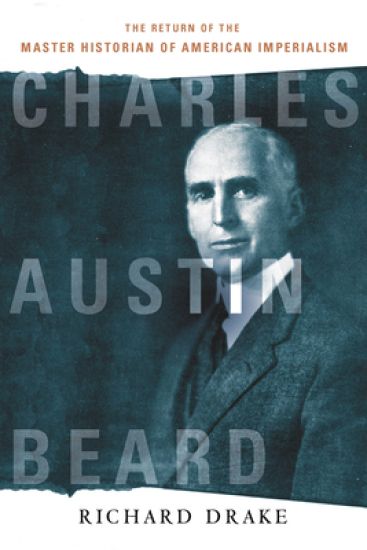
Richard Drake presents a new interpretation of Charles Austin Beard's life and work. The foremost American historian and a leading public intellectual in the first half of the twentieth century, Beard participated actively in the debates about American politics and foreign policy surrounding the two world wars. In a radical change of critical focus, Charles Austin Beard places the European dimension of Beard's thought at the center, correcting previous biographers' oversights and presenting a far more nuanced appreciation for Beard's life. Drake analyzes the stages of Beard's development as a historian and critic: his role as an intellectual leader in the Progressive movement, the support that he gave to the cause of American intervention in World War I, and his subsequent revisionist repudiation of Wilsonian ideals and embrace of non-interventionism in the lead-up to World War II. Charles Austin Beard shows that, as Americans tally the ruinous costs—both financial and moral—of nation-building and informal empire, the life and work of this prophet of history merit a thorough reexamination.
Richard Drake presents a new interpretation of Charles Austin Beard's life and work. The foremost American historian and a leading public intellectual in the first half of the twentieth century, Beard participated actively in the debates about American politics and foreign policy surrounding the two world wars. In a radical change of critical focus, Charles Austin Beard places the European dimension of Beard's thought at the center, correcting previous biographers' oversights and presenting a far more nuanced appreciation for Beard's life. Drake analyzes the stages of Beard's development as a historian and critic: his role as an intellectual leader in the Progressive movement, the support that he gave to the cause of American intervention in World War I, and his subsequent revisionist repudiation of Wilsonian ideals and embrace of non-interventionism in the lead-up to World War II. Charles Austin Beard shows that, as Americans tally the ruinous costs—both financial and moral—of nation-building and informal empire, the life and work of this prophet of history merit a thorough reexamination.


Coloring Austin Animals: A Celebration of Five Years of No-Kill in Austin
Staf Volunteers of Austin Animal Center
Createspace Independent Publishing Platform
2016
nidottu
Each year, more than 18,000 homeless or displaced animals enter the Austin Animal Center. Through adoption, rescue placements, foster families and returns to owner, the shelter has saved more than 90% of these animals since 2011. This past year, about 95% have been saved. This means AAC relies on the community and many programs to help not just dogs and cats, but also wildlife, small animals like rabbits, and farm animals like roosters The following are just a few of the special animals who have called Austin Animal Center home and eventually find permanent families. These are the faces that help us celebrate the fact that Austin is truly America's safest city for animals. In Austin, every life is worth living and each unique animal has a story to tell.

A Fake World: By: cody Austin Dalla
Cody Austin Dalla
Createspace Independent Publishing Platform
2016
nidottu

Haunted Austin: History and Hauntings in the Captial City
Jeanine Plumer
History Press Library Editions
2010
sidottu
A killer lurks in the dark streets, victimizing servant girls throughout 1885, and Austin becomes the first American city to claim a serial killer. The spirits of convicts wander amidst the manicured grounds of the Texas State Capitol while inside a public servant assassinated in 1903 still haunts the corridors. These are just a few of the strange and frightening tales of Haunted Austin. Within these pages lies evidence that the frontier bravado legendary in so many Texas men and women lives on long after death. Author Jeanine Plumer explores the sinister history of the city and attempts to answer the question: why do so many ghosts linger in Austin?