Kirjojen hintavertailu. Mukana 12 016 292 kirjaa ja 12 kauppaa.

Kirjahaku

Etsi kirjoja tekijän nimen, kirjan nimen tai ISBN:n perusteella.

1000 tulosta hakusanalla Axel Erdmann

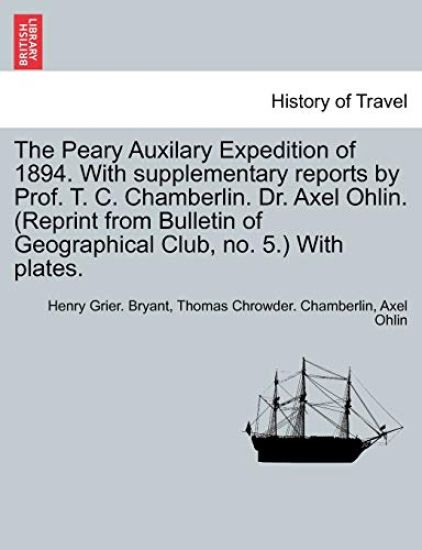
The Peary Auxilary Expedition of 1894. with Supplementary Reports by Prof. T. C. Chamberlin. Dr. Axel Ohlin. (Reprint from Bulletin of Geographical Club, No. 5.) with Plates.
Title: The Peary Auxilary Expedition of 1894 ... With supplementary reports by Prof. T. C. Chamberlin ... Dr. Axel Ohlin. (Reprint from Bulletin of Geographical Club, no. 5.) With plates.]Publisher: British Library, Historical Print EditionsThe British Library is the national library of the United Kingdom. It is one of the world's largest research libraries holding over 150 million items in all known languages and formats: books, journals, newspapers, sound recordings, patents, maps, stamps, prints and much more. Its collections include around 14 million books, along with substantial additional collections of manuscripts and historical items dating back as far as 300 BC.The HISTORY OF TRAVEL collection includes books from the British Library digitised by Microsoft. This collection contains personal narratives, travel guides and documentary accounts by Victorian travelers, male and female. Also included are pamphlets, travel guides, and personal narratives of trips to and around the Americas, the Indies, Europe, Africa and the Middle East. ++++The below data was compiled from various identification fields in the bibliographic record of this title. This data is provided as an additional tool in helping to insure edition identification: ++++ British Library Bryant, Henry Grier.; Chamberlin, Thomas Chrowder.; Ohlin, Axel; 1895. 77 p.; 8 . 10460.dd.13.
Diakonie Auf Der Hohe Der Zeit: Erfahrungen Und Perspektiven. Festschrift Fur Axel Kramme
German description: Diakonie und Kirche stehen vor einer Reihe struktureller Herausforderungen. Was ist und was braucht es fur eine Diakonie auf der Hohe der Zeit? Der vorliegende Aufsatzband versammelt verschiedene Erfahrungen und Perspektiven aus Geschichte und Gegenwart, aus Theorie und Praxis, aus Kirche und Diakonie. Erfahrungen aus der Diakonie in der DDR kommen genauso zur Sprache wie die Perspektive auf eine zunehmend von Sakularisierung und Pluralisierung gepragte Gegenwart. Verschiedene Akteure aus Wissenschaft, Diakonie und Kirche kommen zu Wort um die Herausforderungen, vor allem aber die Chancen einer Diakonie auf der Hohe der Zeit zu beschreiben. Mit Beitragen von Axel Kramme, Michael Haspel, Ulrich Lilie, Johannes Eurich, Christoph Stolte, Henrich Herbst, Rosmarie Grunert, Klaus Scholtissek und Ramon Seliger English summary: Diaconia as social welfare organization and church face a number of structural challenges. What is and what does it need for a diaconia up to date? This volume of essays brings together various experiences and perspectives from history and the present, from theory and practice, from church and diaconia. Experiences from the diaconia in the GDR are discussed as well as the perspective of the present situation of diakonia and church that is increasingly characterized by secularisation and pluralisation. Various authors from science, diakonia and church offer their perspective in order to describe the challenges, but above all the chances of a diakonia up to date.
Fremdwahrnehmung und Selbstwahrnehmung einer autistischen Stoerung im Kindes- und Jugendalter. Zur Autobiographie von Axel Brauns
Vordiplomarbeit aus dem Jahr 2003 im Fachbereich Pädagogik - Heil- und Sonderpädagogik, Note: 1, Philipps-Universität Marburg, 9 Eintragungen im Literaturverzeichnis, Sprache: Deutsch, Anmerkungen: Diese Hausarbeit wurde für das Vordiplom angefertigt und zählte somit als Prüfungsleitung. , Abstract: Vor wenigen Jahren war der Begriff "Autismus" den meisten Menschen noch weitgehend unbekannt. Heutzutage ist dieser Begriff zwar weitgehend verbreitet, was sicherlich u.a. auch dem Film "Rain Man" zu verdanken ist, in dem eine Erscheinungsform des Autismus dargestellt wird. Trotzdem können sich viele Menschen keine konkreten Vorstellungen davon machen, was es bedeutet, autistisch zu sein. Denn nur wenn einem bewusst ist, warum Autisten in verschiedenen Situationen gerade so und nicht anders reagieren und man weiß, warum dies bei ihnen der Fall ist, im Gegensatz zu "normalen" Kindern und Jugendlichen, ist man fähig, das angeeignete Wissen im Umgang mit Autisten zu berücksichtigen. Dadurch wird es einem ermöglicht, sein eigenes Verhalten speziell auf die Bedürfnisse der betroffenen Kinder und Jugendlichen auszurichten. Daher versuche ich in der vorliegenden Arbeit, einen Einblick in den Autismus und seine Erscheinungs- formen im Kindes- und Jugendalter zu geben und werde mich darüber hinaus mit der Autobiographie "Bundschatten und Fledermäuse" des Autisten Axel Brauns auseinandersetzen.
Maktens rivaler : Drottning Lovisa Ulrika, Gustav III, Axel von Fersen och Carl Fredrik Pechlin 1755-1792;
Dolska intriger och skändliga svek. Valfusk, spioneri, korruption, landsförrädiska komplotter, upprorsmakeri och militärkupper. Upprepade grundlagsbrott, politiska domstolar, godtyckliga arresteringar. Dödshot, tortyr, avrättningar, landsflykt. Så inleder Norrby sin levande skildring.Kampen mellan kungamakten och adeln under 1700-talets andra hälft: å ena sidan makthungriga drottning Lovisa Ulrika med tysk furstebakgrund, gemål till en svag kung. På andra sidan adeln med i första hand den skicklige Axel von Fersen (d.ä.) och Carl Fredrik Peckling. Men efter hand även den ambitiöse, egocentriske kronprinsen och sedermera kungen Gustav III. Denne fick hela sin regeringstid utkämpa ett tvåfrontskrig, eftersom drottningmodern Lovisa Ulrika vägrade att släppa ifrån sig makten.I Maktens rivaler får läsaren en inträngande och kompetent berättelse om makt och strider mellan stånden även om det under detta skede främst är kampen mellan kungahus och adel som utspelas. Striden mellan Mössor och Hattar, prästernas underdånighet, böndernas agerande och borgarnas svängningar. Sammansvärjningar, attentat, fängslanden, militär och polis alla ingredienser bjuds. Gustav III:s såväl konspiratoriska som naiva agerande inom inrikes- och utrikespolitiken återges.Göran Norrby är både historiker och ekonom, bosatt i Stockholm. Han har en unik bredd och ger därför i sina 1700-talsböcker en ovanligt fyllig bild av det han skriver om.
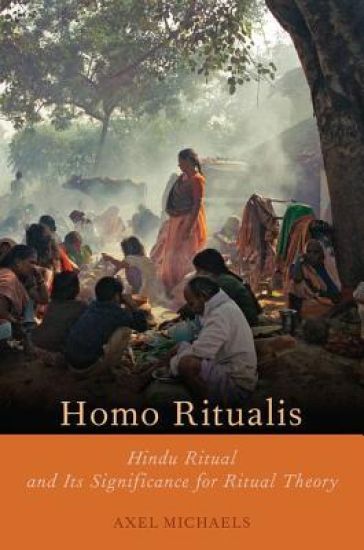
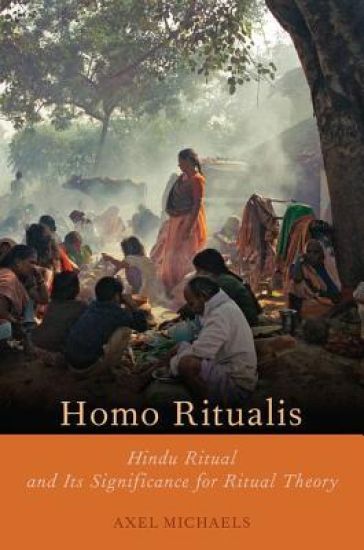
Homo Ritualis

Homo Ritualis

Axel Michaels

Oxford University Press Inc
2016
sidottu
Are the richness and diversity of rituals and celebrations in South Asia unique? Can we speak of a homo ritualis when it comes to India or Hinduism? Are Indians or Hindus more involved in rituals than other people? If so, what makes them special? Homo Ritualis is the first book to present a Hindu theory of rituals. Based on extensive textual studies and field-work in Nepal and India, Axel Michaels argues that ritual is a distinctive way of acting, which, as in the theater, can be distinguished from other forms of action. The book analyzes ritual in these cultural-specific and religious contexts, taking into account how indigenous terms and theories affect and contribute to current ritual theory. It describes and investigates various forms of Hindu rituals and festivals, such as life-cycle rituals, the Vedic sacrifice, vows processions, and the worship of deities (puja). It also examines conceptual components of (Hindu) rituals such as framing, formality, modality, and theories of meaning.
Homo Ritualis

Homo Ritualis

Axel Michaels

Oxford University Press Inc
2016
nidottu
Are the richness and diversity of rituals and celebrations in South Asia unique? Can we speak of a homo ritualis when it comes to India or Hinduism? Are Indians or Hindus more involved in rituals than other people? If so, what makes them special? Homo Ritualis is the first book to present a Hindu theory of rituals. Based on extensive textual studies and field-work in Nepal and India, Axel Michaels argues that ritual is a distinctive way of acting, which, as in the theater, can be distinguished from other forms of action. The book analyzes ritual in these cultural-specific and religious contexts, taking into account how indigenous terms and theories affect and contribute to current ritual theory. It describes and investigates various forms of Hindu rituals and festivals, such as life-cycle rituals, the Vedic sacrifice, vows processions, and the worship of deities (puja). It also examines conceptual components of (Hindu) rituals such as framing, formality, modality, and theories of meaning.
Reification

Reification

Axel Honneth; RaymondNOSSUB Geuss; JonathanNOSSUB Lear

Oxford University Press Inc
2008
sidottu
In the early 20th century, Marxist theory was enriched and rejuvenated by adopting the concept of reification, introduced by the Hungarian theorist Georg Lukács to identify and denounce the transformation of historical processes into ahistorical entities, human actions into things that seemed part of an immutable "second nature." For a variety of reasons, both theoretical and practical, the hopes placed in de-reification as a tool of revolutionary emancipation proved vain. In these original and imaginative essays, delivered as the Tanner Lectures at the University of California, Berkeley in 2005, the distinguished third-generation Frankfurt School philosopher Axel Honneth attempts to rescue the concept of reification by recasting it in terms of the philosophy of recognition he has been developing over the past two decades. Three distinguished political and social theorists: Judith Butler, Raymond Geuss, and Jonathan Lear, respond with hard questions about the central anthropological premise of his argument, the assumption that prior to cognition there is a fundamental experience of intersubjective recognition that can provide a normative standard by which current social relations can be judged wanted. Honneth listens carefully to their criticism and provides a powerful defense of his position.
Siva in Trouble

Siva in Trouble

Axel Michaels

Oxford University Press Inc
2008
sidottu
The town of Deopatan, three kilometers northeast of Kathmandu, is above all famous for its main sanctum, the temple of Pasupati, the 'lord of the animals,' a form of Siva and the tutelary deity of the kings of Nepal since ancient times. By its name alone, the temple attracts thousands of pilgrims each year and has made itself known far beyond the Kathamndu Valley. However, for the dominant Newar population the town is by no means merely the seat of Siva or Pasupati. It is also a city of wild goddesses and other deities. Due to this tension between two strands of Hinduism - the pure, vegetarian Smarta Hinduism and the Newar Hinduism which implies alcohol and blood sacrifices - Siva/Pasupati has more than once been in trouble, as the many festivals and rituals descripbed and analyzed in this book reveal. Deopatan is a contested field. Different deities, agents social groups, ritual specialists, and institutions are constantly seeking dominance, challenging and even fighting each other, thus contributing to social and political dynamics and tensions that are indeed distinct in South Asia. It is these aspects on which Axel Michaels concentrates in this book.
International Political Economy: International Political Economy

International Political Economy: International Political Economy

Axel Hulsemeyer

Oxford University Press, Canada
2010
nidottu
This reader is a collection of primary readings that introduces students to international political economy (ipe), an area of study concerned with the relationship between the two dominant forms of social organization in the modern world: 'the state' and 'the market'. Divided into five parts ranging from Adam Smith's theory of the invisible hand to recent discussions of hemispheric integration, it contains thirty-five unabridged selections that highlight the historical development, major theoretical debates, and practical issues within ipe. Each section opens with a concise introduction that presents key concepts and concludes with study questions and annotated suggestions for further reading.
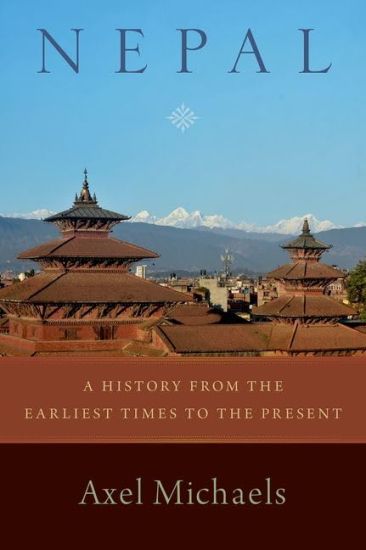
Nepal

Nepal

Axel Michaels

OXFORD UNIVERSITY PRESS INC
2024
sidottu
Until 1951 Nepal was closed to the world, landlocked between the strongest Asian powers, India and China. With its exceptional landscape, it touts the highest mountains and the greatest biodiversity on earth. It is best known as the home of Mt. Everest and holds particular fascination for those interested in climbing the Himalayas. Having long maintained its self-imposed isolation, the nation is one of the least developed in the world. Yet it is inhabited by a remarkably diverse population of 125 ethnic groups, 123 languages, and numerous religions, most notably Hinduism and Buddhism. In this book, South Asia expert Axel Michaels covers the history of Nepal from prehistoric times and the period of the Licchavi dynasty through more recent developments, such as the rise of the republic, the first elections challenged by the Maoist insurgency (1996-2006), and the royal massacre in 2001. Chapters discuss the different principalities on the territory, among them the mysterious and legendary Mustang and Sherpa realms. Since the eighteenth century, these domains have been bundled into a contentious national history. Thus, going well beyond the center of power in the Kathmandu Valley, the book examines Nepal's relations with neighboring cultures in India, Tibet, and China, as well as the influence of British colonial power. It particularly focuses on its rich history of arts, architecture, and handicrafts. Although the Buddha was born in Nepal, the country is the world's last Hindu kingdom and is also a stronghold of Tantric traditions, shamanism, and many folk religions whose festivals and rituals mark daily life. Based on a wealth of primary sources in Nepali, Sanskrit, and other indigeneous languages, Nepal offers a comprehensive and updated history of this unique culture and history.
Institutions and Democratic Citizenship

Institutions and Democratic Citizenship

Axel Hadenius

Oxford University Press
2001
sidottu
This volume examines the nature and role of democratic citizenship, the conditions necessary fro its development, and its relationship to the key democratic institutions of the state. Comparing and contrasting the patterns of political development and practice in established democracies with those states that have experienced democatic breakdown, the author aims to contribute to our understanding of the political conditions that sustain liberal democracy. The book contains two parts, which have a broad theme in common. The aim in Part One is to contribute to the debate on democracy's preconditions. Drawing on a broad range of theories, the author specifies certain societal and institutional traits which can serve to further democracy. Democratic development in Africa, Latin America and India then is compared. The conclusion is that democracy is not the product of social and economic forces first of all. To a yet greater extent it is the consequence of prevailing institutional conditions, i.e. the nature of the state. The historical development of state structures is the object of analysis in Part Two. The focus is mainly on Europe. The prospects for democracy in modern times have been greatly affected, the author maintain, by varying paths of institutional development. Moreover, the differing modes of state have displayed a variable capacity for governance and economic development. The evolution of state structures thus has consequences across broad areas of political and social life.
Institutions and Democratic Citizenship

Institutions and Democratic Citizenship

Axel Hadenius

Oxford University Press
2001
nidottu
This volume examines the nature and role of democratic citizenship, the conditions necessary for its development, and its relationship to the key institutions of the state. Comparing and contrasting the patterns of political development and practice in established democracies with tthose states that have experience democratice breakdown, the author aims to contribute to our understanding of the political conditions that sustain liberal democracy. This book contains two parts, which have a broad theme in common. The aim in Part One is to contribute to the debate on democracy's preconditions. Drawing on a broad range of theories, the author specifies certain societal and institutional traits which can serve to further democracy. Democratic development in Africa, Latin America and India then is compared. The conclusion is that democracy is not the product of social and economic forces first of all. To a yet greater extent it is the consequence of prevailing institutional conditions, i.e. the nature of the state. The historical development of state structures is the object of analysis in Part Two. The focus is mainly on Europe. The prospects for democracy in modern times have been greatly affected, the author maintain, by varying paths of institutional development. Moreover, the differing modes of state have displayed a variable capacity for governance and economic development. The evolution of state structures thus has consequences across broad areas of political and social life.
Reification

Reification

Axel Honneth; Judith Butler; Raymond Geuss; Jonathan Lear

Oxford University Press Inc
2012
nidottu
In the early 20th century, Marxist theory was enriched and rejuvenated by adopting the concept of reification, introduced by the Hungarian theorist Georg Lukács to identify and denounce the transformation of historical processes into ahistorical entities, human actions into things that seemed part of an immutable "second nature." For a variety of reasons, both theoretical and practical, the hopes placed in de-reification as a tool of revolutionary emancipation proved vain. In these original and imaginative essays, delivered as the Tanner Lectures at the University of California, Berkeley in 2005, the distinguished third-generation Frankfurt School philosopher Axel Honneth attempts to rescue the concept of reification by recasting it in terms of the philosophy of recognition he has been developing over the past two decades. Three distinguished political and social theorists: Judith Butler, Raymond Geuss, and Jonathan Lear, respond with hard questions about the central anthropological premise of his argument, the assumption that prior to cognition there is a fundamental experience of intersubjective recognition that can provide a normative standard by which current social relations can be judged wanted. Honneth listens carefully to their criticism and provides a powerful defense of his position.