
Kirjahaku
Etsi kirjoja tekijän nimen, kirjan nimen tai ISBN:n perusteella.
1000 tulosta hakusanalla Brian H Appleton

World Brain is H.G. Wells' visionary exploration of the future of knowledge and global communication. Written in 1938, this thought-provoking work outlines Wells' concept of a "World Brain," a universal repository of knowledge accessible to all, which he saw as essential for human progress and peace. In a world on the brink of another world war, Wells foresaw the need for a global information network that would enable humanity to share ideas, overcome misunderstandings, and unite under shared truths.In this Adultbrain Publishing edition, World Brain speaks directly to our current era, where information is at our fingertips but disunity remains. For those interested in futurism, knowledge networks, and the evolution of global society, Wells' work offers an inspiring and thought-provoking glimpse into a world where knowledge is the ultimate power.Can shared knowledge save the world?In World Brain, H.G. Wells presents a radical proposal: a centralized global repository of information that can educate, unify, and empower all of humanity. Written as a collection of essays, Wells outlines his vision for a universal resource that transcends borders, cultures, and ideologies. The concept was revolutionary at its time and resonates now more than ever in an age defined by digital information.In this Adultbrain Publishing edition, World Brain offers a unique perspective on the potential-and the challenges-of creating a globally interconnected society. Wells' ideas remain a compelling call to action, urging us to harness knowledge for a future where collaboration triumphs over conflict.Is humanity ready to build its World Brain?

The Brain as an Organ of Mind - Third Edition is an unchanged, high-quality reprint of the original edition of 1880. Hansebooks is editor of the literature on different topic areas such as research and science, travel and expeditions, cooking and nutrition, medicine, and other genres. As a publisher we focus on the preservation of historical literature. Many works of historical writers and scientists are available today as antiques only. Hansebooks newly publishes these books and contributes to the preservation of literature which has become rare and historical knowledge for the future.
The Brain As An Organ Of Mind has been considered by academicians and scholars of great significance and value to literature. This forms a part of the knowledge base for future generations. So that the book is never forgotten we have represented this book in a print format as the same form as it was originally first published. Hence any marks or annotations seen are left intentionally to preserve its true nature.


A text for newcomers to the field of brain electromagnetic topography, combining the necessary knowledge in the diverse areas of physical sciences, mathematics, neurophysiology, and anatomy. Topics include fundamentals of data acquisition, mapping, and post-processing; source modeling and analysis;
Leading With the Brain in Mind
Dickmann Michael H.; Stanford-Blair Nancy; Rosati-Bojar Anthea L.
Corwin Press Inc
2004
sidottu
`Using a wonderful combination of research, stories, case studies, and reflective activities, the authors give their readers the gift of a new understanding of leadership and provide them with the tools they need to bring new life and effectiveness to their role' - Pat Wolfe, Educational Consultant, Mind Matters, Inc, Minneapolis Building on the principles of Connecting Leadership to the Brain (Michael H Dickmann and Nancy Stanford-Blair, Corwin Press 2002), this latest work empowers leaders with the practical tools they need to immediately impact others' learning and achievement. The authors masterfully translate complex research about brain interactions into easy-to-read explanations and ready-to-use practices. Short stories and subsequent "reflection zones" throughout the book help us to examine what we know about leadership through our experiences, and offer compelling insights into enhancing leadership through the brain-based techniques provided. Some unique features of this text include: ] integrated intuitive reflection exercises ] tips for nurturing-and understanding the nature of-intelligence ] definition of leadership within a historical context ] reasons and ways to make the leadership paradigm shift
Leading With the Brain in Mind
Dickmann Michael H.; Stanford-Blair Nancy; Rosati-Bojar Anthea L.
Corwin Press Inc
2004
nidottu
`Using a wonderful combination of research, stories, case studies, and reflective activities, the authors give their readers the gift of a new understanding of leadership and provide them with the tools they need to bring new life and effectiveness to their role' - Pat Wolfe, Educational Consultant, Mind Matters, Inc, Minneapolis Building on the principles of Connecting Leadership to the Brain (Michael H Dickmann and Nancy Stanford-Blair, Corwin Press 2002), this latest work empowers leaders with the practical tools they need to immediately impact others' learning and achievement. The authors masterfully translate complex research about brain interactions into easy-to-read explanations and ready-to-use practices. Short stories and subsequent "reflection zones" throughout the book help us to examine what we know about leadership through our experiences, and offer compelling insights into enhancing leadership through the brain-based techniques provided. Some unique features of this text include: ] integrated intuitive reflection exercises ] tips for nurturing-and understanding the nature of-intelligence ] definition of leadership within a historical context ] reasons and ways to make the leadership paradigm shift
Occupational Therapy Approaches to Traumatic Brain Injury
Laura H Krefting; Jerry A Johnson
Routledge
2016
nidottu
This sensitive book provides a much-needed compilation and description of OT programs for the care of individuals disabled by traumatic brain injury (TBI). Focusing on the disabled individual, the family, and the societal responses to the injured, this comprehensive book covers the spectrum of available services from intensive care to transitional and community living. Both theoretical approaches to the problems of brain injury as well as practical treatment techniques are explored in Occupational Therapy Approaches to Traumatic Brain Injury. The processes of assessment and intervention are vital to the recovery of brain-injured patients and this thorough book devotes two chapters specifically to assessment and several chapters on intervention and family involvement. This useful volume contains information about rehabilitation from ‘coma to community,’as well as numerous other approaches.The findings and treatment suggestions presented here are applicable to many helping professionals working with TBI patients. Health care practitioners working with brain injured persons and their families in both institutional and community contexts, physical therapists, physicians, nurses, and psychologists and social workers involved with assessment will find this an invaluable addition to their professional references.
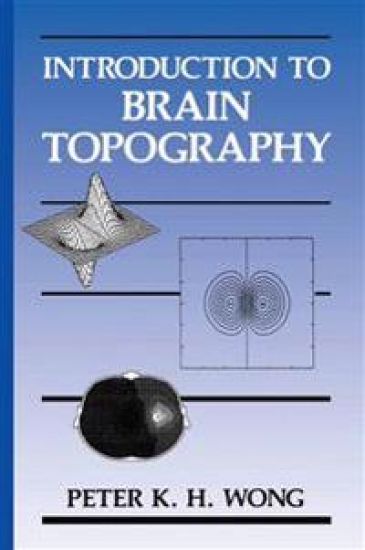
It had been difficult to find appropriate teaching material for students and newcomers to this field of brain electromagnetic topography. In part, this is due to the many disciplines involved, requiring some knowledge of the physical sciences, mathematics, neurophysiology and anatomy. It is my hope that this book will be found suitable for introducing interested workers to this exciting field. Advanced topics will not be covered, as there are many excellent texts available. Peter K.H. Wong vii ACKNOWLEDGEMENT My co-authors, Hal Weinberg and Roberto Bencivenga, for their support; Richard Hamer, for all his early advice; Ernst Rodin and Gene Ramsay, for their encouragement; Wendy Cummings for her assistance; Technologists from the Department of Diagnostic Neurophysiology for collecting such excellent data; Bio-Logic Systems Corp. for permission to use some data as illustration; and all my friends and colleagues. My wife Elke, for putting up with me throughout this presumptuous endeavour. The manuscript was delivered in camera-ready form to the Publisher. Illustrations were created using Harvard Graphics and CorelDraw software. ix CONTENTS Part 1: Fundamentals. 1 1.1 Introduction . . . 1 1.2 Data Aquisition. . 3 Map Construction. 8 Interpolation . . . 12 1.3 Spatial Sampling . . 16 1.4 Reference and Reference-Dependence 20 1.5 Map Display Methods ..... . 27 Scaling and Floating Voltage Scales. 37 Summary Maps .......... . 37 1.6 Identification of Topographic Features 41 1.7 Spike Mapping .. . 51 1.8 Post-Processing 61 Analog Front-end. 62 Digital Filtering . 63 Reference Manipulation .. 65 Statistical Mapping .
Occupational Therapy Approaches to Traumatic Brain Injury
Laura H Krefting; Jerry A Johnson
Routledge Member of the Taylor and Francis Group
1991
sidottu
This sensitive book provides a much-needed compilation and description of OT programs for the care of individuals disabled by traumatic brain injury (TBI). Focusing on the disabled individual, the family, and the societal responses to the injured, this comprehensive book covers the spectrum of available services from intensive care to transitional and community living. Both theoretical approaches to the problems of brain injury as well as practical treatment techniques are explored in Occupational Therapy Approaches to Traumatic Brain Injury. The processes of assessment and intervention are vital to the recovery of brain-injured patients and this thorough book devotes two chapters specifically to assessment and several chapters on intervention and family involvement. This useful volume contains information about rehabilitation from ‘coma to community,’as well as numerous other approaches.The findings and treatment suggestions presented here are applicable to many helping professionals working with TBI patients. Health care practitioners working with brain injured persons and their families in both institutional and community contexts, physical therapists, physicians, nurses, and psychologists and social workers involved with assessment will find this an invaluable addition to their professional references.


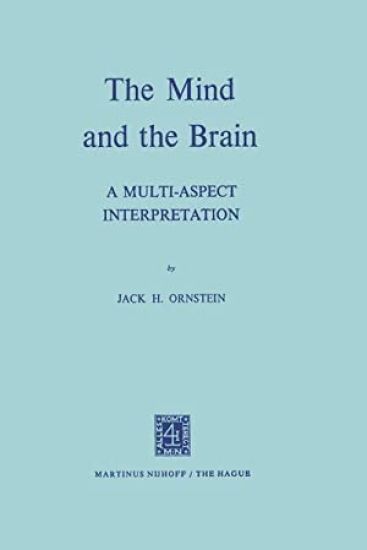
2 no predictions or experimental findings based on the Identity Theory differ from those based on mind-brain Parallelism or Epiphenomenal ism, i.e., Dualism in general. The Identity Theory, therefore, must stand or fall on its reputed conceptual advantages over Dualism. Then the conceptual issues at stake in the mind-brain problem are discussed. The kernel of truth present in the Identity Theory is shown to be obscured by all the talk about reducing sensations to neural processes. An attempt is made to characterize pain adequately as a pattern or complex of bodily processes. This view is then reconciled with the asymmetry in the way one is aware of one's own pains and the way in which others are. This asymmetry constitutes an epistemological dualism which no philosophical theory or scientific experiment could alter. The sense in which experiences are both mental and physical is thus elucidated. A Multi-Aspect Theory of the mind is presented and defended. Five aspects of pain are discussed in some detail: experiential, neural, bodily, behavioral and verbal. Having a mind characteristically involves having all of these features except the bodily (i.e., a physical irregularity). Thus having a mind characteristically entails having experiences and a healthy, functioning brain. It also involves being able to act and speak reasonably intelligently.
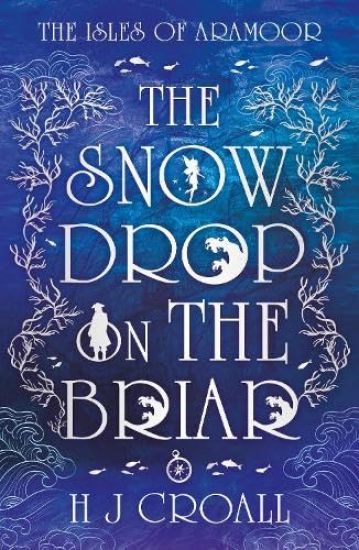
Beneath the roots of the great tree Elaren lies Tir Caelin, a hidden city of fairies. It is a place of safety, light and song – yet not for Eirlys. Born beneath snowdrops, fierce and full of joy, she dreams of something more. When whispers on the wind and visions of pirates disturb her peace, she follows the call north... and finds her fate forever changed. Captured far from home, Eirlys is drawn into the world of the Briar – a ship feared as pirate but crewed by men who are more than their reputation. At their helm stands Corwin Rhyll, young, disciplined, and marked by secrets of his own. Though distrust runs deep between fairy and sailor, the sea forges bonds no land could shape. Across enchanted ports, storm-lashed seas, and battles with the merrow who haunt the deeps, Eirlys and Corwin discover a connection that neither fate nor distance can deny. But destiny has not finished with them. A letter sealed in wax, an island whispered in legend, and a choice that could change the isles forever lie ahead. In a world where roots hum with magic and the sea carries whispers of prophecy, love may be the bravest tether of all.