Catherine: A Story was the first full-length work of fiction produced by William Makepeace Thackeray. It first appeared in serialized installments in Fraser's Magazine between May 1839 and February 1840, credited to "Ikey Solomons, Esq. Junior". Thackeray's original intention in writing it was to criticize the Newgate school of crime fiction, exemplified by Bulwer-Lytton and Harrison Ainsworth, whose works Thackeray felt glorified criminals. Thackeray even included Dickens in this criticism for his portrayal of the good-hearted streetwalker Nancy and the charming pickpocket, the Artful Dodger, in Oliver Twist. Ainsworth's Jack Sheppard portrayed a real life prison breaker and thief from the eighteenth century in flattering terms. In contrast, Thackeray sought out a real life criminal whom he could portray in as unflattering terms as possible. He settled on Catherine Hayes, another eighteenth-century criminal, who was burned at the stake for murdering her husband in 1726. However, as he told his mother, Thackeray developed a "sneaking kindness" for his heroine, and the novel that was supposed to present criminals as totally vile, without any redeeming characteristics, instead made Catherine and her roguish companions seem rather appealing. Thackeray felt the result was a failure, and did not republish it in his lifetime.
Catherine: A Story was the first full-length work of fiction produced by William Makepeace Thackeray. It first appeared in serialized installments in Fraser's Magazine between May 1839 and February 1840, credited to "Ikey Solomons, Esq. Junior". Thackeray's original intention in writing it was to criticize the Newgate school of crime fiction, exemplified by Bulwer-Lytton and Harrison Ainsworth, whose works Thackeray felt glorified criminals. Thackeray even included Dickens in this criticism for his portrayal of the good-hearted streetwalker Nancy and the charming pickpocket, the Artful Dodger, in Oliver Twist.
William Makepeace Thackeray 18 July 1811 - 24 December 1863) was an English novelist of the 19th century. He is known for his satirical works, particularly Vanity Fair, a panoramic portrait of English society.Thackeray, an only child, was born in Calcutta, British India, where his father, Richmond Thackeray (1 September 1781 - 13 September 1815), was secretary to the Board of Revenue in the British East India Company. His mother, Anne Becher (1792-1864), was the second daughter of Harriet Becher and John Harman Becher, who was also a secretary (writer) for the East India Company. Richmond died in 1815, which caused Anne to send her son to England in 1816, while she remained in British India. The ship on which he travelled made a short stopover at St. Helena, where the imprisoned Napoleon was pointed out to him. Once in England he was educated at schools in Southampton and Chiswick, and then at Charterhouse School, where he became a close friend of John Leech. Thackeray disliked Charterhouse, and parodied it in his fiction as "Slaughterhouse". Nevertheless, Thackeray was honoured in the Charterhouse Chapel with a monument after his death. Illness in his last year there, during which he reportedly grew to his full height of six foot three, postponed his matriculation at Trinity College, Cambridge, until February 1829.Never too keen on academic studies, Thackeray left Cambridge in 1830, but some of his earliest published writing appeared in two university periodicals, The Snob and The Gownsman.
William Makepeace Thackeray (18 July 1811 - 24 December 1863) was an English novelist of the 19th century. He is known for his satirical works, particularly Vanity Fair, a panoramic portrait of English society. BIOGRAPHY: Thackeray, an only child, was born in Calcutta, British India, where his father, Richmond Thackeray (1 September 1781 - 13 September 1815), was secretary to the Board of Revenue in the British East India Company. His mother, Anne Becher (1792-1864), was the second daughter of Harriet Becher and John Harman Becher, who was also a secretary (writer) for the East India Company. Richmond died in 1815, which caused Anne to send her son to England in 1816, while she remained in British India. The ship on which he travelled made a short stopover at St. Helena, where the imprisoned Napoleon was pointed out to him. Once in England he was educated at schools in Southampton and Chiswick, and then at Charterhouse School, where he became a close friend of John Leech. Thackeray disliked Charterhouse, and parodied it in his fiction as "Slaughterhouse". Nevertheless, Thackeray was honoured in the Charterhouse Chapel with a monument after his death. Illness in his last year there, during which he reportedly grew to his full height of six foot three, postponed his matriculation at Trinity College, Cambridge, until February 1829. citation needed]Never too keen on academic studies, Thackeray left Cambridge in 1830, but some of his earliest published writing appeared in two university periodicals, The Snob and The Gownsman. Thackeray then travelled for some time on the continent, visiting Paris and Weimar, where he met Goethe. He returned to England and began to study law at the Middle Temple, but soon gave that up. On reaching the age of 21 he came into his inheritance from his father, but he squandered much of it on gambling and on funding two unsuccessful newspapers, The National Standard and The Constitutional, for which he had hoped to write. He also lost a good part of his fortune in the collapse of two Indian banks. Forced to consider a profession to support himself, he turned first to art, which he studied in Paris, but did not pursue it, except in later years as the illustrator of some of his own novels and other writings. .... George Edward Bateman Saintsbury ( 23 October 1845 - 28 January 1933), was an English writer, literary historian, scholar, critic and wine connoisseur.Born in Lottery Hall, Southampton, he was educated at King's College School, London, and at Merton College, Oxford where he achieved a first class BA degree in Classical Mods, (1865), and a second class in literae humaniores (1867). He left Oxford in 1868 having failed to obtain a fellowship, and briefly became a master at the Manchester Grammar School, before spending six years in Guernsey as senior classical master of Elizabeth College, where he began his literary career by submitting his first reviews to The Academy. From 1874 until he returned to London in 1876 he was headmaster of the Elgin Educational Institute, with a brief period in 1877 on the Manchester Guardian. For ten years he was actively engaged in journalism, becoming an important member of the staff of the Saturday Review. Some of the critical essays contributed to the literary journals were afterwards collected in his Essays in English Literature, 1780-1860 (2 vols., 1890-1895), Essays on French Novelists (1891), Miscellaneous Essays (1892), and Corrected Impressions (1895). In 1895 he became professor of rhetoric and English literature at the University of Edinburgh, a position he held until 1915. He retired to 1A Royal Crescent, Bath, Somerset and died there in 1933...
Les poux Watrin, dont le mari est garde-chasse du duc d'Orl ans, ont lev trois enfants: Bernard, leur fils, maintenant garde-chasse lui aussi, Catherine, leur ni ce, dont le p re tait un prisonnier allemand bless recueilli par la famille, et Mathieu, un enfant abandonn qu'ils ont recueilli. Catherine et Bernard ont peu peu appris s'aimer, d'abord comme fr re et soeur, puis comme des amants. Apr s dix-huit mois pass s Paris en apprentissage, Catherine revient chez les Watrin pour s' tablir comme modiste la ville toute proche.
For t de Villers-Cotter ts, mai 1829. Les poux Watrin, dont le mari est garde-chasse du duc d'Orl ans, ont lev trois enfants: Bernard, leur fils, maintenant garde-chasse lui aussi, Catherine, leur ni ce, dont le p re tait un prisonnier allemand bless recueilli par la famille, et Mathieu, un enfant abandonn qu'ils ont recueilli. Catherine et Bernard ont peu peu appris s'aimer, d'abord comme fr re et soeur, puis comme des amants. Apr s dix-huit mois pass s Paris en apprentissage, Catherine revient chez les Watrin pour s' tablir comme modiste la ville toute proche.
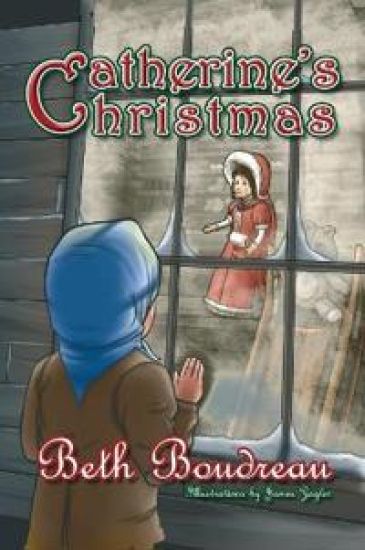
Catherine's Christmas is set in the small but bustling town of Inverness, Cape Breton Island, Nova Scotia, circa 1920. The events in the story are true, as recalled and told to the author by her mother Catherine Ann MacLellan (Forsyth). She was born in Inverness in the year 1913, to Neil and Rachel (MacDonald) MacLellan. However, events of the story are not in chronological order; rather, the author has taken the liberty to interweave them wherever she chose.In the late 19th century, many people emigrated from Scotland, to Inverness and other areas of Cape Breton, drawn to the employment offered by the coal mines dotted over the island. They brought the Gaelic language with them and it is still alive and spoken by many, at the writing of this story. Name places on Cape Breton echo those of home areas left behind by the settlers. They also brought with them, a generous spirit, unique sense of humor, love of dance, music and tradition which helped mold the island into its current shape.This children's story was to capture a little of Catherine and a little of the flavor of her era so they could both become known and appreciated by her grandchildren and great grandchildren. The innocence and simple life of these times deserve to be remembered.
Revised and updated edition! This anthology of Catherine's letters, prayers, and The Dialogue is perfect for students of medieval spirituality, mysticism and theology, as well as anyone interested in prayer and the spiritual life. This is the best introduction to the prayer and ministry of St. Catherine that I have read! The texts are beautifully translated. Benedict Ashley, O.P. Aquinas Institute of Theology This anthology makes accessible to a large reading public the extraordinary sensitivity and affection of Catherine of Siena, gifts grounded in love. New Oxford Review
Sigrid Undset's Catherine of Siena is critically acclaimed as one of the best biographies of this well known, and amazing fourteenth-century saint. Known for her historical fiction, which won her the Nobel Prize for literature in 1928, Undset based this factual work on primary sources, her own experiences living in Italy, and her profound understanding of the human heart. One of the greatest novelists of the twentieth century, Undset was no stranger to hagiography. Her meticulous research of medieval times, which bore such fruit in her multi-volume masterpieces Kristin Lavransdatter and The Master of Hestviken, acquainted her with some of the holy men and women produced by the Age of Faith. Their exemplary lives left a deep impression upon the author, an impression Undset credited as one of her reasons for entering the Church in 1924. Catherine of Siena was a particular favorite of Undset, who also was a Third Order Dominican. An extraordinarily active, intelligent, and courageous woman, Catherine at an early age devoted herself to the love of God. The intensity of her prayer, sacrifice, and service to the poor won her a reputation for holiness and wisdom, and she was called upon to make peace between warring nobles. Believing that peace in Italy could be achieved only if the Pope, then living in France, returned to Rome, Catherine boldly traveled to Avignon to meet with Pope Gregory XI. With sensitivity to the zealous love of God and man that permeated the life of Saint Catherine, Undset presents a most moving and memorable portrait of one of the greatest women of all time.
In the seventh installment of The Photography Workshop Series, Catherine Opie—well known for dynamic portraits and landscapes that speak to identity and community—offers insight into creating photographs that navigate the contemporary landscape, as well as the landscape of the body and constructed identity.Aperture Foundation works with the world’s top photographers to distill their creative approaches to, teachings on, and insights into photography—offering the workshop experience in a book. Our goal is to inspire photographers of all levels who wish to improve their work, as well as readers interested in deepening their understanding of the art of photography. Through images and words, in this volume Catherine Opie shares her creative process and discusses a wide range of issues, from representing subcultures and marginalized communities, to making confrontational work that reimagines and subverts expectations.
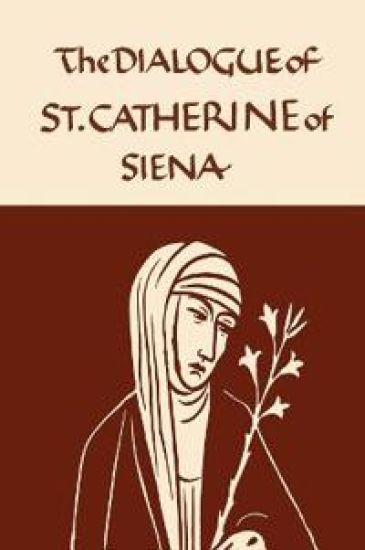
"The Dialogue of St. Catherine of Siena contains four of the 14th-century saint's most famous works. During periods of ecstasy, she dictated these often subtle and always insightful essays to her followers, speaking directly to other devout Christians, addressing their spiritual concerns and pitfalls with a loving, though strict compassion. Believers and students of religion will find this book, as eloquent as it is inspiring, accessible and thought-provoking. Italian affiliate of the Dominican Order CATHERINE OF SIENA (1347 1380) dedicated her life to Christ at an early age, declaring a lifelong commitment to virginity at age seven. She practiced severe mortifications of the flesh, including long periods of fasting where she ate only sacrament wafers. Most of her writings were in the form of letters, over 300 of which have survived. "
"The Dialogue of St. Catherine of Siena contains four of the 14th-century saint's most famous works. During periods of ecstasy, she dictated these often subtle and always insightful essays to her followers, speaking directly to other devout Christians, addressing their spiritual concerns and pitfalls with a loving, though strict compassion. Believers and students of religion will find this book, as eloquent as it is inspiring, accessible and thought-provoking. Italian affiliate of the Dominican Order CATHERINE OF SIENA (1347 1380) dedicated her life to Christ at an early age, declaring a lifelong commitment to virginity at age seven. She practiced severe mortifications of the flesh, including long periods of fasting where she ate only sacrament wafers. Most of her writings were in the form of letters, over 300 of which have survived. "
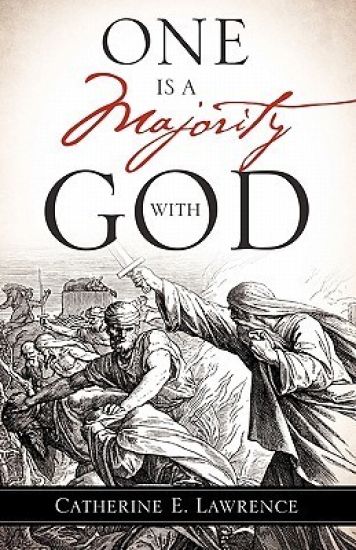
Elijah the Tishbite was a mightily, anointed prophet of God that transformed every life he touched. The key to this phenomenal ministry was relationship. Elijah had learned that an intimate relationship with God led to power with man. Through a careful study of his life and ministry, we can learn these same spiritual principles that will cause us to transform lives and move in the supernatural power of God for our generation. Catherine E. Lawrence left a successful career in investments to pursue a full time ministry. Since that time she has spent the last 27 years in pastoral ministry and as a conference speaker ministering in the offices of prophetess and teacher.