

Kirjahaku
Etsi kirjoja tekijän nimen, kirjan nimen tai ISBN:n perusteella.
1000 tulosta hakusanalla Chappy



The perfect gift for childrenClick on the cover to see what's inside This FAIRIES MARKER ACTIVITY BOOK for children makes them improve their skillsFairies Dot Markers Activity- is a coloring book whose task is to color dots Dot Marker, which as a result will show the picture that the child can finish coloring with paints or crayons or cut out ✓ The educational pictures of this type train children to focus, perceptiveness and accuracy while engaging them in the task. Education, relaxation and entertainment combined✓ Coloring book thanks to black pages on the back of the illustration prevent the colors from going through to the other side✓ Carefully crafted illustrations are perfect for a child's first coloring book and for developing color combining skillsIn this book you can find: ★ A lot of Fairys★ Large 8.5 "x 11" format★ 25 unique and original designs★ Simple shape and thick lines★ No pictures on the backside ★Images taken from Freepik We invite you to check out our other products from the Dot Markers Activity series as well as other educational products that combine smiling and learning through fun Put a SMILE on your face Scroll up and BUY NOW


Religioznyy Faktor V Modernizatsii Angliyskoy I Russkoy Kul'tur XVI V.
Chaplygin Ivan
LAP Lambert Academic Publishing
2012
pokkari

Elektroemkostnoy Preobrazovatel' Dlya Kontrolya Emkosti Kabelya
Chapaykina Anastasiya
LAP Lambert Academic Publishing
2014
pokkari


Graphes de Steinhaus R?guliers Et Triangles de Steinhaus ?quilibr?s
Chappelon-J
Omniscriptum
2018
pokkari

To treat a cold sore:As soon as the first symptoms are detected, put honey on the affected part of the lip.To cure toothache:Make a plug of cotton wool, soak it in whisky and apply it to the troublesome tooth.For fainting:Chop an onion and persuade the patient to inhale the fumes until tears come.Grandma's Remedies is an endlessly fascinating collection of traditional cures and treatments for everything from acne to wasp stings. Many are surprisingly effective, and all of them paint a vivid picture of the world of our grandparents and great-grandparents, where resourceful and inventive women were the guardians of family health. If you're intrigued by the traditional and natural approach to healthcare, if you've ever wondered how to make a poultice or a tincture, or even if you just want to find out about the more domestic side of history, Grandma's Remedies is interesting - and enlightening - reading.

Drug Delivery Devices and Therapeutic Systems examines the current technology and innovations moving drug delivery systems (DDS) forward. The book provides an overview on the therapeutic use of drug delivery devices, including design, applications, and a description of the design of each device. While other books focus on the therapy, the primary emphasis in this book is on current technologies for DDS applications, including microfluidics, nanotechnology, biodegradable hydrogel and microneedles, with a special emphasis on wearable DDS. As part of the Developments in Biomedical Engineering and Bioelectronics series, this book is written by experts in the field and informed with information directly from manufacturers. Pharmaceutical scientists, medical researchers, biomedical engineers and clinical professionals will find this an essential reference.
In Seven Strategies of Assessment Learning, author Jan Chappuis gives K to 12 classroom teachers an incisive look at seven practical strategies structured around three essential questions—Where am I going? Where am I now? and How can I close the gap? Complete with research-based recommendations about assessment practices for improving student achievement, the book is sequenced to help teachers easily weave formative assessment practices into daily teaching and assessment activities at all levels. After introducing the strategies and the research base for formative assessment practices, the remaining chapters explain each strategy in detail, provide a research-based rationale for using the strategy, describe how the strategy can be applied in contexts ranging from kindergarten through high school in a range of subject areas, and offer instructions for carrying out core procedures and suggestions for adaptations. The new features new, more recent research, extended examples of the strategies, and improved features that make the text easier to use for collaborative learning. The Enhanced Pearson eText features embedded video, Discussion Questions, Reflection Journal, and Defining Assessments. This title is also available as a loose-leaf packaged with the Enhanced Pearson eText. To order the Enhanced Pearson eText packaged with a loose-leaf version, use ISBN 013405895X. Invigorate learning with the Enhanced Pearson eText*The Enhanced Pearson eText provides a rich, interactive learning environment designed to improve student mastery of content with embedded video, Discussion Questions, Reflection Journal, and Defining Assessments. The Enhanced Pearson eText is also available without a print version of the textbook. Instructors, visit pearsonhighered.com/etextbooks to register for your digital examination copy. Students, register for or purchase your eText at pearsonhighered.com/etextbooks. *The Enhanced eText features are only available in the Pearson eText format. They are not available in third-party eTexts or downloads.
In their legendary book, Reengineering the Corporation, Jim Champy and Michael Hammer introduced businesspeople to the enormous power of a revolutionary methodology called reengineering. Using reengineering, businesses around the world have systematically retooled their processes--achieving dramatic cost savings, greater customer satisfaction, and more value. Now, Jim Champy and Dr. Harry Greenspun show how to apply the proven reengineering methodology in health care: throughout physician practices, hospitals, and even entire health systems. You'll meet innovative and visionary leaders who've been successfully reengineering organizations across the entire delivery spectrum and learn powerful lessons for improving quality, reducing costs, and expanding access. This book doesn't just demonstrate the immense potential of health care reengineering to revolutionize health care delivery: it offers a clear roadmap for realizing that potential in your own organization. Deliver Better Care to More People, at Lower Cost How reengineering can lead to more efficient, safer delivery--and sharply reduced costs How to focus on prevention and wellness, as well as chronic disease and hospital care How to earn the trust, contributions, and passion of skeptical physicians and health care professionals How to harness technology to create more seamless, accessible, valued, and sustainable health care systems--and avoid technology's pitfalls How Zeev Neuwirth transformed the Lenox Hill Hospital ER and the 700-doctor Harvard Vanguard Medical Associates practice How Tom Knight is revolutionizing patient safety at Methodist Hospital System, one of America's largest private, nonprofit medical complexes How to start today in your own organization!
Introduction to Student-Involved Assessment FOR Learning, An
Jan Chappuis; Rick Stiggins
Pearson
2017
nidottu
Helps learners understand how they can improve student achievement by integrating instruction and assessment. Learners should understand and be able to do the following assessment tasks upon completingStudent-Involved Assessment FOR Learning: (1) establish clear learning targets as the basis for instruction and assessment, (2) select assessment methods that align with those learning targets, (3) select and/or create high-quality assessments that accurately measure student progress to the learning targets, (4) clearly communicate assessment results to learners for both formative and summative purposes, and (5) involve students in the assessment process to develop their capabilities to be self-directed learners. Note: This is the standalone book
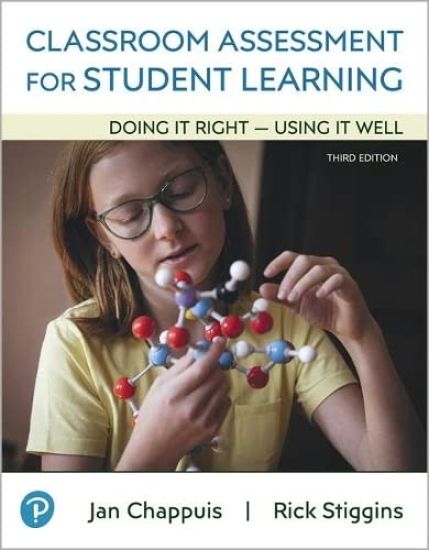
Classroom Assessment for Student Learning helps readers gather accurate information about students' achievement and use the assessment process and its results effectively to improve achievement. This user-friendly guide is full of practical tips, activities, and real-world examples of what assessment for learning looks like in today's classrooms. The 3rd Edition continues to focus on five keys to quality classroom assessment, with an enhanced emphasis on the formative use of classroom assessment results. The keys help readers 1) establish a clear assessment purpose to meet the information needs of all intended users; 2) base instruction and assessment on clear learning targets; 3) design or select all assessments to meet standards of accuracy; 4) communicate summative and formative results effectively; and 5) involve students in the assessment process and in using results to further learning.

The Penguin Writers' Guides series provides authoritative, succinct and easy-to-follow guidance on specific aspects of written English. Whether you need to brush up your skills or get to grips with something for the first time, these invaluable Guides will help you find the best way to get your message across clearly and effectively.A simple and practical guide, How to Write Better Letters explains how to write a wide range of letters, from invitations and letters of condolence to practical correspondence including complaints, job applications, letters of resignation and those trying to raise sponsorship. Drawing on advice from a variety of experts and containing many authentic letters as examples, this guide also details the appropriate title to give any correspondent, outlines common mistakes in spelling and grammar, and provides essential tips on matters such as setting the correct tone when writing emails.

Facing the Revocation tells the story of one French Protestant (Huguenot) family, the Robillard de Champagnés, as they faced the Revocation of the Edict of Nantes, issued under Louis XIV, which criminalized their religion in 1685. Carolyn Chappell Lougee challenges the way Huguenot history has been told for 300 years, ever since the Huguenots themselves set its principal interpretive lines, thereby offering new insights into the reign of Louis XIV. Denying the standard ascription of deeper faith to the Huguenots who emigrated and venal motives to those who remained in France, this study shows how complex the considerations were--at once social, familial, economic, and political, as well as religious--that impelled individuals and families either to leave the country or stay and convert to the king's religion. Lougee uses evidence elucidating Huguenot escapes from France to question how intent Louis XIV was on stopping Huguenots from leaving, and how closely he and his agents hewed to the letter of the law prescribing imprisonment for captured fugitives. Exploring the personal stories of several families among the Champagnés' social set who stayed after the Revocation, Facing the Revocation sheds new light on the possibilities for Protestant resistance in Louis XIV's late reign and on the satisfactions available to families who complied with the king's will, while demonstrating how strongly the values emigrants like Marie de La Rochefoucauld de Champagné and her children brought with them from France shaped their experiences in changed circumstances.
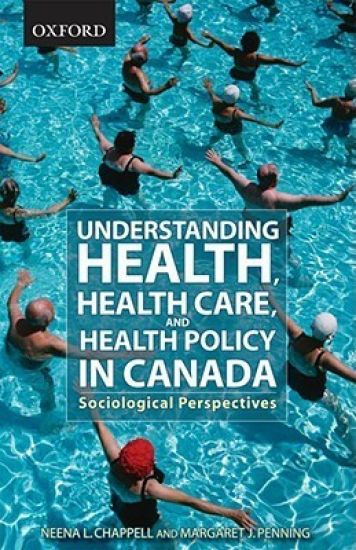
Health and Health Care in Canada
Neena Chappell; Margaret Penning
Oxford University Press, Canada
2008
nidottu
Examines the sociology of health from a lifespan perspective and emphasizes health (promotion, maintenance, and prevention) over illness (treatment, cure, care). Topics include ethics, medical and scientific knowledge, health and families, and health and the aging.

Winner of the David H. Pinkney Prize of the French Historical Society Winner of the Frances Richardson Keller-Sierra Prize of the Western Association of Women Historians Winner of the Award for Best Scholarly Work of the National Huguenot Society The Edict of Nantes ended the civil wars of the Reformation in 1598 by making France a kingdom with two religions. Catholics could worship anywhere, while Protestants had specific locations where they were sanctioned to worship. Over the coming decades Protestants' religious freedom and civil privileges eroded until the Revocation of the Edict of Nantes, issued under Louis XIV in 1685, criminalized their religion. The Robillard de Champagné, a noble family, were among those facing the Revocation. They and their co-religionists confronted the difficult decision whether to obey this new law and convert, feign conversion and remain privately Protestant, or break the law and attempt to flee secretly in what was the first modern mass migration. In this sweeping family saga, Carolyn Chappell Lougee narrates how the Champagné family's persecution and Protestant devotion unsettled their economic advantages and social standing. The family provides a window onto the choices that individuals and their kin had to make in these trying circumstances, the agency of women within families, and the consequences of their choices. Lougee traces the lives of the family members who escaped; the kin and community members who decided to stay, both complying with and resisting the king's will; and those who resettled in Britain and Prussia, where they adapted culturally and became influential members of society. She challenges the narrative Huguenots told over subsequent generations about the deeper faith of those who opted for exile and the venal qualities of those who remained in France. A masterful and moving account of the Hugenots, Facing the Revocation offers a deeply personal perspective on one of the greatest acts of religious intolerance in history.