Kirjojen hintavertailu. Mukana 11 534 093 kirjaa ja 12 kauppaa.

Kirjahaku

Etsi kirjoja tekijän nimen, kirjan nimen tai ISBN:n perusteella.

747 tulosta hakusanalla Cherokee Hatcher

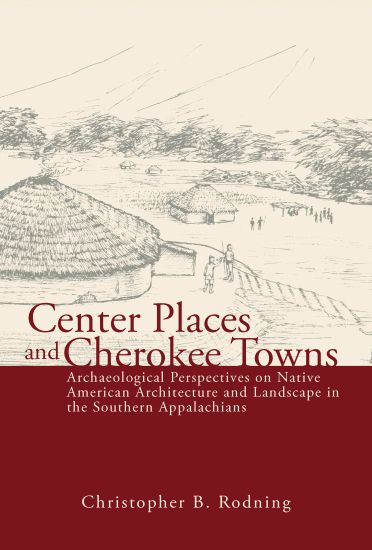
Center Places and Cherokee Towns

Center Places and Cherokee Towns

Christopher B. Rodning

The University of Alabama Press
2019
nidottu
Examines how architecture and other aspects of the built environment, such as hearths, burials, and earthen mounds, formed center places within the Cherokee cultural landscape In Center Places and Cherokee Towns, Christopher B. Rodning opens a panoramic vista onto protohistoric Cherokee culture. He posits that Cherokee households and towns were anchored within their cultural and natural landscapes by built features that acted as "center places." Rodning investigates the period from just before the first Spanish contact with sixteenth-century Native American chiefdoms in La Florida through the development of formal trade relations between Native American societies and English and French colonial provinces in the American South during the late 1600s and 1700s. Rodning focuses particularly on the Coweeta Creek archaeological site in the upper Little Tennessee Valley in southwestern North Carolina and describes the ways in which elements of the built environment were manifestations of Cherokee senses of place. Drawing on archaeological data, delving into primary documentary sources dating from the eighteenth century, and considering Cherokee myths and legends remembered and recorded during the nineteenth century, Rodning shows how the arrangement of public structures and household dwellings in Cherokee towns both shaped and were shaped by Cherokee culture. Center places at different scales served as points of attachment between Cherokee individuals and their communities as well as between their present and past. Rodning explores the ways in which Cherokee architecture and the built environment were sources of cultural stability in the aftermath of European contact, and how the course of European contact altered the landscape of Cherokee towns in the long run. In this multi-faceted consideration of archaeology, ethnohistory, and recorded oral tradition, Rodning adeptly demonstrates the distinct ways that Cherokee identity was constructed through architecture and other material forms. Center Places and Cherokee Towns will have a broad appeal to students and scholars of southeastern archaeology, anthropology, Native American studies, prehistoric and protohistoric Cherokee culture, landscape archaeology, and ethnohistory.
Art of the Cherokee

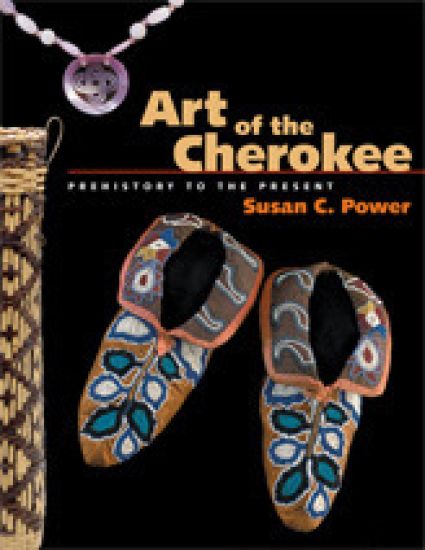
Art of the Cherokee

Susan C. Power

University of Georgia Press
2007
pokkari
This illustrated historical overview features some of the finest examples of Cherokee art in private, corporate, and museum collections throughout the world. As Susan C. Power ranges across the rich legacy of Cherokee artistic achievement from the sixteenth century to the present, she discusses baskets, masks, beaded and embroidered garments, jewelry, and paintings. Power draws on archival and scholarly sources and, when possible, the artists' own words as she interprets these objects in terms of their design, craftsmanship, style, and most important, their function and meaning in Cherokee history and culture.In addition to tracing the development of Cherokee art, Power reveals the wide range of geographical locales from which Cherokee art has originated. These places include the Cherokee's tribal homeland in the Southeast, the tribe's areas of resettlement in the West, and abodes in the United States and beyond to which individuals subsequently moved. Intimately connected to the time and place of its creation, Cherokee art changed along with Cherokee social, political, and economic circumstances. The entry of European explorers into the Southeast, the Trail of Tears, the American Civil War, and the signing of treaties with the U.S. government are among the transforming events in Cherokee art history that Power discusses.In the twentieth century, as Cherokee artists joined the mainstream art world, they helped shape the Native American Fine Art Movement. Today, Cherokee artists continue to create in an artistic voice that is uniquely Cherokee—a voice both traditional and contemporary.
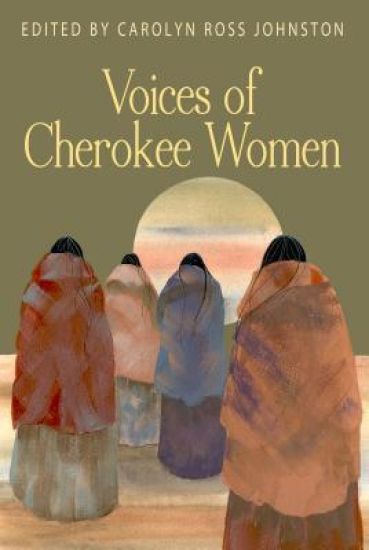
Voices of Cherokee Women

Voices of Cherokee Women

John F Blair Publisher
2013
pokkari
Voices of Cherokee Women is a compelling collection of first-person accounts by Cherokee women. It includes letters, diaries, newspaper articles, oral histories, ancient myths, and accounts by travelers, traders, and missionaries who encountered the Cherokees from the 16th century to the present. Among the stories told by these “voices” are those of Rebecca Neugin being carried as a child on the Trail of Tears; Mary Stapler Ross seeing her beautiful Rose Cottage burned to the ground during the Civil War; Hannah Hicks watching as marauders steal her food and split open her feather beds, scattering the feathers in the wind; and girls at the Cherokee Female Seminary studying the same curriculum as women at Mount Holyoke. Voices of Cherokee Women recounts how Cherokee women went from having equality within the tribe to losing much of their political and economic power in the 19th century to regaining power in the 20th, as Joyce Dugan and Wilma Mankiller became the first female chiefs of the Cherokee Nation. The book’s publication was timed for the commemoration of the 175th anniversary of the Trail of Tears. Carolyn Ross Johnston has a B.A. from Samford University and a Ph.D. in history from the University of California–Berkeley. Her previous publications Cherokee Women in Crisis: Removal, The Civil War, and Allotment, 1838-1907; Sexual Power: Feminism and the Family in America; Jack London: An American Radical; and My Father’s War: Fighting with the Buffalo Soldiers in World War II. A recipient of Woodrow Wilson and Danforth fellowships and a Pulitzer-prize nominee, Johnston teaches at Eckerd College in St. Petersburg, Florida, where she is professor of history and American studies and the Elie Wiesel Professor of Humane Letters. "In her spirited and well-sourced collection, Johnston...unfolds history through the voices of people who remembered terrible events....An academic account that respectfully resurrects long-dead voices from a people who still have a lot to tell us." - Kirkus Reviews"
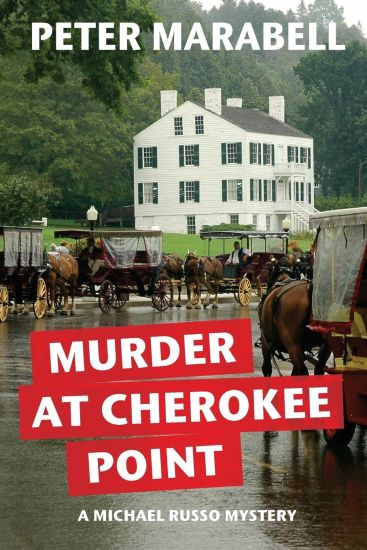
Murder at Cherokee Point

Murder at Cherokee Point

Peter Marabell

Kendall Sheepman Company
2014
nidottu
A showdown with the Mob on Mackinac Island.It's summer in Northern Michigan. A wealthy and influential aristocrat is found dead at the secluded and private Cherokee Point Resort Association, north of Harbor Springs. Fearful of outside intrusion, Point members stonewall the investigation. The cops ask Petoskey lawyer Michael Russo for his help, and Russo agrees to speed the investigation along. An interesting assignment turns difficult and dangerous when a Chicago Mafia boss warns Russo off the case.From the quiet streets of Petoskey to the nostalgic ambiance of Mackinac Island, Russo quickly finds himself embroiled in a world of political influence, old money, and what people will do to keep their dirty secrets hidden.
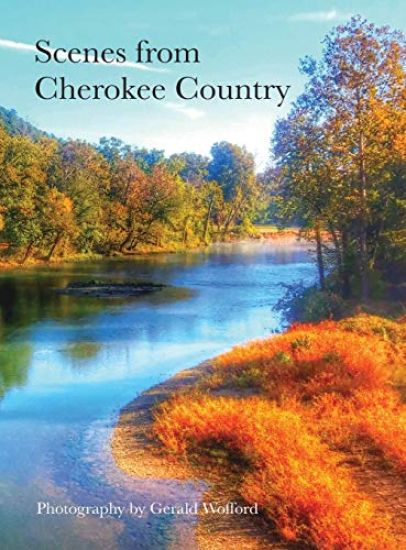
Scenes from Cherokee Country

Scenes from Cherokee Country

Kast Publishing LLC
2019
sidottu
Gerald Wofford is an award-winning photographer, often earning top honors from the Native American Journalists Association. Always known to have his camera with him, Gerald never misses an opportunity to photograph scenes from northeast Oklahoma and Cherokee Country. His love for nature is evident in his photography as he captures the vidid colors of the seasons. Gerald has enjoyed a long-time career as a videographer and photographer with the Muscogee (Creek) Nation and now, currently with his tribe, the Cherokee Nation of Oklahoma. He graduated from the University of Oklahoma with a bachelor of arts degree in film.
Pinkie at Camp Cherokee

Pinkie at Camp Cherokee

Henry S. (Henry St Clair) Whitehead

Hassell Street Press
2021
sidottu
This work has been selected by scholars as being culturally important and is part of the knowledge base of civilization as we know it.This work is in the public domain in the United States of America, and possibly other nations. Within the United States, you may freely copy and distribute this work, as no entity (individual or corporate) has a copyright on the body of the work.Scholars believe, and we concur, that this work is important enough to be preserved, reproduced, and made generally available to the public. To ensure a quality reading experience, this work has been proofread and republished using a format that seamlessly blends the original graphical elements with text in an easy-to-read typeface.We appreciate your support of the preservation process, and thank you for being an important part of keeping this knowledge alive and relevant.
Historical Sketch of the Cherokee
When James Mooney lived with and studied the Cherokee between 1887 and 1900, they were the largest and most important Indian tribe in the United States. His dispassionate account of their history from the time of their first contact with whites until the end of the nineteenth century is more than a sequence of battles won and lost, treaties signed and broken, towns destroyed and people massacred. There is humanity along with inhumanity in the relations between the Cherokee and other groups, Indian and non-Indian; there is fortitude and persistence balanced with disillusionment and frustration. In these respects, the history of the Cherokee epitomizes the experience of most Native Americans. The Cherokee Nation ceased to exist as a political entity seven years after the initial study was done, when Oklahoma became a state.In the introduction to the original publication of this history in 1900, James Mooney commented that "there is change indeed in dress and outward seeming, but the heart of the Indian is still his own." This history was originally included in the 19th Annual Report of the Bureau of American Ethnology.It was republished under the auspices of the National Anthropological Archives of the Smithsonian Museum of Natural History, at the request of the Governing Body of the Cherokee Nation, in 1975, with new introductory material and supplementary illustrations from the archives. The volume has a foreword from W.W. Keeler, chief of the Cherokee Nation, and an introduction by Richard Mack Bettis, president of the Tulsa Tsa-La-Gi-Ya Cherokee Community.