Title: Paterson's Guide to Glasgow, the Clyde, and Land of Burns.Publisher: British Library, Historical Print EditionsThe British Library is the national library of the United Kingdom. It is one of the world's largest research libraries holding over 150 million items in all known languages and formats: books, journals, newspapers, sound recordings, patents, maps, stamps, prints and much more. Its collections include around 14 million books, along with substantial additional collections of manuscripts and historical items dating back as far as 300 BC.The HISTORY OF BRITAIN & IRELAND collection includes books from the British Library digitised by Microsoft. As well as historical works, this collection includes geographies, travelogues, and titles covering periods of competition and cooperation among the people of Great Britain and Ireland. Works also explore the countries' relations with France, Germany, the Low Countries, Denmark, and Scandinavia. ++++The below data was compiled from various identification fields in the bibliographic record of this title. This data is provided as an additional tool in helping to insure edition identification: ++++ British Library Paterson, William; 1883 72 p.; 8 . 10370.cc.25.(3.)
This is an introduction to the literature of contemporary American writer Clyde Edgerton. A North Carolina native, Edgerton has been compared to Mark Twain for his easy, humorous style, which is based in oral tradition. Like Twain and other humorous writers, Edgerton’s work often contains both biting satire and exploration of very large questions about the human condition. The book contains an overview of each of his novels and his memoir in addition to offering critical commentary on theme, craft, and structure. Pedagogical support is offered with specific strategies that will encourage authentic engagement and learning. Teachers will find specific companion pieces of literature for introducing Edgerton’s vivid and challenging work. This book presents the case for including more of Clyde Edgerton’s work in our secondary and college English language arts classrooms as a means of revitalizing curricula and challenging the ways we traditionally think about teaching.
The 18th century was a wealth of knowledge, exploration and rapidly growing technology and expanding record-keeping made possible by advances in the printing press. In its determination to preserve the century of revolution, Gale initiated a revolution of its own: digitization of epic proportions to preserve these invaluable works in the largest archive of its kind. Now for the first time these high-quality digital copies of original 18th century manuscripts are available in print, making them highly accessible to libraries, undergraduate students, and independent scholars.Medical theory and practice of the 1700s developed rapidly, as is evidenced by the extensive collection, which includes descriptions of diseases, their conditions, and treatments. Books on science and technology, agriculture, military technology, natural philosophy, even cookbooks, are all contained here.++++The below data was compiled from various identification fields in the bibliographic record of this title. This data is provided as an additional tool in helping to insure edition identification: ++++British LibraryT091186London: printed in the year, 1767. 18p., plate; 4
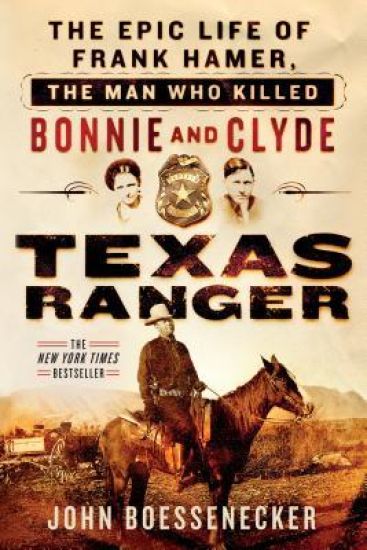
The New York Times Best Seller "Frank Hamer, last of the old breed of Texas Rangers, has not fared well in history or popular culture. John Boessenecker now restores this incredible Ranger to his proper place alongside such fabled lawmen as Wyatt Earp and Eliot Ness. Here is a grand adventure story, told with grace and authority by a master historian of American law enforcement. Frank Hamer can rest easy as readers will finally learn the truth behind his amazing career, spanning the end of the Wild West through the bloody days of the gangsters." --Paul Andrew Hutton, author of The Apache Wars To most Americans, Frank Hamer is known only as the "villain" of the 1967 film Bonnie and Clyde. Now, in Texas Ranger, historian John Boessenecker sets out to restore Hamer's good name and prove that he was, in fact, a classic American hero. From the horseback days of the Old West through the gangster days of the 1930s, Hamer stood on the frontlines of some of the most important and exciting periods in American history. He participated in the Bandit War of 1915, survived the climactic gunfight in the last blood feud of the Old West, battled the Mexican Revolution's spillover across the border, protected African Americans from lynch mobs and the Ku Klux Klan, and ran down gangsters, bootleggers, and Communists. When at last his career came to an end, it was only when he ran up against another legendary Texan: Lyndon B. Johnson. Written by one of the most acclaimed historians of the Old West, Texas Ranger is the first biography to tell the full story of this near-mythic lawman.
To most Americans, Frank Hamer is known only as the "villain" of the 1967 film Bonnie and Clyde. Now, in The New York Times bestselling Texas Ranger, historian John Boessenecker sets out to restore Hamer's good name and prove that he was, in fact, a classic American hero. From the horseback days of the Old West through the gangster days of the 1930s, Hamer stood on the frontlines of some of the most important and exciting periods in American history. He participated in the Bandit War of 1915, survived the climactic gunfight in the last blood feud of the Old West, battled the Mexican Revolution's spillover across the border, protected African Americans from lynch mobs and the Ku Klux Klan, and ran down gangsters, bootleggers, and Communists. When at last his career came to an end, it was only when he ran up against another legendary Texan: Lyndon B. Johnson. Written by one of the most acclaimed historians of the Old West, Texas Ranger is the first biography to tell the full story of this near-mythic lawman. "Frank Hamer, last of the old breed of Texas Rangers, has not fared well in history or popular culture. John Boessenecker now restores this incredible Ranger to his proper place alongside such fabled lawmen as Wyatt Earp and Eliot Ness. Here is a grand adventure story, told with grace and authority by a master historian of American law enforcement. Frank Hamer can rest easy as readers will finally learn the truth behind his amazing career, spanning the end of the Wild West through the bloody days of the gangsters."--Paul Andrew Hutton, author of The Apache Wars
The 18th century was a wealth of knowledge, exploration and rapidly growing technology and expanding record-keeping made possible by advances in the printing press. In its determination to preserve the century of revolution, Gale initiated a revolution of its own: digitization of epic proportions to preserve these invaluable works in the largest archive of its kind. Now for the first time these high-quality digital copies of original 18th century manuscripts are available in print, making them highly accessible to libraries, undergraduate students, and independent scholars.Medical theory and practice of the 1700s developed rapidly, as is evidenced by the extensive collection, which includes descriptions of diseases, their conditions, and treatments. Books on science and technology, agriculture, military technology, natural philosophy, even cookbooks, are all contained here.++++The below data was compiled from various identification fields in the bibliographic record of this title. This data is provided as an additional tool in helping to insure edition identification: ++++British LibraryT091186London: printed in the year, 1767. 18p., plate; 4
The 18th century was a wealth of knowledge, exploration and rapidly growing technology and expanding record-keeping made possible by advances in the printing press. In its determination to preserve the century of revolution, Gale initiated a revolution of its own: digitization of epic proportions to preserve these invaluable works in the largest archive of its kind. Now for the first time these high-quality digital copies of original 18th century manuscripts are available in print, making them highly accessible to libraries, undergraduate students, and independent scholars.Medical theory and practice of the 1700s developed rapidly, as is evidenced by the extensive collection, which includes descriptions of diseases, their conditions, and treatments. Books on science and technology, agriculture, military technology, natural philosophy, even cookbooks, are all contained here.++++The below data was compiled from various identification fields in the bibliographic record of this title. This data is provided as an additional tool in helping to insure edition identification: ++++Huntington LibraryN026386The final 5]p. include 'References to the plan of the canal'.Edinburgh: printed by Balfour, Auld and Smellie; for John Balfour, 1767. 2],35, 5]p., plates: map; 4
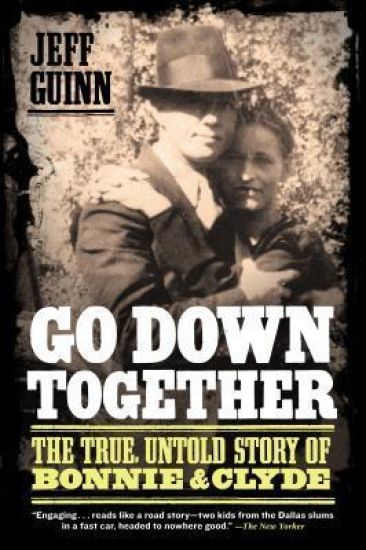
Previous books and films have emphasized the supposed glamour of America's most notorious criminal couple, thus contributing to ongoing mythology. The real story is completely different--and far more fascinating. With newly discovered material, bestselling author Jeff Guin tells the real tale of two kids from a filthy Dallas slum who fell in love and then willingly traded their lives for a brief interlude of excitement and, more importantly, fame. The timing for their first heist could not have been better, when most Americans, reeling from the Great Depression, were desperate for escapist entertainment. Thanks to newsreels, true crime magazines, and new-fangled wire services that transmitted scandalous photos of Bonnie smoking a cigar to every newspaper in the nation, the Barrow Gang members almost instantly became household names. In the minds of the public, they were cool, calculating bandits who robbed banks and killed cops with equal impunity. Nothing could have been further from the truth. Clyde and Bonnie were perhaps the most inept crooks ever, and their two-year crime spree was as much a reign of error as it was of terror. Lacking the sophistication to plot robberies of big-city banks, the Barrow Gang preyed mostly on small mom-and-pop groceries and service stations. Even at that, they often came up empty-handed and were reduced to breaking into gum machines for meal money. Both were crippled, Clyde from cutting off two of his toes while in prison and Bonnie from a terrible car crash caused by Clyde's reckless driving. Constantly on the run from the law, they lived like animals, camping out in their latest stolen car, bathing in creeks, and dining on cans of cold beans and Vienna sausages. Yet theirs was a genuine love story. Their devotion to each other was as real as their overblown reputation as criminal masterminds was not. Now, thanks in great part to surviving Barrow and Parker family members and collectors of criminal memorabilia who provided Jeff Guinn with access to never-before-published material, we finally have the real story of Bonnie and Clyde and their troubled times, delivered with cinematic sweep and unprecedented insight by a masterful storyteller.
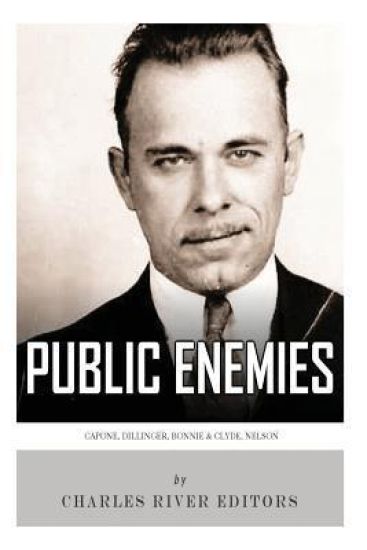
*Covers the lives, crimes, and deaths of the Public Enemies. *Explains the legends and myths surrounding all of the public enemies in an attempt to separate fact from fiction. *Includes pictures of important people, places, and events. *Includes Bibliographies for further reading. America has always preferred heroes who weren't clean cut, an informal ode to the rugged individualism and pioneering spirit that defined the nation in previous centuries. The early 19th century saw the glorification of frontier folk heroes like Davy Crockett and Daniel Boone. After the Civil War, the outlaws of the West were more popular than the marshals, with Jesse James and Billy the Kid finding their way into dime novels. And at the height of the Great Depression in the 1930s, there were the "public enemies", common criminals and cold blooded murderers elevated to the level of folk heroes by a public frustrated with their own inability to make a living honestly. In 1933, the Chicago Crime Commission designated the first Public Enemy, and the most famous of them all. Despite his organized crime spree during the '20s, Al Capone was a popular figure in Chicago, viewed by many as a Robin Hood because he took pains to make charitable donations to the city. At the same time, he bribed government officials and cops, ensuring they looked the other way despite his violent ways of doing business. Throughout the decade, Capone was often out in public, despite several attempts on his life, and the gang war between Al Capone and Bugs Moran was well known and even celebrated to an extent. Even to this day, Chicago's gangster past is viewed as part of the city's lore, and tours of the most famous spots in Chicago's gang history are available across the city. Eventually, J. Edgar Hoover's FBI appropriated the term "Public Enemy" and applied it to outlaws like John Dillinger, Baby Face Nelson, and Bonnie and Clyde. Two months after Franklin D. Roosevelt's inauguration in 1933, a petty thief who had spent almost a decade behind bars for attempted theft and aggravated assault was released from jail. By the end of the year, that man, John Dillinger, would be America's most famous outlaw: Public Enemy Number One. From the time of his first documented heist in early July 1933, until his dramatic death in late July of the following year, he would capture the nation's attention and imagination as had no other outlaw since Jesse James. The man who became Public Enemy Number One after the deaths of John Dillinger and Pretty Boy Floyd was Baby Face Nelson, who ran with Dillinger in 1934. Baby Face was a merciless outlier who pulled triggers almost as fast as he lost his temper. By the time fate caught up with Baby Face Nelson in November 1934 at the "Battle of Barrington", a shootout that left his body riddled with nearly 20 bullet holes, he was believed to have been responsible for the deaths of more FBI agents than anybody else in American history. There was no shortage of well known public enemies like John Dillinger and Baby Face Nelson, but none fascinated the American public as much as Bonnie and Clyde. While the duo and their Barrow Gang were no more murderous than other outlaws of the era, the duo's romantic relationship and the discovery of photographs at one of their hideouts added a more human dimension to Bonnie and Clyde, even as they were gunning down civilians and cops alike. When Bonnie and Clyde were finally cornered and killed in a controversial encounter with police, a fate they shared with many other outlaws of the period, their reputations were cemented. Public Enemies chronicles the lives, legends, and legacies of America's most famous public enemies. Along with pictures of important people, places, and events, you will learn about Capone, Dillinger, Baby Face, and Bonnie & Clyde like never before.