School librarians need a simple action plan for overcoming the barriers to adopting School Library 2.0. This book provides one, and describes how fully integrating technology would dramatically benefit 21st-century schools.Web 2.0 and its associated tools have the power to substantially increase student achievement. This book has two straightforward primary purposes: to detail the research-based reasons classroom teachers fail to incorporate Web 2.0 tools into their instruction and collaboration with other educators; and to provide actionable strategies to rectify these omissions. The Secret Reasons Why Teachers Are Not Using Web 2.0 Tools and What School Librarians Can Do about It provides authoritative definitions of Web 2.0, explains the types of Web 2.0 tools suited for use in educational settings, examines the research-based reasons they are underutilized, and offers strategies for school librarians to model the use of technology-enabled tools—and for teaching others to do so. This book will benefit anyone wishing to effect a positive social change in improving student achievement: practicing K–12 librarians and educators, K–12 school and district administrators, and researchers in the field of K–12 education.
This book is a book of HOPE. It is for the one that may think only bad things happen to them. This book is for the one who is looking for HOPE in the rough times. It is also for those with "good lives." And those who struggle. This book is for you. This is a book about the ups and downs of my life and how I made it through it all. For the most part Keeping a positive attitude was the reason I was able to cope. I mean keeping the main three words in your mind; I can, I will, I am. Put these words in front of anything you're trying to do. Ex: I will beat this cancer. We've all had great times in our lives and rough times. During the rough times I added God to my positive words. I've experienced enough downs that it kept bringing me closer to God through his word. I would read verses in the Bible that helped me through whatever tragedy I was dealing with. The only. This is a book of Hope. I would look at pictures of my children and grandchildren to remind me to continue going. I would go to California to visit my grandchildren and went to the beach a lot. I would watch and stare at the waves rolling in and out. Some waves were huge and lasted long and others were shorter and crumbled quickly. The waves would remind me of my life. Sometimes my life was up and stable for a long time. These were the good times. The next time short and messy or crumbly which reminded me of the rough times. Although it may seem like everything around me was bad, it wasn't. I would like you to know by keeping a positive attitude and never giving up you can survive anything. Remember every day you wake up it is a chance to Ride the Waves of God. Joyce Creighton is a senior Christian woman who grew up in the Midwest state of Illinois. Joyce enjoys helping others that need help to do things like cooking, going to store, etc. She has two beautiful children and two beautiful grandchildren. This allows Joyce to get to California quite a bit because that is where they live. Joyce enjoys helping people and particularly seniors; by cooking for them, taking them to the store or doctor appointments. Her heart is helping seniors. Joyce's hobbies include bible study, doing puzzles of all kinds to keep my mind fresh. Joyce enjoyed writing this book.
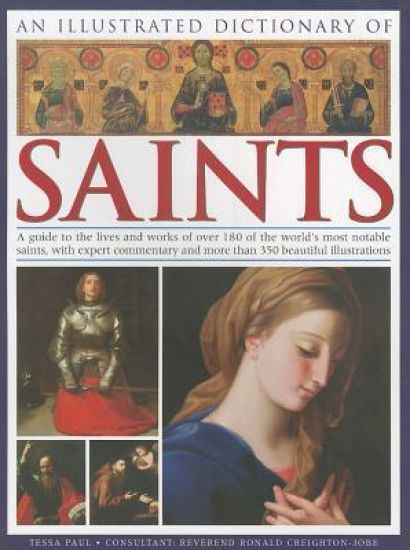
This dictionary of saints chronicles the mysterious history of sainthood, telling the story of individual holy lives from a modern perspective. It also unravels some of the myths surrounding sainthood, and explores such issues as the importance of symbolism in Christian art, holy sites and the significance of relics and pilgrimage. As well as dozens of well-known and most-loved saints such as St Francis of Assisi and Joan of Arc, other more local and perhaps less well-known saints are also described such as Wolfgang of Regensburg and Leander, Bishop of Seville. The book is illustrated with more than 350 images of saints, the places where they lived, beautiful churches and mysterious relics.
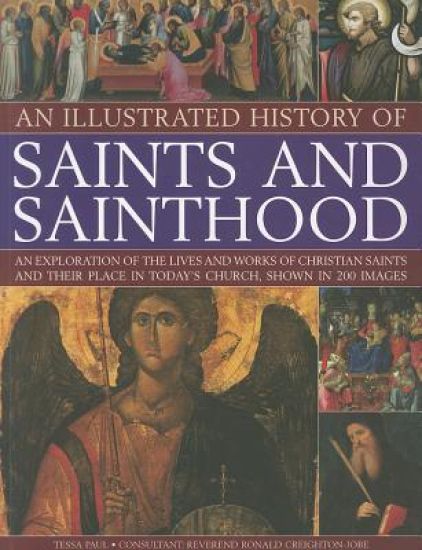
This is an exploration of the lives and works of Christian saints and their place in today's church, shown in 200 images. This is a fascinating history of saints and sainthood, and their role within Christianity and the Catholic Church. It explores the religious significance of sainthood, the process of canonisation, and the mysteries and miracles that are attributed to the saints. It looks at patron saints, hero and warrior saints, as well as apostles and martyrs. Special sections are included on the most enduring and popular saints, prayed to and called upon throughout the world, such as Mary the Virgin, James the Great, St Christopher, Francis of Assisi, Joan of Arc and Theresa of Liseux. It is sumptuously illustrated with beautiful works of art and iconography that have inspired believers down the centuries. This beautiful book chronicles the mysterious history of sainthood, unravelling the myths and addressing such issues as martyrdom, relics, patronage and canonisation. It discusses what a saint is and explains the selection and confirmation process, and covers subjects such as feast days, pilgrimage, and how sainthood is depicted in art. Themed spreads throughout the book provide lists of patron saints and feast days, and discuss in more detail areas such as The Holy Family, Celtic Saints, Warrior Saints, Saintly Popes and the Incorruptibles. The final chapter contains in-depth studies of some of the world's most called-upon and best-loved saints, including Mary the Mother of God, John the Baptist and James the Great, Francis of Assisi and more. A valuable reference book, this expert guide will inform every reader interested in discovering more about Christianity and the company of saints.
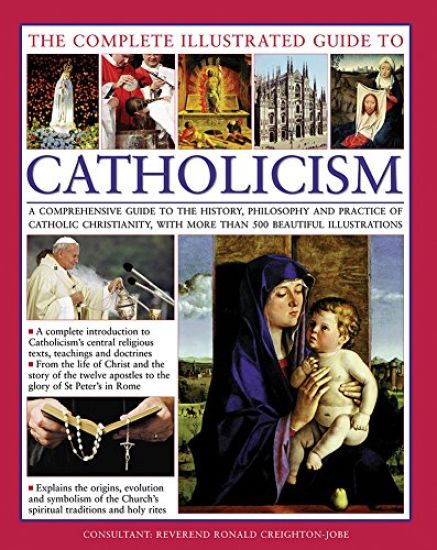
Beginning with the life of Christ, the key events in the Christian story are retold and introduced within their historical context in this beautiful book. The second section discusses the Catholic doctrine, including the Holy Trinity, the Eucharist, the role of Mary, and heaven, hell, and purgatory. The final section of the book looks at the contemporary practice of Catholicism, while also discussing important days in the Catholic year. Lavishly illustrated with more than 500 paintings, statues, maps and photographs, this book offers fresh insight into a religion which remains a potent force in millions of people's lives around the world.
The book takes a clear, step-by-step approach to building small, simple game projects. It focuses on short, attainable goals so that the reader can finish something, instead of trying to create a complex RPG or open-world game that never sees the light of day. This book encourages readers hungry for knowledge. It does not go into gory detail about how every little knob and dial functions – that's what the software manual is for! Rather, this book is the fastest path from zero to finished game using the Unity 3D engine. If you've ever wanted to develop games, but have never felt "smart" enough to deal with complex programming, this book is for you. It's also a great kick-start for developers coming from other tools like Flash, Unreal Engine, and Game Maker Pro.
This is a practical and light-hearted guide to get to grips with creating your first games, with easy-to-follow, step-by-step tutorials using the award winning Unity engine. If you've ever wanted to enter the world of independent game development but have no prior knowledge of programming or game development, then this is the book for you. Game developers transitioning from other tools like GameMaker and Flash will find this a useful tool to get them up to speed on the Unity engine, as will anyone who has never handled the Unity engine before.
"Routines for Reasoning will help teachers think a lot harder about what the mathematical practices mean...This book should be on every mathematics teacher's bookshelf." -- Elham Kazemi, Geda and Phil Condit Professor in Mathematics Education, University of Washington; coauthor of Intentional Talk "This book is a must read for every K-12 teacher serious about shifting the nature of learning mathematics in the next decade." --Timothy D. Kanold, Former Director of Mathematics and Science, and School Superintendent, Adlai E. Stevenson HSD 125 Routines can keep your classroom running smoothly. Now imagine having a set of routines focused not on classroom management, but on helping students develop their mathematical thinking skills. Routines for Reasoning provides expert guidance for weaving the Standards for Mathematical Practice into your teaching by harnessing the power of classroom-tested instructional routines. Grace Kelemanik, Amy Lucenta, and Susan Janssen Creighton have applied their extensive experience teaching mathematics and supporting teachers to crafting routines that are practical teaching and learning tools, including: Capturing Quantities encouraging abstract and quantitative reasoning Connecting Representations noticing and using mathematical structure Recognizing Repetition developing repeated reasoning skills Three Reads starting and sustaining thinking in problem solving situations Each routine provides a familiar, accessible structure that supports repeated use until the steps to follow, thinking skills to employ, and questions to ask become automatic--enabling all students to engage more fully in learning opportunities while building crucial mathematical thinking habits. "Teaching students to think and reason is perhaps the greatest challenge we face as math educators," the authors remind us, "and these routines provide clear pathways to do so." Far beyond simply a collection of strategies, Routines for Reasoning provides significant support for getting started with these routines, incorporating them into the rhythm of your classroom, and ultimately building toward student independence.
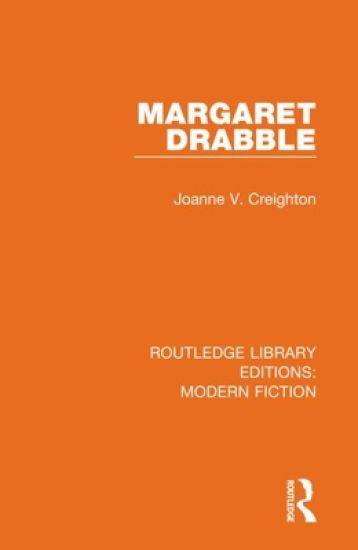
Margaret Drabble is a writer who plays a lively role in both popular and literary culture. Widely read and studied throughout the world her novels attract both the general reader and the literary critic. Originally published in 1985, Joanne Creighton examines this phenomenon and places particular emphasis on her "Englishness", her role as a woman writing credibly about modern women and her ability to mediate between the traditional and the modern. She argues that the resonances of Drabble’s work grow put of her strong sense of the powers and resources of existing literary traditions coupled with her intelligent portrayal of the familiar problems of people in modern society, and that is precisely this mediating position which makes Drabble an important voice in contemporary fiction and links her with other writers of her generation. Challenging those critics who see Drabble as a fiction traditionalist. Creighton finds her work open-ended, inquiring, equivocal and unquestionably contemporary in spirit.
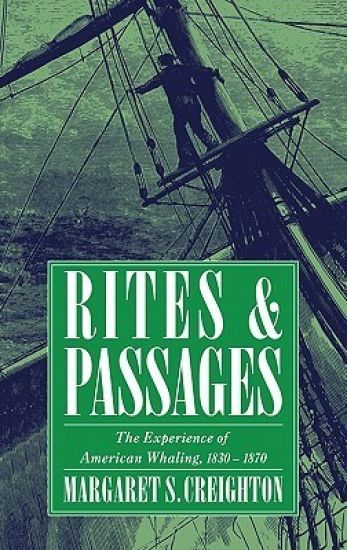
This book contributes to what has recently been called a 'new social history of seafaring'. This new maritime history places sailors themselves at the center, not the periphery, of the maritime past, and explores ways that the history of the sea and the history of the shore have intersected. It differs from traditional accounts which celebrate exotic trades, powerful merchants, maritime technologies, and military exploits. Drawn on the evidence of nearly two hundred ship logs and sailors' diaries, Rites and Passages examines American whalemen at the height of the whaling industry in the 1800s and argues that whaling life and culture was shaped by both the American mainland and by the exigencies of ocean life. Unlike other published accounts of seafaring, this work brings gender into the maritime equation, not only with a discussion of the ways that women figured in this male world, but also with an examination of the ways that seafaring served as a rite of passage into manhood.
This book contributes to what has recently been called a ‘new social history of seafaring’. This new maritime history places sailors themselves at the center, not the periphery, of the maritime past, and explores ways that the history of the sea and the history of the shore have intersected. It differs from traditional accounts which celebrate exotic trades, powerful merchants, maritime technologies, and military exploits. Drawn on the evidence of nearly two hundred ship logs and sailors’ diaries, Rites and Passages examines American whalemen at the height of the whaling industry in the 1800s and argues that whaling life and culture was shaped by both the American mainland and by the exigencies of ocean life. Unlike other published accounts of seafaring, this work brings gender into the maritime equation, not only with a discussion of the ways that women figured in this male world, but also with an examination of the ways that seafaring served as a rite of passage into manhood.
Originally published by Abt Books in 1981, this manual has been designed to provide the reader with a practical guide to designing and conducting public involvement programs as part of agency or corporate decision making. Offers valuable skills for government and corporate decision makers required by law to solicit public opinion in designing and implementing programs. Provides advice on designing public and small group meetings, working with the media, defusing volatile issues, meeting hostile audiences, and preparing summary reports.
This intellectual biography reveals Albert Eustace Haydon's growth from a pre-scientific Christianity to a scientific study of religions in light of evolution and pragmatic philosophy. Replacing G. B. Foster in comparative religion at the University of Chicago in 1919, Haydon became one of the most important figures in the development of humanism as a religious movement in North America, providing leadership in the writing of the first Humanist Manifesto in 1933. Today Haydon's writings remain a most important interpretation of religions from a humanist perspective. This work will be valuable to classes which deal with philosophical, religious, social, and intellectual thought in North America since Charles Darwin.
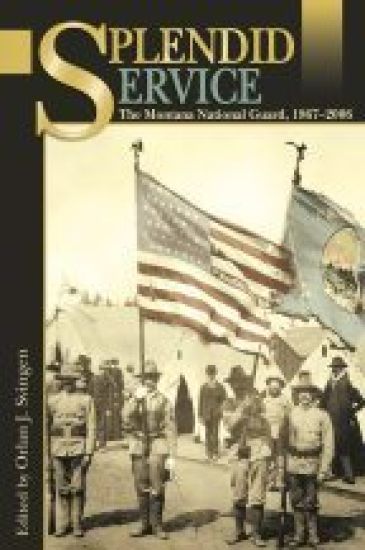
Although the history of the Montana National Guard is still being written as its members continue to serve around the globe, the seeds of this long-standing military organization germinated in 1867, when the territory's acting governor organized a rag-tag militia force in response to widespread fear of impending Indian uprisings against the white population. It was a fiasco that cost the government dearly. Yet from that humble beginning arose a far more worthy band of soldiers, serving honorably during natural disasters, the Spanish-American War, the Mexican border crises, labor disputes, both World Wars, the Cold War, the Vietnam War, Desert Storm, and more.Splendid Service recounts the proud moments and important achievements, and the painful failures and heart-breaking sacrifices, that the Montana National Guard experienced from 1867 to the end of the twentieth century. It chronicles how state, national, or international developments in politics, law, funding, public sentiment, and more affected the role Guardsmen played in assisting or protecting local communities, federal and state agencies, and the United States. The volume describes the process of repeated reorganizing and restructuring as state and federal governments sought to meet new challenges. It highlights some of the individuals whose contributions fostered the success of Montana's armed forces, and describes the difficulties its leaders faced, including lack of funding and supplies, inadequate facilities and training camps, and the state's large geographic area. Other aspects of military life, such as the daily camp routine, drills and training, competitions, and advances in equipment are detailed as well. The long-standing and commendable service of the Montana National Guard has indeed left a legacy for future generations.
Dickie, then Dick, then Richard was born in a small remote northern town in Manitoba. By the time he was three; he had a new step-mother and brother and was living in a small town in Northern Ontario, Canada. He came under the foster care of a childless couple in the community- a prominent leader in the region, while serving as a go-fer for the local house of ill repute. From these humble beginnings, he always wondered at how he, this small town boy from Northern Ontario, could eventually become a "Captain of Industry" and one of the original "Mad Men" of Advertising in the late 1960's in New York City. This is his story...it started as a project after he retired, mostly focussing on the funny stories in his work life. As time marched on, (25 years in the making), his book included stories of his formative years, time in the Canadian Navy in WWII, University days, his family, his beloved Silver Islet and his faith. Dick started his business career with the team and the company (Proctor & Gamble) that invented the "science" and tools of marketing research. He was present when marketers and the public were shifting from the use of radio and print to television. He figured out how to measure the impact and effectiveness of advertising and compare across mediums. He learned that innovation and filling perceived vacuums led to great opportunities. Over the course of his career - he helped save the Dick Van Dyke Show through the use of viewer research, walked the Red Carpet at the Oscars, provided input for the Grand Ole Opry, attended several Super Bowl Games as a VIP, testified at Congressional Committee hearings, and added to the bottom line for his clients and employers by saving or making millions of dollars, through a common sense approach based on real data. He was an able provider for his family of five children realizing the American Dream of moving into the upper middle class and retiring to Florida. This is when he started to compile his stories. The book includes his search for family and a mother replacement, his various summer jobs such as building Canada after the war - including blasting of the road bed for the Trans-Canada Highway and surveying for the Ontario Hydro electrical grid. Profiled are Dick's adventures in mining camps, with scallywags and Madame's, with Presidents of companies and in facing death a number of times. Though all his stories and his life, Dick loved to laugh and treasured the power of a good joke or story - well told. During his life in school, the Navy, University, in Business and with his family - he would hear the repeated refrain (usually when he was laughing at some absurdity) - "This is Really Serious Business"...Dick had his own opinion.
The study of infant, child, and adolescent remains (nonadult remains) is a topic of growing interest within the fields of archaeology and bioarchaeology. Many published volumes and articles delve into the experiences of childhood and what these small remains may tell us about life, more broadly, in the past. For those interested in exploring infant and child remains, it is an exciting period as more methods and approaches are constantly being incorporated into the archaeological toolkit. This Element introduces the reader to the topic and to common methodological approaches used to consider nonadult remains from archaeological contexts. With this toolkit in hand, readers will be able to begin their own explorations and analyses of nonadult human remains within archaeological contexts.