Kirjojen hintavertailu. Mukana 12 016 292 kirjaa ja 12 kauppaa.

Kirjahaku

Etsi kirjoja tekijän nimen, kirjan nimen tai ISBN:n perusteella.

1000 tulosta hakusanalla David L. Goetsch

Teaching the Faith at Home

Teaching the Faith at Home

David L Rueter

Concordia Publishing House
2015
pokkari
When children are in their early elementary school years, their minds are actually at the peak time for easy rote memorization. And yet, many Protestant churches begin formal confirmation instruction years after this formative period. What are the effects of this lapse in time? Too often, young teens fall away from their church after confirmation-a trend that will hurt future generations of families.After assessing current trends in the faith development of youth, Dr. David Rueter wrote Teaching the Faith at Home: What Does This Mean? How Is This Done? to reveal why the historic model of teaching the catechism early in the home is key in keeping families connected to the Church. Part 1 focuses on laying a foundation for understanding the history, purpose, and theological reasons for catechesis. And Part 2 is a very practical look at strategies and models for catechetical instruction that can be shared at church and used in the home.Catechesis that's grounded in family life is not a new idea, but it's one that our fast-paced culture often forgets and would do well to remember and cherish.
Excavation

Excavation

David L. Carmichael; Robert H. Lafferty III; Brian Leigh Molyneaux

AltaMira Press,U.S.
2003
nidottu
Excavation is traditionally considered the heart of the archaeological enterprise. But it is an activity transformed over the past two decades of increasingly contract-based work. Carmichael and Lafferty lay out the basics of this brand of excavation for the novice reader in this handy, practical guide. After outlining the ethical concerns in archaeological excavation and the history of the endeavor, the authors walk the reader through the steps of contemporary excavation—site identification, remote sensing, test excavation, and various scales of recovery. They also deal with the complex issues of human burials uncovered in excavation. Written in an accessible, practical way, Carmichael and Lafferty's guide will be useful to students, field school attendees, and other novice fieldworkers.
The Little Book of Big Word Puzzles

The Little Book of Big Word Puzzles

David L. Hoyt; Merriam-Webster Merriam-Webster

Algonquin Books (division of Workman)
2015
pokkari
A pocket-sized brain gym! Mental games, visual conundrums, logic posers, riddles, illusions—in all, over 500 dazzling, full-color puzzles designed to stretch neurons and shake up your usual way of thinking. Be creative. Be challenged. Push your brain in different directions. The puzzles are organized by 12 types with 10 levels of difficulty, each designed to make you feel more curious, intuitive, engaged, and smarter. Written by David L. Hoyt, the most syndicated puzzle writer in the country, with Merriam-Webster, America’s most trusted dictionary. All in a travel-friendly, gift-friendly 4" x 6" chunky size. In Mixed-Up Definition, unscramble the letters to reveal the definition of a given word. In Syllabary, use the clues to link syllables in a grid to create words. In Cross’d Word Connections, find the letters in common to help solve a series of four crossword puzzles. Plus Dictionary Race Winder, Make the Connection, Color Word Chains, Prism Word Finder, and other clever riffs on word searches. The book features 20 puzzle types, which are arranged in a mixed fashion throughout for maximum variety and stimulation. They range in difficulty from an easy “1” to a brain-busting “10”—so puzzle lovers of all skill levels will be tested— and include spaces for recording completion times. Each puzzle type is explained in clear instructions, and all answers are printed in the back.
Focus Groups as Qualitative Research

Focus Groups as Qualitative Research

David L. Morgan

SAGE Publications Inc
1997
sidottu
From the First Edition: "Continues the high quality of previously published volumes in the Sage series on qualitative research methods. . . . Useful and instructive. . . . David L. Morgan deals with a number of practical issues concerning the conduct of focus groups, such as the degree of moderator involvement and group size. . . . Provides ample illustrations . . . and thought-provoking advice for researchers and students." --Contemporary Sociology "David L. Morgan's book is unique among current offerings on focus groups because it is directed at academic users of focus groups rather than practitioners. His account is also unique in its critical attitude toward contemporary market research applications of focus groups. . . . The book succeeds best at providing fuel for scholarly debates about what group interviews can and cannot contribute to research." --Journal of Marketing Research "Provides the reader with a very clear and practical overview of the focus group as a method for field research. . . . Well-written and informative. . . . Providing the history and methodological rationale for the method. . . . Attests to the benefits or strengths of focus group research on the basis of personal opinion and testimonial evidence." --Personnel Psychology Only a decade ago, focus groups were virtually unknown to social scientists. Now their use in academic as well as outside settings is vast and ever growing. David L. Morgan has extensively revised and updated his best-selling Focus Groups as Qualitative Research, providing an excellent guide for researchers in every discipline. He begins his comprehensive revision with an updated introduction that offers a discussion of current social science approaches to focus groups. Expanded coverage on the comparison of focus groups to individual interviews follows, as well as more on the strengths and weaknesses of focus groups (Chapter 2). Chapter 3's section on self-contained focus groups has also been expanded to reflect the increased range of research being done in this area. The next chapter has been thoroughly reorganized both to provide an overview of what a typical set of groups looks like as well as new insights on research design. Similarly, Chapters 5 and 6 have been reorganized and broadened to include examples from social scientists who have established their own practices and methodological research on focus groups. This best-selling research guide concludes with future directions and references that take into account the explosive growth in focus groups as a research tool for all social scientists. Reflecting the many changes that have occurred in the study of focus groups over the years, Focus Groups as Qualitative Research, Second Edition is for qualitative researchers in every academic discipline as well as those in nonacademic settings.
Focus Groups as Qualitative Research

Focus Groups as Qualitative Research

David L. Morgan

SAGE Publications Inc
1997
nidottu
From the First Edition: "Continues the high quality of previously published volumes in the Sage series on qualitative research methods. . . . Useful and instructive. . . . David L. Morgan deals with a number of practical issues concerning the conduct of focus groups, such as the degree of moderator involvement and group size. . . . Provides ample illustrations . . . and thought-provoking advice for researchers and students." --Contemporary Sociology "David L. Morgan's book is unique among current offerings on focus groups because it is directed at academic users of focus groups rather than practitioners. His account is also unique in its critical attitude toward contemporary market research applications of focus groups. . . . The book succeeds best at providing fuel for scholarly debates about what group interviews can and cannot contribute to research." --Journal of Marketing Research "Provides the reader with a very clear and practical overview of the focus group as a method for field research. . . . Well-written and informative. . . . Providing the history and methodological rationale for the method. . . . Attests to the benefits or strengths of focus group research on the basis of personal opinion and testimonial evidence." --Personnel Psychology Only a decade ago, focus groups were virtually unknown to social scientists. Now their use in academic as well as outside settings is vast and ever growing. David L. Morgan has extensively revised and updated his best-selling Focus Groups as Qualitative Research, providing an excellent guide for researchers in every discipline. He begins his comprehensive revision with an updated introduction that offers a discussion of current social science approaches to focus groups. Expanded coverage on the comparison of focus groups to individual interviews follows, as well as more on the strengths and weaknesses of focus groups (Chapter 2). Chapter 3's section on self-contained focus groups has also been expanded to reflect the increased range of research being done in this area. The next chapter has been thoroughly reorganized both to provide an overview of what a typical set of groups looks like as well as new insights on research design. Similarly, Chapters 5 and 6 have been reorganized and broadened to include examples from social scientists who have established their own practices and methodological research on focus groups. This best-selling research guide concludes with future directions and references that take into account the explosive growth in focus groups as a research tool for all social scientists. Reflecting the many changes that have occurred in the study of focus groups over the years, Focus Groups as Qualitative Research, Second Edition is for qualitative researchers in every academic discipline as well as those in nonacademic settings.
The Focus Group Kit

The Focus Group Kit

David L. Morgan; Richard A. Krueger

SAGE Publications Inc
1997
nidottu
You have just been asked to run a focus group, but you don't know where to start. How do you get the right mix of people together? How many people should be in your group? What kind of questions should you ask? How do you phrase them? What do you do with the information you've gathered? How do you put it all together in one cohesive report? These are but a few of the issues that are covered in the Focus Group Kit. The kit provides you with all you'll need to know to run a successful focus group, from the initial planning stages to asking questions, to moderating to the final analyzing and reporting of your research.
Planning Focus Groups

Planning Focus Groups

David L. Morgan

SAGE Publications Inc
1997
nidottu
Author David L. Morgan covers the wide range of practical tasks required in the course of a research project when using focus groups. Throughout, Planning Focus Groups emphasizes the clarifying purposes of the research project in order to collect data that meet the goals. The author extensively and concisely covers the basic decisions that are necessary to plan a research project using focus groups, such as who should be in the groups, the total number of groups, their size, and much more. This volume also features a detailed discussion of timelines, personnel, and budgets. Among the other topics covered are recruitment, selecting locations, and recording and managing data. Practical material includes checklists, recruitment tools, timelines, and budgets.
The Focus Group Guidebook

The Focus Group Guidebook

David L. Morgan

SAGE Publications Inc
1997
nidottu
Providing a general introduction to focus group research, The Focus Group Guidebook includes the appropriate reasons for using focus groups and what you can expect to accomplish with them. It provides a brief history of focus groups, a discussion of when to use focus groups and why, and several brief case studies illustrating different uses of focus groups. Author David L. Morgan also extensively provides the timeline and costs associated with focus groups, including a discussion of the ethical issues involved in focus group research. Thoroughly covering all the information to help you start your focus group project, this guidebook is appropriate for anybody beginning a focus group, as well as manager or clients who will be using focus groups.
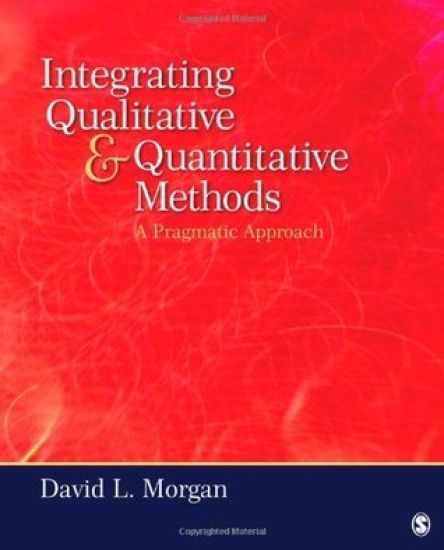
Integrating Qualitative and Quantitative Methods

Integrating Qualitative and Quantitative Methods

David L. Morgan

SAGE Publications Inc
2013
nidottu
Focusing on research designs for projects that collect both qualitative and quantitative data, this practical book discusses strategies for bringing qualitative and quantitative methods together so that their combined strengths accomplish more than is possible with a single method. The approach is broadly interdisciplinary, reflecting the interest in mixed methods research of social scientists from anthropology, communication, criminal justice, education, evaluation, nursing, organizational behavior, psychology, political science, public administration, public health, sociology, social work, and urban studies. In contrast to an "anything goes" approach or a naïve hope that "two methods are better than one," the author argues that projects using mixed methods must pay even more attention to research design than single method approaches. The book’s practical emphasis on mixed methods makes it useful both to active researchers and to students who intend to pursue such a career.
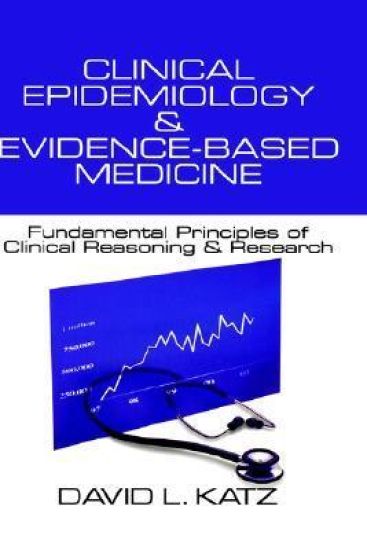
Clinical Epidemiology & Evidence-Based Medicine

Clinical Epidemiology & Evidence-Based Medicine

David L. Katz

SAGE Publications Inc
2001
sidottu
The presentation is consistently excellent. One, the writing is lucid and organized in a way that should be very natural for the clinical reader. Two, the text requires no background in mathematics and uses a minimum of symbols. And, three, the methodological concepts and clinical issues are well integrated through a number of carefully prepared and comprehensive examples. Greg Samsa, Associate Director, Duke Center for Clinical Health Policy Research If a patient is older or younger than, sicker or healthier than, taller or shorter than or simply different from the subjects of a study, do the results pertain? Clinical Epidemiology & Evidence-based Medicine is a resource for all health-care workers involved in applying evidence to the care of their patients. Using clinical examples and citing liberally from the peer-reviewed literature, the book shows how statistical principles can improve medical decisions. Plus, as Katz shows how probability, risk and alternatives are fundamental considerations in all clinical decisions, he demonstrates the intuitive basis for using clinical epidemiolgy as a science underlying medical decisions. After reading this text, the practitioner should be better able to access, interpret, and apply evidence to patient care as well as better understand and control the process of medical decision making.
Clinical Epidemiology & Evidence-Based Medicine

Clinical Epidemiology & Evidence-Based Medicine

David L. Katz

SAGE Publications Inc
2001
nidottu
The presentation is consistently excellent. One, the writing is lucid and organized in a way that should be very natural for the clinical reader. Two, the text requires no background in mathematics and uses a minimum of symbols. And, three, the methodological concepts and clinical issues are well integrated through a number of carefully prepared and comprehensive examples. Greg Samsa, Associate Director, Duke Center for Clinical Health Policy Research If a patient is older or younger than, sicker or healthier than, taller or shorter than or simply different from the subjects of a study, do the results pertain? Clinical Epidemiology & Evidence-based Medicine is a resource for all health-care workers involved in applying evidence to the care of their patients. Using clinical examples and citing liberally from the peer-reviewed literature, the book shows how statistical principles can improve medical decisions. Plus, as Katz shows how probability, risk and alternatives are fundamental considerations in all clinical decisions, he demonstrates the intuitive basis for using clinical epidemiolgy as a science underlying medical decisions. After reading this text, the practitioner should be better able to access, interpret, and apply evidence to patient care as well as better understand and control the process of medical decision making.
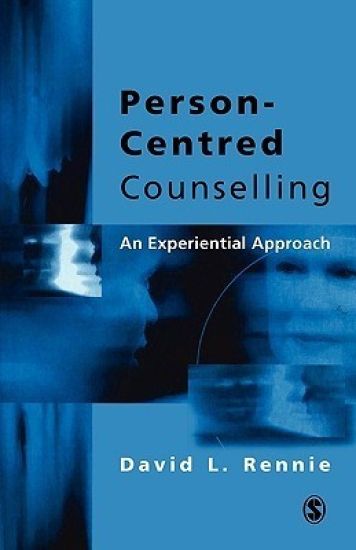
Person-Centred Counselling

Person-Centred Counselling

David L. Rennie

SAGE Publications Inc
1998
sidottu
`This book offers a truly engaging "read". The writing style is good and it gives the reader a wide range of perspectives, from the meta-theoretical to the concrete practical experience of clients and counsellors.... David Rennie's book serves to continue the development as well as the exposition of the person-centred approach to counselling' - British Journal of Guidance and Counselling `This is a very good book... clearly within the humanistic/experiential tradition... It seems to me to be very important that this kind of research continues - it is the raw data of the counselling profession' - Person-Centred Practice This book contains powerful new ideas about person-centred theory and practice. Supported by intensive qualitative research into the client's experience of counselling, the book highlights the significance and pervasiveness of reflexivity - defined as self-awareness and agency within that self-awareness - and explores surprising ways in which clients contribute reflexively to the counselling process. Vivid examples highlight activities, show the therapy in action and illustrate how counsellors can use their own experiences creatively to facilitate their attunement to themselves, their clients and their relationships with them. The theoretical framework covers matters such as the use of images and metaphor, counsellor transparency and the assistance of clients' agency. Emphasis is placed on the client/counsellor relationship through such crucial areas as the working alliance, power dynamics and metacommunication.
Person-Centred Counselling

Person-Centred Counselling

David L. Rennie

SAGE Publications Inc
1998
nidottu
`This book offers a truly engaging "read". The writing style is good and it gives the reader a wide range of perspectives, from the meta-theoretical to the concrete practical experience of clients and counsellors.... David Rennie's book serves to continue the development as well as the exposition of the person-centred approach to counselling' - British Journal of Guidance and Counselling `This is a very good book... clearly within the humanistic/experiential tradition... It seems to me to be very important that this kind of research continues - it is the raw data of the counselling profession' - Person-Centred Practice This book contains powerful new ideas about person-centred theory and practice. Supported by intensive qualitative research into the client's experience of counselling, the book highlights the significance and pervasiveness of reflexivity - defined as self-awareness and agency within that self-awareness - and explores surprising ways in which clients contribute reflexively to the counselling process. Vivid examples highlight activities, show the therapy in action and illustrate how counsellors can use their own experiences creatively to facilitate their attunement to themselves, their clients and their relationships with them. The theoretical framework covers matters such as the use of images and metaphor, counsellor transparency and the assistance of clients' agency. Emphasis is placed on the client/counsellor relationship through such crucial areas as the working alliance, power dynamics and metacommunication.
100 Questions  &  Answers About Gastroesophageal Reflux Disease (GERD): A Lahey Clinic Guide

100 Questions & Answers About Gastroesophageal Reflux Disease (GERD): A Lahey Clinic Guide

David L. Burns; Neeral L. Shah

Jones and Bartlett Publishers, Inc
2006
nidottu
More than 25 million Americans suffer from gastro-esophageal reflux disease (GERD). Whether you've recently been diagnosed with GERD, want to gain a better understanding of GERD, or know someone who suffers from this condition, this book offers help. The only text to provide both the patient's and physician's perspectives, this invaluable resource offers readers authoritative, practical answers to 100 of the most common questions asked by patients and families.
Break Out

Break Out

David L. Craddock

Schiffer Publishing Ltd
2017
sidottu
Around the world, millions of people hijack cars in Grand Theft Auto, role play fantastical heroes in World of WarCraft, and crush candy on phones as small as wallets yet nearly as powerful as desktop computers. But long before video games became a multi-billion-dollar industry, two hackers invented the Apple II, a PC that contained less memory than the average Microsoft Word document and bowled over consumers by displaying four colors at once. Some users tapped its resources to design productivity software. Others devised some of the most influential games of all time. From the perils along the Oregon Trail and the exploits of Carmen Sandiego to the shadowy dungeons of Wizardry and Prince of Persia's trap-filled labyrinth, Break Out recounts the making of some of the Apple II's most iconic games, illustrates how they informed the games we play today, and tells the stories of the pioneers who made them.