Kirjojen hintavertailu. Mukana 12 184 868 kirjaa ja 12 kauppaa.

Kirjahaku

Etsi kirjoja tekijän nimen, kirjan nimen tai ISBN:n perusteella.

1000 tulosta hakusanalla David R Addleman

The Yellow Journalism

The Yellow Journalism

David R. Spencer; Geneva Overholser

Northwestern University Press
2007
nidottu
When a case containing dismembered human remains surfaced in New York's East River in June of 1897, the publisher of the ""New York Journal"" - a young, devil-may-care millionaire named William Randolph Hearst - decided that his newspaper would ""scoop"" the city's police department by solving this heinous crime. Pulling out all the stops, Hearst launched more than a journalistic murder investigation; his newspaper's active intervention in the city's daily life, especially its underside, marked the birth of the Yellow Press. In a work that studies the rise and fall of this phenomenon, David R. Spencer documents the fierce competition that characterized yellow journalism, the social realities and trends that contributed to its success (and its ultimate demise), its accomplishments for good or ill, and its long-term legacy. Most notable among Hearst's competitors was New York City's ""The World"", owned and managed by a European Jewish immigrant named Joseph Pulitzer. ""The Yellow Journalism"" describes how these two papers and others exploited the scandal, corruption, and crime among the city's most influential citizens, and its most desperate inhabitants - a policy that made this ""journalism of action"" remarkably effective, not just as a commercial force, but also as an advocate for the city's poor and defenseless. Spencer shows how many of the innovations first introduced during this period - from investigative reporting to the use of color, entertainment news, and cartoons in papers - have had a lasting effect on journalism; and how media in our day reflects the Yellow Press's influence, but also its threatened irrelevance within the broader realities of contemporary society.
George Sanders, Zsa Zsa, and Me

George Sanders, Zsa Zsa, and Me

David R. Slavitt

Northwestern University Press
2009
nidottu
Taking its inspiration from Sanders' own autobiography ""Memoirs of a Professional Cad"" (1960), this book is part witty, bawdy, and irreverent memoir, part moving meditation on the price of fame; like most of David Slavitt's work, it defies easy categorization. In George Sanders, ""Zsa Zsa, and Me"", Slavitt looks back to his career as a film critic in the glamorous - at least superficially - world of 1950s Hollywood, when he traveled in circles that included the talented British actor George Sanders (1906-1972) and his then-wife, Zsa Zsa Gabor, who was talented at, well, being famous. Sanders, who seemed to maintain an ironic detachment from roles that were often beneath him, nonetheless couldn't bear the decline of his later years and committed suicide at the age of sixty-five. Darkly humorous to the end, his note read, 'Dear World, I am leaving because I am bored. I feel I have lived long enough. I am leaving you with your worries in this sweet cesspool. Good luck'. Zsa Zsa, on the other hand, remains in the headlines (with her dubiously named husband Frederic Prinz von Anhalt) at age ninety-two. Although he punctuates his story with witty asides - the author's encounter with Marilyn Monroe is particularly memorable - Slavitt turns a critic's eye toward questions of talent and art, while also tackling the difficult and universal questions of aging, relationships, and mortality.
Re Verse

Re Verse

David R. Slavitt

Northwestern University Press
2009
nidottu
David R. Slavitt does not believe in literary criticism so much as in 'remarks', and in this witty and unusual work, he remarks on the life of the poet: how it was - and how it is - to be an American writer in our time. Combining personal reminiscence with deft literary analysis, incisive biographical sketches, and, sometimes, literary gossip, the essays in ""Re Verse"" give new perspectives on the famous, including Harold Bloom, Robert Penn Warren, Robert Frost, and Stephen Spender, and recover the charms of the nearly forgotten, such as Dudley Fitts, Winfield Townley Scott, Merrill Moore, and John Hall Wheelock. Slavitt writes with self-deprecating humor of his own literary education and uses his impressive experience and erudition to illuminate the whims of poetic influence, passion, and reputation. With a refreshing honesty and considerable poise, he gives readers an enlightening view of the vast and ever-changing literary universe.
Kinsmen Through Time

Kinsmen Through Time

David R. Edmunds

Scarecrow Press
1987
sidottu
Foreword by Dr. Francis A. Levier, Tribal Administrator, Citizen Band Potawatomi Indians of Oklahoma. Allies of New France, the Potawatomi Indians played a major role in the development of the fur trade and the colonial struggle for North America. By the late 18th century they occupied a broad territory stretching from Milwaukee to Detroit. Today the Potawatomis occupy lands in Kansas and Oklahoma, while smaller communities reside in Michigan, Wisconsin, and Canada. This is the first extended annotated bibliography—including almost 1100 books, journal articles, pamphlets, and other items—to focus on Potawatomi history (1600-1980). It will also serve as a useful guide for scholars studying the frontier in the Midwest. With an extensive index.
Salvationist Samurai

Salvationist Samurai

David R. Rightmire

Scarecrow Press
1997
sidottu
Arriving in Japan in 1895, the Salvation Army rose from a position of relative obscurity to national recognition within a space of twelve years. The cultural adaptation of mission and message was most directly influenced by the life and work of Gunpei Yamamuro (1872-1940), who helped transform the Army into an indigenous expression of Wesleyan-holiness mission, uniquely adapted to the needs of Japan's emerging industrialized society. Salvationist Samurai is the first English-language work to clarify the role of Yamamuro in relation to the progress of the Salvation Army in Japan. In light of the recent centennial celebration of the Salvation Army in Japan, it is fitting that this illustrated work be published in commemoration of its most prominent representative.
Leo Tolstoy

Leo Tolstoy

David R. Egan; Melinda A. Egan

Scarecrow Press
2005
nidottu
In this quarter-century update of Leo Tolstoy: An Annotated Bibliography of English Language Sources to 1978, authors David and Melinda Egan list the more than 1,200 books, essays, articles and doctoral dissertations written about the great Russian author from 1978 to 2003 (the 175th anniversary of Tolstoy's birth). In the twenty-five years since the first volume, there has been a remarkable growth in Tolstoy scholarship, including significant developments in feminist, psychological, linguistic, and intertextual studies. Most important, a number of seminal works have emerged which challenge the long-established critical view that Tolstoy was not one writer but two - Tolstoy the artist, who wrote the great classics War and Peace and Anna Karenina, and Tolstoy the moralist and sage, who, during the last three decades of his life, wrote didactic works to propagate his religious, moral and ethical views. The book provides a comprehensive list of English language studies of Tolstoy's life, art, thought and influence in order to promote awareness of and access to those works that have been written about him since 1977. The authors also include descriptive (non-critical) annotations for the vast majority of sources, allowing users to determine which studies they might find particularly valuable. Divided into nine sections, the book addresses Tolstoy's novels, the major components of his non-literary life, and his legacy to the world. The book also includes a subject index of several hundred headings to help users navigate their way through its principal sections.
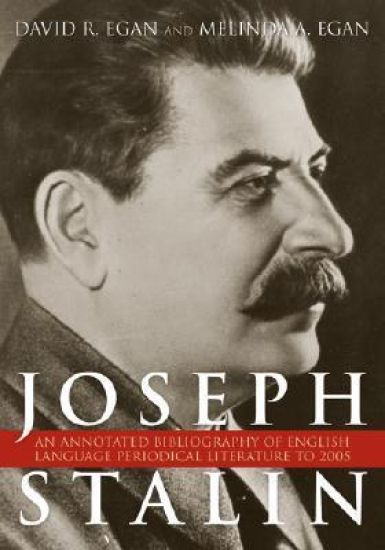
Joseph Stalin

Joseph Stalin

David R. Egan; Melinda A. Egan

Scarecrow Press
2007
sidottu
With the opening of Russian and communist-bloc archives dating from the Soviet-era, there has been a significant increase of scholarly writings pertaining to Joseph Stalin. Widely considered to be among the most influential historical figures of the twentieth century, Stalin continues to be a source of intense study. In the absence of a comprehensive compilation of periodical literature, the need for Joseph Stalin: An Annotated Bibliography of English Language Periodical Literature to 2005 is conspicuous. Ranging from editorials and news reports to academic articles, the more than 1,700 sources cited collectively cover the full range of his life, the various aspects of his leadership, and virtually all facets of the system and practices traditionally associated with his name. The coverage in this bibliography extends beyond the person of Stalin to include the subjects of Stalinism, the Stalinist system, the Stalin phenomenon, and those policies and practices of the Communist Party and Soviet state associated with him. This volume also provides a record of scholarly opinion on Stalin and sheds light on the evolution and current state of Stalinology. An effort has been made to list only those articles in which Stalin figures prominently, but, in some instances, articles have been included which do not center on Stalin but are worthy of listing for other reasons. The book is divided into fourteen main sections: General Studies and Overviews; Biographical Information and Psychological Assessments; The Revolutionary Movement, October Revolution and Civil War; Rise to Power; Politics; Economics; Society and Social Policy; Nationalism and Nationality Policy; Culture; Religion; Philosophy and Theory; Foreign Relations and International Communism; Military Affairs; and De-Stalinization. Including a subject index of several hundred headings and even greater number of subheadings, this comprehensive annotated bibliography should be of benefit to those individuals who, for the purpose of research or classroom
A Philadelphia Family

A Philadelphia Family

David R. Contosta; E. Digby Baltzell

University of Pennsylvania Press
1992
pokkari
Three generations of the Houston-Woodward family, one of the wealthiest and most influential in Philadelphia, have been leaders in politics, diplomacy, suburban planning, housing reform, land conservation, and historic preservation. In A Philadelphia Family, David Contosta analyzes the impact the Houstons and Woodwards have had economically, politically, and demographically on Philadelphia, a city known for its reserved and private leading families. The story of the Houston and Woodward families' continuing public service offers a unique perspective on Philadelphia history in the nineteenth and twentieth centuries. Family founder Henry Howard Houston (1820-1895) was one of America's greatest post-Civil War entrepreneurs, a top executive of the Pennsylvania Railroad as well as a leading speculator in oil, mining, and other railroad ventures. Houston created a unique, planned suburb in Chestnut Hill, which his son Samuel and son-in-law George Woodward maintained and expanded in the twentieth century. Woodward, in particular, became an energetic crusader for housing reform. Other family members have distinguished themselves in government service and charitable work. Stanley Woodward served in the Roosevelt and Truman administrations, George Woodward was a state senator for 30 years, and Lawrence M. C. Smith was founder and owner of a prominent classical music station in Philadelphia.
Moral Minority

Moral Minority

David R. Swartz

University of Pennsylvania Press
2014
pokkari
In 1973, nearly a decade before the height of the Moral Majority, a group of progressive activists assembled in a Chicago YMCA to strategize about how to move the nation in a more evangelical direction through political action. When they emerged, the Washington Post predicted that the new evangelical left could "shake both political and religious life in America." The following decades proved the Post both right and wrong—evangelical participation in the political sphere was intensifying, but in the end it was the religious right, not the left, that built a viable movement and mobilized electorally. How did the evangelical right gain a moral monopoly and why were evangelical progressives, who had shown such promise, left behind? In Moral Minority, the first comprehensive history of the evangelical left, David R. Swartz sets out to answer these questions, charting the rise, decline, and political legacy of this forgotten movement. Though vibrant in the late nineteenth century, progressive evangelicals were in eclipse following religious controversies of the early twentieth century, only to reemerge in the 1960s and 1970s. They stood for antiwar, civil rights, and anticonsumer principles, even as they stressed doctrinal and sexual fidelity. Politically progressive and theologically conservative, the evangelical left was also remarkably diverse, encompassing groups such as Sojourners, InterVarsity Christian Fellowship, Evangelicals for Social Action, and the Association for Public Justice. Swartz chronicles the efforts of evangelical progressives who expanded the concept of morality from the personal to the social and showed the way—organizationally and through political activism—to what would become the much larger and more influential evangelical right. By the 1980s, although they had witnessed the election of Jimmy Carter, the nation's first born-again president, progressive evangelicals found themselves in the political wilderness, riven by identity politics and alienated by a skeptical Democratic Party and a hostile religious right. In the twenty-first century, evangelicals of nearly all political and denominational persuasions view social engagement as a fundamental responsibility of the faithful. This most dramatic of transformations is an important legacy of the evangelical left.
The Ontology of Cyberspace

The Ontology of Cyberspace

David R. Koepsell

Open Court Publishing Co ,U.S.
2000
sidottu
This work is an examination of how intellectual property laws should be applied to cyberspace, software and other computer-mediated creations. Is software a creation to be patented, like an invented machine or process, or is it an original expression to be copyrighted, like drawings and books? This distinction is artificial, argues the author, and is responsible for the growing legal problems related to intellectual property law. Computer-mediated objects are no different from books, songs, or machines and do not require any special treatment by the law. Koepsell suggests revisions to the legal framework itself which prevent this artificial and problematic distinction, and simplify the protection of all intellectual property.
The Ontology of Cyberspace

The Ontology of Cyberspace

David R. Koepsell

Open Court Publishing Co ,U.S.
2003
pokkari
Is software a creation to be patented, like an invented machine or process, or an original expression to be copyrighted, like drawings and books? This distinction is artificial, argues Koepsell, and is responsible for the growing legal problems related to intellectual property law. Computer-mediated objects are no different from books, songs, or machines and do not require any special treatment by the law. The author suggests revisions to the legal framework itself which prevent this artificial and problematic distinction, and simplifies the protection of all intellectual property.
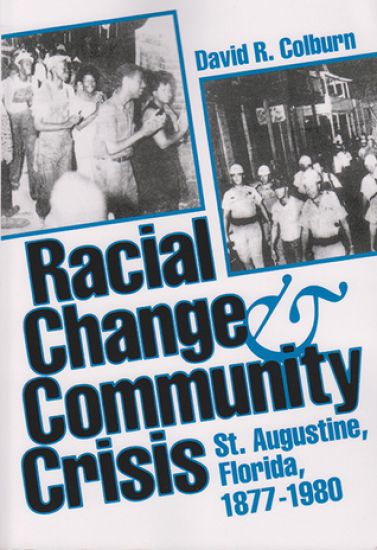
Racial Change and Community Crisis

Racial Change and Community Crisis

David R. Colburn

University Press of Florida
1991
nidottu
"Colburn presents the facts and is not afraid to interpret them. His narrative captures the inherent drama of specific events and situations: the ruthless beatings of demonstrators, the complacency and fear of many white moderates, the genuinely incredible power of nonviolence to accomplish grand political ends, and the great courage this weapon required of those who wielded it."--Reviews in American HistoryIn 1964, racial reform and racial extremism clashed in St. Augustine, Florida, the city the Southern Christian Leadership Conference targeted for the activities of its nonviolent army. Under the leadership of Martin Luther King, Jr., the SCLC staged demonstrations in St. Augustine that they hoped would pressure the U.S. Congress into passing civil rights legislation. Extremists, led by Ku Klux Klan and John Birch Society members, saw in St. Augustine a last opportunity to halt the forces of racial change. What resulted--beatings, shootings, bombings, and mass arrests--was some of the ugliest racial violence the nation has witnessed.
Government in the Sunshine State

Government in the Sunshine State

David R. Colburn; Lance deHaven-Smith; Reubin O'D. Askey

University Press of Florida
1999
sidottu
Addressing how the diversity in nationality of its population has shaped government, the authors of this book offer a history of the State's political development over the last 150 years and the issues facing it today.
Florida's Megatrends

Florida's Megatrends

David R. Colburn; Lance deHaven-Smith

University Press of Florida
2002
nidottu
Florida began the twentieth century rooted in the Confederacy - the least populated of the southern states, with a rural, agricultural, frontier society. By the end of the century, Florida had become the most populated, urban, and culturally diverse state in the South - and the fourth largest in the nation. Florida's Megatrends is a lively overview of the forces that forged Florida in the twentieth century, the trends that are projected for the first quarter of this century, and how both will shape Florida in the future. The transformation of Florida began with railroad barons and developers from northern states who triggered the 1920s land boom. Waves of migration and immigration continued throughout the twentieth century. With a constant influx of new residents from the Caribbean and Latin America, combined with the African-American and Native American populations, Florida has become one of the most racially and ethnically diverse states in the nation. The state's economy is no longer dominated by agriculture but by tourism, construction, commerce, and technology. In Florida Megatrends, two of Florida's most respected scholars examine the evolution of the state, the remarkable changes that have shaped it, and the relevant concerns facing Florida in the future from political, historical, sociological, economic, and environmental perspectives.
From Yellow Dog Democrats to Red State Republicans

From Yellow Dog Democrats to Red State Republicans

David R. Colburn

University Press of Florida
2007
sidottu
Likely to raise hackles among Democrats and Republicans alike, this dynamic history of modern Florida argues that the Sunshine State has become the political and demographic future of the nation. In the twenty-first century, David Colburn says, Florida is a dynamic, highly partisan, largely conservative state at the cultural, social, and economic intersection of the Western Hemisphere. But the transition hasn't been entirely felicitous. Allegations abound that the state is a ""banana republic"" favoring the wealthy, a piece of paradise that embraces ""immigrants, natives, seniors, rednecks, evangelicals, and yes, flim-flam artists and mobile home salesmen. All of whom came to the state looking for ways to improve their lot in life."" Colburn depicts the state's colorful governors at the center of every postwar development from Cracker to Sun Belt politics, from segregation to integration, from boosterism and modernization to economic and environmental crises. As the story of one of the most influential states in the nation, the book redefines Florida politics.
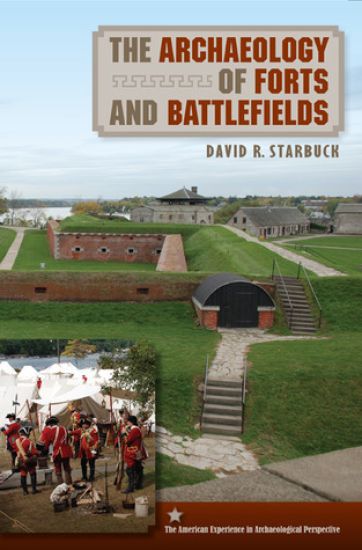
The Archaeology of Forts and Battlefields

The Archaeology of Forts and Battlefields

David R. Starbuck

University Press of Florida
2011
sidottu
Forts and battlefields embody activities and locations where nations have come into conflict and where victory or defeat has determined the shape of modern American society. This book discusses some of the most dynamic archaeological projects that have been conducted at many of the most exciting forts and battlefields throughout the United States. David Starbuck discusses the history of American military conflicts and the techniques used for locating and documenting forts and battlefields. He addresses how archaeologists use modern scientific techniques to discover the remains of forts, battlefields, and other types of military encampments, as well as some of the problems encountered when dealing with human remains found at military sites. Referencing both terrestrial and underwater examples, Starbuck uses case studies from major North American military conflicts to explain how forensic anthropology has helped greatly in assigning ""identity"" to some of the forgotten soldiers and how archaeology has helped to protect sites and improve the accuracy of the reconstruction of forts and battlefields. Having directed excavations at several major military sites, and having visited many of the sites detailed in his book, Starbuck is able to provide a personal perspective on what survives of these forts and battlefields today and what they tell us about our past.
I Fear I Shall Never Leave This Island

I Fear I Shall Never Leave This Island

David R. Bush

University Press of Florida
2011
sidottu
Johnson's Island, in Sandusky, Ohio, was not the largest Civil War prison in the North, but it was the only one to house Confederate officers almost exclusively. As a result, a distinctive prison culture developed, in part because of the educational background and access to money enjoyed by these prisoners. David Bush has spent more than two decades leading archaeological investigations at the prison site. In I Fear I Shall Never Leave This Island he pairs the expertise gained there with a deep reading of extant letters between one officer and his wife in Alexandria, Virginia, providing unique insights into the trials and tribulations of captivity as actually experienced by the men imprisoned at Johnson's Island. Together, these letters and the material culture unearthed at the site capture in compelling detail the physical challenges and emotional toll of prison life for POWs and their families. They also offer fascinating insights into the daily lives of the prisoners by revealing the very active manufacture of POW craft jewellery, especially rings. No other collection of Civil War letters offers such a rich context; no other archaeological investigation of Civil War prisons provides such a human story.
I Fear I Shall Never Leave This Island

I Fear I Shall Never Leave This Island

David R. Bush

University Press of Florida
2012
nidottu
Johnson's Island, in Sandusky, Ohio, was not the largest Civil War prison in the North, but it was the only one to house Confederate officers almost exclusively. As a result, a distinctive prison culture developed, in part because of the educational background and access to money enjoyed by these prisoners. David Bush has spent more than two decades leading archaeological investigations at the prison site. In I Fear I Shall Never Leave This Island he pairs the expertise gained there with a deep reading of extant letters between one officer and his wife in Alexandria, Virginia, providing unique insights into the trials and tribulations of captivity as actually experienced by the men imprisoned at Johnson's Island. Together, these letters and the material culture unearthed at the site capture in compelling detail the physical challenges and emotional toll of prison life for POWs and their families. They also offer fascinating insights into the daily lives of the prisoners by revealing the very active manufacture of POW craft jewellery, especially rings. No other collection of Civil War letters offers such a rich context; no other archaeological investigation of Civil War prisons provides such a human story.
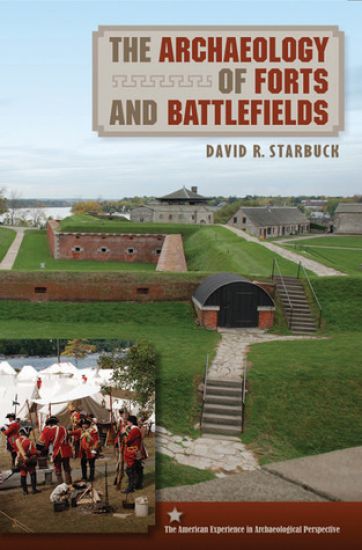
The Archaeology of Forts and Battlefields

The Archaeology of Forts and Battlefields

David R. Starbuck

University Press of Florida
2012
nidottu
Forts and battlefields embody activities and locations where nations have come into conflict and where victory or defeat has determined the shape of modern American society. This book discusses some of the most dynamic archaeological projects that have been conducted at many of the most exciting forts and battlefields throughout the United States. David Starbuck discusses the history of American military conflicts and the techniques used for locating and documenting forts and battlefields. He addresses how archaeologists use modern scientific techniques to discover the remains of forts, battlefields, and other types of military encampments, as well as some of the problems encountered when dealing with human remains found at military sites. Referencing both terrestrial and underwater examples, Starbuck uses case studies from major North American military conflicts to explain how forensic anthropology has helped greatly in assigning ""identity"" to some of the forgotten soldiers and how archaeology has helped to protect sites and improve the accuracy of the reconstruction of forts and battlefields. Having directed excavations at several major military sites, and having visited many of the sites detailed in his book, Starbuck is able to provide a personal perspective on what survives of these forts and battlefields today and what they tell us about our past.