Kirjojen hintavertailu. Mukana 12 016 292 kirjaa ja 12 kauppaa.

Kirjahaku

Etsi kirjoja tekijän nimen, kirjan nimen tai ISBN:n perusteella.

665 tulosta hakusanalla Dissected Lives

International Organizations as Self-Directed Actors
This exciting new text illustrates and advances the argument that International Organizations (IOs) need to be taken seriously as actors in world affairs. Bringing together an international line-up of distinguished contributors, the text examines recent theories that suggest how IOs are able to set their own policies and implement them in meaningful ways. The chapters review these theoretical positions and then present a series of case studies which focus on how these theories play out when IOs are charged with solving global problems: including development, peacekeeping and environmental policy coordination. Examining and analysing both positive and negative examples of this independence, this text is a valuable resource on the topic of the internal workings of IOs, providing the richest and most focused textbook so far dealing with the capacity of IOs for independent action in international politics. It is essential reading for all students of international organizations.
Gray's Clinical Photographic Dissector of the Human Body

Gray's Clinical Photographic Dissector of the Human Body

Marios Loukas; R. Shane Tubbs

Elsevier Health Sciences
2024
nidottu
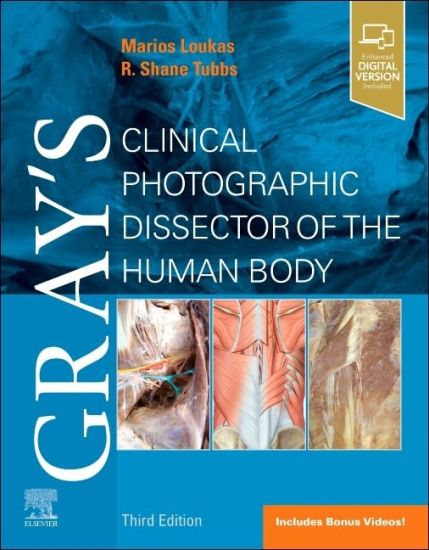
**Selected for 2025 Doody’s Core Titles® in Anatomy/Embryology** The perfect hands-on reference, Gray's Clinical Photographic Dissector of the Human Body, 3rd Edition, is a practical resource in the anatomy lab, on surgical rotations, during clerkship and residency and beyond! This fully revised third edition uses a unique, step-by-step presentation of full-color cadaveric photographs to orient you more quickly in the anatomy lab, and points out the clinical relevance of each structure and every dissection. Each photograph depicts clearly labeled anatomical structures, including muscles, bones, nerves, blood vessels, and organs-making this one-of-a-kind resource ideal for preparing for laboratory sessions and as a useful reference during dissections. Contains nearly 1,100 full-color photographs for comparison to the cadavers you study, helping you become more proficient and confident in your understanding of the intricacies of the human body Guides you through each dissection step-by-step, using a unique, real-world photographic presentation Includes complementary high-quality schematic drawings throughout to help orientate you and aid understanding Contains superb corresponding Gray’s illustrations to add clarity to key anatomical structures Helps you easily relate anatomical structures to clinical conditions and procedures Features new explanatory videos of human cadaveric dissection for each chapter Depicts the pertinent anatomy for more than 30 common clinical procedures such as prosthetic hip replacements, intravenous catheters, lumbar puncture, and knee joint aspiration, including where to make the relevant incisions Reflects the same level of accuracy and thoroughness that has made the Gray’s ‘family’ of products the most trusted learning resources in anatomy Prepared by an expert author team-highly experienced educators and leading authorities in clinical anatomy An eBook version is included with purchase. The eBook allows you to access all of the text and figures, with the ability to search, customize your content, make notes and highlights, and have content read aloud The Evolve Instructor site with downloadable images is available to instructors through their Elsevier sales rep or via request at https://evolve.elsevier.com
Stopping Times and Directed Processes

Stopping Times and Directed Processes

G. A. Edgar; Louis Sucheston

Cambridge University Press
2010
pokkari
The notion of 'stopping times' is a useful one in probability theory; it can be applied to both classical problems and fresh ones. This book presents this technique in the context of the directed set, stochastic processes indexed by directed sets, and many applications in probability, analysis and ergodic theory. Martingales and related processes are considered from several points of view. The book opens with a discussion of pointwise and stochastic convergence of processes, with concise proofs arising from the method of stochastic convergence. Later, the rewording of Vitali covering conditions in terms of stopping times clarifies connections with the theory of stochastic processes. Solutions are presented here for nearly all the open problems in the Krickeberg convergence theory for martingales and submartingales indexed by directed set. Another theme of the book is the unification of martingale and ergodic theorems.
Stopping Times and Directed Processes

Stopping Times and Directed Processes

G. A. Edgar; Louis Sucheston

Cambridge University Press
1992
sidottu
The notion of 'stopping times' is a useful one in probability theory; it can be applied to both classical problems and fresh ones. This book presents this technique in the context of the directed set, stochastic processes indexed by directed sets, and many applications in probability, analysis and ergodic theory. Martingales and related processes are considered from several points of view. The book opens with a discussion of pointwise and stochastic convergence of processes, with concise proofs arising from the method of stochastic convergence. Later, the rewording of Vitali covering conditions in terms of stopping times clarifies connections with the theory of stochastic processes. Solutions are presented here for nearly all the open problems in the Krickeberg convergence theory for martingales and submartingales indexed by directed set. Another theme of the book is the unification of martingale and ergodic theorems.
The Self-Directed Teacher

The Self-Directed Teacher

David Nunan; Clarice Lamb

Cambridge University Press
1996
pokkari
Advances in second language teaching methodology, including new emphases on learner-centeredness and individualised instruction, have significantly changed the roles teachers play in the classroom and made ever greater demands upon their classroom management skills. Nunan and Lamb help language teachers to meet these new demands by providing them with the practical knowledge and skills necessary for the effective management of teaching and learning in today’s classrooms. The central focus of the book is on the independent decisions teachers must make in key areas such as lesson planning, teacher talk, group work, error correction, resource management, and evaluation. The text uses a task-based approach, and the material presented is well supported by theory and research.
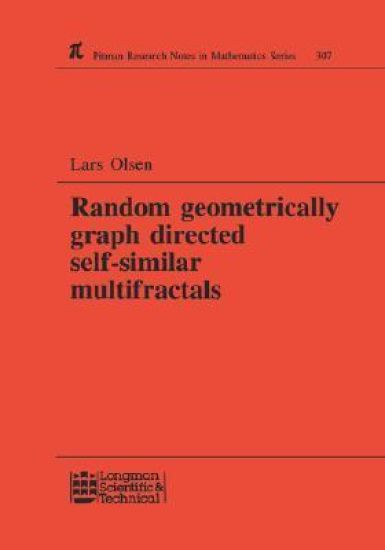
Random Geometrically Graph Directed Self-Similar Multifractals
Multifractal theory was introduced by theoretical physicists in 1986. Since then, multifractals have increasingly been studied by mathematicians. This new work presents the latest research on random results on random multifractals and the physical thermodynamical interpretation of these results. As the amount of work in this area increases, Lars Olsen presents a unifying approach to current multifractal theory. Featuring high quality, original research material, this important new book fills a gap in the current literature available, providing a rigorous mathematical treatment of multifractal measures.
How to Dissect

How to Dissect

William Berman

Touchstone Books
1985
nidottu
A beginner's guide to dissecting everything from an earthworm to a frog to a feral pig, perfect for a middle school classroom.This 214-page manual features over 821 step-by-step illustrations providing a perfect introduction to the art of dissection. Updated and easy to follow, these guided projects cover everything from simple earthworms to the complex fetal pig. Ages 12+.
The Self-Directed IRA Handbook, Second Edition: An Authoritative Guide for Self Directed Retirement Plan Investors and Their Advisors
The Self-Directed IRA Handbook is the most widely used book in the self-directed IRA industry. The first edition was released in 2013 and sold over 20,000 copies. The Second Edition added 80 new pages of content and three new chapters (solo 401(k), cryptocurrency, valuations) with over 50 new citations. The Handbook, now in its Second Edition, clearly explains the prohibited transaction rules, investment structures, common self-directed IRA investment assets (real estate, private company, IRA/LLCs, private equity, hedge funds, crowdfunding, crytpocurrency, precious metals), and IRA tax pitfalls (UBIT & UDFI tax). The Handbook also includes extensive FAQs after each chapter, and nearly 150 citations to cases, statutes, rulings, and opinions from the IRS and DOL.
Assessment Strategies for Self-Directed Learning

Assessment Strategies for Self-Directed Learning

Costa Arthur L.; Kallick Bena

Corwin Press Inc
2004
nidottu
A new volume for the Experts In Assessment series focusing on assessing students' abilities as self-directed learners. Self-directed learners are defined as self-managing, self-monitoring, and self-modifying. These three dispositions need to be assessed to determine if they are being internalized and habituated over time. Arthur L Costa and Bena Kallick use "triangulation" to ensure that the assessment system is balanced and complete. Assessment "triangulation" consists of knowledge, performance, and demonstration. This book promises to gain a lot of interest and attention merely by the fact that it is authored by the Habits of Mind experts.
The Self-Directed Learning Handbook

The Self-Directed Learning Handbook

Maurice Gibbons

Jossey-Bass Inc.,U.S.
2002
nidottu
The Self-Directed Learning Handbook offers teachers and principals an innovative program for customizing schooling to the learning needs of individual students— and for motivating them to take increasing responsibility for deciding what and how they should learn. Whether the students are struggling or proficient, the program is designed to nurture their natural passion for learning and mastery, challenging them to go beyond the easy and familiar so they can truly excel. The program can be introduced in stages in any middle or high school classroom and enables students of diverse abilities to design and pursue independent course work, special projects, or even artistic presentations, community field work or apprenticeships. Using this approach, the students take on an increasingly autonomous, self-directed role as they progress. The heart of the program is the action contract (or learning agreement) whereby the student sets challenging yet attainable goals, commits to a path for achieving them, and evaluates the results. Special emphasis is placed on developing skills and competencies that can serve the student well in his or her academic and career endeavors.
The Learner-Directed Classroom

The Learner-Directed Classroom

Teachers' College Press
2012
nidottu
Educators at all levels want their students to develop habits of self-directed learning and critical problem-solving skills that encourage ownership and growth. In The Learner-Directed Classroom, practicing art educators (PreK–16) offer both a comprehensive framework for understanding student-directed learning and concrete pedagogical strategies to implement student-direct learning activities in school. In addition, research-based assessment strategies provide educators with evidence of student mastery and achievement. Teachers who structure self-directed learning activities can facilitate effective differentiation as students engage in the curriculum at their level. This book provides evidence-based, practical examples of how to transform the classroom into a creative and highly focused learning environment. Contributors: Catherine Adelman, Marvin Bartel, Katherine Douglas, Ellyn Gaspardi, Clyde Gaw, Lois Hetland, Pauline Joseph, Tannis Longmore, Linda Papanicolaou, Cameron Sesto, George Szekely, Ilona Szekely, Dale Zalmstra
Weighted Shifts on Directed Trees

Weighted Shifts on Directed Trees

Zenon Jan Jablonski; Il Bong Jung; Jan Stochel

American Mathematical Society
2011
nidottu
A new class of (not necessarily bounded) operators related to (mainly infinite) directed trees is introduced and investigated. Operators in question are to be considered as a generalization of classical weighted shifts, on the one hand, and of weighted adjacency operators, on the other; they are called weighted shifts on directed trees. The basic properties of such operators, including closedness, adjoints, polar decomposition and moduli are studied. Circularity and the Fredholmness of weighted shifts on directed trees are discussed. The relationships between domains of a weighted shift on a directed tree and its adjoint are described. Hyponormality, cohyponormality, subnormality and complete hyperexpansivity of such operators are entirely characterized in terms of their weights. Related questions that arose during the study of the topic are solved as well.
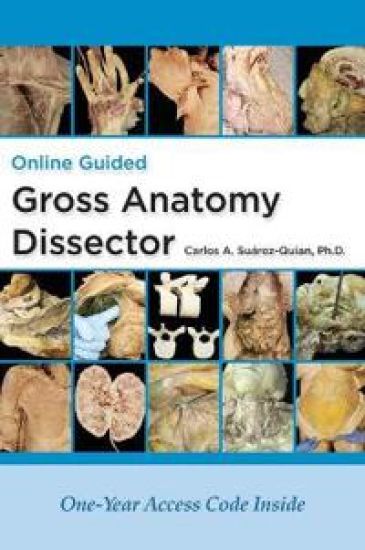
Gross Anatomy Dissector

Gross Anatomy Dissector

Carlos A. Suarez-Quian

Oxford University Press Inc
2011
muu
Free Previews: Introduction to the Dissector www.onlinedissector.com/instructions.html | Module 2: Thorax Section 4. Dissection of the Coronary Arteries and Heart Chambers | Within this preview there are identification and instruction slides as well as a dissection video: Removal of the Heart from the Mediastinum | Here are the interactive flashcards that accompany this section. Save Time Without Compromising Learning Quality: The study of gross anatomy presents unique challenges: students confront a daunting volume of new and complex information within time constraints for proving their mastery, and faculty are charged with delivering high-quality courses in decreased curricular hours. Where can they turn for help? The Online Guided Gross Anatomy Dissector is an innovative learning tool that addresses the needs of both students and faculty, with proven success. The Suarez Dissector makes possible the teaching of all anatomy, head-to-toe, in a rigorous yet approachable manner. Several features make it a favorite among students and faculty alike: - Over 2,000 original photographs of cadavers (superficial to deep) present a visual in-lab dissection guide, eliminating the need for reading lengthy 'how to dissect' descriptions and maximizing dissecting efficiency. - 41 dissection videos enable students to envision the dissection ahead of time, making them better prepared for the laboratory. - 327 interactive, multi-labeled flash cards are included-at no additional charge-for the students to test and reinforce their knowledge of the material. - Its streamlined, modular nature allows faculty to assign the Suarez Dissector as the exclusive laboratory tutorial, or to pick and choose individual sections for self-directed learning of gross anatomy. - Its portability makes it ideal for reviewing anatomy from home, from the library, from the cafe-anywhere accessible to the Internet. The anatomy is presented as a first-year student encounters it, dissects it, and is assessed on it. Concise, interactive dissection instructions promote student initiative to dissect, resulting in more efficient use of time in the laboratories. Assessment: After three years of class testing at Georgetown University School of Medicine-both with medical students who have access to cadaveric dissections and with Special Master's students who do not-the results are clear: the Suarez Dissector yields comparable exam scores for both groups. Contact Dr. Suarez-Quian at [email protected] for the assessment data after students used the Online Guided Gross Anatomy Dissector. Interactive, multi-labeled Flash Cards increase retention: Included, at no additional charge, are 300 interactive, multi-labeled flash cards. Using images from the Dissector, Dr. Suarez-Quian has created interactive identification exercises that review the location of important nerves, organs, vessels, muscles, bones, and tissues. Without additional expense, students can prep for course and exams. The exercises are located at the end of each module so students can easily navigate between quizzing themselves and referring back to the original material. Product Format Details: This product comes as a card containing an access code that activates a 365-day subscription to the Online Guided Gross Anatomy Dissector by registering the code at www.onlinedissector. com/register.html Full Demo Access: If you teach anatomy and would like to preview the full product to consider it for recommendation to your students, please email [email protected] for a 1-month trial access code. Included in the email should be your name, the name of the module, the start date of the module and the student numbers. Instructor's Resource Library: Available to adopters of the Suarez Dissector, the Instructor's Resource Library includes PowerPoint(R) versions of all the content available on the website. A PowerPoint(R) presentation is provided for each section of every module, including all text, photographs, and labels. All text is editable within PowerPoint, including the labels and leaders on the photographs, which can be modified and easily removed. The IRL also includes all of the dissection video segments from the website, ready for use in lecture. In addition, the IRL includes a thorough syllabus document for each module. The syllabus includes the following: - Learning objectives for all modules and sections - Thorough lists of structures to be identified, by section - Dissection notes for each module - Sample review questions for each module (multiple choice questions with photos of anatomical structures) A preview sample of the lecturer resources is available to view at www.onlinedissector.com/sample/
Principles for a Self-Directed Society

Principles for a Self-Directed Society

Jesse S Smith

Basement Productions, Inc.
2020
pokkari
Principles for a Self-Directed Society sets forth four basic goals, which seem modest in their simplicity: 1. to live in peace2. to restore the natural environment3. health and prosperity4. basic rights: freedom, privacy and equalityThese goals are not radical or extreme. They are long-term goals, not easily attained; but they are goals which most reasonable people want for themselves and for their descendents.This work is predicated on the principle that people working together can improve the world by consciously creating positive social change.