

Kirjahaku
Etsi kirjoja tekijän nimen, kirjan nimen tai ISBN:n perusteella.
1000 tulosta hakusanalla Edith Piaf
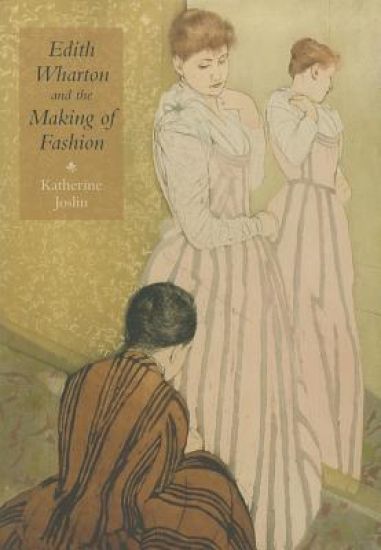
Edith Wharton and the Making of Fashion
Katherine Joslin
University of New Hampshire Press
2011
nidottu
Edith Wharton and the Making of Fashion places the iconic New York figure and her writing in the context of fashion history and shows how dress lies at the very center of her thinking about art and culture. The study traces American patronage of the Paris couture houses from Worth and Doucet through Poiret and Chanel and places Wharton's characters in these establishments and garments to offer fresh readings of her well-known novels. Less known are Wharton's knowledge of and involvement in the craft of garment making in her tales of seamstresses, milliners, and textile workers, as well as in her creation of workshops in Paris during the First World War to employ Belgian and French seamstresses and promote the value of handmade garments in a world given to machine-driven uniformity of design and labor. Pointing the way toward further research and inquiry, Katherine Joslin has produced a truly interdisciplinary work that combines the best of literary criticism with an infectious love and appreciation of material culture.

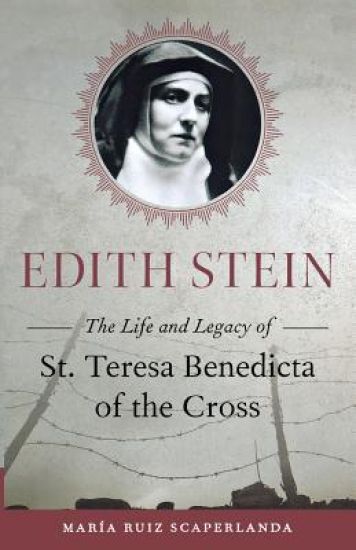
Edith Stein: The Life and Legacy of St. Teresa Benedicta of the Cross
Maria Ruiz Scaperlanda
Sophia Institute Press
2017
nidottu
In the wake of World War I when neither Jews nor women were widely accepted in academia, Edith Stein rose to prominence as a leading philosopher who thrived in the intellectual community in Germany. She shocked both her Jewish family and her academic friends when she fell in love with Jesus Christ and became a Roman CatholicMore shocking still, eleven years later, Edith entered the cloistered Carmelite order to follow a life of mystic and contemplative prayer, changing her name to Teresa Benedicta of the Cross. Edith Stein's surrender to grace is all the more visible because of the dark night that enveloped the period of history in which she lived and died -- when millions of men and women, including Edith Stein herself, were systematically murdered by the Nazi regime in the name of diligent ethnic cleansing.Today, as the meaning of feminism is lost in a world of relativism, Edith Stein provides a model for a true feminist woman who authentically integrates faith, family, and work. Award-winning journalist Maria Ruiz Scaperlanda brings new light to this complex woman, her culture, and the pivotal period of history in which she lived and died.More than a biography, these pages paint a multifaceted portrait of Edith Stein as seen by scholars, friends, and relatives - and by Catholics and Jews alike. You'll gain new insights into the complex aspects of her life and death, as well as the impact of her character and personality on those who knew her. But most of all, you will enter into the interior life of this woman of Jewish descent who transformed her entire life because of her encounter with Jesus Christ, an encounter that led her from the depths of atheism to the heights of sainthood.
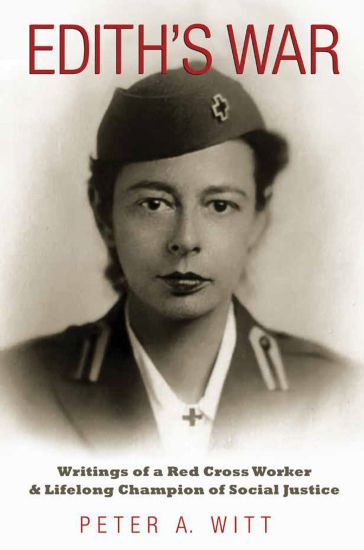
Edith May Witt served her country by joining the Red Cross in World War II as a staff assistant (or “club woman”) in Oran, Algeria, and worked throughout the Mediterranean theater, including several assignments in Italy. Edith Witt was also a talented writer and left behind a rich archive that illuminates the wartime experiences of civilian women. In her words: “The Clubs had Red Cross girls soldiers could talk to. We worked long hard hours with sometimes a day off a week. I was always tired, high on excitement, adventure, joy and sorrow, and thousands of people, mostly men. I got to know more about my country and about Americans than I had ever known before and I loved them dearly.”After her death, Peter A. Witt, Edith’s nephew, painstakingly sifted through countless papers and letters to provide a nuanced and annotated portrait of the war through one woman’s extraordinarily perceptive eyes. And yet he found that Edith’s devotion to service did not end with the war. From marching to Selma with Martin Luther King Jr. in 1965 to building community organizations in San Francisco in the 1970s to push for decent and affordable living, Edith Witt remained a tireless advocate for social justice.Edith’s War is a welcome contribution to the social history of World War II and an inspiring tale of one woman’s life of advocacy and service that encourages readers to embrace thoughtful action in their own lives. Scholars and general readers alike will find Edith’s War an engaging and enjoyable read.
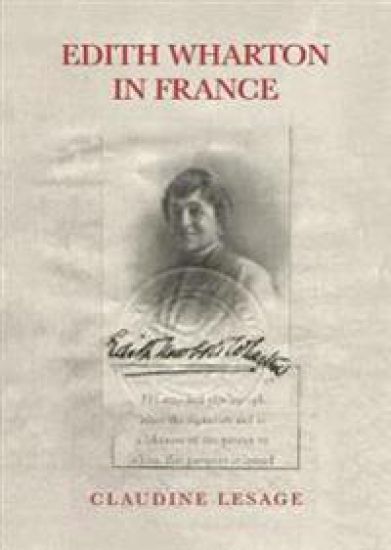
From French scholar and author Claudine Lesage, comes Edith Wharton in France, an examination of Wharton’s years (1907-1937) in France. Lesage, with her innate knowledge of French culture, uses previously unknown or untranslated sources to provide a unique look into French society and Wharton’s place within it. Edith Wharton in France chronicles Edith Wharton’s dogged efforts to penetrate the Byzantine levels of French high society, her love for the French and Italian countryside, and her consuming passion for the Mediterranean garden. While Lesage is initially skeptical of Wharton’s ability to “become French,” this work ultimately portrays a woman of indomitable spirit who ultimately succeeds in fashioning a French home of her own making in her beloved adopted country. Lesage’s work illuminates the intertwined characters and important relationships of Wharton’s life in France, many of them overlooked or minimized in earlier biographies. Prominently featured in the account are the French novelist Paul Bourget and his wife Minnie, whose meticulous diary entries over a 35-year period provide a fresh look at Wharton’s active social life both in Paris and on the French Riviera. A still more intimate look into Wharton’s French circle is provided by her extensive correspondence with the Frenchman Léon Bélugou, a widely travelled mining engineer, writer and well-known figure in Parisian high society. Spanning more than 25 years, the letters portray a mutual intellectual kinship and devoted friendship. Other newly discovered highlights include letters presented as evidence in Wharton’s French divorce proceedings, a mysterious autobiographical essay written by Wharton’s lover, American journalist Morton Fullerton, and numerous photographs never before published. The author of multiple works of translation, as well original French texts on Wharton and Conrad, Lesage had access to unexamined and untranslated French sources. She presents Wharton’s life from the perspective of a native French woman, capturing a unique view of Wharton trying to navigate through the ancient layers of French society and master its often maddeningly obscure rules, all the while commenting on the horrors of World War I and the cataclysmic changes in the arts and culture of Paris.
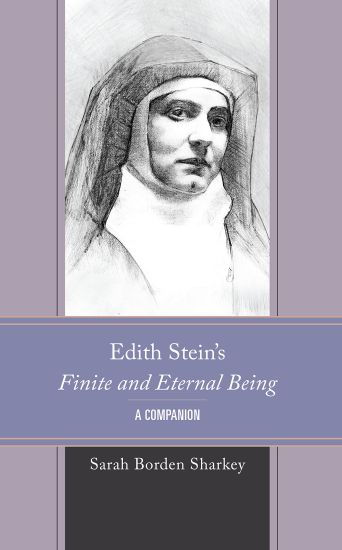
There are few topics more central to philosophical discussions than the meaning of being, and few thinkers offering a more compelling and original vision of that meaning than Edith Stein (1891–1942). Stein’s magnum opus, drawing from her decades working with the early phenomenologists and intense years as a student and translator of medieval texts, lays out a grand vision, bringing together phenomenological and Scholastic insights into an integrated whole. The sheer scope of Stein’s project in Finite and Eternal Being is daunting, and the text can be challenging to navigate. In this book, Sarah Borden Sharkey provides a guide to Stein’s great final philosophical work and intellectual vision. The opening essays give an overview of Stein’s method and argument and place Finite and Eternal Being both within its historical context and in relation to contemporary discussions. The author also provides clear, detailed summaries of each section of Stein’s opus, drawing from the latest scholarship on Stein’s manuscript. Edith Stein’s Finite and Eternal Being: A Companion offers a unique guide, opening up Stein’s grand cathedral-like vision of the meaning of being as the unfolding of meaning.
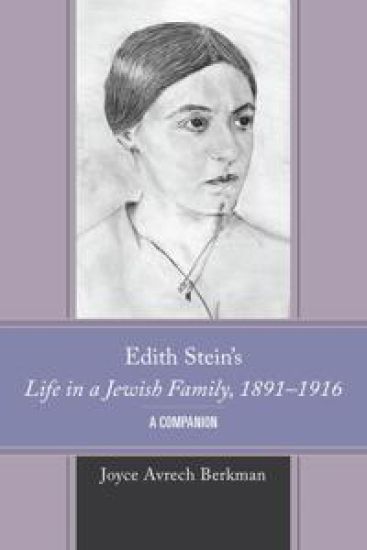
Edith Stein's Life in a Jewish Family, 1891–1916
Joyce Avrech Berkman
BLOOMSBURY PUBLISHING PLC
2023
sidottu
Edith Stein’s Life in a Jewish Family, 1891–1916 is a treasure trove for the study of Stein’s youth and early adulthood, her approach to writing autobiographically, and her intricate relationship with historical influences of her time and place. Through intellectual mining Stein’s narrative and conducting a comprehensive historical analysis of Stein’s achievement as a distinct type of autobiography, Joyce Avrech Berkman argues that a key axis of Stein’s consciousness, values, philosophical ideas, and life choices is a deep, tense, unresolved, philosophical, and spiritual struggle to both uphold traditional societal and cultural values and practices and also critiquing them to pioneer new patterns of thought. Berkman further probes the sharply controversial nature of Stein’s autobiography for her family members and Stein scholars in the decades after her death. Edith Stein’s Life in a Jewish Family, 1891–1916: A Companion serves as an important guide to scholars in autobiographical studies, history, philosophy, and theology, as well as to a broader readership interested in Stein’s life for religious and cultural reasons.
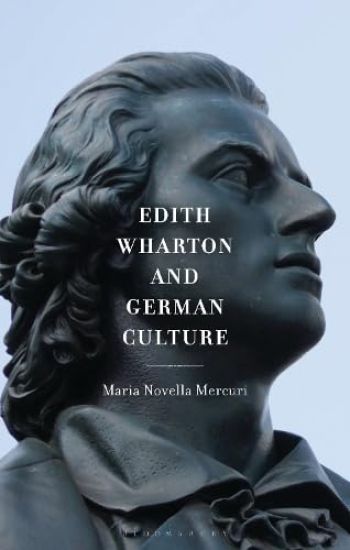
Given Wharton’s broad education in European languages and cultures, the absence of a full-length study of the influence of German thinking and aesthetics on her creative work has long been a considerable gap in the field of Wharton studies. Maria-Novella Mercuri offers a close analysis of Wharton's engagement with German literature and philosophy. Each chapter centers on one main novel or theme recurring in a group of works including poetry, plays and short fiction, as well as posthumously published autobiographical work. Wharton’s body of work is analyzed in relation to German authors such as Wolfgang Goethe, Friedrich Schiller, Johann Gottfried Herder, Friedrich de La Motte Fouqué, Theodor Fontane, Clara Viebig, Thomas Mann, Heinrich Sudermann, and Gottfried Keller. Mercuri also draws attention to the impact of Arthur Schopenhauer and Friedrich Nietzsche's philosophy as the pervasive influence of Goethe’s thought on history, ethics and aesthetics.
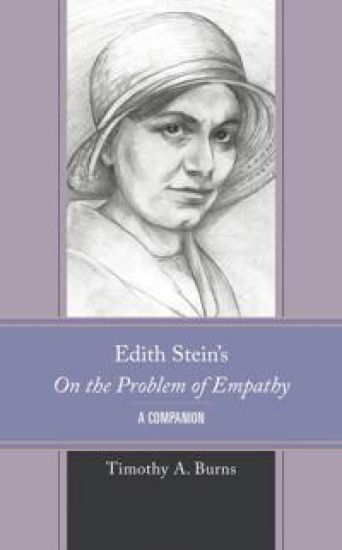
Empathy (Einfühlung)—as a crucial concept for understanding ourselves, others, and communities—was a central topic of interest in the first half of the twentieth century amongst philosophers and in the emerging sciences of psychology and sociology. Edith Stein’s dissertation and inaugural publication, On the Problem of Empathy, introduces her unique take on empathy, embodiment, phenomenology, and intersubjectivity. Her immersion in phenomenology and her intimate familiarity with the psychology and sociology of her day make it a challenge for contemporary readers to understand. This companion provides a guide to Stein’s first philosophical masterpiece. The opening essays, including a contribution from Íngrid Vendrell Ferran, indicate the most important influences on Stein’s thought circa 1917, the structure and method of her argument, the place of this work in her oeuvre, its historical significance, and its relevance for contemporary philosophical discussions. Timothy Burns then provides a clear and detailed summary of each section of Empathy, elucidating the argument that weaves through this classic of philosophical thought.
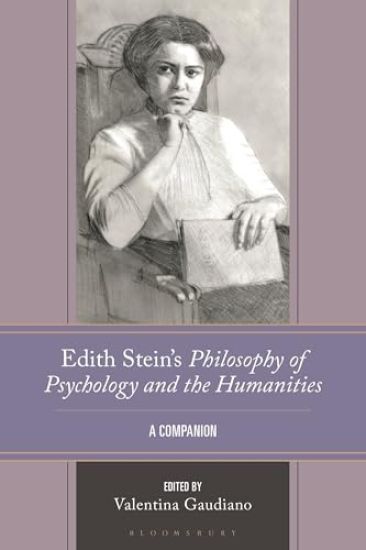
Edith Stein's Contributions to the Philosophical Foundation of Psychology and the Humanities: A Companion
Valentina Gaudiano
BLOOMSBURY ACADEMIC
2025
sidottu
Edith Stein's Philosophy of Psychology and the Humanities is a pioneering exploration of the intersection between psychology, philosophy, and human sciences. Written in the aftermath of World War I, the book delves into the interplay between individual and collective experience, examining how empathy, motivation, and causality shape our understanding of human behaviour. Through a meticulous phenomenological approach, Stein analyses prevailing psychological theories and highlights the necessity of integrating the spiritual and material dimensions of human existence. She offers a unique framework for understanding the human person not only as an individual but also as a participant in communal and societal structures. This work challenges disciplinary boundaries and anticipates debates on interdisciplinary research, making it a timeless contribution to philosophy, psychology, and social thought. Stein's analysis resonates today as a call for a holistic approach to the complexities of human experience.
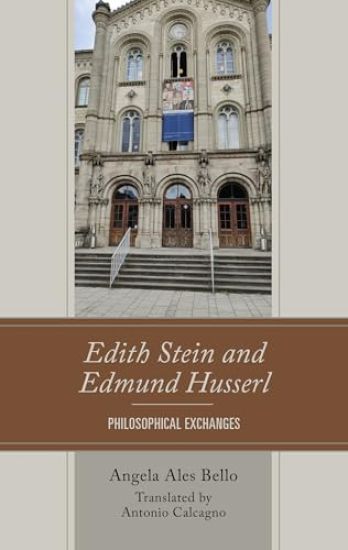
This book offers a reconsideration and re-evaluation of the philosophical exchange between Edmund Husserl and Edith Stein by addressing their unique and differing positions in light of the thinkers’ shared phenomenological roots. Angela Ales Bello highlights the depth and breadth of the philosophers’ thinking on questions related to intersubjectivity, ethics, religion, ontology, gender, anthropology, method, personhood, and psychology.

Edith Stein and Max Scheler in Dialogue
BLOOMSBURY ACADEMIC
2025
sidottu
Edith Stein (1891-1942) and Max Scheler (1874-1928) have enough shared intellectual debts and interests that their respective oeuvres demand to be placed in conversation. Both were early practitioners of the phenomenological method, drew from and reflected on theological resources in their philosophical explorations, and maintained a lifelong interest in the human person. This volume, the first of its kind, brings together philosophers and theologians to explore the convergences and divergences in their thought. It examines key themes such as the human person, spirit (Geist), education (Bildung), and social ontology, demonstrating their historical importance and contemporary relevance. The authors argue that reading these philosophers together is essential for understanding their historical significance and for illuminating contemporary concerns both within and beyond academia. The volume also features the first English translation of Edith Stein's seminal essay, "The Meaning of Phenomenology as Worldview."

Now collected in a giftable boxed set, two companion works by Holocaust survivor and eminent psychologist Edith Eger--her New York Times bestselling memoir The Choice, and her inspirational guide The Gift. "I'll be forever changed by Edith Eger's story." --Oprah Winfrey Edith Eger's classic nonfiction works, wonderful gifts on their own, are now available in a collectible set. Her profound messages help us analyze our own thoughts and behaviors, move on from past hardships, and find joy in everyday life. Read in tandem, these works will inspire and guide readers toward a richer, more fulfilling life of love, understanding, and forgiveness. In the New York Times bestselling The Choice, Eger tells the story of her training as a ballerina and Olympic gymnast before being sent to Auschwitz at the age of sixteen. After decades struggling with flashbacks and survivor's guilt, determined to stay silent and hide from the past, she returned to Auschwitz thirty-five years after the war ended, and began at last to truly heal. She finally understood how to forgive the one person she'd been unable to forgive--herself. Edie interweaves her remarkable personal journey with the moving stories of patients she has helped. She explores how we can be imprisoned in our own minds and how to find the key to freedom. The Choice is a life-changing book that has already provided hope and comfort to hundreds of thousands of readers. In The Gift, Eger explains why the most persistent imprisonment she experienced was not in the prison the Nazis put her in, but the one she created for herself--the prison within her own mind. The Gift, a prescriptive complement to The Choice, helps readers see a path forward in their own lives, and explains how to attain the peace Eger eventually found for herself. Accompanied by stories from her own life and the lives of her patients, Eger's empowering lessons help readers see how their darkest moments can be their greatest teachers. We all face suffering--sadness, loss, despair, fear, anxiety, failure. And we all have a choice: to give in and give up in the face of trauma and hardship, or to live every moment as a gift. The new edition of The Gift includes two new chapters on dealing with the emotional consequences of Covid, and how to bring the joy of food and family into your life. This chapter, jointly written with her daughter, Dr. Marianne Engle, is accompanied by seventeen of their favorite recipes.

Easy, mouthwatering comfort food and mostly Mexican-American recipes from one of social media’s biggest stars.Step into the heart of Edith Galvez’s home—her kitchen, where simplicity meets flavor. For the first time, Edith shares her most cherished recipes in her debut cookbook, In Edith’s Kitchen. Perfect for families on the go, this cookbook features quick and satisfying weeknight staples like Chicken with Alfredo Pasta. You’ll also find lazy weekend dinners such as Mississippi Pot Roast, comforting classics including Huevos Rancheros and Enchiladas Rojas, and of course decadent desserts like Lemon Blueberry Loaf Cake and Mexican Tiramisu. Packed with a variety of nourishing recipes and sprinkled with the love and care that made Edith a social media favorite, this cookbook is your invitation to flavorful, heartfelt cooking without intimidation. Growing up, Edith spent summers on her family’s ranch in Mexico, savoring the vibrant street foods sold by esquites and paletas vendors and learning treasured recipes and techniques from her abuela and mother. As she built her own family, she had to balance their busy lives while still enjoying delicious meals. What began as a personal outlet for her shyness and anxiety became a career when Edith’s ASMR-style cooking videos skyrocketed her to fame. Her quiet approach resonated with the Latino community, breaking language barriers and inviting fans into her world. Viral hits like pasta carbonara and chile rellenos quickly established her as a go-to source for Mexican-American cooking, beloved by new and seasoned cooks alike. In Edith’s Kitchen has delicious dishes for every meal of the day and is a perfect addition to any home cook’s collection.
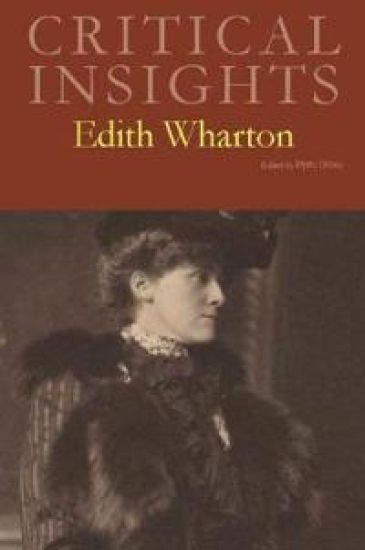
Edith Wharton
H.W. Wilson Publishing Co.
2018
sidottu
A great starting point for students seeking an introduction to Edith Wharton and the critical discussions surrounding her work. This volume will examine a wide range of Wharton’s works, from her major novels The House of Mirth, The Custom of the Country, and The Age of Innocence to her war writings, Gothic fiction, and late works, such as The Children and The Glimpses of the Moon. It will address the relationship between Wharton and other writers, including Willa Cather, Henry James, and Charlotte Brontë, and will offer fresh perspectives on Wharton’s views on gender, motherhood, law, architecture, and the classical tradition. Each essay is 2,500 to 5,000 words in length, and all essays conclude with a list of ""Works Cited,"" along with endnotes. Finally, the volume's appendixes offer a section of useful reference resources:A chronology of the author's lifeA complete list of the author's works and their original dates of publicationA general bibliographyA detailed paragraph on the volume's editorNotes on the individual chapter authorsA subject index
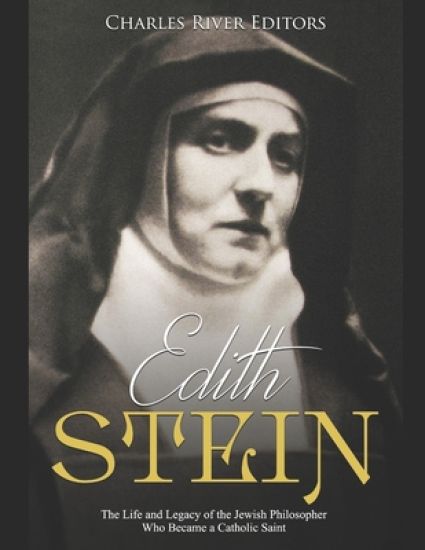
Edith Stein: The Life and Legacy of the Jewish Philosopher Who Became a Catholic Saint
Charles River
Independently Published
2019
nidottu