Kirjojen hintavertailu. Mukana 12 016 292 kirjaa ja 12 kauppaa.

Kirjahaku

Etsi kirjoja tekijän nimen, kirjan nimen tai ISBN:n perusteella.

1000 tulosta hakusanalla Edmundo LLAMAS ALBA

Edmund Spenser

Edmund Spenser

Hadfield Andrew

Longman
1996
nidottu
This collection represents some of the best recent critical writing on Edmund Spenser, a major Renaissance English poet. The essays cover the whole of Spensers work, from early literary experiments such as The Shepeardes Calendar, to his unfinished crowning work,The Fairie Queene. The introduction provides an overview of critical responses to Spenser, setting his work and the debates which it has generated in their perspective contexts: new historicist, post-structural, psychoanalytic and feminist. His study also covers the critical responses of leading British, Irish and American scholars.
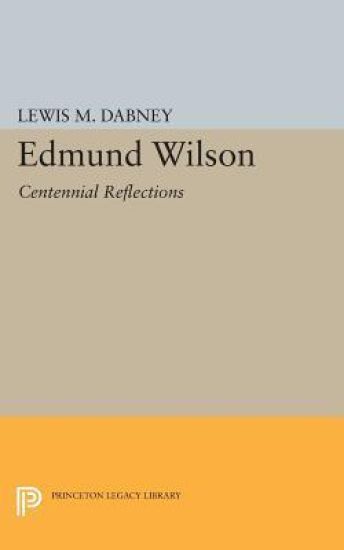
Edmund Wilson

Edmund Wilson

Princeton University Press
2014
pokkari
Edmund Wilson helped shape American letters from the early 1920's through the mid-'60s. He remains a presence in our literary culture, and his accounts of art and society have influenced a younger generation of readers and thinkers. This vibrant collection emerges from symposiums held at the Mercantile Library and at Princeton University in 1995, Wilson's centennial year. At these occasions, prominent critics, literary journalists, and historians aired a variety of points of view about his work and personality. Assembled and edited by Lewis Dabney, this book shows new intellectual voices interacting with veterans who knew Wilson and his times. In the first part, Morris Dickstein, Jason Epstein, Barbara Epstein, David Bromwich, Jed Perl, and Mark Krupnick comment on Wilson's development as a critic, his faith in reason and his personal romanticism, his version of modernism and eclectic interest in the arts, as well as the sources of his later writing about Judaism. In the second section, a reading of the journals from The Twenties to The Sixties by Neale Reinitz and a chapter from Dabney's biography-in-progress lead to the reminiscences of Elizabeth Hardwick, Jason Epstein, Mary Meigs, Roger Straus, and Alfred Kazin, as well as Michael C. D. Macdonald, the son of family friends, and the Dead Sea Scrolls scholar James Sanders giving an authentic sense of Wilson's place in the literary life. Two of his important works, the study of the Marxist intellectual tradition in To the Finland Station and of Civil War literature in Patriotic Gore, anchor the discussion in the third part. Here David Remnick and Daniel Aaron debate his radical commitment, joined by Arthur Schlesinger and others in a vigorous exchange, and Randall Kennedy's attack on Wilson's neglect of nineteenth-century black writers provokes a response from Toni Morrison. Instructive essays by Andrew Delbanco and Louis Menand, and discerning comments by Paul Berman and Sean Wilentz round out the volume. Originally published in 1997. The Princeton Legacy Library uses the latest print-on-demand technology to again make available previously out-of-print books from the distinguished backlist of Princeton University Press. These editions preserve the original texts of these important books while presenting them in durable paperback and hardcover editions. The goal of the Princeton Legacy Library is to vastly increase access to the rich scholarly heritage found in the thousands of books published by Princeton University Press since its founding in 1905.
Edmund Wilson

Edmund Wilson

Princeton University Press
2016
sidottu
Edmund Wilson helped shape American letters from the early 1920's through the mid-'60s. He remains a presence in our literary culture, and his accounts of art and society have influenced a younger generation of readers and thinkers. This vibrant collection emerges from symposiums held at the Mercantile Library and at Princeton University in 1995, Wilson's centennial year. At these occasions, prominent critics, literary journalists, and historians aired a variety of points of view about his work and personality. Assembled and edited by Lewis Dabney, this book shows new intellectual voices interacting with veterans who knew Wilson and his times. In the first part, Morris Dickstein, Jason Epstein, Barbara Epstein, David Bromwich, Jed Perl, and Mark Krupnick comment on Wilson's development as a critic, his faith in reason and his personal romanticism, his version of modernism and eclectic interest in the arts, as well as the sources of his later writing about Judaism. In the second section, a reading of the journals from The Twenties to The Sixties by Neale Reinitz and a chapter from Dabney's biography-in-progress lead to the reminiscences of Elizabeth Hardwick, Jason Epstein, Mary Meigs, Roger Straus, and Alfred Kazin, as well as Michael C. D. Macdonald, the son of family friends, and the Dead Sea Scrolls scholar James Sanders giving an authentic sense of Wilson's place in the literary life. Two of his important works, the study of the Marxist intellectual tradition in To the Finland Station and of Civil War literature in Patriotic Gore, anchor the discussion in the third part. Here David Remnick and Daniel Aaron debate his radical commitment, joined by Arthur Schlesinger and others in a vigorous exchange, and Randall Kennedy's attack on Wilson's neglect of nineteenth-century black writers provokes a response from Toni Morrison. Instructive essays by Andrew Delbanco and Louis Menand, and discerning comments by Paul Berman and Sean Wilentz round out the volume. Originally published in 1997. The Princeton Legacy Library uses the latest print-on-demand technology to again make available previously out-of-print books from the distinguished backlist of Princeton University Press. These editions preserve the original texts of these important books while presenting them in durable paperback and hardcover editions. The goal of the Princeton Legacy Library is to vastly increase access to the rich scholarly heritage found in the thousands of books published by Princeton University Press since its founding in 1905.
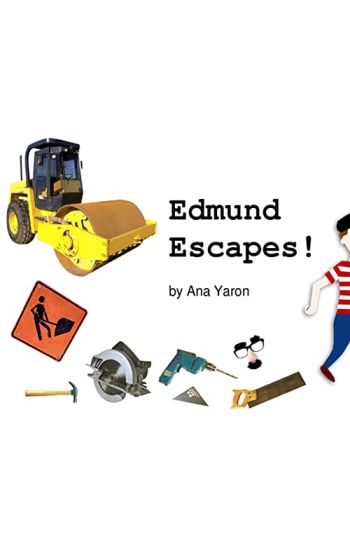
Edmund Escapes!

Edmund Escapes!

Ana Yaron

Ana Yaron
2017
sidottu
Edmund is tired of the same old story, and is planning an escape. From disquises to fleeing to hiding to digging, join clever Edmund on his adventures of trying to escape from his own book
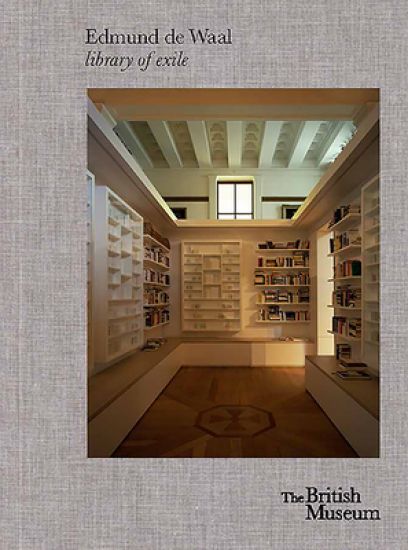
Edmund de Waal

Edmund de Waal

Edmund de Waal; Elif Shafak; Hartwig Fischer

British Museum Press
2020
sidottu
Published to mark the display of library of exile at the British Museum, this beautifully produced new book reflects on the themes raised by de Waal’s thought-provoking work of art. The introduction from Hartwig Fischer, Director of the British Museum, positions the artwork within the wider context of the Museum’s collection, highlighting the dialogue between objects from across time and throughout history and the contemporary. Finally, de Waal concentrates on the work itself, its journey to the British Museum via Venice and Dresden, and its future role in the foundation of the New University Library in Mosul. The library contains 2,000 books written by authors in exile in numerous languages from antiquity to the present day. The exterior walls, washed with porcelain over sheets of gold are inscribed with the names of libraries from history – from Nineveh and Alexandria to those lost more recently including Timbuktu, Aleppo and Mosul. Displayed inside the structure are four vitrines of porcelain vessels inspired by Daniel Bomberg’s Renaissance printing of the Jewish scripture, the Talmud. Visitors are invited to contemplate and respond to the books by writing notes on the ex libris bookplate inserted into each edition. First shown as part of the Venice Biennale in 2019, the library travelled to Dresden before its installation at the British Museum in London in 2020. From here the library will form part of the New University Library in Mosul.
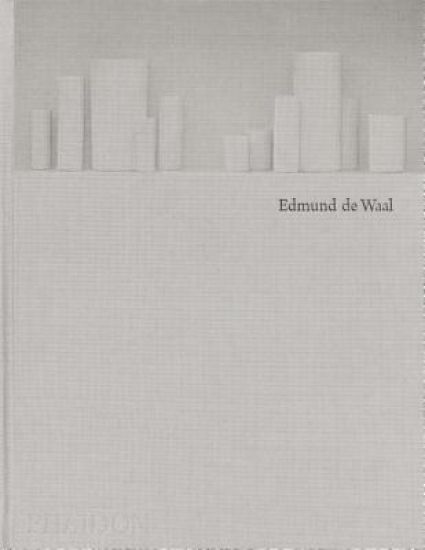
Edmund de Waal

Edmund de Waal

Edmund de Waal; Crichton-Miller Emma

Phaidon Press Ltd
2014
sidottu
The first monograph on this internationally famous potter and writer, this book brings to life the man behind The Hare with Amber Eyes. Stunning photography reveals a day in the life of de Waal and his studio and documents his major exhibitions and installations. Contributors include novelists Colm Toibín, Peter Carey and AS Byatt.
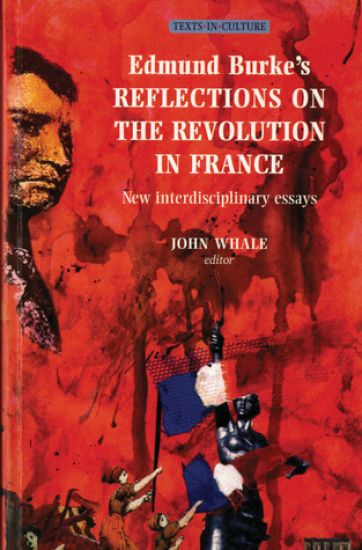
Edmund Burke's Reflections on the Revolution in France
First published in 1790 Edmund Burke's Reflections on the Revolution in France initiated a debate not only about the nature of the unprecedented historical events taking place across the channel, but about the very identity of the British state and its people. It has subsequently been appropriated by a variety of conservative and liberal thinkers and has played a major role in our understanding of the relationship between rhetoric, aesthetics and politics.In this volume, leading Burke scholars offer new and challenging essays which allow us to reconsider the historical context in which Reflections on the Revolution in France was written. The essays consider its reception, its engagements in the discourses of nationalism and toleration, its legacy to English and Irish writers of the Romantic period and its impact within our contemporary cultural and critical theory. The volume demonstrates a range of interdisciplinary critical methods and cultural perspectives from which to read Burke's most famous work.This volume will be the ideal companion to Burke's Reflections for all students of literature, history, politics and Irish studies.
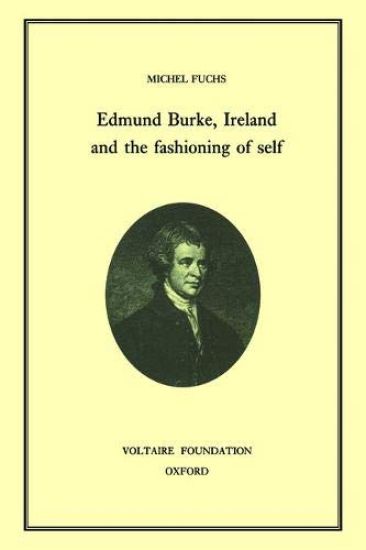
Edmund Burke, Ireland, and the Fashioning of Self
This is the first attempt, since the work of A.P.I. Samuels in 1923, at examining the early career of Edmund Burke without assuming that he was born to become the arch-conservative who condemned the French Revolution. Instead of being in revolt against the Enlightenment, the young Burke was a man intent on illustrating himself and his age by promoting rational knowledge and widening the field of reason. His turn to politics is, therefore, seen as turning away from truth; the compromise changed the direction of his thinking. An escapist solution to some of Burke’s problems could not make him forget Ireland, his native country. The fact that Ireland is the first country to have been colonized by England makes it an interesting laboratory of colonial misrule. The study of how it fashioned such a man torn between Ireland and England raises and sheds light on problems that go very much beyond the fate of Burke as an individual. It is a demonstration of the different means used by colonial powers to maintain their conquered empire and contain dissidence and rebellion. Making people believe, for instance, that the order of things is as it should be because that is what it is, does not tax the imagination, but it works and is still being used the world over. In this opinion campaign, Protestant England enjoyed the unfailing support of the Catholic hierarchy in Ireland and a ‘realistic’ understanding on the part of Catholic Europe. It is an example of the private and public tragedies caused by the divided loyalties that colonialism generated. The painfully experienced situation of a ‘cultural mulatto’ is the inevitable result of a state of domination. If it seems complex, it is because it is not purely negative: the dominated may in turn dominate the dominator. The effects are still with us of the passionate oscillations and reversals of opinion that Burke called his ‘principles’. Finally it illustrates the fundamental error of those who, even for a moment, lose sight of the truth perceived by Victor Hugo that ‘the first phase of the possible is to be impossible’. As a cultural mulatto, Burke led an impossible life, but who can fail to see that what was then an ‘impossibility’ is, in the present situation of Ireland and of the world, not only possible but eminently desirable? If only because this is just the beginning.
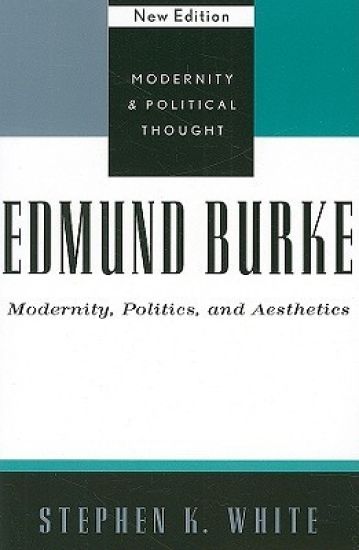
Edmund Burke

Edmund Burke

Stephen K. White

Rowman Littlefield Publishers
2002
nidottu
Edmund Burke: Modernity, Politics, and Aesthetics examines the philosophy of Burke in view of its contribution to our understanding of modernity. Burke's relevance, until recently, has lain in how his critique of the French Revolution bolstered arguments against revolutionary communism. As that threat recedes, should we allow Burke's significance to recede as well? Stephen K. White argues that Burke remains important because he shows us how modernity engenders an implicit forgetfulness of human finitude. White illustrates this theme by showing how Burke's political thought, his judgment of the 'modern system of morality and policy,' and its taste for a 'false sublime' are structured by his aesthetics. In the late 20th century, an undemocratic thinker such as Burke may not have answers to our problems, but we might do well to let him deepen the questions that we ask.
Edmund Husserl

Edmund Husserl

Dermot Moran

Polity Press
2005
sidottu
Dermot Moran provides a lucid, engaging, and critical introduction to Edmund Husserl's philosophy, with specific emphasis on his development of phenomenology. This book is a comprehensive guide to Husserl's thought from its origins in nineteenth-century concerns with the nature of scientific knowledge and with psychologism, through his breakthrough discovery of phenomenology and his elucidation of the phenomenological method, to the late analyses of culture and the life-world. Husserl's complex ideas are presented in a clear and expert manner. Individual chapters explore Husserl's key texts including Philosophy of Arithmetic, Logical Investigations, Ideas I, Cartesian Meditations and Crisis of the European Sciences. In addition, Moran offers penetrating criticisms and evaluations of Husserl's achievement, including the contribution of his phenomenology to current philosophical debates concerning consciousness and the mind. Edmund Husserl is an invaluable guide to understanding the thought of one of the seminal thinkers of the twentieth century. It will be helpful to students of contemporary philosophy, and to those interested in scientific, literary and cultural studies on the European continent.
Edmund Husserl

Edmund Husserl

Dermot Moran

Polity Press
2005
nidottu
Dermot Moran provides a lucid, engaging, and critical introduction to Edmund Husserl's philosophy, with specific emphasis on his development of phenomenology. This book is a comprehensive guide to Husserl's thought from its origins in nineteenth-century concerns with the nature of scientific knowledge and with psychologism, through his breakthrough discovery of phenomenology and his elucidation of the phenomenological method, to the late analyses of culture and the life-world. Husserl's complex ideas are presented in a clear and expert manner. Individual chapters explore Husserl's key texts including Philosophy of Arithmetic, Logical Investigations, Ideas I, Cartesian Meditations and Crisis of the European Sciences. In addition, Moran offers penetrating criticisms and evaluations of Husserl's achievement, including the contribution of his phenomenology to current philosophical debates concerning consciousness and the mind. Edmund Husserl is an invaluable guide to understanding the thought of one of the seminal thinkers of the twentieth century. It will be helpful to students of contemporary philosophy, and to those interested in scientific, literary and cultural studies on the European continent.
Edmund Spenser

Edmund Spenser

Colin Burrow

LIVERPOOL UNIVERSITY PRESS
1996
nidottu
Edmund Spenser (1554-1599) was the greatest Elizabethan poet, whose Shepheardes Calendar (1579) inaugurated a revolution in English poetry, and whose unfinished Faerie Queene (1590-96) was the longest and most accomplished poem written in the sixteenth century. Readers have always been immediately attracted by the fluid grace of is language, and by the magical world of dwarfs, hermits, knights and dragons evoked in The Faerie Queene, but have often been bewildered and overawed by the bulk and complexity of his writing. In this approachable and informative book, Colin Burrow clarifies the genres and conventions of work in Spenser’s poem. He explores the poet’s taste for archaism and allegory, and the native of epic and of heroism in The Faerie Queene. He presents Spenser as a ‘Renaissance’ poet, who is drawn at once to images of vital rebirth and to images of mortal frailty. In clear, jargon-free prose he explores Spenser’s equivocal relationship with his Queen and with the Irish landscape in which he spent his mature years. Spenser emerges from this book a less orthodox and harmonious poet that he is often thought to be, but as a complex, thoughtful and attractive writer.
Poetry Classics: Edmund Spenser

Poetry Classics: Edmund Spenser

Edmund Spenser

Bloomsbury Publishing PLC
1999
sidottu
Born in London in 1552, Edmund Spenser was educated at Cambridge University, but lived most of his life in Ireland. As a poet, he enjoyed much fame during his lifetime. This collection represents not only "The Faerie Queene", but his love sonnets, wedding sonnets, and pastoral eclogues.
Edmund Spenser's 'The Faerie Queene'

Edmund Spenser's 'The Faerie Queene'

Andrew Zurcher

Edinburgh University Press
2011
sidottu
Introduces a Renaissance masterpiece to a modern audience. This Guide will help new readers to understand and enjoy The Faerie Queene, drawing attention to its various ironies, its self-reflexive construction, its visual emphasis and the timeless ethical, political, and literary questions that it asks of all of us. The book includes key selections from the poem (each accompanied by a headnote, commentary and glosses), historical and critical discussions, teaching and learning plans and a guide to further resources in electronic and print media. Key Features * Contains substantial selections from The Faerie Queene * Provides an integrated introduction to Spenser's life, the intellectual and historical context of his writing and the poem's critical reception * Includes a range of suggestions for teaching and learning about the poem, both in formal seminars and through independent study * Contains a bibliography of further resources, including a list of editions, a list of key critical studies of the poem and a selection of useful websites