Toni Ross has written a beautiful memoir, the intimate story of a gay woman in a straight world. It has many comments about society in general, about gay society, gay men, wife and wife and so on. No holes barred. But always with love and compassion. A very beautiful and interesting love story which is very readable and extremely rewarding.
The 18th century was a wealth of knowledge, exploration and rapidly growing technology and expanding record-keeping made possible by advances in the printing press. In its determination to preserve the century of revolution, Gale initiated a revolution of its own: digitization of epic proportions to preserve these invaluable works in the largest archive of its kind. Now for the first time these high-quality digital copies of original 18th century manuscripts are available in print, making them highly accessible to libraries, undergraduate students, and independent scholars.The Age of Enlightenment profoundly enriched religious and philosophical understanding and continues to influence present-day thinking. Works collected here include masterpieces by David Hume, Immanuel Kant, and Jean-Jacques Rousseau, as well as religious sermons and moral debates on the issues of the day, such as the slave trade. The Age of Reason saw conflict between Protestantism and Catholicism transformed into one between faith and logic -- a debate that continues in the twenty-first century.++++The below data was compiled from various identification fields in the bibliographic record of this title. This data is provided as an additional tool in helping to insure edition identification: ++++British LibraryT231047Mary Bosanquet = Mary Fletcher.Burslem: printed, by J. Tregortha, M.DCC.L, XCVI i.e 1796]. 24p.; 4
This textbook is intended to give students a quick start in using theory to address syntactic questions. At each stage, Cowper is careful to introduce a theoretical apparatus that is no more complex than is required to deal with the phenomenon under consideration. Comprehensive and up-to-date, this accessible volume will also provide an excellent refresher for linguists returning to the study of Government-Binding theory. "Cowper exhibits the analytical devices of current principles-and-parameters approaches, takes readers carefully through the central elements of grammatical theory (including very recent work), and ushers them selectively into the technical literature...A serious introduction for those who want to know the nuts and bolts of syntactic theory and to see why linguists are so excited these days."--David Lightfoot, University of Maryland "An excellent short introduction to the Government and Binding model of syntactic theory...Cowper's work succeeds in teaching syntactic argumentation and in showing the conceptual reasons behind specific proposals in modern syntactic theory."--Jaklin Kornfilt, Syracuse University
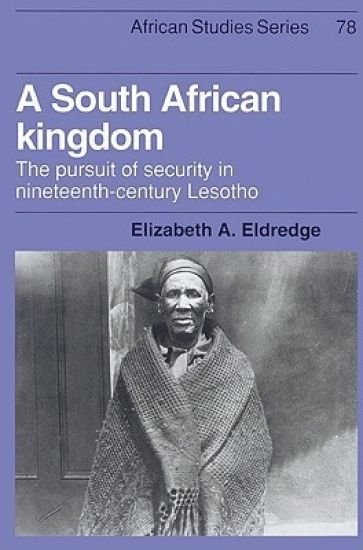
The Basotho kingdom emerged and consolidated in the dramatic and dangerous environment of nineteenth-century South Africa. In this 2003 book, Elizabeth Eldredge provides a rich description of local agriculture, iron-working and craft industries, bringing out the resourceful responses of the Basotho to the challenges of drought and famine, and explaining the dynamics of the competition for land. During the colonial period, regional economic integration increasingly influenced local production, land use and internal politics, and drew the Basotho into the regional migrant labour system. Throughout these turbulent years, the overriding interest of the Basotho was the pursuit of security. Dr Eldredge analyzes the epic struggle which bound together rich and poor, chiefs and commoners, and men and women in a largely successful effort to sustain this fragile and innovative society in the face of political threats and environmental challenges.
The Basotho kingdom emerged and consolidated in the dramatic and dangerous environment of nineteenth-century South Africa. Elizabeth Eldredge provides a rich description of local agriculture, iron-working and craft industries, bringing out the resourceful responses of the Basotho to the challenges of drought and famine, and explaining the dynamics of the competition for land. During the colonial period, regional economic integration increasingly influenced local production, land use and internal politics, and drew the Basotho into the regional migrant labour system. Throughout these turbulent years, the overriding interest of the Basotho was the pursuit of security. Dr Eldredge analyzes the epic struggle which bound together rich and poor, chiefs and commoners, and men and women in a largely successful effort to sustain this fragile and innovative society in the face of political threats and environmental challenges.
Because the two of you look forward to many happy and fulfilling years together, you need to know how to get your marriage off to a good start. And keep it growing. In “Building a Great Marriage”, Anne Ortlund presents building blocks for establishing a solid foundation: dealing with your expectations getting along with in-laws and your spouse’s friends improving your sex life joining a local church keeping your relationship fun and intimate surviving the storms of daily living sharing and assigning responsibilities and many more aspects of the first years of marriage.
Elizabeth Fay's invaluable book addresses the student in an immediate and direct manner to provide an unequalled introduction to the issues most important for feminist analyses of Romantic literature.
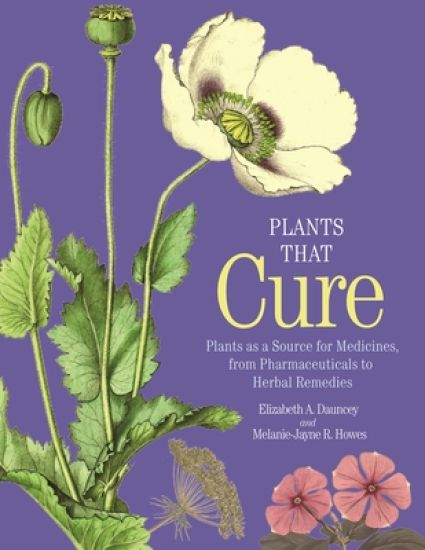
A full-color illustrated guide to the natural history of plants with medicinal properties Of the nearly 400,000 plants that have evolved on Earth, around seven percent of them have been used in traditional herbal medicine or as local remedies. More recently, scientific studies have revealed how plants may be sources of important medicines, often in the form of single isolated compounds. Plants That Cure explores these critical compounds and the plants that produce them. This richly illustrated book, filled with color photographs and diagrams, is organized by body system, which feeds into a discussion of the compounds and plants employed for particular conditions, including heart and circulatory problems, fatigue and dementia, nausea and indigestion, respiratory infections, arthritis and joint movement, eye conditions, reproductive issues, and types of cancer. This detailed book examines the mechanisms of action for these plants and also explains how some of their chemical compounds contribute to the functioning and survival of the plants themselves. Essential for herbalists, botanists, and anyone interested in natural remedies and drug discovery, Plants That Cure is the indispensable resource for understanding how medicinal plants work.Provides an authoritative natural history of the most important medicinal plantsFeatures hundreds of color photos and illustrationsExplores the roles of plants in different systems of traditional medicine throughout the worldLooks at specific body systems and the phytochemical compounds used to treat or alleviate systemic conditions, from heart ailments and respiratory infections to reproductive issues
Admissions and financial aid policies at liberal arts colleges have changed dramatically since 1955. Through the 1950s, most colleges in the United States enrolled fewer than 1000 students, nearly all of whom were white. Few colleges were truly selective in their admissions; they accepted most students who applied. In the 1960s, as the children of the baby boom reached college age and both federal and institutional financial aid programs expanded, many more students began to apply to college. For the first time, liberal arts colleges were faced with an abundance of applicants, which raised new questions. What criteria would they use to select students? How would they award financial aid? The answers to these questions were shaped by financial and educational considerations as well as by the struggles for civil rights and gender equality that swept across the nation. The colleges' answers also proved crucial to their futures, as the years since the mid-1970s have shown. When the influx of baby boom students slowed, colleges began to recruit aggressively in order to maintain their class sizes. In the past decade, financial aid has become another tool that colleges use to compete for the best students. By tracing the development of competitive admission and financial aid policies at a selected group of liberal arts colleges, Crafting a Class explores how institutional decisions reflect and respond to broad demographic, economic, political, and social forces. Elizabeth Duffy and Idana Goldberg closely studied sixteen liberal arts colleges in Massachusetts and Ohio. At each college, they not only collected empirical data on admissions, enrollment, and financial aid trends, but they also examined archival materials and interviewed current and former administrators. Duffy and Goldberg have produced an authoritative and highly readable account of some of the most important changes that have taken place in American higher education during the tumultuous decades since the mid-1950s. Crafting a Class will interest all readers who are concerned with the past and future directions of higher education in the United States. Originally published in 1997. The Princeton Legacy Library uses the latest print-on-demand technology to again make available previously out-of-print books from the distinguished backlist of Princeton University Press. These editions preserve the original texts of these important books while presenting them in durable paperback and hardcover editions. The goal of the Princeton Legacy Library is to vastly increase access to the rich scholarly heritage found in the thousands of books published by Princeton University Press since its founding in 1905.
Admissions and financial aid policies at liberal arts colleges have changed dramatically since 1955. Through the 1950s, most colleges in the United States enrolled fewer than 1000 students, nearly all of whom were white. Few colleges were truly selective in their admissions; they accepted most students who applied. In the 1960s, as the children of the baby boom reached college age and both federal and institutional financial aid programs expanded, many more students began to apply to college. For the first time, liberal arts colleges were faced with an abundance of applicants, which raised new questions. What criteria would they use to select students? How would they award financial aid? The answers to these questions were shaped by financial and educational considerations as well as by the struggles for civil rights and gender equality that swept across the nation. The colleges' answers also proved crucial to their futures, as the years since the mid-1970s have shown. When the influx of baby boom students slowed, colleges began to recruit aggressively in order to maintain their class sizes. In the past decade, financial aid has become another tool that colleges use to compete for the best students. By tracing the development of competitive admission and financial aid policies at a selected group of liberal arts colleges, Crafting a Class explores how institutional decisions reflect and respond to broad demographic, economic, political, and social forces. Elizabeth Duffy and Idana Goldberg closely studied sixteen liberal arts colleges in Massachusetts and Ohio. At each college, they not only collected empirical data on admissions, enrollment, and financial aid trends, but they also examined archival materials and interviewed current and former administrators. Duffy and Goldberg have produced an authoritative and highly readable account of some of the most important changes that have taken place in American higher education during the tumultuous decades since the mid-1950s. Crafting a Class will interest all readers who are concerned with the past and future directions of higher education in the United States. Originally published in 1997. The Princeton Legacy Library uses the latest print-on-demand technology to again make available previously out-of-print books from the distinguished backlist of Princeton University Press. These editions preserve the original texts of these important books while presenting them in durable paperback and hardcover editions. The goal of the Princeton Legacy Library is to vastly increase access to the rich scholarly heritage found in the thousands of books published by Princeton University Press since its founding in 1905.
One of the key themes of the Enlightenment was the search for universal laws and truths that would help illuminate the workings of the universe. It is in such attitudes that we trace the origins of modern science and medicine. However, not all eighteenth century scientists and physicians believed that such universal laws could be found, particularly in relation to the differences between living and inanimate matter. From the 1740s physicians working in the University of Medicine of Montpellier began to contest Descartes's dualist concept of the body-machine that was being championed by leading Parisian medical 'mechanists'. In place of the body-machine perspective that sought laws universally valid for all phenomena, the vitalists postulated a distinction being living and other matter, offering a holistic understanding of the physical-moral relation in place of mind-body dualism. Their medicine was not based on mathematics and the unity of the sciences, but on observation of the individual patient and the harmonious activities of the 'body-economy'. Vitalists believed that Illness was a result of disharmony in this 'body-economy' which could only be remedied on an individual level depending on the patient's own 'natural' limitations. The limitations were established by a myriad of factors such as sex, class, age, temperament, region, and race, which negated the use of a single universal treatment for a particular ailment. Ultimately Montpelier medicine was eclipsed by that of Paris, a development linked to the dynamics of the Enlightenment as a movement bent on cultural centralisation, acquiring a reputation as a kind of anti-science of the exotic and the mad. Given the long-standing Paris-centrism of French cultural history, Montpellier vitalism has never been accorded the attention it deserves by historians. This study repairs that neglect.
Kate and Betty Hadley team up, again, with Boston police detectives, Joe Talbot and Casey Roach, to find out how a valuable, antique document got into an old copy of a popular book. Who does the document belong to and why did it get there? Not being detectives, the socialite sisters use their spunk, social contacts, and the daily newspaper, to find their way through a maze of plausible owners before finding the real one.
Two socialite sisters in 1930s Boston take it upon themselves to help the police in crime detection. Armed with fountain pen, notepaper, a Mercedes Benz roadster, and plenty of lipstick, Kate and Betty Hadley can fulfill their dreams of living on the edge of excitement as they hunt for clues, gossip and society pages. They don't have to look for trouble. Trouble just finds them.When Kate and Betty are contacted by their next-door neighbor asking if they have seen her maid, they get suspicious. The girl is a recent Irish immigrant with few friends. The sisters take it upon themselves to interview the girl's few friends and try to retrace her steps the night she disappeared. What happened to Mary?
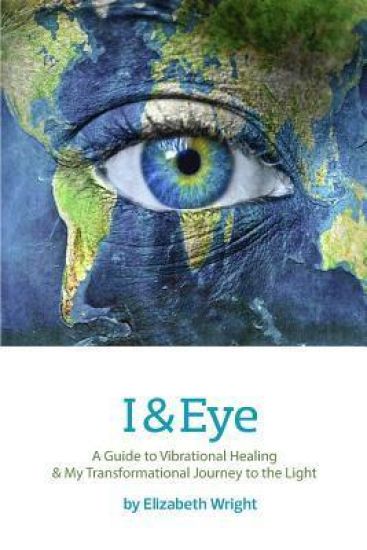
Join Elizabeth Wright as she shares her journey from disconnection and self-destruction to her re-connection with Spirit and self-love. Her powerful story of transformation delivered in an honest, authentic voice will touch your heart as she bares the truth of her soul. Elizabeth was born in India and raised in Turkey, and moved to the U.S. at 10 years. She lived in Australia for 11 years, where she had her spiritual awakening and now resides in New York. With a B.S. degree in Journalism, Elizabeth Wright worked in the corporate world for many years before transitioning to work as a Healer, Yoga Teacher and Spiritual Motivator, affecting many people's lives for the better. The book is a combination of her personal story from despair to triumph as well as a beginners "how-to" guide for energy healing. Now is the time of a massive shift in consciousness for the planet and Elizabeth's educational and inspirational messages are perfectly suited to guide people into their hearts to support these important shifts. The information she imparts is pertinent and current to the global scene. Elizabeth provides tools and guidelines to help the every day person learn what it takes to re-connect to their own Higher Self, the most spiritual and perfect part of each of us, our essence. She also instructs how to perform energy healing on others as well as how to clear your own energetic field to help raise your vibration. Energy healing uses an ancient technique of channeling the different colors of "light" or energy into the body to balance the body's seven major energy centers called Chakras, thereby activating the body's own self-healing ability. She provides helpful energetic exercises which explain how to tap into and use the energy to help bring about your own change and healing. This book can really help a large number of people transform their own lives which will, in turn support the new way of living and being in a healthier, holistic and sustainable society, benefiting every living being and the planet.
Sea and river crossings may bring together or tear apart people and the chapters of their lives. Here are stories of those passing purposefully over the water and those being swept by tides. Whether moving on, heading back, or just adrift, ferries feature large. From around Oban, the ferry hub of Scotland's isle-tangled west coast, ten authors offer stories on this common theme. Here are people lost and people found. Birth and death. Tales of whales, the bleat of sheep and the tang of the salt air. Not all are Scottish ferries. Not all may be real ferries. But each journey is a crossing in which something is discovered or something is changed. Welcome aboard. Profits from the sale of this book will be donated to the RNLI