Kirjojen hintavertailu. Mukana 11 717 486 kirjaa ja 12 kauppaa.

Kirjahaku

Etsi kirjoja tekijän nimen, kirjan nimen tai ISBN:n perusteella.

1000 tulosta hakusanalla FREEDOM DIVIDEND

Freedom For The Poor

Freedom For The Poor

Timothy J. Gaffaney

Routledge
2020
nidottu
This book identifies and examines the way in which New Right liberal theorists in the United States have employed a conception of liberty in their attack on welfare provision for the poor, and contrasts that concept with liberal justifications for public welfare that are grounded in equality.
Freedom to Be

Freedom to Be

John R. Kelly

Routledge
2019
sidottu
First published in 1987. Following an introductory chapter on the nature of theory and the outline of the book, there are eight chapters on the explanatory approaches, or models, employed in this dialectical analysis of the leisure industry. These models focus on particular elements of leisure: experience, decision, development, identities, interaction, institutions, political forces, and human definitions. With a new preface to the re-issue by the author, this title will be of great interest to students of Sociology and Leisure Studies.
Freedom to Be

Freedom to Be

John R. Kelly

Routledge
2020
nidottu
First published in 1987. Following an introductory chapter on the nature of theory and the outline of the book, there are eight chapters on the explanatory approaches, or models, employed in this dialectical analysis of the leisure industry. These models focus on particular elements of leisure: experience, decision, development, identities, interaction, institutions, political forces, and human definitions. With a new preface to the re-issue by the author, this title will be of great interest to students of Sociology and Leisure Studies.
Freedom to Care

Freedom to Care

Asha Bhandary

Routledge
2019
sidottu
This book presents the first systematic account of dependency care in a liberal theory of justice. Despite the fact that receiving dependency care is necessary for human survival, the practices with which we meet society’s care needs are seldom recognized for their functional role. Instead, norms about gender and race obscure and shape expectations about whose needs for care are legitimate as well as about whose caregiving labor more advantaged members of society will receive. These opaque arrangements must be made visible if we are to remedy skewed intuitions and judgements about care. Freedom to Care develops a modified form of social contract theory with which to evaluate society’s caregiving arrangements. Building on work by feminist liberals and care ethicists, it reframes debates about care to move beyond gender with an inequality-tracking framework that can be employed in any culture. Because care provision has been enmeshed in the subordination of women and people of color, eliminating the invisibility of these forms of labor yields a critical liberal theory of justice with feminist and anti-racist aims.
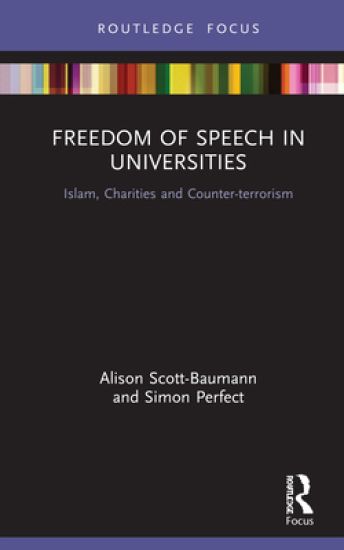
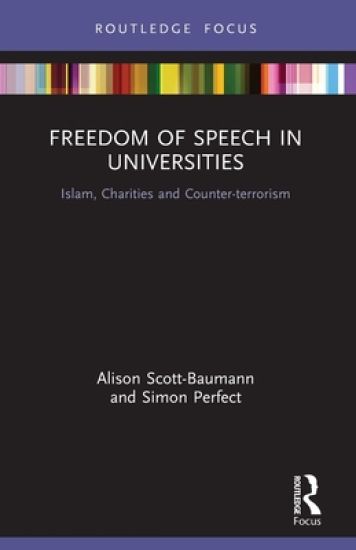
Freedom of Speech in Universities

Freedom of Speech in Universities

Alison Scott-Baumann; Simon Perfect

Routledge
2021
sidottu
Freedom of speech and extremism in university campuses are major sources of debate and moral panic in the United Kingdom today. In 2018, the Joint Committee on Human Rights in Parliament undertook an inquiry into freedom of speech on campus. It found that much of the public concern is exaggerated, but identified a number of factors that require attention, including the impact of government counter-terrorism measures (the Prevent Duty) and regulatory bodies (including the Charity Commission for England and Wales) on freedom of speech.This book combines empirical research and philosophical analysis to explore these issues, with a particular focus on the impact upon Muslim students and staff. It offers a new conceptual paradigm for thinking about freedom of speech, based on deliberative democracy, and practical suggestions for universities in handling it.Topics covered include:The enduring legacy of key thinkers who have shaped the debate about freedom of speechThe role of right-wing populism in driving moral panic about universitiesThe impact of the Prevent Duty and the Charity Commission upon Muslim students, students’ unions and university managersStudents’ and staff views about freedom of speechAlternative approaches to handling freedom of speech on campus, including the Community of InquiryThis highly engaging and topical text will be of interest to those working within public policy, religion and education or religion and politics and Islamic Studies.The Open Access version of this book, available at http://www.taylorfrancis.com, has been made available under a Creative Commons [Attribution-Non Commercial-No Derivatives (CC-BY-NC-ND)] 4.0 license.
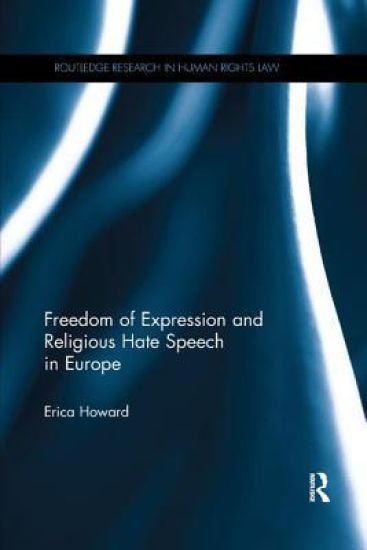
Freedom of Expression and Religious Hate Speech in Europe
In recent years, the Danish cartoons affair, the Charlie Hebdo murders and the terrorist attacks in Brussels and Paris have resulted in increasingly strident anti-Islamic speeches by politicians. This raises questions about the limits to freedom of expression and whether this freedom can and should be restricted to protect the religious feelings of believers. This book uses the case law of the European Court of Human Rights to provide a comprehensive analysis of the questions: whether legal prohibitions of religious hate speech violate the right to freedom of expression; and, whether such laws should be used to prosecute politicians and others who contribute to current debates when they use anti-Islam rhetoric. A well-known politician who uses such rhetoric is Dutch politician Geert Wilders. He has been prosecuted twice for hate speech, and was acquitted in the first case and recently convicted in the second. These prosecutions are used to illustrate the issues involved in drawing the line between freedom of expression and religious hate speech. The author argues that freedom of expression of politicians and those contributing to the public debate should not be restricted except in two very limited circumstances: when they incite to hatred or violence and there is an imminent danger that violence will follow or where it stops people from holding or manifesting their religion. Based on this, the author concludes that the European Court of Human Rights should decide, if it is asked to do so, that Wilders conviction for hate speech violates his freedom of expression.
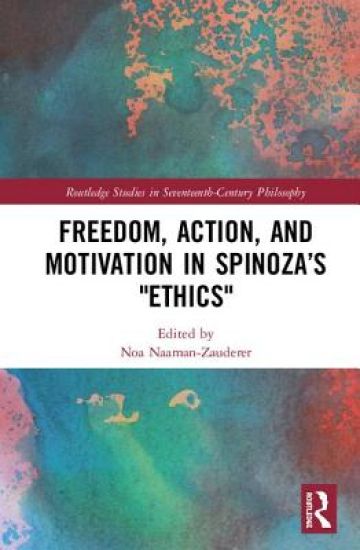
Freedom, Action, and Motivation in Spinoza’s "Ethics"
The present volume posits the themes of freedom, action, and motivation as the central principles that drive Spinoza’s Ethics from its first part to its last. It assembles essays by internationally leading scholars who provide different, sometimes opposing interpretations of these fundamental themes as they operate across the five parts of the Ethics and within its manifold domains. The diversity of issues, approaches, and perspectives within this volume, along with the chapters’ common focus, open up new ways of understanding not only some of the key concepts and main objectives in the Ethics but also the threads unifying the entire work.The sequence of essays in the book broadly follows the order of the Ethics, providing up-to-date perspectives of Spinoza’s views on freedom, action, and motivation in their ontological, cognitive, physical, affective, and ethical facets. This enables readers to engage with a variety of new interpretations of these key themes of the Ethics and to reconsider their consequences both for other related issues in the Ethics and for the relevance of the Ethics to contemporary trends in philosophy of action and motivation. The essays will contribute to the growing interest in Spinoza’s Ethics and spark further discussion and debate within and outside the vast body of scholarship on this important work. Freedom, Action, and Motivation in Spinoza’s Ethics will be of interest to scholars and advanced students working on Spinoza and early modern philosophy, as well as on philosophy of action and motivation.
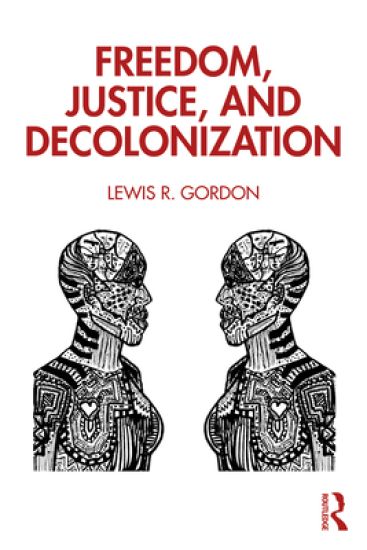
Freedom, Justice, and Decolonization
The eminent scholar Lewis R. Gordon offers a probing meditation on freedom, justice, and decolonization. What is there to be understood and done when it is evident that the search for justice, which dominates social and political philosophy of the North, is an insufficient approach for the achievements of dignity, freedom, liberation, and revolution? Gordon takes the reader on a journey as he interrogates a trail from colonized philosophy to re-imagining liberation and revolution to critical challenges raised by Afropessimism, theodicy, and looming catastrophe. He offers not forecast and foreclosure but instead an urgent call for dignifying and urgent acts of political commitment. Such movements take the form of examining what philosophy means in Africana philosophy, liberation in decolonial thought, and the decolonization of justice and normative life. Gordon issues a critique of the obstacles to cultivating emancipatory politics, challenging reductionist forms of thought that proffer harm and suffering as conditions of political appearance and the valorization of nonhuman being. He asserts instead emancipatory considerations for occluded forms of life and the irreplaceability of existence in the face of catastrophe and ruin, and he concludes, through a discussion with the Circassian philosopher and decolonial theorist, Madina Tlostanova, with the project of shifting the geography of reason.
Freedom, Justice, and Decolonization
The eminent scholar Lewis R. Gordon offers a probing meditation on freedom, justice, and decolonization. What is there to be understood and done when it is evident that the search for justice, which dominates social and political philosophy of the North, is an insufficient approach for the achievements of dignity, freedom, liberation, and revolution? Gordon takes the reader on a journey as he interrogates a trail from colonized philosophy to re-imagining liberation and revolution to critical challenges raised by Afropessimism, theodicy, and looming catastrophe. He offers not forecast and foreclosure but instead an urgent call for dignifying and urgent acts of political commitment. Such movements take the form of examining what philosophy means in Africana philosophy, liberation in decolonial thought, and the decolonization of justice and normative life. Gordon issues a critique of the obstacles to cultivating emancipatory politics, challenging reductionist forms of thought that proffer harm and suffering as conditions of political appearance and the valorization of nonhuman being. He asserts instead emancipatory considerations for occluded forms of life and the irreplaceability of existence in the face of catastrophe and ruin, and he concludes, through a discussion with the Circassian philosopher and decolonial theorist, Madina Tlostanova, with the project of shifting the geography of reason.
Freedom and Censorship in Early Modern English Literature
Broadening the notion of censorship, this volume explores the transformative role played by early modern censors in the fashioning of a distinct English literature in the sixteenth and seventeenth centuries. In early modern England, the Privy Council, the Bishop of London and the Archbishop of Canterbury, the Stationers’ Company, and the Master of the Revels each dealt with their own prerogatives and implemented different forms of censorship, with the result that authors penning both plays and satires had to juggle with various authorities and unequal degrees of freedom from one sector to the other. Text and press control thus did not give way to systematic intervention but to particular responses adapted to specific texts in a specific time. If the restrictions imposed by regulation practices are duly acknowledged in this edited collection, the different contributors are also keen to enhance the positive impact of censorship on early modern literature. The most difficult task consists in finding the exact moment when the balance tips in favour of creativity, and the zone where, in matters of artistic freedom, the disadvantages outweigh the benefits. This is what the twelve chapters of the volume proceed to do. Thanks to a wide variety of examples, they show that, in the Elizabethan and Jacobean eras, regulations seldom prevented writers to make themselves heard, albeit through indirect channels. By contrast, in the 1630s, the increased supremacy of the Church seemed to tip the balance the other way.
Freedom Bound 1

Freedom Bound 1

Patricia Grimshaw

Routledge
2021
sidottu
Over generations, Australian women have envisaged a world of freedom. This new collection of documents - letters, diary extracts, poems, public speeches - charts the visions that inspired women and the obstacles that confronted them.Dealing with a period from colonisation to early Federation in 1901, Freedom Bound I shows how intertwined were women's public and personal lives, and how bound by custom, ties, affection and duties. The different meanings of freedom have been shaped by the nature of women's oppression, their quests given focus by their different points of departure. Convict women protested - often violently - at the indignities they endured; Aboriginal women protested at the cruelty of the frontier and the paternalism of the mission; and white middle-class women demanded the freedom to participate in the public world.Together with its companion volume, Freedom Bound II, which deals with the twentieth century, this volume documents the dreams that inspired women, the pleasures and pain that informed their politics and the desires that enthralled them, even as they bade them to be free. It is an essential resource for students and teachers of Australian women's history.
Freedom Bound II

Freedom Bound II

Katie Holmes

Routledge
2021
sidottu
Over generations, Australian women have envisaged a world of freedom. This new collection of documents - letters, songs, poetry, diary extracts - charts the visions that inspired women and the obstacles that confronted them.Exploring twentieth-century Australia, Freedom Bound II shows how intertwined were women's public and personal lives, and how bound by custom, ties, affections and duties. The different meanings of freedom have been shaped by the nature of women's oppression, their quests given focus by their different points of departure. Aboriginal women sought self-determination and the right to keep their children; migrant women sought to affirm culture and family ties, and escape discrimination and poverty. Overburdened mothers wanted relief from continual childbearing and a measure of self-fulfilment. Numerous women have campaigned for freedom from domestic tyranny and male violence.Together with its companion volume, Freedom Bound I, which deals with the period of colonisation, this volume documents the dreams that inspired women, the pleasures and the pain that informed their politics and the desires that enthralled them, even as they bade them to be free. It is an essential resource for students and teachers of Australian women's history.
Freedom of Speech in Universities

Freedom of Speech in Universities

Alison Scott-Baumann; Simon Perfect

TAYLOR FRANCIS LTD
2022
nidottu
Freedom of speech and extremism in university campuses are major sources of debate and moral panic in the United Kingdom today. In 2018, the Joint Committee on Human Rights in Parliament undertook an inquiry into freedom of speech on campus. It found that much of the public concern is exaggerated, but identified a number of factors that require attention, including the impact of government counter-terrorism measures (the Prevent Duty) and regulatory bodies (including the Charity Commission for England and Wales) on freedom of speech.This book combines empirical research and philosophical analysis to explore these issues, with a particular focus on the impact upon Muslim students and staff. It offers a new conceptual paradigm for thinking about freedom of speech, based on deliberative democracy, and practical suggestions for universities in handling it.Topics covered include:The enduring legacy of key thinkers who have shaped the debate about freedom of speechThe role of right-wing populism in driving moral panic about universitiesThe impact of the Prevent Duty and the Charity Commission upon Muslim students, students’ unions and university managersStudents’ and staff views about freedom of speechAlternative approaches to handling freedom of speech on campus, including the Community of InquiryThis highly engaging and topical text will be of interest to those working within public policy, religion and education or religion and politics and Islamic Studies.The Open Access version of this book, available at http://www.taylorfrancis.com, has been made available under a Creative Commons [Attribution-Non Commercial-No Derivatives (CC-BY-NC-ND)] 4.0 license.
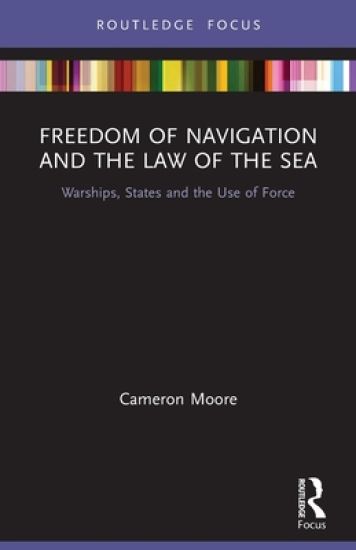
Freedom of Navigation and the Law of the Sea

Freedom of Navigation and the Law of the Sea

Cameron Moore

TAYLOR FRANCIS LTD
2023
nidottu
There has been a recent increase in clashes between warships asserting rights to navigate and states asserting sovereignty over coastal waters. This book argues for a set of rules which respect the rights of coastal states to protect their sovereignty and of warships to navigate lawfully, whilst also outlining the limits of each.The book addresses the issue of the clash between warships and states by considering the general principles applying to use of force in the law of the sea and the law of national self-defence. It focuses on the right of coastal states to use force to prevent passage of warships which threaten their sovereignty, with particular reference to the specific maritime zones, as well as by warships to ensure passage or to defend themselves. The book also assesses the extent to which the law of armed conflict may be applicable to these issues. The conclusion draws together a set of rules which take account of both contemporary and historical events and seeks to balance the competing interests at stake.Providing a concise overview of the enduring issue of freedom of navigation, this book will appeal to anyone studying international law, the law of the sea, security studies and international relations. It will also be of interest to naval, coast guard and military officers as well as government legal advisors.
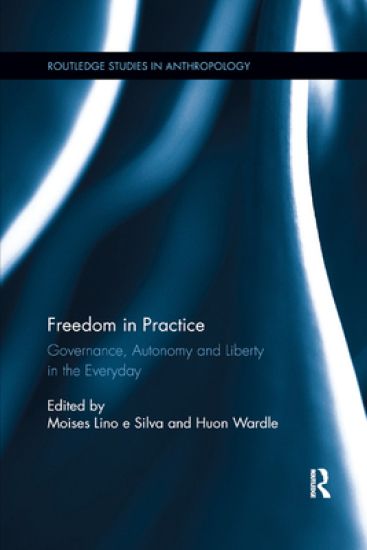
Freedom in Practice
‘Freedom’ is one of the most fiercely contested words in contemporary global experience. This book provides an up-to-date overview from an anthropological perspective of the diverse ways in which freedom is understood and practised in everyday life, including the emergent relationships between governance, autonomy and liberty. The contributors offer a wealth of ethnographic insight from a variety of geographic, cultural and political contexts. Taken together the essays constitute a radical challenge to assumptions about what freedom means in today’s world.
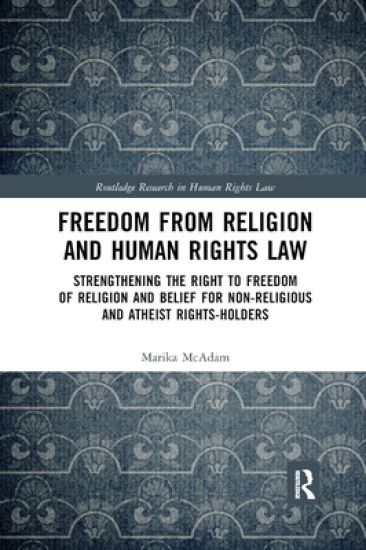
Freedom from Religion and Human Rights Law
Although human rights belong to all persons on the basis of their humanity, this book demonstrates that in the practice of international human rights law, the freedom to be non-religious or atheist does not receive the same protection as the freedom to be religious. Despite the claimed universality of freedom of religion and belief contained in article 18 of the International Covenant on Civil and Political Rights, the key assertion made is that there is a hierarchy of religion and belief, with followers of major established religions enjoying high protection and low regulation at the top, and atheists and non-believers enduring high persecution and weaker protection at the bottom. The existence of this hierarchy is proven and critiqued through three case study chapters that respectively explore the extent to which non-religious and atheist rights-holders enjoy freedom from proselytism, freedom from hate and freedom from the religions of their parents.
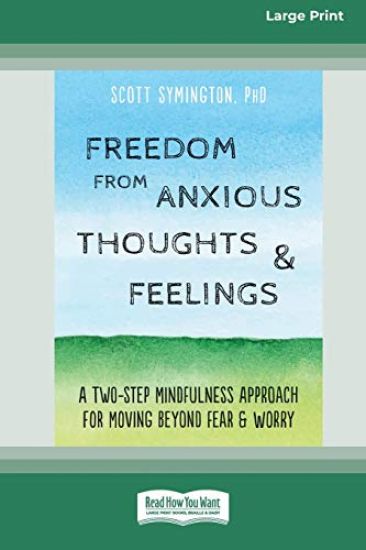
Freedom from Anxious Thoughts and Feelings

Freedom from Anxious Thoughts and Feelings

Scott Symington

ReadHowYouWant
2020
pokkari
Mindfulness is a powerful treatment for anxious thoughts and negative emotions. However, many people find it difficult to apply the principles of mindfulness when they are in the throes of anxious worries and destructive moods. In this book, psychologist Scott Symington presents a ridiculously easy, breakthrough mindfulness approach called the two-screen method to help when the painful thoughts feel overwhelming.
Freedom as a Service

Freedom as a Service

Evgeny Morozov

Farrar, Straus and Giroux
2027
sidottu
A startling analysis of how tech solutionism is obscuring creative problem-solving toward a more equitable society. From smart devices that help reduce one's carbon footprint to apps where one can buy themed portfolios of companies that promote vegan or LGBTQ-friendly causes, corporations appear to be producing, at light speed, solutions to our most preoccupying social problems. You, as a conscientious user, just need to buy in. Welcome to solutionism. In Freedom as a Service, tech's most formidable critic, Evgeny Morozov, identifies a new stage of capitalism: organic capitalism, a system that is happy to admit to its own failures while unleashing more capitalist solutions to them. Under organic capitalism, "platform populism" enables a multitude of solutionist interventions while also creating the illusion that the users are in charge. And, Morozov argues, it's the left that is most susceptible to this Trojan horse, as technocratic approaches are combined with the do-good rhetoric of a more humane capitalism. But solutionism doesn't really solve problems; it simply monetizes the behavioral change of an individual. We are actually under-producing solutions because the sort of structural solutions that are not favorable to capital never come into existence. Trenchant, bold, and highly original, Freedom as a Service is an urgent expos of our current political and technological order. Drawing on Marx and Hayek, Morozov cuts through the fog of solutionism's false promises, proposing a counter-paradigm: obsoletism, where instead of solving problems, we concentrate our efforts on creating a new world where such problems are made obsolete. With this groundbreaking new concept, Morozov illuminates a way forward: more tech-literate, more imaginative, and more effective at securing a just and habitable future.