In the searing poems of his new collection, Twice Alive, the Pulitzer Prize–winner Forrest Gander addresses the exigencies of our historical moment and the intimacies, personal and environmental, that bind us to others and to the world. Drawing from his training in geology and his immersion in Sangam literary traditions, Gander invests these poems with an emotional intensity that illuminates our deep-tangled interrelations. While conducting fieldwork with a celebrated mycologist, Gander links human intimacy with the transformative collaborations between species that compose lichens. Throughout Twice Alive, Gander addresses personal and ecological trauma—several poems focus on the devastation wrought by wildfires in California where he lives—but his tone is overwhelmingly celebratory. Twice Alive is a book charged with exultation and tenderness.
Mojave Ghost initiates an unusually tender bond with the reader as it chronicles an intimate relationship with arresting honesty and vividness. Moving through grief and loss towards a renewal that never sidesteps the wholeness of experience, Gander's new collection discovers an articulate language for the merging of exterior and interior landscapes. Gander, trained as a geologist, walked along much of the 800-mile San Andreas fault toward the desolate town of his birth, and found himself crossing permeable dimensions of time and space, correlating his emotions and the stricken landscape with other divisions: the fractures and folds underlying not only our country, but any self in its relationship with others. The result is this moving new collection that unforgettably describes a spiritual and physical journey. With its confidential tones and candid self-examination, Mojave Ghost is Gander’s most inviting and poignant book yet.
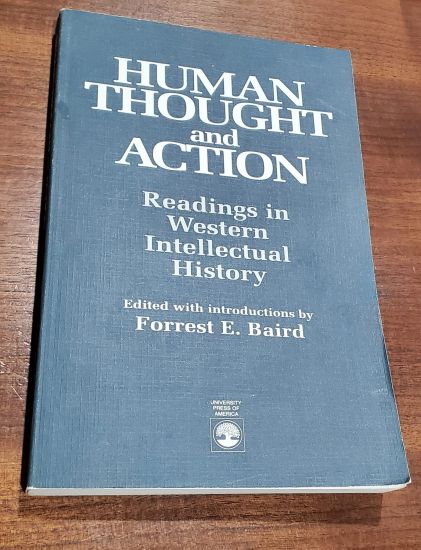
A book of readings in Western intellectual history focusing on the role of reason in human action. Contents:^ Plato: Myth of the Cave; Plato: ^IThe Four Virtues; Aristotle: Knowledge of Causes; Aristotle: The Types of Governments; Epicurus: Epicureanism; Epictetus: Stoicism; St. Augustine: The Platonist; St. Augustine: The Nature of Sources of Evil; St. Thomas Aquinas: The Four Laws; St. Thomas Aquinas: The Nature of the Soul; Pico: The Oration on the Dignity of Man; John Calvin: Reason, Sin and Illumination; St. Teresa of Avila: Interior Castle; Rene Descartes: PensÈs ; Thomas Hobbes: The State of Nature; John Locke: The State of Nature; Alexander Pope: Essay on Man; David Hume: Impressions and Ideas; Voltaire: Candide; Immanuel Kant: Space and Time; Immanuel Kant: The Good Will; Edmund Burke: Revolution in France; James Madison: The Federal Government; Soren Kierkegaard: Subjective Truth; Fyodor Dostoevsky: The Grand Inquisitor; Karl Marx and Friedrich Engels: Communist Manifesto; Friedrich Nietzsche: The Will to Power; William James: Pragmatism; William James: Philosophical Temperaments; Sigmund Freud: The Ego and the Id; Ludwig Wittgenstein: Later Theory; Jean-Paul Sartre: Existentialism; Carol Gilligan: Women's Place in Man's World; Appendix: Programmed Text on Epistemology.
A book of readings in Western intellectual history focusing on the role of reason in human action. Contents:^ Plato: Myth of the Cave; Plato: ^IThe Four Virtues; Aristotle: Knowledge of Causes; Aristotle: The Types of Governments; Epicurus: Epicureanism; Epictetus: Stoicism; St. Augustine: The Platonist; St. Augustine: The Nature of Sources of Evil; St. Thomas Aquinas: The Four Laws; St. Thomas Aquinas: The Nature of the Soul; Pico: The Oration on the Dignity of Man; John Calvin: Reason, Sin and Illumination; St. Teresa of Avila: Interior Castle; Rene Descartes: Pens,s ; Thomas Hobbes: The State of Nature; John Locke: The State of Nature; Alexander Pope: Essay on Man; David Hume: Impressions and Ideas; Voltaire: Candide; Immanuel Kant: Space and Time; Immanuel Kant: The Good Will; Edmund Burke: Revolution in France; James Madison: The Federal Government; Soren Kierkegaard: Subjective Truth; Fyodor Dostoevsky: The Grand Inquisitor; Karl Marx and Friedrich Engels: Communist Manifesto; Friedrich Nietzsche: The Will to Power; William James: Pragmatism; William James: Philosophical Temperaments; Sigmund Freud: The Ego and the Id; Ludwig Wittgenstein: Later Theory; Jean-Paul Sartre: Existentialism; Carol Gilligan: Women's Place in Man's World; Appendix: Programmed Text on Epistemology.
A haunting and peculiar travelogue, Deeds of the Utmost Kindness employs forms as diverse as haiku and prose poetry in settings that range from Japan to the rural Ozarks to contemporary Moscow. The compelling strangeness of the poems' precise details exposes varied rhythms of thought and illustrated how different logics work in the metaphoric structures of changing places . Yet behind the uneasy sense of dislocation felt by the constant traveler lies the personal, essentially moral, voice of the poet as observer.
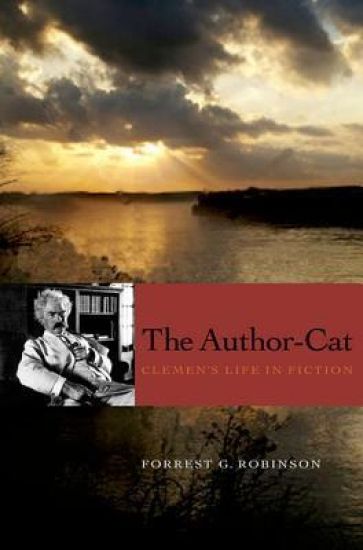
A comprehensive reading of Mark Twain's major work At the end of his long life, Samuel Clemens felt driven to write a truthful account of what he regarded as the flaws in his character and the errors of his ways. His attempt to tell the unvarnished truth about himself is preserved in nearly 250 autobiographical dictations. In order to encourage complete veracity, he decided from the outset that these would be published only posthumously. Nevertheless, Clemens's autobiography is singularly unrevealing. Forrest G. Robinson argues that, by contrast, it is in his fiction that Clemens most fully—if often inadvertently—reveals himself. He was, he confessed, like a cat who labors in vain to bury the waste that he has left behind. Robinson argues that he wrote out of an enduring need to come to terms with his remembered experiences—not to memorialize the past, but to transform it. By all accounts—including his own—Clemens's special curse was guilt. He was unable to forgive himself for the deaths of those closest to him—from his siblings' death in childhood to the deaths of his own children. Nor could he reconcile himself to his role in the Civil War, his part in the duel that prompted his departure from Virginia City in 1864, and—worst of all—his sense of moral complicity in the crimes of slavery. Tracing the theme of bad faith in all of Clemens's major writing, but with special attention to the late work, Robinson sheds new light on a tormented moral life. His book challenges conventional assumptions about the humorist's personality and creativity, directing attention to what William Dean Howells describes as "the depths of a nature whose tragical seriousness broke in the laughter which the unwise took for the whole of him."
This thoroughly rewritten and updated third edition offers comprehensive coverage of cost engineering, emphasizing capital projects and focusing on both estimating and cost control. Maintaining and enhancing the style of presentation that made the previous editions so popular, Applied Cost Engineering, Third Edition furnishes an entirely new and cost-effective approach to estimating and controlling contingency, a new chapter on systems and computer applications, a new chapter on bulk material control, expanded coverage of the factors that affect estimate accuracy, an introduction to the novel concept of estimate and schedule classification, additional end-of-text case studies, and much more.
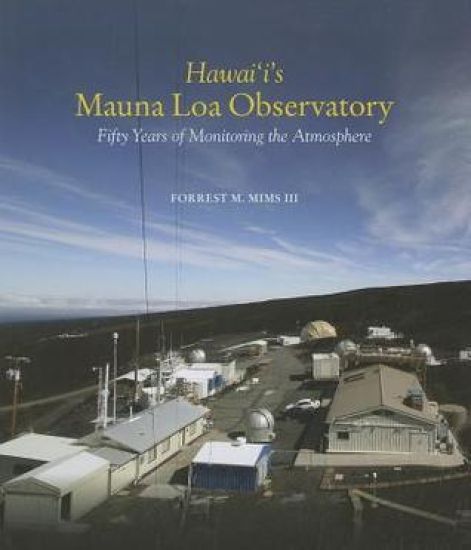
Hawaii's Mauna Loa Observatory (MLO) is one of the world's leading scientific stations for monitoring the atmosphere. For more than fifty years, beginning with atmospheric chemist Charles Keeling's readings of carbon dioxide levels in the atmosphere, MLO has provided climate scientists a continuous record of the atmosphere's increasing concentration of carbon dioxide--and sparked the international debate over global warming. Hawai'i's Mauna Loa Observatory tells the story of the men and women who made these and many other measurements near the summit of the world's largest mountain. Botanist Archibald Menzies, who trekked up Mauna Loa's rough, lava-encrusted slopes in 1794, was the first to make scientific measurements from the summit. In the winter of 1840, the US Exploring Expedition spent a grueling three weeks at the edge of the summit crater. Their scientific achievements remained unsurpassed for more than a century and anticipated the research that was begun in 1951, when a primitive weather station was built atop the mountain. Serious research began in 1956 when the first building of the present observatory was erected a few thousand feet below the summit. Recollections of past and present MLO staff detail the historic beginning of carbon-dioxide measurements and many exciting discoveries and near disasters at the remote observatory in this colorful account of the evolution of MLO into a world-class facility. Today more than a hundred experiments are carried out at MLO, including precise measurements of the ozone layer, the sun's ultraviolet, the dust and air pollution drifting across the Pacific from Asia, and a wide assortment of gases in the atmosphere. These and other measurements have provided ground truthing for satellite-borne sensors and led to major scientific findings, some of which have influenced public policy decisions. Hawai'i's Mauna Loa Observatory should be read by atmospheric science students to gain an appreciation for the enormous effort required to generate high quality data. Much more than a strict scientific biography of Mauna Loa, this work will also be appreciated by anyone interested in a highly accessible history of the human side of atmospheric observations at a remote, high-altitude observatory.
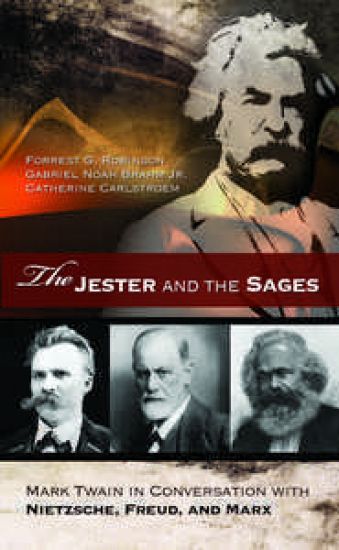
The Jester and the Sages approaches the life and work of Mark Twain by placing him in conversation with three eminent philosophers of his time - Friedrich Nietzsche, Sigmund Freud, and Karl Marx. Unprecedented in Twain scholarship, this interdisciplinary analysis by Forrest G. Robinson, Gabriel Noah Brahm Jr., and Catherine Carlstroem rescues the American genius from his role as funny-man by exploring how his reflections on religion, politics, philosophy, morality, and social issues overlap the philosophers' developed thoughts on these subjects. Remarkably, they had much in common. During their lifetimes, Twain, Nietzsche, Freud, and Marx witnessed massive upheavals in Western constructions of religion, morality, history, political economy, and human nature. The foundations of reality had been shaken, and one did not need to be a philosopher - nor did one even need to read philosophy - to weigh in on what this all might mean. Drawing on a wide range of primary and secondary materials, the authors show that Twain was well attuned to debates of the time. Unlike his Continental contemporaries, however, he was not as systematic in developing his views. Brahm and Robinson's chapter on Nietzsche and Twain reveals their subjects' common defiance of the moral and religious truisms of their time. Both desired freedom, resented the constraints of Christian civilization, and saw punishing guilt as the disease of modern man. Pervasive moral evasion and bland conformity were the principal end result, they believed. In addition to a continuing focus on guilt, Robinson discovers in his chapter on Freud and Twain that the two men shared a lifelong fascination with the mysteries of the human mind. From the formative influence of childhood and repression, to dreams and the unconscious, the mind could free people or keep them in perpetual chains. The realm of the unconscious was of special interest to both men as it pertained to the creation of art. In the final chapter, Carlstroem and Robinson explain that, despite significant differences in their views of human nature, history, and progress, Twain and Marx were both profoundly disturbed by economic and social injustice in the world. Of particular concern was the gulf that industrial capitalism opened between the privileged elite property owners and the vast class of property-less workers. Moralists impatient with conventional morality, Twain and Marx wanted to free ordinary people from the illusions that enslaved them. Twain did not know the work's of Nietzsche, Freud, and Marx well, yet many of his thoughts cross those of his philosophical contemporaries. By focusing on the deeper aspects of Twain's intellectual makeup, Robinson, Brahm, and Carlstroem supplement the traditional appreciation of the forces that drove Twain's creativity and the dynamics of his humor.
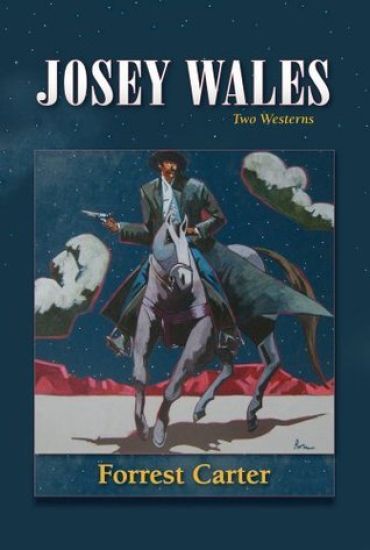
Josey Wales was the most wanted man in Texas. His wife and child had been lost to pre-civil War destruction and, like Jesse James and other young farmers, he joined the guerrilla soldiers of Missouri--men with no cause but survival and no purpose but revenge. Josey Wales and his Cherokee friend, Lone Watie, set out for the West through the dangerous Camanchero territory. Hiding by day, traveling by night, they are joined by an Indian woman named Little Moonlight, and rescue an old woman and her granddaughter from their besieged wagon. The five of them travel toward Texas and win through brash and honest violence, a chance for a new way of life.
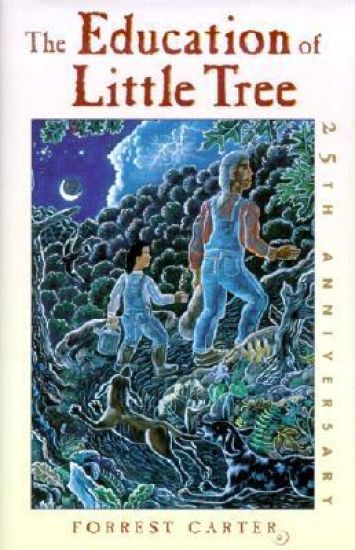
This story has entranced readers of all ages since it was first published twenty-five years ago. The tale tells the story of a boy orphaned very young, who is adopted by his Cherokee grandmother and half-Cherokee grandfather in the Appalachian mountains of Tennessee during the Great Depression. 'Little Tree' as his grandparents call him is shown how to hunt and survive in the mountains, to respect nature in the Cherokee Way, taking only what is needed, leaving the rest for nature to run its course. Little Tree also learns the often callous ways of the white businessmen and tax collectors, and how Grandpa, in hilarious vignettes, scares them away from his illegal attempts to enter the cash economy. Grandma teaches Little Tree the joys of reading and education. But when Little Tree is taken away for schooling by whites, we learn of the cruelty meted out to Indian children in an attempt to assimilate them and of Little Tree's perception of the Anglo world and how it differs from the Cherokee Way.
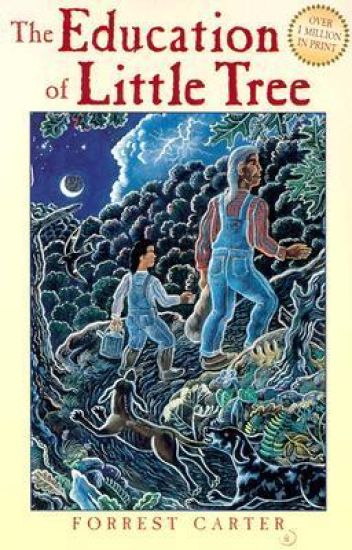
This story has entranced readers of all ages since it was first published twenty-five years ago. The tale tells the story of a boy orphaned very young, who is adopted by his Cherokee grandmother and half-Cherokee grandfather in the Appalachian mountains of Tennessee during the Great Depression. 'Little Tree' as his grandparents call him is shown how to hunt and survive in the mountains, to respect nature in the Cherokee Way, taking only what is needed, leaving the rest for nature to run its course. Little Tree also learns the often callous ways of the white businessmen and tax collectors, and how Grandpa, in hilarious vignettes, scares them away from his illegal attempts to enter the cash economy. Grandma teaches Little Tree the joys of reading and education. But when Little Tree is taken away for schooling by whites, we learn of the cruelty meted out to Indian children in an attempt to assimilate them and of Little Tree's perception of the Anglo world and how it differs from the Cherokee Way.
How do we think? What does a faithful use of logic look like? Without even pausing to think about it, we exercise our capacity for rational thought. But how exactly does logic work? What makes some arguments valid and others not? In this Questions in Christian Philosophy volume, philosopher Forrest Baird offers an introduction to logic. He considers the basic building blocks of human reason, including types of arguments, fallacies, syllogisms, symbols, and proofs, all of which are demonstrated with exercises for students throughout. In addition, he reflects on the relationship between the use of reason and the Christian faith. With this academic but accessible primer, readers will be introduced to the basics of logic—and encouraged to reason better. The Questions in Christian Philosophy Series features introductory textbooks that offer students a Christian perspective on the various branches of philosophy, enabling them as they seek to understand all facets of life including existence, knowledge, ethics, art, and more.
A Timeless Classic!Compact and pocket-sized, this handy reference contains thousands of facts and figures relevant to pipefitters, steamfitters-anyone concerned with layout and installation of pipe.Provides answers to all sorts of problems indigenous to power and industrial pipebending, and the fabrication of welding fittings in both shop and field.Logically categorizes all material according to job description, supporting each working table with a clear example of how to use it. Includes a special reference section that gives instant data on the 24 most useful on-the-job subjects, such as spark tests for metals, sheet metal weights, valve types, weights and measures, and many more.Discusses all types of bends; elbows, tees, and crosses; plastic pipe; soldering and brazing; travel and run; fitting dimensions; threading pipe; relative physical properties; and more.Power and Industrial Pipe Bending Pipe Fabrications Soldering and Brazing Offset Connections Reference Data Index
Escalation is a natural tendency in any form of human competition, and today's security environment demands that the United States be prepared for a host of escalatory threats. This analysis of escalation dynamics and approaches to escalation management draws on a range of historical examples from World War I through Somalia in the early 1990s to inform escalation-related decisionmaking.
Space stability appears to be eroding as a growing number of states acquire the ability to degrade or destroy U.S. space assets. The United States needs a coordinated national space deterrence strategy designed to operate on both sides of a potential adversary's cost-benefit decision calculus. Future research will determine the most effective and affordable mix of strategies, policies, and systems for strengthening space deterrence.
To effectively manage an international crisis, the United States must balance its threats with restraint. It must posture forces in ways that deter aggression without implying that an attack is imminent, while limiting its own vulnerability to surprise attack. A RAND study sought to identify which long-range strike assets--strike fighters, bombers, ballistic missiles, cruise missiles--offer capabilities most conducive to stabilizing such crises.