Kirjojen hintavertailu. Mukana 12 016 292 kirjaa ja 12 kauppaa.

Kirjahaku

Etsi kirjoja tekijän nimen, kirjan nimen tai ISBN:n perusteella.

1000 tulosta hakusanalla Frederick Beiser

Frederick Harris Goff

Frederick Harris Goff

Frederick Harris Goff

Literary Licensing, LLC
2012
sidottu
The book titled ""Frederick Harris Goff"" is a biography of the American philanthropist and banker, Frederick Harris Goff. The book is written by Goff himself, and provides a detailed account of his life, career, and contributions to society. The book begins with Goff's early life, including his upbringing in Ohio and his education at Western Reserve University. It then goes on to detail his career as a banker, including his work at the Cleveland Trust Company and the establishment of the Cleveland Foundation, one of the first community foundations in the United States. Throughout the book, Goff discusses his philosophy of philanthropy, emphasizing the importance of community involvement and the need to address social issues through collaborative efforts. He also reflects on his personal life, including his marriage and family, and his passion for the arts and education. Overall, ""Frederick Harris Goff"" provides a comprehensive and insightful look into the life of one of America's most influential philanthropists. It is a must-read for anyone interested in the history of philanthropy, community development, or the life of Frederick Harris Goff.A Brief Sketch Of His Life And An Account Of The Memorial Meeting Held By The Directors Of The Cleveland Trust Company, In March, 1923.This scarce antiquarian book is a facsimile reprint of the old original and may contain some imperfections such as library marks and notations. Because we believe this work is culturally important, we have made it available as part of our commitment for protecting, preserving, and promoting the world's literature in affordable, high quality, modern editions, that are true to their original work.
Frederick the Great and Bismarck: Standards for Modern Strategists
Makers of modern strategy have an unprecedented challenge in our complex world. American strategists have been criticized for strategic failures since World War II. Congressional investigations have been initiated to examine the strategic education of senior military officers. The news media is replete with criticism of our strategy. The lingering question is how can a nation with our sophisticated educational system and highly intelligent leaders fail to develop a coherent, consistent, and productive strategy? This study examines two historical strategists, Frederick the Great and Otto von Bismarck, to determine if history provides any solutions for modern strategists. The study uses Michael Howard's elements of grand strategy. Five elements of grand strategy are discussed: operational, logistical, social, technological, and political. Frederick's and Bismarck's use of these elements is examined during the times they dominated policy making in Prussia. Their methods provide valuable insights about strategy development. This paper does not provide a solution to our modern problems with strategy. Rather, it focuses on two models. One model contains the elements of grand strategy. The second model provides criteria to evaluate the development and execution of strategy: determination, consistency of purpose, realism, creativity, vision, flexibility, and decisiveness. The conclusions verify Frederick's and Bismarck's strategic effectiveness. Frederick as King and Bismarck as Prime Minister provide numerous examples of successful implementation of grand strategy. Although our world is more complicated, there are definite applications for the modern strategist. The final section of the paper is a discussion of some modern strategic issues. We are not executing strategy effectively. However, if our leaders recognize the problem and develop a strategy which addresses the two models presented, our strategy will improve. If we do not, the lessons of Frederick and Bismarck wi This work has been selected by scholars as being culturally important, and is part of the knowledge base of civilization as we know it. This work was reproduced from the original artifact, and remains as true to the original work as possible. Therefore, you will see the original copyright references, library stamps (as most of these works have been housed in our most important libraries around the world), and other notations in the work. This work is in the public domain in the United States of America, and possibly other nations. Within the United States, you may freely copy and distribute this work, as no entity (individual or corporate) has a copyright on the body of the work. As a reproduction of a historical artifact, this work may contain missing or blurred pages, poor pictures, errant marks, etc. Scholars believe, and we concur, that this work is important enough to be preserved, reproduced, and made generally available to the public. We appreciate your support of the preservation process, and thank you for being an important part of keeping this knowledge alive and relevant.
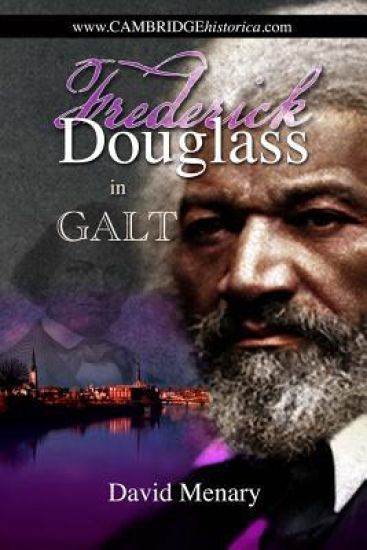
Frederick Douglass in Galt

Frederick Douglass in Galt

David Menary

Lulu.com
2014
nidottu
Before the American Civil War, and almost a decade before Confederation, abolitionist and former slave Frederick Douglass visited Galt (present-day Cambridge, Ontario), Canada West. It was mid-December 1857, and he lectured about "The Brotherhood of Nations." Douglass was a familiar figure on the lecture circuit, having helped many fugitive slaves flee to Canada through the Underground Railroad. Although Douglass had been a close associate of radical abolitionist John Brown, he also developed a friendship with President Abraham Lincoln that lasted until Lincoln's assassination by John Wilkes Booth. The lecture series that winter in Galt included other well-known speakers, but all other speeches were free to the residents of the town, except for the Douglass lecture, for which there was a 12-and-a-half cent admission charge. Proceeds helped defray travel costs for Douglass, and fund his anti-slavery newspaper in Rochester, N.Y. When he died in 1895, he was one of the best-known men in America.
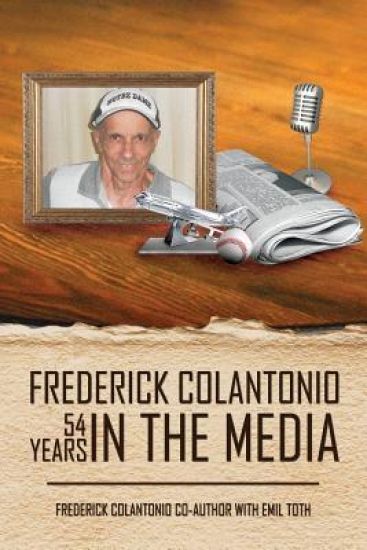
Frederick Colantonio 54 Years in the Media

Frederick Colantonio 54 Years in the Media

Frederick A. Colantonio; Emil Toth

Lulu.com
2015
nidottu
This inspirational biography reveals the persecution of Fred Colantonio as a child, boy and man. The reason for his trials was being small in stature. His earliest memories of school were taunts, bruises and bullies. Fred stood four feet seven inches tall and weighed 75 pounds upon entering St. Benedict's High School. His first day in high school a nun asked him, "Why are you here. You should be in grade school." Fred replied, "Sister, I've had ten years of grade school. I've had more than enough to last a lifetime." When he could no longer contend with the high school bullies, he sought help from Sister Superior Mary Patricuis. Because of her grace and understanding he escaped further persecution, when she warned the bullies there would be consequences if they persisted in bullying Fred. In adulthood, Fred turned his life around by utilizing a positive mental attitude at work and in his relationships.
Narrative of the Life of Frederick Douglass, an American Slave
Written by Douglass himself, this is his treatise against slavery that expresses his hope for what life could be. Published in 1845, the text played a role in the Civil War by bolstering the abolitionist cause and promoting early African American intellectualism.In Douglass's time, slavery was viewed as a civilizing institution that maintained order. Douglass refuted these false notions with accounts of the inhumane treatment slaves frequently endured. He showed that slavery was keeping people in subservient roles, and in the worse cases slaves were treated in terrible ways that were far from civilized.Douglass argued slavery was not just dehumanizing to the slave, but also corrupted the slave owners: "Slavery proved as injurious to her as it did to me. When I went there, she was a pious, warm, and tender-hearted woman. Under its influence, the tender heart became stone, and the lamblike disposition gave way to one of tiger-like fierceness."It was the weight of such sentiments that made Douglass's text so influential to American history. This text is frequently required reading for students and allows us to better understand the full repercussions of slavery.
Frederick Douglass' Dream

Frederick Douglass' Dream

Lise Marlowe

Lulu.com
2016
nidottu
Camp William Penn in La Mott, Pennsylvania was the first official federal training camp for African American soldiers in the Civil War. Over 11,000 men, 40% of them former slaves, walked through the gates of Camp William Penn. Frederick Douglass was the main recruiter of the camp. The camp was on the land of the infamous abolitionist and women's rights suffragist, Lucretia Mott.