Kirjojen hintavertailu. Mukana 12 016 292 kirjaa ja 12 kauppaa.

Kirjahaku

Etsi kirjoja tekijän nimen, kirjan nimen tai ISBN:n perusteella.

1000 tulosta hakusanalla Frederick C. Beiser

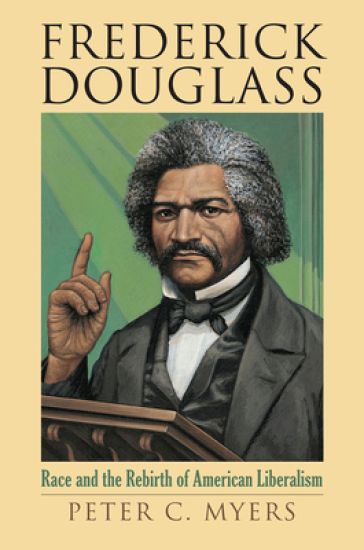
Frederick Douglass

Frederick Douglass

Peter C. Myers

UNIVERSITY PRESS OF KANSAS
2023
nidottu
For Frederick Douglass, the iconic nineteenth-century slave and abolitionist, the foundations for his arguments in support of racial equality rested on natural rights and natural law-and the bold proclamation of the Declaration of Independence that all men are created equal. But because many Americans never observed this principle—and in Douglass’s day even renounced it—he made it his life’s work to move the nation toward this vision of a more noble liberalism. Peter Myers now considers that effort and the natural rights arguments by which Douglass confronted race in America.Myers examines the philosophic core of Douglass’s political thought, offering a greater understanding of its depth and coherence. He depicts Douglass as the leading thinker to apply the Founders’ doctrine of natural rights to the plight of African Americans—an activist who grounded his arguments on the rights guaranteed by the Constitution and the inherent injustice not only of slavery but of any form of racial superiority.Myers first reconsiders Douglass’s descriptive analysis of slavery, developing his arguments for its natural wrongness and for its natural weakness in conjunction with the right of resistance. He then examines Douglass’s understandings of civil government in general and of the U.S. constitutional order in particular, exploring his argument on the Constitution’s relation to slavery and his thoughts on the powers and duties of the federal and state governments in the matter of postslavery race relations—including new insight into Douglass’s controversial “do nothing” doctrine.Myers argues that Douglass’s political thought at its core is both more coherent and more defensible in substance than his critics acknowledge. He maintains that Douglass was right in finding the natural rights principles of the Declaration a sufficient theoretical basis for addressing the nation’s racial problems and contends that his hopefulness for the demise of slavery and white supremacy was marked by moderation and realism.Myers finds in Douglass’s political thought the foundations of a revitalized argument for the mainstream civil rights, integrationist tradition of African American political thought. His analysis offers a new way of looking at an important thinker, as well as a compelling case for hoping that race relations in America will improve over time.
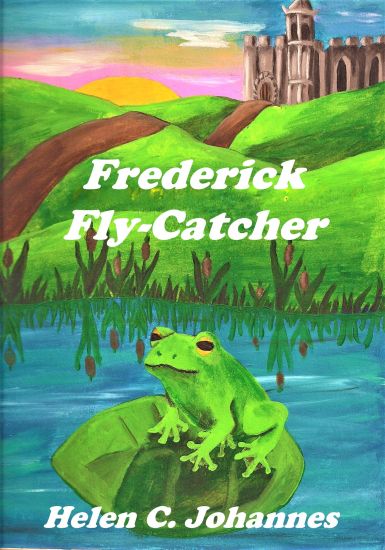
Frederick Fly-Catcher

Frederick Fly-Catcher

Helen C Johannes

Helen C. Johannes
2020
pokkari
Frederick the frog isn't looking for adventure. His life in the family pond--hanging out and catching flies--is perfect. Or it would be if a bully wasn't harassing the youngest frogs. To defend them, Frederick accepts a fly-catching challenge, but what he catches isn't an insect. It's a magic ring, and Frederick has swallowed it Whenever he burps or coughs, something terrifying happens to the pond. "Frogs shouldn't have anything to do with human things," says wise Uncle Ben, so to protect his family, Frederick must leave the only world he knows. The world beyond the pond is frightening, but rather than hide or mope, Frederick sets out to get rid of this dangerous human thing. His only hope is to find the small human who tossed the ring into the pond, the boy chased by big men and bigger horses. The boy is in trouble, too, but how can Frederick, one little frog, save a human, much less the pond from an evil sorcerer? A middle grade chapter book, 16 chapters, approximately 18,000 words.
Frederick County, Virginia Deed Book Series, Volume 4, Deed Books 12, 13, 14
These abstracts contain information from deeds, leases, releases, mortgages and other agreements that reveal family relationships. The abstracts are presented in the original order that they were entered in the deed books. The deed book page number is indicated. In addition to family relationships, these abstracts contain hundreds of names of witnesses and neighbors. A full name index is included.
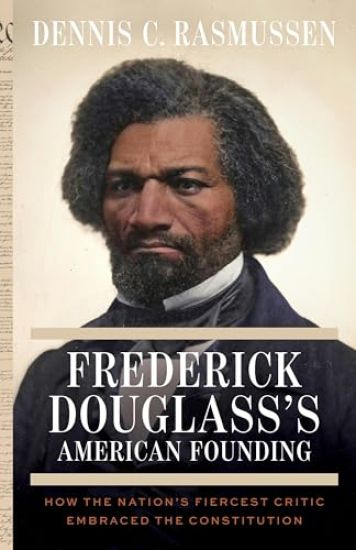
Frederick Douglass's American Founding

Frederick Douglass's American Founding

Dennis C. Rasmussen

PRINCETON UNIVERSITY PRESS
2026
sidottu
The remarkable story of how Frederick Douglass went from condemning the Constitution as a proslavery pact to celebrating it as a “glorious liberty document” that promises freedom to everyone The speeches and writings of Frederick Douglass contain some of the most probing examinations ever of the role that slavery played in America’s founding. In Frederick Douglass’s American Founding, Dennis Rasmussen traces the great abolitionist’s intellectual journey from denouncing the founders as hypocrites and the Constitution as evil to embracing them both. Throughout the 1840s, Douglass described the founders as “little better than a band of pirates” and the Constitution as “a most cunningly-devised and wicked compact.” Beginning in 1849, however, he undertook a long period of study and reflection that produced a dramatic change of mind. From 1851 on, Douglass contended that the founders were resolutely opposed to slavery and that the Constitution was a “glorious liberty document” that required immediate emancipation, despite several clauses that appeared to suggest otherwise. Even after embracing the Constitution and the founders, Douglass remained second to none in castigating America for the evils of slavery. Indeed, as he argued in his greatest speech, “What to the Slave Is the Fourth of July?” (1852), the glory of the nation’s founding ideals only put their persistent betrayal into starker relief. Douglass also came to regard the founders as radicals in their fight against tyranny. That was why he insisted that he and his fellow abolitionists, rather than moderates like Abraham Lincoln, were the founders’ true heirs. Whatever you think about the founding, Douglass’s arguments will challenge—and perhaps even change—your views. After seeing the Constitution through Douglass’s eyes, it is difficult to look at it in the same way again.
Frederick Douglass

Frederick Douglass

C. James Trotman Ph.D.

Greenwood Press
2011
sidottu
Written for young adults, this biography of Frederick Douglass covers the life of the most famous black abolitionist and intellectual of the 19th century.Frederick Douglass: A Biography explores the life of the most famous black abolitionist and intellectual of the 19th century. The book covers the major developments of Douglass's life from his birth in 1818 through his time as a slave and his rise to prominence as the most famous black voice for freedom of his time. The biography discusses Douglass's relationships with such figures as John Brown, the feminist Elizabeth Cady Stanton, and five presidents of the United States, including Abraham Lincoln. It analyzes his role in national politics before, during, and after the Civil War, and examines the way his life is tied to significant local, regional, and national events. By focusing on the importance of spirituality in Douglass's life, this revealing work adds to our understanding of the man, the way he saw himself, and the many things he accomplished.
T.C. Cannon

T.C. Cannon

Joan Frederick

Northland Publishing
1995
nidottu
Tommy Wayne T.C. Cannon was to the world of contemporary Native American art what James Dean was to American movie culture. Here is a chronicle of the words and work of the man regarded as the most eloquent and innovative of contemporary Native American artists. A 1996 Oklahoma Book Award finalist.