Kirjojen hintavertailu. Mukana 12 016 292 kirjaa ja 12 kauppaa.

Kirjahaku

Etsi kirjoja tekijän nimen, kirjan nimen tai ISBN:n perusteella.

1000 tulosta hakusanalla Frederick Rickmann

Frederick Chopin as a Man and Musician: Volumes 1-2, Complete (With illustrations and musical staves)
Frederick Niecks' meticulous biography of Chopin is praised to this day as one of the finest accounts of the legendary composer's life ever written.In Niecks' painstakingly assembled work, we behold a chronologically arranged narrative of the upbringing, rise to fame, prominence, illness and death of Frederick Chopin. His tumultuous, strained relationship with French author George Sand is recounted, with the regular quotation of correspondences between the couple and others included in abundance. Frederick Chopin as a Man and Musician is a meticulous and voluminous work, perfect for fans and students of the composer who wish to gain intimate insights into Chopin's personal nature, habits, friends, family and the world in which he lived. His travels and struggle with a disease generally suspected to be tuberculosis, are much discussed. Tragically we hear accounts of the mental anguish suffered by the composer, as he grappled with both popular recognition and his worsening respiratory condition.
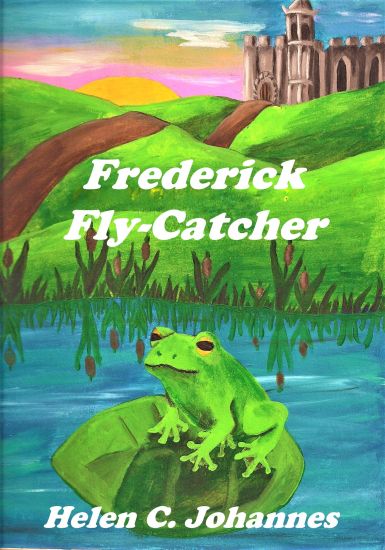
Frederick Fly-Catcher

Frederick Fly-Catcher

Helen C Johannes

Helen C. Johannes
2020
pokkari
Frederick the frog isn't looking for adventure. His life in the family pond--hanging out and catching flies--is perfect. Or it would be if a bully wasn't harassing the youngest frogs. To defend them, Frederick accepts a fly-catching challenge, but what he catches isn't an insect. It's a magic ring, and Frederick has swallowed it Whenever he burps or coughs, something terrifying happens to the pond. "Frogs shouldn't have anything to do with human things," says wise Uncle Ben, so to protect his family, Frederick must leave the only world he knows. The world beyond the pond is frightening, but rather than hide or mope, Frederick sets out to get rid of this dangerous human thing. His only hope is to find the small human who tossed the ring into the pond, the boy chased by big men and bigger horses. The boy is in trouble, too, but how can Frederick, one little frog, save a human, much less the pond from an evil sorcerer? A middle grade chapter book, 16 chapters, approximately 18,000 words.
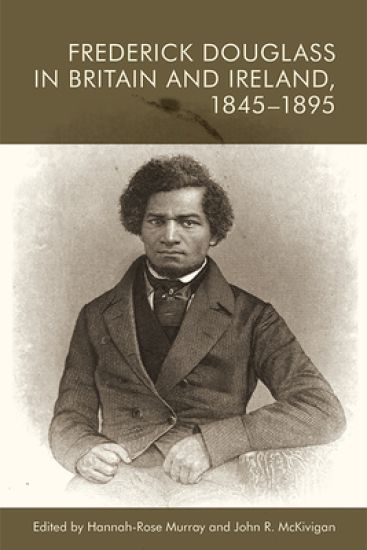
Frederick Douglass in Britain and Ireland, 1845-1895
The first and only anthology dedicated to Douglass's three journeys to Britain, covering oratory, print and visual culture The only monograph and anthology to focus on Frederick Douglass's relationship with Britain through unexplored oratory and print culture Provides a monograph-length introduction focusing on Douglass' experiences in the British Isles, from his first visit in 1845, to 1859 and 1886 (the latter two visits have received scant attention from scholars in comparison to his first visit in 1845) Provides specialist and general audiences with political and cultural insights into Frederick Douglass' transatlantic visits Presents speeches, letters and poetry in relation to Douglass' visit (including his own testimony) that have never been published before Examines Douglass' impact on British culture with a section on songs, images and poetry written in response to his lectures Radically updates Douglass' speaking locations in Britain, which is printed alongside a visual map of these locations Provides several images new to scholarship (for instance, the ticket to one of Douglass' lectures in Cambridgeshire) This critical edition documents Frederick Douglass's relationship with Britain through unexplored oratory and print culture. With an unprecedented and comprehensive 60,000-word introduction that places the speeches, letters, poetry and images printed here into context, the sources provide extraordinary insight into the myriad performative techniques Douglass used to win support for the causes of emancipation and human rights. Editors examine how Douglass employed various media letters, speeches, interviews and his autobiographies to convince the transatlantic public not only that his works were worth reading and his voice worth hearing, but also that the fight against racism would continue after his death.
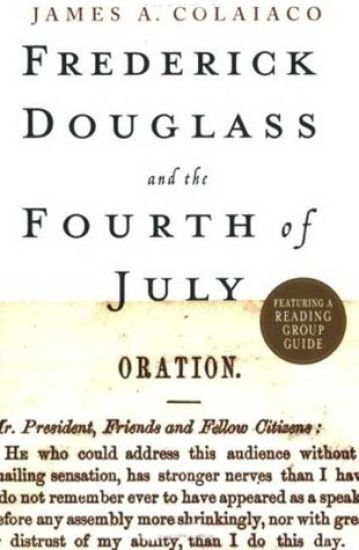
Frederick Douglass and the Fourth of July

Frederick Douglass and the Fourth of July

James a. Colaiaco

St. Martin's Griffin
2007
nidottu
On July 5th, 1852, Frederick Douglass, one of the greatest orators of all time, delivered what was arguably the century's most powerful abolition speech. At a time of year where American freedom is celebrated across the nation, Douglass eloquently summoned the country to resolve the contradiction between slavery and the founding principles of our country. In this book, James A. Colaiaco vividly recreates the turbulent historical context of Douglass' speech and delivers a colorful portrait of the country in the turbulent years leading to the civil war. Now including a reader's guide with discussion points, this book provides a fascinating new perspective on a critical time in American history.
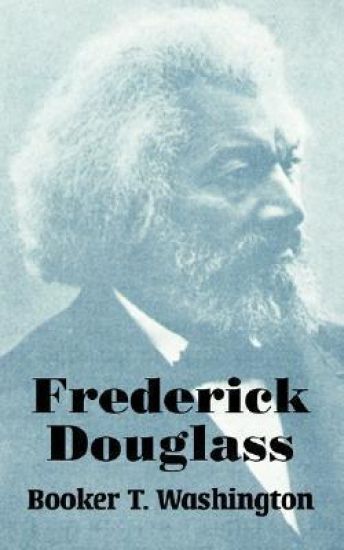
Frederick Douglass

Frederick Douglass

Booker T Washington

University Press of the Pacific
2003
pokkari
CONTENTS Chronology Frederick Douglass, the Slave Back to Plantation-Life Escape from Slavery; Learning the Ways of Freedom Beginning of His Public Career Slavery and Anti-Slavery Seeks Refuge in England Home Again as a Freeman - New Problems and New Triumphs Free Colored People and Colonization The Underground Railway and the Fugitive Slave Law Douglass, Harriet Beecher Stowe and John Brown Forebodings of the Crisis Douglass's Services in the Civil War Early Problems of Freedom Sharing the Responsibilities and Honors of Freedom Further Evidences of Popular Esteem, with Glimpses into the Past Final Honors to the Living and Tributes to the Dead
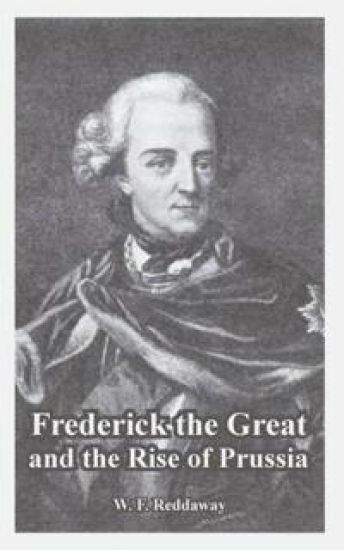
Frederick the Great and the Rise of Prussia

Frederick the Great and the Rise of Prussia

W F Reddaway

University Press of the Pacific
2005
pokkari
A thorough study of the heritage of Frederick and how he built upon it throughout his life as he extended Prussia's power and role in European politics. This title is cited and recommended by Books for College Libraries; the Catalogue of the Lamont Library, Harvard College; and The American Historical Association's Guide to Historical Literature. At the time of original publication in 1904, W. F. Reddaway was Fellow and Lecturer of King's College, Cambridge.
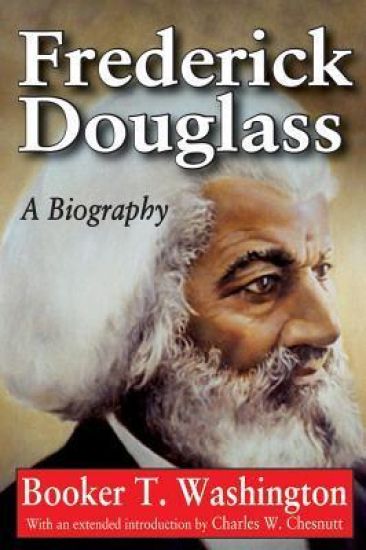
Frederick Douglass

Frederick Douglass

Booker T. Washington

AldineTransaction
2012
nidottu
This biography, written by Booker T. Washington, one of most important post-Civil War African-American thinkers, is an account of the life and career of Frederick Douglass. The biographical account is set within a nation struggling to solve one of the most excruciating social problems that any modern people faced—slavery. This volume encompasses the experiences of Frederick Douglass as a slave and then as a public man, through the anti-slavery movement, the Civil War, and the period of reconstruction.Douglass's fame as a speaker was secure. His position as the champion of an oppressed race was, in his own generation, as picturesque as it was unique. From the blight of slavery, Douglass emerged, passed through, and triumphed over the lingering prejudice that he encountered as a freeman. Like the author of his biography, Douglass seized his place in history. His life is an epic, one that finds few to equal it in the realms of either romance or reality. Douglass was a role model to the author, and his early narrative was a guide to black and white people alike.Among the subjects covered are the Genesis of the Anti-Slavery Agitation, the Fugitive Slave Law, the Underground Railway, the American Colonization Society, the Conflict in Kansas for Free Soil, the John Brown Raid, the Civil War, the Enlistment of Colored Troops, and Reconstruction.
Frederick Douglass

Frederick Douglass

David W. Blight

Simon Schuster
2018
sidottu
**Winner of the Pulitzer Prize in History** “Extraordinary…a great American biography” (The New Yorker) of the most important African-American of the nineteenth century: Frederick Douglass, the escaped slave who became the greatest orator of his day and one of the leading abolitionists and writers of the era.As a young man Frederick Douglass (1818–1895) escaped from slavery in Baltimore, Maryland. He was fortunate to have been taught to read by his slave owner mistress, and he would go on to become one of the major literary figures of his time. His very existence gave the lie to slave owners: with dignity and great intelligence he bore witness to the brutality of slavery. Initially mentored by William Lloyd Garrison, Douglass spoke widely, using his own story to condemn slavery. By the Civil War, Douglass had become the most famed and widely travelled orator in the nation. In his unique and eloquent voice, written and spoken, Douglass was a fierce critic of the United States as well as a radical patriot. After the war he sometimes argued politically with younger African Americans, but he never forsook either the Republican party or the cause of black civil and political rights. In this “cinematic and deeply engaging” (The New York Times Book Review) biography, David Blight has drawn on new information held in a private collection that few other historian have consulted, as well as recently discovered issues of Douglass’s newspapers. “Absorbing and even moving…a brilliant book that speaks to our own time as well as Douglass’s” (The Wall Street Journal), Blight’s biography tells the fascinating story of Douglass’s two marriages and his complex extended family. “David Blight has written the definitive biography of Frederick Douglass…a powerful portrait of one of the most important American voices of the nineteenth century” (The Boston Globe). In addition to the Pulitzer Prize, Frederick Douglass won the Bancroft, Parkman, Los Angeles Times (biography), Lincoln, Plutarch, and Christopher awards and was named one of the Best Books of 2018 by The New York Times Book Review, The Wall Street Journal, The Boston Globe, The Chicago Tribune, The San Francisco Chronicle, and Time.
Frederick Douglass

Frederick Douglass

David W. Blight

Simon Schuster
2020
pokkari
* Selected as One of the Best Books of the 21st Century by The New York Times * Winner of the Pulitzer Prize in History * “Extraordinary…a great American biography” (The New Yorker) of the most important African American of the 19th century: Frederick Douglass, the escaped slave who became the greatest orator of his day and one of the leading abolitionists and writers of the era.As a young man Frederick Douglass (1818–1895) escaped from slavery in Baltimore, Maryland. He was fortunate to have been taught to read by his slave owner mistress, and he would go on to become one of the major literary figures of his time. His very existence gave the lie to slave owners: with dignity and great intelligence he bore witness to the brutality of slavery. Initially mentored by William Lloyd Garrison, Douglass spoke widely, using his own story to condemn slavery. By the Civil War, Douglass had become the most famed and widely travelled orator in the nation. In his unique and eloquent voice, written and spoken, Douglass was a fierce critic of the United States as well as a radical patriot. After the war he sometimes argued politically with younger African Americans, but he never forsook either the Republican party or the cause of black civil and political rights. In this “cinematic and deeply engaging” (The New York Times Book Review) biography, David Blight has drawn on new information held in a private collection that few other historian have consulted, as well as recently discovered issues of Douglass’s newspapers. “Absorbing and even moving…a brilliant book that speaks to our own time as well as Douglass’s” (The Wall Street Journal), Blight’s biography tells the fascinating story of Douglass’s two marriages and his complex extended family. “David Blight has written the definitive biography of Frederick Douglass…a powerful portrait of one of the most important American voices of the nineteenth century” (The Boston Globe). In addition to the Pulitzer Prize, Frederick Douglass won the Bancroft, Parkman, Los Angeles Times (biography), Lincoln, Plutarch, and Christopher awards and was named one of the Best Books of 2018 by The New York Times Book Review, The Wall Street Journal, The Boston Globe, The Chicago Tribune, The San Francisco Chronicle, and Time.
Frederick Douglass

Frederick Douglass

Peter Burchard

Atheneum Books for Young Readers
2007
pokkari
In a swift and compelling narrative, acclaimed historian Peter Burchard tells the story of the greatest black American of the nineteenth century, a pioneer who laid down a firm foundation for all men and women who came after him.As a child and as a youth, Frederick Douglass was enslaved, but his intelligence, his resilient character, and his innate charm, together with a measure of good fortune, helped him survive. He became a forceful speaker and persuasive writer and conducted a campaign to abolish slavery and secure civil rights for his people and for all Americans. He saw himself as a soldier in a battle for the dignity of the “great family of man.” This new biography presents Douglass as he lived through the misery, tragedy, and heartbreak of his early years, as he escaped from slavery only to endure anxiety and outrage in the free states of the North. He eventually made his way to Great Britain, where he lectured forcefully against slavery. In the United States, as the Civil War began, Douglass recruited young black men to fight and die for their freedom and the freedom of their brothers held in bondage in the South. He became a friend and counselor to presidents, senators, and governors.