Kirjahaku
Etsi kirjoja tekijän nimen, kirjan nimen tai ISBN:n perusteella.
1000 tulosta hakusanalla Geoffrey Poitras

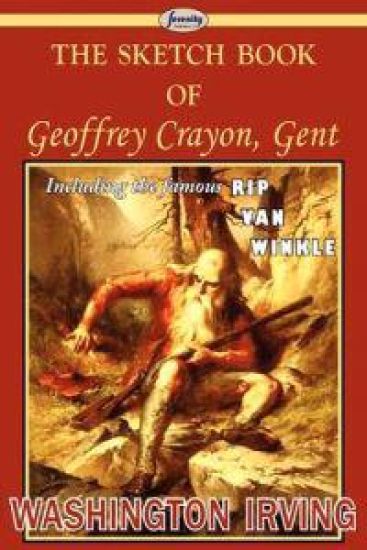
The Sketch Book of Geoffrey Crayon, Gent (Large Print Edition)
Washington Irving
Serenity Publishers, LLC
2012
pokkari

Happy Birthday Geoffrey - The Big Birthday Activity Book: Personalized Children's Activity Book
Birthdaydr
Createspace Independent Publishing Platform
2018
nidottu
Happy Birthday Geoffrey is a personalized kids activity book, it includes personalized crosswords, word searches, number puzzles, jokes, drawing and coloring >It is suitable for children between 6-11 years old It is the perfect birthday present for Geoffrey, and is a great keepsake for parents to remember their child's early years and birthdays This personalized book is available for other names also This is a great gift for children and an amazing keepsake for parents Happy Birthday Geoffrey
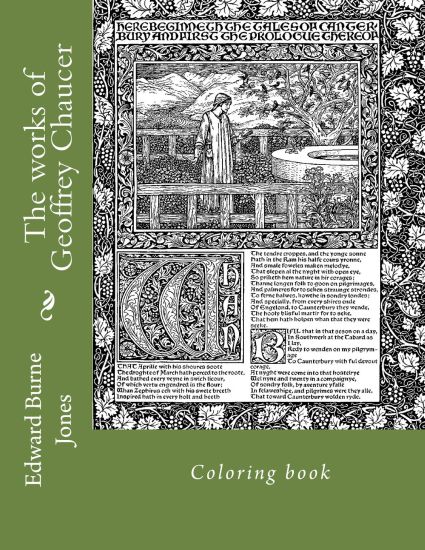
The works of Geoffrey Chaucer: Coloring book
Edward Burne Jones
Createspace Independent Publishing Platform
2018
nidottu
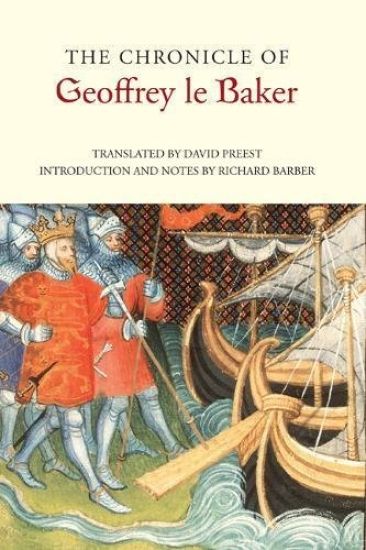
The Chronicle of Geoffrey le Baker of Swinbrook
The Boydell Press
2018
pokkari
Geoffrey le Baker's chronicle covers the reigns of Edward II and Edward III up to the English victory at Poitiers. David Preest's new translation includes extensive notes and an introduction by Richard Barber. Geoffrey le Baker's chronicle covers the reigns of Edward II and Edward III up to the English victory at Poitiers. It starts in a low key, copying an earlier chronicle, but by the end of Edward II's reign he offers a much more vivid account. Baker's description of Edward II's last days is partly based on the eyewitness account of his patron, Sir Thomas de la More, who was present at one critical interview. This story of Edward's death, like many other details from his chronicle, was picked up by Tudor historians, particularly by Holinshed, who was the source for Shakespeare's history plays. The reign of Edward III is dominated, not by Edward III himself, but by Baker's real hero, Edward prince of Wales. His bravery aged sixteen at Crécy is presented as a prelude to his victory at Poitiers, a battle which Baker is able to describe in great detail, apparently from what he was told by the prince's commanders. It is a rarity among medieval battles, because - in sharp contrast to the total anarchy at Crécy - the prince and his staff were able to see the enemy's manoeuvres. Throughout the chronicle there are sharply defined vignettes which stay in the mind - the killing of the Scottish champion on Halidon Hill, the drowning of Sir Edward Bohun, the earls of Salisbury and Suffolk as prisoners carried in a cart, the death of Sir Walter Selby and his two sons, the bravery of Sir Thomas Dagworth against a cobbler's son, the duel between Otho and the duke of Lancaster, John Dancaster and the lewd washerwoman. Baker writes in a complex Latin which even scholars find problematic,and David Preest's new translation will be widely welcomed by anyone interested in the fourteenth century. There are extensive notes and an introduction by Richard Barber. DAVID PREEST has also translated The Chronica Maiora of Thomas Walsingham, a Choice Outstanding Academic Title; RICHARD BARBER's recent book Edward III and the Triumph of England draws heavily on Geoffrey le Baker's work for the first twenty years of Edward'sreign.

The Chronicle of Geoffrey le Baker of Swinbrook
The Boydell Press
2012
sidottu
Geoffrey le Baker's chronicle covers the reigns of Edward II and Edward III up to the English victory at Poitiers. David Preest's new translation includes extensive notes and an introduction by Richard Barber. Geoffrey le Baker's chronicle covers the reigns of Edward II and Edward III up to the English victory at Poitiers. It starts in a low key, copying an earlier chronicle, but by the end of Edward II's reign he offers a much more vivid account. His description of Edward II's last days is partly based on the eyewitness account of his patron, Sir Thomas de la More, who was present at one critical interview. Baker's story of Edward's death, like many other details from his chronicle, was picked up by Tudor historians, particularly by Holinshed, who was the source for Shakespeare's history plays. The reign of Edward III is dominated, not by Edward III himself, but by Baker's real hero, Edward prince of Wales. His bravery aged 16 at Crécy is presented as a prelude to his victory at Poitiers, a battle which Baker is able to describe in great detail, apparently from what he was told by the prince's commanders. It is a rarity among medieval battles, because - in sharp contrast to the total anarchy at Crécy - the prince and his staff were able to see the enemy's manoeuvres. Throughout the chronicle there are sharply defined vignetteswhich stay in the mind - the killing of the Scottish champion on Halidon Hill, the drowning of Sir Edward Bohun, the earls of Salisbury and Suffolk as prisoners carried in a cart, the death of Sir Walter Selby and his two sons, the bravery of Sir Thomas Dagworth against a cobbler's son, the duel between Otho and the duke of Lancaster, John Dancaster and the lewd washerwoman. Baker writes in a complex Latin which even scholars find problematic, and David Preest's new translation will be widely welcomed by anyone interested in the fourteenth century. There are extensive notes and an introduction by Richard Barber.
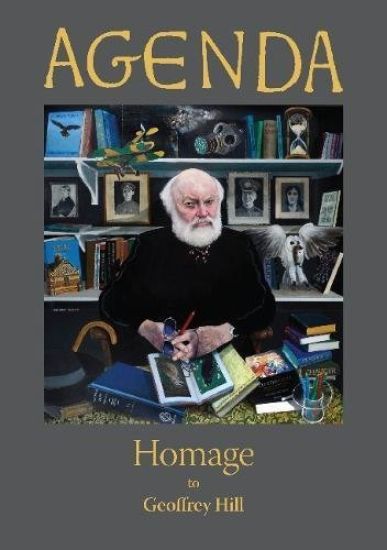
Homage to Geoffrey Hill (Agenda Magazine)
Agenda Poetry
2016
nidottu
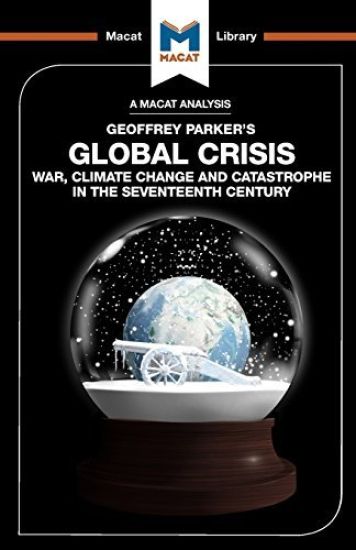
Few historians can claim to have undertaken historical analysis on as grand a scale as Geoffrey Parker in his 2013 work Global Crisis: War, Climate Change and Catastrophe in the Seventeenth Century. It is a doorstop of a book that surveys the ‘general crisis of the 17th century,’ shows that it was experienced practically throughout the world, and was not merely a European phenomenon, and links it to the impact of climate change in the form of the advent of a cold period known as the ‘Little Ice Age.’ Parker’s triumph is made possible by the deployment of formidable critical thinking skills – reasoning, to construct an engaging overall argument from very disparate material, and analysis, to re-examine and understand the plethora of complex secondary sources on which his book is built. In critical thinking, analysis is all about understanding the features and structures of argument: how given reasons lead to conclusions, and what kinds of implicit reasons and assumptions are being used. Historical analysis applies the same skills to the fabric of history, asking how given chains of events occur, how different reasons and factors interact, and so on.Parker, though, takes things further than most in his quest to understand the meaning of a century’s-worth of turbulence spread across the whole globe. Beginning by breaking down the evidence for significant climatic cooling in the 17th-century (due to decreased solar activity), he moves on to detailed study of the effects the cooling had on societies and regimes across the world. From this detailed spadework, he constructs a persuasive argument that accounts for the different ways in which the effects of climate change played out across the century – an argument with profound implications for a future likely to see serious climate change of its own.
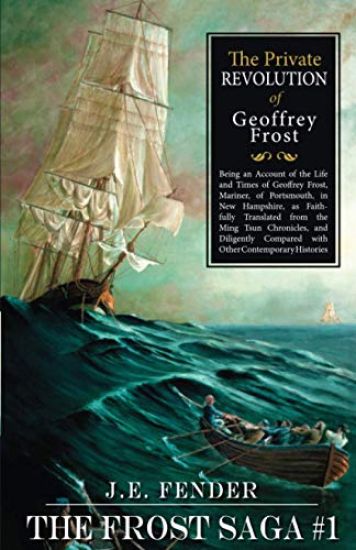
A young ship's captain finds himself thrust into high adventure during the American Revolution At twenty-six, Geoffrey Frost is already an experienced mariner and a veteran of the China trade, but he sets aside his lucrative commercial interests to assist the American colonies in their war with Great Britain. Unfortunately, things go bad from the start. His first mission for the colony of New Hampshire - to transport some badly needed cannons captured in the Bahamas - runs afoul of British naval vessels patrolling the American coast. Commanding a ship built for cargo rather than warfare, and a crew more accustomed to fending off pirates than engaging a well-trained British naval crew, Frost reveals a flair for tactics and a coolness under fire that bodes well for his wartime career. If he can stay alive that long Fans of Patrick O'Brian and C.S. Forester rejoice The Frost Saga brings their brand of high-seas adventure to American shores The characters are memorable...{There is} enough action for two books - from shipwrecks to battles to daring rescues... After several plot twists, Frost arrives at the end of this adventure but ready for the next... Fender has made an auspicious start with the first book in this projected series. - Library JournalWe early discoverers of Patrick O'Brian who anxiously awaited each new book in the series have felt bereft since his pen was stilled. J.E. Fender has come to the rescue...The Frost Saga shows a mastery of technical and historical detail...-J.F. Lehman, former Secretary of the Navy and author of On Seas of Glory

Drawing from the Geoffrey Bawa Archives
LARS MULLER PUBLISHERS
2023
sidottu
The Sri Lankan architect Geoffrey Bawa (1919–2003) fused sensitivity for local context with the technological discoveries and design principles of modernism in his work. Accordingly, Bawa often incorporated materials (local stone and timber) and layouts (high roofs, cross-ventilation, vast overhangs) specific to Sri Lanka’s monsoon climate and storied architectural history – from the cave monasteries of the Anuradhapura period to the feudal Walauwa style of manor houses – into his modernist designs. Gathering essays by scholars and writers across a multitude of disciplines – including architecture, photography, geography, urban design and art history – this volume spotlights Bawa’s exceptionally beautiful architectural drawings, delving into the central, multipronged role of the medium in his practice, from ideation to instruction to post-construction review. The anthology also explores the identity of post-independence Sri Lanka, which Bawa helped to shape – aesthetically and, less overtly, ideologically. Featuring over 200 lush drawings and photographs, many of which have never been published before, the book promises to engage both general and scholarly audiences with interests in architecture, drawing and archives.
The Sketch-book of Geoffrey Crayon, Gent - Volume I is an unchanged, high-quality reprint of the original edition of 1895. Hansebooks is editor of the literature on different topic areas such as research and science, travel and expeditions, cooking and nutrition, medicine, and other genres. As a publisher we focus on the preservation of historical literature. Many works of historical writers and scientists are available today as antiques only. Hansebooks newly publishes these books and contributes to the preservation of literature which has become rare and historical knowledge for the future.

The Sketch Book of Geoffrey Crayon is an unchanged, high-quality reprint of the original edition of 1865. Hansebooks is editor of the literature on different topic areas such as research and science, travel and expeditions, cooking and nutrition, medicine, and other genres. As a publisher we focus on the preservation of historical literature. Many works of historical writers and scientists are available today as antiques only. Hansebooks newly publishes these books and contributes to the preservation of literature which has become rare and historical knowledge for the future.



The Works of Geoffrey Chaucer is an unchanged, high-quality reprint of the original edition of 1898. Hansebooks is editor of the literature on different topic areas such as research and science, travel and expeditions, cooking and nutrition, medicine, and other genres. As a publisher we focus on the preservation of historical literature. Many works of historical writers and scientists are available today as antiques only. Hansebooks newly publishes these books and contributes to the preservation of literature which has become rare and historical knowledge for the future.

The Poetical Works of Geoffrey Chaucer - Volume II is an unchanged, high-quality reprint of the original edition of 1879. Hansebooks is editor of the literature on different topic areas such as research and science, travel and expeditions, cooking and nutrition, medicine, and other genres. As a publisher we focus on the preservation of historical literature. Many works of historical writers and scientists are available today as antiques only. Hansebooks newly publishes these books and contributes to the preservation of literature which has become rare and historical knowledge for the future.