The term ‘postmodernity’ has been used to describe that historical transformation of the late 20th century when the institutional breaks holding back individual emancipation disintegrated, thereby giving rise to the full expression of individual desires and the quest for self-fulfilment. But there are now signs – argues Gilles Lipovetsky, one of the most original social thinkers in France today – that we’ve entered a new phase of ‘hypermodernity’, characterized by hyper-consumption and the hypermodern individual. Hyperconsumption is a consumption which absorbs and integrates more and more spheres of social life and which encourages individuals to consume for their own personal pleasure rather than to enhance their social status. Hypermodernity is a society characterized by movement, fluidity and flexibility, distanced more than ever from the great structuring principles of modernity. And the hypermodern individual, while oriented towards pleasure and hedonism, is also filled with the kind of tension and anxiety that comes from living in a world which has been stripped of tradition and which faces an uncertain future. Individuals are gnawed by anxiety; fear has superimposed itself on their pleasures, and anguish on their liberation. Everything worries and alarms them, and there are no longer any beliefs systems to which they can turn for assurance. These are hypermodern times.
The term ‘postmodernity’ has been used to describe that historical transformation of the late 20th century when the institutional breaks holding back individual emancipation disintegrated, thereby giving rise to the full expression of individual desires and the quest for self-fulfilment. But there are now signs – argues Gilles Lipovetsky, one of the most original social thinkers in France today – that we’ve entered a new phase of ‘hypermodernity’, characterized by hyper-consumption and the hypermodern individual. Hyperconsumption is a consumption which absorbs and integrates more and more spheres of social life and which encourages individuals to consume for their own personal pleasure rather than to enhance their social status. Hypermodernity is a society characterized by movement, fluidity and flexibility, distanced more than ever from the great structuring principles of modernity. And the hypermodern individual, while oriented towards pleasure and hedonism, is also filled with the kind of tension and anxiety that comes from living in a world which has been stripped of tradition and which faces an uncertain future. Individuals are gnawed by anxiety; fear has superimposed itself on their pleasures, and anguish on their liberation. Everything worries and alarms them, and there are no longer any beliefs systems to which they can turn for assurance. These are hypermodern times.
27 of the world's greatest attempts at re-creating or reimagining paradise on earth (Book 3 of the bestselling Atlas series) "Paradises got off to a bad start early on. The one the Bible had arranged had to rapidly close its pearly gates when its first two occupants, Adam and Eve, had misbehaved." Humankind knows too well that the Garden of Eden will not reopen its gates, but people are always on the lookout for its mirror image, its fleeting precursor. They have devoted many sleepless nights to fashioning their own Elysian Plains and have assembled a collection of El Dorados: ideal cities, castles where freedom reigns, islands without sin or sorrow, communities governed by love and nudity, flower and bird gardens, phalansteries and homes following the motto “Do as you please.” There are only few success stories. Yet, despite failing to build paradises endowed with an eternal life expectancy, civilizations have sometimes succeeded in manufacturing small plots of Eden, a Mount Olympus in miniature, capable of pinching a few days or centuries from our endless melancholy. This atlas embarks us upon a journey across civilizations, through the exploration of 27 real or fictional places, including: • gardens of the Middle Ages • Atlantis • Castles of King Ludwig II • Oceana • Pitcairn Island • city of Manoa • Mausoleum of Qin Shi Huang • And more Each place is illustrated with a specially designed map in a graphic style that has become the hallmark of this Atlas series.
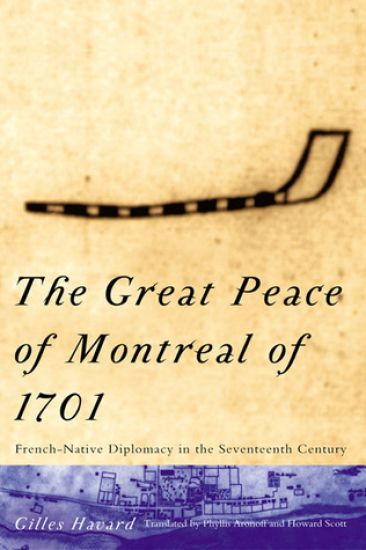
The last decades of the seventeenth century were marked by persistent, bloody conflicts between the French and their Native allies on the one side and the Iroquois confederacy on the other. In the summer of 1701, 1,300 representatives of forty First Nations from the Maritimes to the Great Lakes and from James Bay to southern Illinois met with the French at Montreal. Elaborate, month-long ceremonies culminated in the signing of The Great Peace of Montreal, which effectively put an end to the Iroquois wars. In The Great Peace of Montreal of 1701 Gilles Havard brings to life the European and Native players who brought about this major feat of international diplomacy. He highlights the differing interests and strategies of the numerous First Nations involved while giving a dramatic account of the colourful conference. The treaty, Havard argues, was the culmination of the French colonial strategy of Native alliances and adaptation to Native political customs. It illustrates the extent of cultural interchange between the French and their Native allies and the crucial role the latter played in French conflicts with the Iroquois and the British. As we approach the 300th anniversary of the treaty's signing in August 1701, Gilles Havard emphasizes its contemporary significance: in signing a treaty with forty separate parties the French recognized the independent sovereignty of every First Nation. This translation is significantly revised and updated from the original French publication of 1992.
The last decades of the seventeenth century were marked by persistent, bloody conflicts between the French and their Native allies on the one side and the Iroquois confederacy on the other. In the summer of 1701, 1,300 representatives of forty First Nations from the Maritimes to the Great Lakes and from James Bay to southern Illinois met with the French at Montreal. Elaborate, month-long ceremonies culminated in the signing of The Great Peace of Montreal, which effectively put an end to the Iroquois wars. In The Great Peace of Montreal of 1701 Gilles Havard brings to life the European and Native players who brought about this major feat of international diplomacy. He highlights the differing interests and strategies of the numerous First Nations involved while giving a dramatic account of the colourful conference. The treaty, Havard argues, was the culmination of the French colonial strategy of Native alliances and adaptation to Native political customs. It illustrates the extent of cultural interchange between the French and their Native allies and the crucial role the latter played in French conflicts with the Iroquois and the British. As we approach the 300th anniversary of the treaty's signing in August 1701, Gilles Havard emphasizes its contemporary significance: in signing a treaty with forty separate parties the French recognized the independent sovereignty of every First Nation. This translation is significantly revised and updated from the original French publication of 1992.
Pasquinade is a satire or critical comment traditionally posted in a public place in ancient Rome; in particular, on the statue of Pasquino. Pasquinades in E is Gilles Paquet’s contribution to this waning tradition.These essays are exercises in critical thinking. They aim to exorcise a number of mental prisons about aspects of governing, and at denouncing pathologies in our ways of thinking and governing ourselves, by exposing their toxic nature. Silence on such matters connotes tacit agreement with toxic nonsense and, therefore, guilt by association for the ensuing mal-governance.
This short book contributes to accelerating the process of recognition of governance studies as a heuristically powerful field of study in two distinct ways. In Part I, it shows first how the governance approach has emerged in response to the limitations of the two main cosmologies that have dominated the 20th century scene type-I liberalism rooted in the market and decentralization; and type-II liberalism rooted in statism and centralization. It proposes a better way to respond effectively to the challenges of effective coordination when power, resources and information are widely distributed into many hands and heads. This new approach has been criticized by the defenders of the ruling cosmologies, but it has evolved effective prototypes of inquiring systems capable of guiding the search for effective wayfinding and for the design of organizational arrangements ensuring effectiveness, resilience and innovation. In Part II, it explores how the governance approach may help in tackling wicked policy problems where ends are neither well known nor agreed upon, and means-ends relationships are either poorly understood or unstable. Three somewhat different cases are discussed: equality where a dominant ideology of egalitarianism in democratic societies is challenged with great difficulty by a cosmology of equability; diversity where, in Canada, maximum diversity would appear to be regarded as optimal diversity, and multiculturalism is propagandized as the nec plus ultra response even though it may be shown to be toxic; and sustainability, where the problem definition and the general direction in which a viable organizational learning regime will emerge are unclear. On both fronts, the book tries to bring a bit of subtlety, a taste for complexity, and some innovative ideas to debates that have wallowed, both at the conceptual and at the practical levels, in ideologically muddy waters.
This short book throws some light on the modern-day pathologies that are crippling the productivity, resilience, innovation and survival of our private, public and social organizations, and therefore of our standard of living. It probes the proximate sources of dysfunction at five interfaces: between the organization and its employees (x-inefficiency), its value chain upstream (escaping fault), its socio-physical environment (externalities), its governance regime (hijacking by certain groups), and its ethical context (moral vacancy). Toxicities at these five interfaces are interrelated and moral vacancy is of central importance in this complex of relationships that may be the source of something like two-thirds to three-quarters of the observed waste. Our inquiry, built around the Detox Prism, gauges the toxicity at these five interfaces, probes their sources, and suggests useful families of design repairs based on a mix of mechanisms of practical use in the different sectors. This detox perspective is based on a systematic effort to lift both analysts and practitioners with the skyhook of a crane in order to broaden their outlook, to lengthen their time horizon, and to help them escape from mental prisons to inspire effective and practical design thinking.
A whimsical bedtime book perfect for sharingReading stories is a cherished bedtime ritual, a special moment that parents savor with their children--no matter what their species In this funny yet tender book, a stork reads to her chick in their rooftop nest, a walrus tucks his calf into an igloo cradle, and an alien tells his child a story in zero gravity.Both parents and children will fall in love with the adorable cast of characters in this charming book.
Celebrated landscape architect Gilles Clément may be best known for his public parks in Paris, including the Parc André Citroën and the garden of the Musée du Quai Branly, but he describes himself as a gardener. To care for and cultivate a plot of land, a capable gardener must observe in order to act and work with, rather than against, the natural ecosystem of the garden. In this sense, he suggests, we should think of the entire planet as a garden, and ourselves as its keepers, responsible for the care of its complexity and diversity of life. "The Planetary Garden" is an environmental manifesto that outlines Clément's interpretation of the laws that govern the natural world and the principles that should guide our stewardship of the global garden of Earth. These are among the tenets of a humanist ecology, which posits that the natural world and humankind cannot be understood as separate from one another. This philosophy forms a thread that is woven through the accompanying essays of this volume: "Life, Constantly Inventive: Reflections of a Humanist Ecologist" and "The Wisdom of the Gardener." Brought together and translated into English for the first time, these three texts make a powerful statement about the nature of the world and humanity's place within it.
Representing the highest quality of scholarship, Gilles Emery offers a much-anticipated introduction to Catholic doctrine on the Trinity. His extensive research combined with lucid prose provides readers a resource to better understand the foundations of Trinitarian reflection. The book is addressed to all who wish to benefit from an initiation to Trinitarian doctrine.The path proposed by this introductory work comprises six steps. First the book indicates some liturgical and biblical ways for entering into Trinitarian faith. It then presents the revelation of the Father, Son, and Holy Spirit in the New Testament, by inviting the reader to reflect upon the signification of the word "God." Next it explores the confessions of Trinitarian faith, from the New Testament itself to the Creed of Constantinople, on which it offers a commentary. By emphasizing the Christian culture inherited from the fourth-century Fathers of the Church, the book presents the fundamental principles of Trinitarian doctrine, which find their summit in the Christian notion of "person."On these foundations, the heart of the book is a synthetic exposition of the persons of the Father, the Son, and the Holy Spirit in their divine being and mutual relations, and in their action for us. Finally, the last step takes up again the study of the creative and saving action of the Trinity: the book concludes with a doctrinal exposition of the "missions" of the Son and Holy Spirit, that is, the salvific sending of the Son and Holy Spirit that leads humankind to the contemplation of the Father.