

Kirjahaku
Etsi kirjoja tekijän nimen, kirjan nimen tai ISBN:n perusteella.
1000 tulosta hakusanalla Gregory

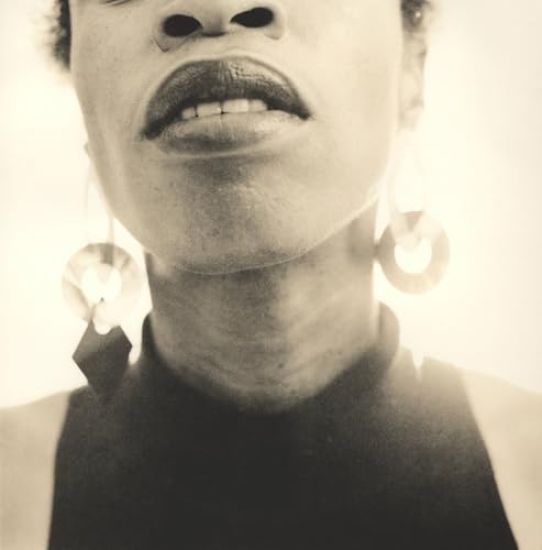
This stunning exhibition catalog offers a groundbreaking retrospective of Joy Gregory’s four-decade career, providing an in-depth exploration of her contributions to contemporary art. Generously illustrated with 200 color images, this book presents a comprehensive collection of Gregory’s most iconic works, alongside rarely seen and newly commissioned pieces. Organized to coincide with a major retrospective exhibition at London’s Whitechapel Gallery, the catalog spans her career, from her early analogue photography to her innovative use of digital media, video, textiles, and installation. Gregory’s approach to art is characterized by a striking ability to catch flies with honey—to engage with complex and often difficult topics such as post-colonialism, beauty, and identity through works that captivate with their nuance and visual allure. Her use of beauty and craftsmanship draws viewers into deeper contemplation of histories of the transatlantic slave trade, language endangerment, and the diasporic experience. Insightful essays by leading scholars explore these themes and situate Gregory’s work within the broader context of contemporary British and international art. A thought-provoking conversation with Deborah Willis delves into the importance of archives in preserving marginalized histories. Perfect for those interested in contemporary art, photography, and the intersection of culture, activism, and identity, this monograph is both a visual treasure and a vital resource for understanding Joy Gregory’s profound influence on the cultural landscape.
Daniel Gregory Mason
Bellum Publishing
2011
nidottu
John Gregory and the Invention of Professional Medical Ethics and the Profession of Medicine
Laurence B. McCullough
Springer
2010
nidottu
The best things in my Ufe have come to me by accident and this book results from one such accident: my having the opportunity, out of the blue, to go to work as H. Tristram Engelhardt, Jr. 's, research assistant at the Institute for the Medical Humanities in the University of Texas Medi cal Branch at Galveston, Texas, in 1974, on the recommendation of our teacher at the University of Texas at Austin, Irwin C. Lieb. During that summer Tris "lent" me to Chester Bums, who has done important schol arly work over the years on the history of medical ethics. I was just finding out what bioethics was and Chester sent me to the rare book room of the Medical Branch Library to do some work on something called "medical deontology. " I discovered that this new field of bioethics had a history. This string of accidents continued, in 1975, when Warren Reich (who in 1979 made the excellent decisions to hire me to the faculty in bioethics at the Georgetown University School of Medicine and to persuade Andre Hellegers to appoint me to the Kennedy Institute of Ethics) took Tris Engelhardt's word for it that I could write on the history of modem medical ethics for Warren's major new project, the Encyclopedia of Bioethics. Warren then asked me to write on eighteenth-century British medical ethics.
John Gregory's Writings on Medical Ethics and Philosophy of Medicine
Springer
2010
nidottu
This volume introduces a new subseries of Philosophy and Medicine, Classics of Medical Ethics. The purpose of this new subseries is to bring out scholars' editions of major works in the history of medical ethics and philosophy of medicine. This new subseries will target for publication texts that are long out of print and difficult to access. Each volume will contain an introduction to the writings on medical ethics and philosophy of medicine produced by the original author. Each volume will also contain a guide to the primary and major secondary Hterature, to facilitate teaching and scholarship in bioethics, philosophy of medicine, and history of medicine. Texts will be presented in their origi nal style and will provide pagination of the original, so that citations can be made either to the original text or to the page numbers in these vol umes. Finally, each volume will be well indexed, again to facilitate teaching and research. Bioethics and philosophy of medicine - the former more so than the latter - have an insufficiently developed understanding of themselves as having a history. As a consequence, these fields lack the maturity that critical dialogue of the past with the present provides for other fields and disciplines of the humanities. To the extent that this problem is due to the fact that major primary historical sources are not readily available, this subseries will contribute to the further development and maturation of bioethics and philosophy of medicine as fields of the humanities.

Gods and Fighting Men; The story of the Tuatha de Danaan and of the Fianna of Ireland, arranged and put into English by Lady Gregory
Lady Gregory
ALPHA EDITION
2021
pokkari
Gods And Fighting MenThe Story Of The Tuatha De Danaan And Of The Fianna Of Ireland Arranged And Put Into English By Lady Gregory (Edition2023)
Lady Gregory
Double 9 Books LLP
2023
nidottu
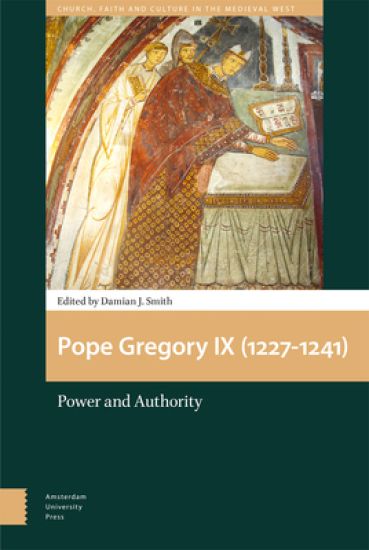
Pope Gregory IX (1227-1241)
AMSTERDAM UNIVERSITY PRESS
2023
sidottu
As Cardinal Hugo and as pope, Gregory was one of the dominant figures in the history of the papacy of the High Middle Ages. Coming to prominence under Pope Innocent III, Hugo played an important political role, particularly as legate on various occasions, as well as being a major promoter of the new religious orders. As pope, his battle with Emperor Frederick II is one of medieval history’s most absorbing conflicts. But he also acted as peacemaker, promoter of the Crusades, instigator of mission for the sake of conversion, refomer of the Curia, patron of arts and liturgy, and as a passionate advocate of Church reform. His decretal collection, the Liber Extra, was the most influential of the Middle Ages. A full examination of Gregory’s pontificate is very long overdue. The current volume brings together a team of international scholars, each of them expert in dealing with a particular aspect of the pontificate, and provides what will be a collection of studies of lasting scholarly value on a central figure of the medieval papacy.
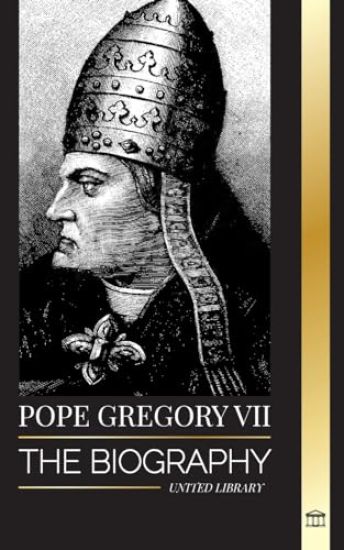
Delve into the life and complex legacy of Pope Gregory VII, an enigmatic figure who left an indelible mark on the Catholic Church and the course of history. In this meticulously researched biography, the multifaceted persona of Hildebrand of Sovana comes alive, tracing his transformation into Pope Gregory VII and his tumultuous reign from 1073 to 1085. Renowned as a great reforming pope, Gregory VII's influence was felt across the corridors of power in both the ecclesiastical and political realms. His pivotal role in the Investiture Controversy, his fiery disputes with Emperor Henry IV, and his unwavering assertion of papal supremacy and authority reshaped the landscape of medieval Europe. Unfolding against a backdrop of power struggles, spiritual fervor, and ideological clashes, this biography uncovers the nuances of Gregory VII's character. From his rigorous enforcement of clerical celibacy to his confrontations with simony and his bold excommunications of Henry IV, his actions were both audacious and divisive. His complex relationship with the Church's history, his contemporaries, and the larger socio-political landscape is explored with meticulous attention. Gregory VII's enduring influence, even after his death, is illuminated through the contrasting narratives that emerged in later generations. From charges of necromancy and torture to admiration for his moral force and religious conviction, his legacy is a tapestry of reverence and criticism. This biography offers a comprehensive exploration of a pivotal figure whose imprint on the Catholic Church and Western history resonates to this day. It invites readers to engage with the intricate interplay of power, faith, and ambition in the life of a saintly yet controversial pope.


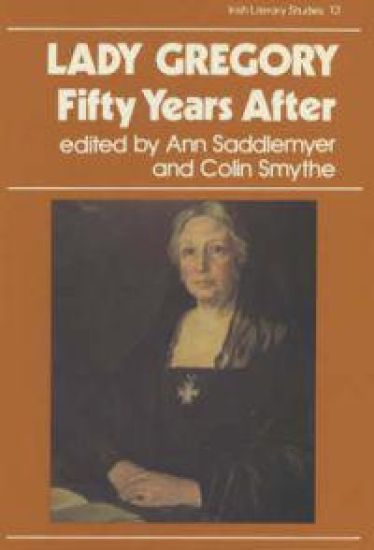
Lady Gregory, Fifty Years After
Colin Smythe Ltd
1986
sidottu
Soon after her death Lady Gregory seemed to be virtually forgotten, and the words on her gravestone - 'she shall be remembered for ever' - had a very hollow ring about them. It has only been in the last fifty years that Lady Gregory's reputation has turned round, beginning with Elizabeth Coxhead's biography, and the subsequent appearance of the Coole Edition of her works. The publication of Mary Lou Kohfeldt's biography in 1985 and now the appearance of this volume - the first collection of essays to be devoted to her - must surely create a greater awareness of her importance as a cornerstone of the Irish Literary Revival. Her books and plays, together with her work for the Abbey as manager, playwright, play-reader and fund-raiser, have had an influence on the literary life of Ireland in the first half of this century that has been greatly underestimated.

Affonso Gregory
VDM Verlag Dr. Muller Aktiengesellschaft Co. KG
2011
nidottu

Pope Gregory VII
OmniScriptum
2026
pokkari

Pope Gregory I
VDM Publishing House
2010
nidottu
Observera att förlaget som ger ut denna produkt baserar innehållet i sina produkter på fria källor som Wikipedia. Boken är med stor sannolikhet endast ett utdrag ur dessa informationskällor, alltså inte en vanlig bok i den bemärkelsen.

Pope Gregory XII
OmniScriptum
2026
pokkari

Pope Gregory I
OmniScriptum
2026
pokkari

Pope Gregory XV
VDM Publishing House
2010
nidottu
Observera att förlaget som ger ut denna produkt baserar innehållet i sina produkter på fria källor som Wikipedia. Boken är med stor sannolikhet endast ett utdrag ur dessa informationskällor, alltså inte en vanlig bok i den bemärkelsen.