This book, first published in 1961, examines the old Tibetan Bon religion, the development of Buddhism in India and Tibet, and covers the religious struggles of the eighth and ninth centuries. It also describes the rise of the Lamaist sects and the priest state of the Dalai Lamas, and taken as a whole is a study of the development of the character of Tibet itself.
This book, first published in 1961, examines the old Tibetan Bon religion, the development of Buddhism in India and Tibet, and covers the religious struggles of the eighth and ninth centuries. It also describes the rise of the Lamaist sects and the priest state of the Dalai Lamas, and taken as a whole is a study of the development of the character of Tibet itself.
Aseptic food processing has become important as a safe and effective method for the preparing and packaging of a variety of foods. This recent book, prepared by a team of European specialists, provides a detailed guide and reference to aseptic food processing technology. All aspects are presented systematically: principles, practice, equipment, applications, packages and packaging, quality control, and safety. All applicable food and beverage categories are examined. More than 130 photographs, diagrams, and other schematics illustrate equipment and their function and a variety of procedures. Tables and graphs provide important quantitative data in convenient form.
In this new edition of the popular textbook, Nonprofit Organizations: Theory, Management, Policy, Helmut K. Anheier and Stefan Toepler have fully updated, revised, and expanded this comprehensive introduction to a growing field. The text takes on an international and comparative perspective, detailing the background and concepts and examining relevant theories and central issues. Anheier and Toepler cover the full range of nonprofit organizations—service providers, membership organizations, foundations, community groups—in different fields, such as arts and culture, health and social services, and education. Introducing central terms such as philanthropy, charity, social entrepreneurship, social investment, and civil society, they explain how the field relates to public management and administration. This textbook is systematic in its approach to theories, management, and policy. The first edition won the Best Book Award at the American Academy of Management in 2006, and this new edition will continue to match the growing demand for academic teaching. Nonprofit Organizations: Theory, Management, Policy is an ideal resource for students of both undergraduate and postgraduate courses.
In this new edition of the popular textbook, Nonprofit Organizations: Theory, Management, Policy, Helmut K. Anheier and Stefan Toepler have fully updated, revised, and expanded this comprehensive introduction to a growing field. The text takes on an international and comparative perspective, detailing the background and concepts and examining relevant theories and central issues. Anheier and Toepler cover the full range of nonprofit organizations—service providers, membership organizations, foundations, community groups—in different fields, such as arts and culture, health and social services, and education. Introducing central terms such as philanthropy, charity, social entrepreneurship, social investment, and civil society, they explain how the field relates to public management and administration. This textbook is systematic in its approach to theories, management, and policy. The first edition won the Best Book Award at the American Academy of Management in 2006, and this new edition will continue to match the growing demand for academic teaching. Nonprofit Organizations: Theory, Management, Policy is an ideal resource for students of both undergraduate and postgraduate courses.
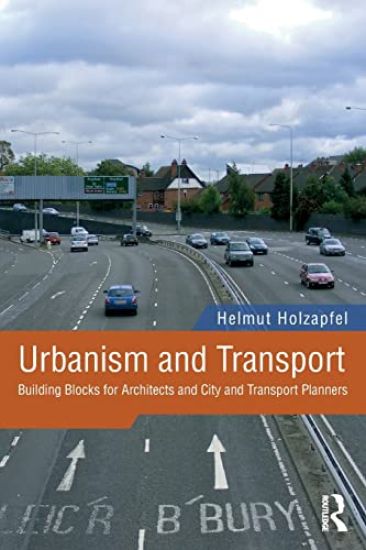
Helmut Holzapfel’s Urbanism and Transport, a bestseller in its own country, now available in English, examines the history and the future of urban design for transport in major European cities. Urbanism and Transport shows how the automobile has come to dominate the urban landscape of cities throughout the world, providing thought-provoking analysis of the societal and ideological precursors that have given rise to these developments. It describes the transformation that occurred in urban life through the ongoing separation of social functions that began in the 1920s and has continued to produce today's phenomenon of fractured urban experience – a sort of island urbanism.Professor Holzapfel examines the vital relation between the house and the street in the urban environment and explains the importance of small-scale, mixed-use urban development for humane city living, contrasting such developments with the overpowering role that the automobile typically plays in today's cities. Taking the insights gained from its historical analysis with a special focus on Germany and the rise of fascism, the book provides recommendations for architects and engineers on how urban spaces, streets, structures and transport networks can be more successfully integrated in the present day.Urbanism and Transport is a key resource for architects, transport engineers, urban and spatial planners, and students providing essential basic knowledge about the urban situation and the challenges of reclaiming cities to serve the basic needs of people rather than the imperatives of automobile transport.
Helmut Holzapfel’s Urbanism and Transport, a bestseller in its own country, now available in English, examines the history and the future of urban design for transport in major European cities. Urbanism and Transport shows how the automobile has come to dominate the urban landscape of cities throughout the world, providing thought-provoking analysis of the societal and ideological precursors that have given rise to these developments. It describes the transformation that occurred in urban life through the ongoing separation of social functions that began in the 1920s and has continued to produce today's phenomenon of fractured urban experience – a sort of island urbanism.Professor Holzapfel examines the vital relation between the house and the street in the urban environment and explains the importance of small-scale, mixed-use urban development for humane city living, contrasting such developments with the overpowering role that the automobile typically plays in today's cities. Taking the insights gained from its historical analysis with a special focus on Germany and the rise of fascism, the book provides recommendations for architects and engineers on how urban spaces, streets, structures and transport networks can be more successfully integrated in the present day.Urbanism and Transport is a key resource for architects, transport engineers, urban and spatial planners, and students providing essential basic knowledge about the urban situation and the challenges of reclaiming cities to serve the basic needs of people rather than the imperatives of automobile transport.
Lewis Carroll, Photographer is a book written by Helmut Gernsheim that explores the lesser-known aspect of Lewis Carroll's life as a photographer. Lewis Carroll, the pen name of Charles Lutwidge Dodgson, is known for his literary works such as Alice's Adventures in Wonderland and Through the Looking Glass, but he was also an avid photographer. The book delves into Carroll's passion for photography, which began in the 1850s and continued until his death in 1898. Gernsheim provides a comprehensive overview of Carroll's photographic works, including his portraits of children, landscapes, and still life compositions. The book also sheds light on the technical aspects of Carroll's photography, including his use of the wet collodion process and his experimentation with different lenses and camera angles. The author also explores the relationship between Carroll's photography and his literary works, highlighting the influence of photography on his writing and vice versa. The book features numerous photographs taken by Carroll, as well as images of the photographer himself and his subjects. Overall, Lewis Carroll, Photographer is a fascinating read for anyone interested in the life and works of Lewis Carroll, photography, or the intersection of art and literature. It provides a unique perspective on the man behind Alice's Adventures in Wonderland and offers a glimpse into the world of Victorian photography.This scarce antiquarian book is a facsimile reprint of the old original and may contain some imperfections such as library marks and notations. Because we believe this work is culturally important, we have made it available as part of our commitment for protecting, preserving, and promoting the world's literature in affordable, high quality, modern editions, that are true to their original work.
Dieses Buch beschreibt interessante Organisationsfragen, Wirtschaftlichkeitsbetrachtungen und andere wichtige Fragen rund um betriebliche Optimierung. Ein Schwerpunkt bildet dabei das ganzheitliche Marketing, IT, Prozessdesign, Einsparungspotentiale, Frameworks sowie als Beispiel einer Projektarbeit das Thema Softwareentwicklung. Ebenfalls angeschnitten ist der Bereich der agilen Projektarbeit, des agilen Prozessdesigns wie auch Nebenthemen, zum Beispiel Rhetorik in der Verhandlungsfuhrung. Dieses Buch versteht sich sowohl aus Denkanstoss wie als Nachschlagewerk. Mit zahlreichen Schaubildern, Beispiel-rechnungen, Formelsammlungen etc. zeigt es plastisch, wie einzelne Bausteine eines Unternehmens zusammenspielen. Uber 60 Beispiele aus der Praxis zur Einsparung im Unternehmen, der gesamte Marketing-Mix bis hin zu Frameworks wie Six Sigma, Kaizen oder TRIZ sowie Scrum und DevOps werden in Zusammenhang gebracht.
Das Buch beschreibt nahezu alle Bereiche der Rhetorik von Gespr chsf hrung, Verhandlungstechniken, K rpersprache bis hin zum Gestalten von Schulungen. Dabei ist neben der Erkl rung der Mechanismen ein Schwerpunkt auf die nachvollziehbare wissenschaftliche Erkl rung gelegt. Damit unterscheidet sich das Werk deutlich von anderen Ratgebern, die meist ohne Hintergrundwissen diesen wichtigen Bereich beschreiben. Das Buch wurde urspr nglich als Lehrbuch gestaltet und angepasst f r das Selbststudium.
Praktische Anleitung und Vorgaben: DevOps steht f r Development und Operations. Dahinter steht eine neue Bewegung, die es sich zum Ziel gemacht hat, die Zusammenarbeit zwischen Softwareentwicklung und Betrieb zu optimieren. Dies beginnt bereits in der Art der Zusammenarbeit, geht ber die Zielsetzung bis hin zum begleitenden Betrieb. Es handelt sich um eine agile Arbeits- und Denkweise, die jedoch andere Frameworks wie ITIL, Six Sigma, Scrum etc. einschlie t. In diesem Buch werden die Grundlagen, Zusammenh nge und Denkans tze aufgezeigt. Zus tzlich werden f r jeden relevanten Bereich (z.B. Menschen, Software, Hardware, Zulieferanten etc.) die grundlegenden Denkans tze erweitert. So entsteht nicht nur ein Nachschlagewerk, sondern ein praktische Hilfe zur Einf hrung von DevOps. Dabei flie en auch berlegungen der TIER-F higkeit von Software, aus dem Marketing etc. mit ein. So l sst sich DevOps von der kleinen IT-Abteilung bis hin zu gro en Rechenzentren nutzen.
Dieses Buch beschreibt interessante Organisationsfragen, Wirtschaftlichkeitsbetrachtungen und andere wichtige Fragen rund um betriebliche Optimierung. Vertieft werden wichtige Bereiche wie Six Sigma, Kaizen oder TRIZ, Szenariotechnik, Projektmanagement, Personal, Markt, Organisation, Strategie, Technologie, Finanzen sowie Hilfsmittel wie Messwertanalyse, Ishikawa und mehr. So erhalten auch das Management oder der Projektleiter gezielte Information, Tipps und klare Handlungsstrategien an die Hand. Weit uber 100 direkte Anregungen, viele Schaubilder und die Erfahrung von vielen Unternehmen.
This pioneering study explores early medieval Frankish identity as a window into the formation of a distinct Western conception of ethnicity. Focusing on the turbulent and varied history of Frankish identity in Merovingian and Carolingian historiography, it offers a new basis for comparing the history of collective and ethnic identity in the Christian West with other contexts, especially the Islamic and Byzantine worlds. The tremendous political success of the Frankish kingdoms provided the medieval West with fundamental political, religious and social structures, including a change from the Roman perspective on ethnicity as the quality of the 'Other' to the Carolingian perception that a variety of Christian peoples were chosen by God to reign over the former Roman provinces. Interpreting identity as an open-ended process, Helmut Reimitz explores the role of Frankish identity in the multiple efforts through which societies tried to find order in the rapidly changing post-Roman world.