Kirjojen hintavertailu. Mukana 11 213 693 kirjaa ja 12 kauppaa.

Kirjahaku

Etsi kirjoja tekijän nimen, kirjan nimen tai ISBN:n perusteella.

1000 tulosta hakusanalla Hermann Hesse; Bengt Samuelson

Siddhartha - An Indian Novel / ??? ????????? ???
in days to come, when Siddhartha would become a god, he would be thereآنے والے دنوں میں، جب سدھارتھ دیوتا بنے گا، وہ وہاں ہوگا۔when he would join the glorious, he would be thereجب وہ جلال میں شامل ہوگا، وہ وہاں ہوگا۔Govinda wanted to follow him as his friendگووندا اسے اپنے دوست کی طرح فالو کرنا چاہتے تھے۔he was his companion and his servantوہ اس کا ساتھی اور اس کا خادم تھا۔he was his spear-carrier and his shadowوہ اس کا نیزہ بردار اور اس کا سایہ تھا۔Siddhartha was loved by everyoneسدھارتھ کو ہر کوئی پسند کرتا تھا۔He was a source of joy for everybodyوہ سب کے لیے خوشی کا باعث تھا۔he was a delight for them allوہ ان سب کے لیے خوشی کا باعث تھا۔But he, Siddhartha, was not a source of joy for himselfلیکن وہ، سدھارتھا، اپنے لیے خوشی کا باعث نہیں تھا۔he found no delight in himselfاس نے اپنے آپ میں کوئی خوشی نہیں پائی
Siddhartha - An Indian Novel / M?t bài tho ?n Ð?
in days to come, when Siddhartha would become a god, he would be theretrong những ng y sắp tới, khi Siddhartha trở th nh một vị thần, anh ấy sẽ ở đ when he would join the glorious, he would be therekhi anh ấy gia nhập vinh quang, anh ấy sẽ ở đ Govinda wanted to follow him as his friendGovinda muốn theo anh ấy như một người bạnhe was his companion and his servantanh ấy l bạn đồng h nh v l người hầu của anh ấyhe was his spear-carrier and his shadowanh ấy l người mang gi o v l c i b ng của anh ấySiddhartha was loved by everyoneSiddhartha được mọi người y u mếnHe was a source of joy for everybodyAnh ấy l nguồn vui của mọi ngườihe was a delight for them allanh ấy l niềm vui của tất cả bọn họBut he, Siddhartha, was not a source of joy for himselfNhưng ng, Siddhartha, kh ng phải l nguồn vui cho ch nh m nhhe found no delight in himselfanh ta kh ng thấy th ch th với ch nh m nh
Siddhartha

Siddhartha

Hermann Hesse

Blackrock Classics
2020
pokkari
Siddhartha is a novel by Hermann Hesse that deals with the spiritual journey of an Indian man named Siddhartha during the time of the Buddha. The book, Hesse's ninth novel (1922), was written in German, in a simple, powerful, and lyrical style. It was published in the U.S. in 1951 and became influential during the 1960s. Hesse dedicated Siddhartha to Romain Rolland and Wilhelm Gundert. The story begins by painting a picture of Siddhartha as a perfect son: smart, athletic, obedient, and handsome. However, he eventually sees the limitations of the Brahmin life, and leaves his home to join the ascetics with his companion Govinda. The two set out in search of enlightenment. After seeing the limitation of asceticism, the two journey to meet the Buddha. Govinda is immediately impressed and takes refuge in the Buddha. Siddhartha respects the Buddha's enlightenment, but realizes that no teaching, not even the Buddha's, can capture enlightenment. The second half of the book starts with Siddhartha impressing a beautiful, wealthy courtesan. She sets him up with a job so that he can afford the beautiful things that will impress her. Initially seeing this as a game for children, he eventually finds himself caught up in the trading, drinking, and gambling of a merchant life. He leaves again for the forest. After settling into a nice life sharing ferryman duties with a wise friend, Siddhartha finds out he fathered a son. He attempts to raise the boy in this simple life, but the boy gets frustrated and returns to the city. Siddhartha finally feels the sorrow of love, which leads to a deep compassion for all of his fellow humans.
Fairy Tales

Fairy Tales

Hermann Hesse

El Sheikh
2016
nidottu
"Although life is an affair of light and shadows, we never accept it as such." Hermann Hesse Hermann Hesse is one of the most widely read German-language authors, his books are world literature classics. Hesse's great literary success is based on such works as The Glass Bead Game, Steppenwolf, Siddharta, Klingsor's Last Summer and Knulp. His books hold a special fascination for readers around the world. Hermann Hesse's Fairy Tales are seven short philosophical fictions written between 1913 and 1918, prior to and during the First World War. Still more relevant than ever, these philosophical fictions home in on the key questions of human existence and challenge conventional intellectual life and the orthodoxy of the world. Hesse's Fairy Tales deal with the dream world, the subconscious and the realm of magic. Full of images springing from Hesse's deep subconscious, the stories do not lend themselves to rational interpretation. They offer an exercise in spiritual detachment and allow their reader to gain perspective of what's really important in life.
Fairy Tales

Fairy Tales

Hermann Hesse

El Sheikh
2020
nidottu
"Fairy Tales" is a collection of newly translated magical short stories written by Hermann Hesse during World War One. Hesse wrote the short fairy tales between 1913 and 1918, before, during and immediately after WWI, they were collected and published in book format in 1918 in German under the title "M rchen"At the time of writing, Hesse was working as an army nurse tending to wounded soldiers. The experience transformed him completely. One can feel the tension building to the war in the early tales, get a first hand view of Hesse psyche during the war and is rewarded by the releif Hesse felt at the end of the war."Fairy Tale" represented an intermediate stage between Hesse's initial ambiguous stance to the war, as an internationalist who tolerated war and a pacifist who looked forward to a German victory, and his later active anti-war campaign.Later in his life, Hesse changed his initial naive view, that "the war is nobody's fault and that it occurs by itself". He came to acknowledge the detrimental role that the military-industrial complex plays in promoting wars, a view that brought him into conflict with supporters of the war, his country and its government.Looking at the world today, seeing military conflicts raging in many pockets around the globe, with no discernible reason or end strategies in sight, while daily life goes on as usual around us, we tend to appreciate Hesse's prophetic and timeless vision.Fairytales included in this volume include: "Strange News", "Faldum", "Iris", "Fine Dream", "Difficult Path", "The Poet", "Augustus" and "Flute Dream"A timeless classic and a must read by all intelligent young people around the world.
Strange News

Strange News

Hermann Hesse

El Sheikh
2018
nidottu
"Strange News" is a collection of newly translated fairy tales written by Hermann Hesse during World War One. The book, which is a Collector's Item contains: Strange News from Another Star, Faldum, Iris, Fine Dream Sequence, A Difficult Path, The Poet, Augustus, and Flute Dream. The book title was inspired by Hesse's timeless classic "Strange News from Another Star". Hesse wrote this short fairy tale in April 1915, one year after the start of the First World War. At the time of writing, Hesse was working as an army nurse tending to wounded soldiers. In the fairy tale, two stars are juxtaposed. On one star, life is valued, beauty is appreciated, reason is respected, humane traditions are cultivated, love and happiness are experienced and peace prevails. On the other star, jealousy, hatred and despair are cultivated, wars are waged incessantly, battlefield murder is officially condoned, the countryside is left strewn with unattended cadavers and fear prevails. The latter is clearly our world as Hesse saw it, rendered mythical, and the former is an idealized world that ours could be. Unlike his earlier works, the story does not lend itself to rational interpretation. It is essentially a fairy tale dealing with the subconscious, magic and the dream world. The fairy tale represents an intermediate stage between Hesse's initial ambiguous stance to the war, as an internationalist who tolerated war and a pacifist who looked forward to a German victory, and his later active anti-war campaign. Later in his life, Hesse changed his initial naive view, that the war is nobody's fault and that it occurs by itself. He came to acknowledge the detrimental role that the military-industrial complex plays in promoting wars, a view that brought him into conflict with supporters of the war, his country and its government. Looking at the world today, seeing military conflicts raging in many pockets around the globe, with no discernible reason or end strategies in sight, while daily life goes on as usual around us, we tend to appreciate Hesse's prophetic and timeless vision.
Siddhartha (Warbler Classics Annotated Edition)
Siddhartha takes place in the ancient Indian kingdom of Kapilavastue and follows the spiritual journey of a man who embarks on a quest for enlightenment. Along the way he becomes a wandering beggar, a rich businessman, a lover, a Buddhist convert, and, ultimately, a wise man. Hermann Hesse's most inspirational and beloved work, Siddhartha integrates Eastern and Western spirituality, psychology, and sensibilities in a simple, moving tale that has influenced generations since its original publication in 1922.This Warbler Classics edition includes Alan Watts's essay The Way of Liberation in Zen Buddhism, which offers a clear, compelling overview of the history and philosophy of Buddhist thought.
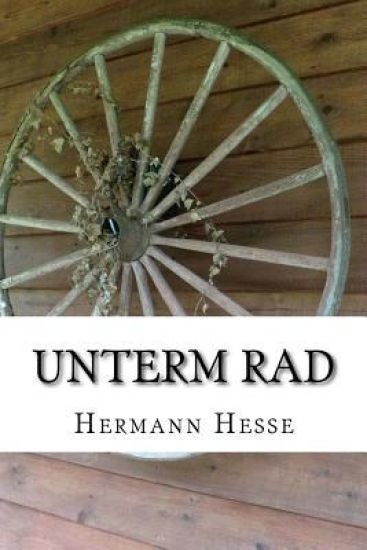
Unterm Rad

Unterm Rad

Hermann Hesse

Createspace Independent Publishing Platform
2018
nidottu
Unterm Rad ist eine Erz hlung von Hermann Hesse, die 1906 erschien. Urspr nglich wurde sie von Hermann Hesse als Roman bezeichnet. In Unterm Rad wird das Schicksal eines begabten Jugendlichen erz hlt, der an einer ihn einseitig fordernden P dagogik, aber auch an sich selbst scheitert. In einer Kleinstadt im Schwarzwald lebt Joseph Giebenrath, Zwischenh ndler und verwitweter Vater des Protagonisten Hans Giebenrath. Hans wird vom Rektor seiner Schule und von seinem Vater von Gleichaltrigen ferngehalten, um einen in ihren Augen "schlechten", kindlichen Einfluss auf den Jungen abzuwehren. Er bekommt Extraunterricht, um sich f r das Landexamen in Stuttgart vorzubereiten, zu dem er als Einziger aus seiner Stadt antritt. Die Naturverbundenheit des Knaben wird immer wieder betont. Allerdings zerschl gt Hans am Abend vor der Abreise zum Landexamen einen Kaninchenstall, den er fr her stets sch tzte. Er besteht landesweit als Zweiter das Landexamen. Dies erlaubt ihm, das Seminar in der Klosterschule in Maulbronn zu besuchen, in dem Landesbeamte und Pastoren ausgebildet werden. Zur Belohnung f r seinen Aufstieg in die Bildungselite wird ihm von seinem Vater das Angeln wieder erlaubt. Direktor und Stadtpfarrer dr ngen Hans zum Lernen in den Ferien, um der gesteigerten Konkurrenz im Seminar gewachsen zu sein. So erh lt er t glich einige Stunden Unterricht. Lediglich Schustermeister Flaig, ein einfacher Mann, Menschenfreund, Pietist, der dem Stadtpfarrer ablehnend gegen bersteht, r t ihm zu mehr "Luft und Bewegung".