

Kirjahaku
Etsi kirjoja tekijän nimen, kirjan nimen tai ISBN:n perusteella.
1000 tulosta hakusanalla Jim Carson

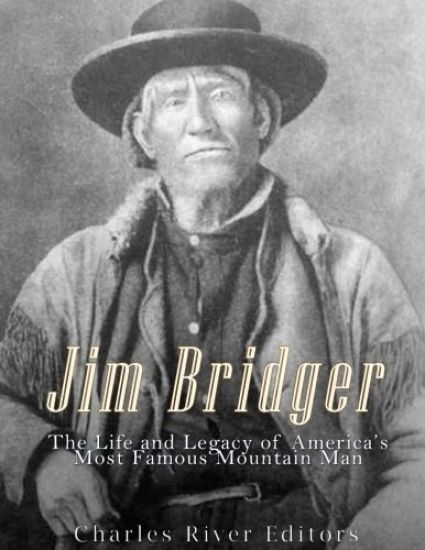
Jim Bridger: The Life and Legacy of America's Most Famous Mountain Man
Charles River
Createspace Independent Publishing Platform
2017
nidottu
Jim Bridger: The Life and Legacy of America's Most Famous Mountain Man
Charles River
Createspace Independent Publishing Platform
2017
nidottu
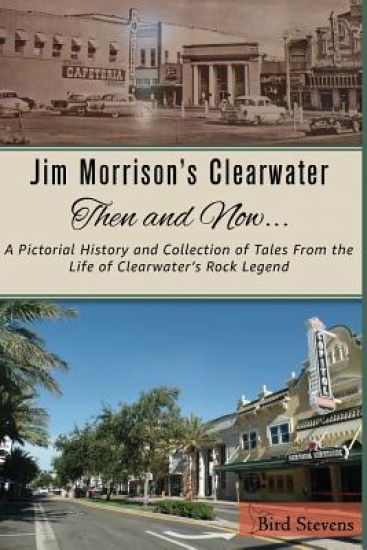
Jim Morrison's Clearwater Then and Now....: A pictorial history and collection of tales from the life of Clearwater's Rock Legend
Bird Stevens
Createspace Independent Publishing Platform
2018
nidottu
Jim Morrison's Clearwater Then and Now, is a pictorial history and collection of tales from the life of Clearwater's Rock Legend. Who was Jim Morrison before he became frontman of The Doors? The stories within these pages will tell stories of a young Jim Morrison from the people that knew him best."Writer and researcher, Bird Stevens, has located the places that probably always remained in Jim Morrison's heart. From conversation with Jim's early acquaintances, Stevens identified and visited many, and has written in detail about, the places that Jim enjoyed and the places where Jim experienced his early losses and disappointments. Journey with the writer from Jim's California banishment to a little frame house on the bank of Clearwater harbor, through his peccadillo adventures in and around Clearwater, Florida, and off to Tallahassee, Florida, where his homes included a typical neighborhood house, a small and dirty house trailer parked behind a rooming house, and an old hotel thought to have once been a house of ill repute.Bird Stevens has described these places in Jim's heart with a vividness that will take you there. So, off you go "
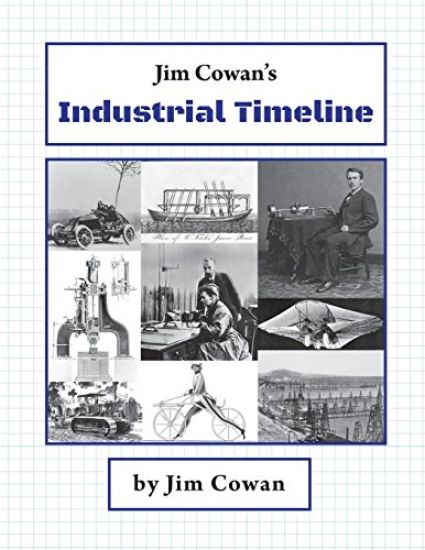
Jim Cowan's Industrial Timeline Most of humanity is alive today because of industrial progress, as the carrying capacity of the planet was substantially lower before the technological mastery of nature achieved largely in the last 300 years. Based on the implications of physics alone, it is likely that we have exited the steep part of this growth, at least by the conventional measures of energy consumption per capita. Man's future technological progress will depend on doing more with the same or declining gross resources, and the information age we are currently experiencing is the perfect setting for these optimization efforts. The much-heralded "dematerialization" of the information age is enabled by the reality that few in advanced economies need worry much about their basic material needs. Jim Cowan has lived through much of this progress, born in a small town in West Texas without running water or indoor bathrooms for much of his childhood. During his career, he worked his way up from rig mechanic to maintenance manager for one of the world's largest oil drilling companies. His timeline recognizes those who mastered nature for the benefit of their fellow human beings, often in obscurity. It is a valuable resource for anyone interested in science, industrial history, technology or engineering and tells the story of man's material struggle and triumph on God's good Earth. "In the sweat of thy face shalt thou eat bread" was the judgment given to man in the Genesis narrative. That we all sweat much less than we used to for our daily bread is evidence of our debt to the Promethean individuals who brought forth the world of abundance we enjoy today. Jim's work is helpful in reminding us of the many blessings we enjoy in this tumultuous, but, in comparison our ancestors' struggles, truly golden age. May we not take our material abundance for granted, nor waste the luxury of leisure, but rather be worthy descendants of those giants on whose shoulders we stand.
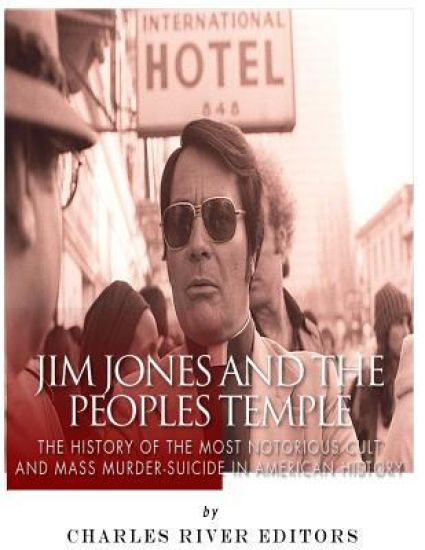
Jim Jones and the Peoples Temple: The History of the Most Notorious Cult and Mass Murder-Suicide in American History
Charles River
Createspace Independent Publishing Platform
2017
nidottu
*Includes pictures *Includes accounts of the cult and the massacre *Includes Jim Jones' quotes about his life and the massacre *Includes online resources and a bibliography for further reading *Includes a table of contents "We didn't commit suicide; we committed an act of revolutionary suicide protesting the conditions of an inhumane world." - Jim Jones The United States has never had a shortage of cults based on religious teachings and charismatic leaders, but perhaps none are as infamous as Jim Jones and the Peoples Temple, which remain notorious for the mass murder-suicide event in Jonestown, Guyana on November 18, 1978, during which nearly 900 people drank cyanide-laced Flavor Aid, including nearly 300 children. To this day, "drinking the Kool-Aid" is a popular phrase in America to refer to people who blindly follow a person or idea without thought, and the event at Jonestown was the deadliest deliberate act involving Americans in history until the 9/11 attacks. In addition to those deaths, Peoples Temple members also murdered a handful of others on the same day, including journalists, a member trying to leave Jonestown, and Congressman Leo Ryan. Almost from birth, Jones believed he had a higher calling, and after being immersed in various Christian churches and both political and religious doctrine, Jones founded the Peoples Temple in Indianapolis in 1955, when he was still in his mid-20s. While that might have been an unusual course in life for most Americans, Jones was hardly the first to take such a path, and indeed, his group expanded at a remarkable pace in the 1960s, which included a move to California after Jones claimed to foresee a nuclear attack on Chicago and the destruction of Indianapolis. By the 1970s, services at the group's Temple attracted thousands of visitors, even as Jones increasingly criticized Christianity and the Bible. Of course, none of the previous locations earned the notoriety of Jonestown, which the Peoples Temple established in Guyana along the northern coast of South America in the mid-'70s. Meant to be a "socialist paradise" and "sanctuary" from America's "creeping fascism," over 900 members headed to the new settlement by 1978. That November, Congressman Leo Ryan arrived in Jonestown to investigate various claims about the Peoples Temple and met with some members who wished to defect from the group. In response, Jones issued a tape decrying outsiders' efforts and directing members to commit suicide, and when some pushed back, he chided them: "Stop these hysterics. This is not the way for people who are socialists or communists to die. No way for us to die. We must die with some dignity." Survivors described the ensuing event, during which children drank the poison first and were followed by parents who lay down to die as a family. Others indicated that Jones had simulated mass suicides on a couple of other occasions before to test members' loyalty as well, so people remained unsure whether the event was real, even as Jones told them, "I tell you, I don't care how many screams you hear, I don't care how many anguished cries...death is a million times preferable to ten more days of this life. If you knew what was ahead of you - if you knew what was ahead of you, you'd be glad to be stepping over tonight." Although many began to worry once they saw the poison take effect in others, most of those who drank the poison were dead within 5 minutes, while Jones apparently shot himself in the head. Jim Jones and the Peoples Temple: The History of the Most Notorious Cult and Mass Murder-Suicide in American History chronicles the notorious cult and the mass murder-suicide. Along with pictures of important people, places, and events, you will learn about the Peoples Temple like never before.
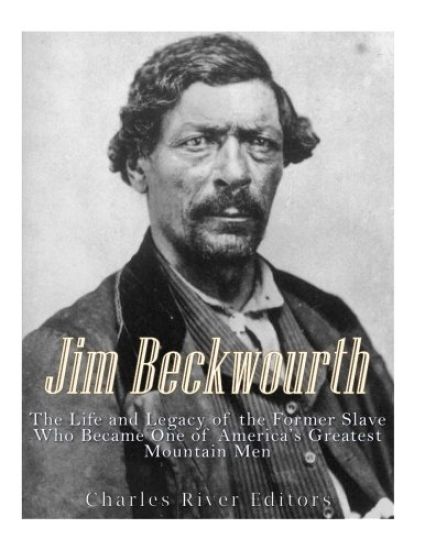
Jim Beckwourth: The Life and Legacy of the Former Slave Who Became One of America's Most Famous Mountain Men
Charles River
Createspace Independent Publishing Platform
2017
nidottu
*Includes pictures *Includes Beckwourth's quotes about his life *Includes online resources and a bibliography for further reading "Jim Beckwourth, who knew, said that though the Indian could never become a white man, the white man lapsed easily into an Indian." - Bernard DeVoto, The Year of Decision: 1846 Explorers, soldiers, and settlers of African-American heritage comprise an unfamiliar story to most students of American history. However, in the push westward, they were present in sufficient numbers to exert great influence on the nation's development. Among the earliest accounts is that of Isabel de Olvera, who settled in New Mexico around the year of 1600, and it is estimated that by 1750, 25% of Albuquerque's population shared discernible African ancestry. York, the well-known servant of Lewis and Clark, accompanied the legendary expedition under the auspices of the Jefferson administration, and Edward Rose traveled up the Missouri River in the same era. Within just a few years, Pio Pico became the governor of California, and George Bush became one of the first African-Americans to travel the Oregon Trail, opening that route to a flood of settlers over a 10-year period. In parallel with these individuals came a number of African-American frontiersmen who participated in the exploration of the Western terrain, said to have numbered in the dozens. Needless to say, such a career was an unusual destiny for those who "emerged from the system of slavery." Emancipation for an American slave generally involved a dangerous and illegal trek on foot toward the north, or through the Underground Railroad network operating between states east of the Mississippi. Given the illiteracy rates of the day, few tangible accounts of such journeys have survived, but one glaring exception is that of James Pierson Beckwourth, the only known African American mountain man to leave behind a detailed, if somewhat sensationalistic, account of his travels. In a journey spanning over half a century, Beckwourth tried his hand at virtually every line of work related to Western life. He served as a soldier, explored a vast range of territory as a mountain man, and worked as a scout and guide. In later years, he lived as an entrepreneurial merchant, professional card player, and as a skilled horse thief for both Indian tribes and the U.S. Army. Perhaps most unique of all was Beckwourth's relations with Native American tribes. Adapting himself to the culture of several tribes of the Plains and the Southwest, and employing a particular charm and prowess in battle, he was adopted by the Crow nation. In their society, Beckwourth rose to the level of War Chief, and he lived with the tribe for several years. Hailing from a largely anonymous slave culture, Beckwourth was in a perpetual search for personal fame throughout his life, and to some degree, he found it, thanks to the "autobiography" personally dictated to author T.D. Bonner, who recast the frontiersman's lasting legacy as that of a "black Daniel Boone." His resulting reputation thrived alongside famed Western characters such as Kit Carson, Jedediah Smith, Pierre Vasquez, and Jim Bridger. Jim Beckwourth: The Life and Legacy of the Former Slave Who Became One of America's Most Famous Mountain Men examines the legendary career of one of the most unique figures in the history of the American West. Along with pictures of important people, places, and events, you will learn about Jim Beckwourth like never before.
Jim Beckwourth: The Life and Legacy of the Former Slave Who Became One of America's Most Famous Mountain Men
Charles River
Createspace Independent Publishing Platform
2017
nidottu
*Includes pictures *Includes Beckwourth's quotes about his life *Includes online resources and a bibliography for further reading "Jim Beckwourth, who knew, said that though the Indian could never become a white man, the white man lapsed easily into an Indian." - Bernard DeVoto, The Year of Decision: 1846 Explorers, soldiers, and settlers of African-American heritage comprise an unfamiliar story to most students of American history. However, in the push westward, they were present in sufficient numbers to exert great influence on the nation's development. Among the earliest accounts is that of Isabel de Olvera, who settled in New Mexico around the year of 1600, and it is estimated that by 1750, 25% of Albuquerque's population shared discernible African ancestry. York, the well-known servant of Lewis and Clark, accompanied the legendary expedition under the auspices of the Jefferson administration, and Edward Rose traveled up the Missouri River in the same era. Within just a few years, Pio Pico became the governor of California, and George Bush became one of the first African-Americans to travel the Oregon Trail, opening that route to a flood of settlers over a 10-year period. In parallel with these individuals came a number of African-American frontiersmen who participated in the exploration of the Western terrain, said to have numbered in the dozens. Needless to say, such a career was an unusual destiny for those who "emerged from the system of slavery." Emancipation for an American slave generally involved a dangerous and illegal trek on foot toward the north, or through the Underground Railroad network operating between states east of the Mississippi. Given the illiteracy rates of the day, few tangible accounts of such journeys have survived, but one glaring exception is that of James Pierson Beckwourth, the only known African American mountain man to leave behind a detailed, if somewhat sensationalistic, account of his travels. In a journey spanning over half a century, Beckwourth tried his hand at virtually every line of work related to Western life. He served as a soldier, explored a vast range of territory as a mountain man, and worked as a scout and guide. In later years, he lived as an entrepreneurial merchant, professional card player, and as a skilled horse thief for both Indian tribes and the U.S. Army. Perhaps most unique of all was Beckwourth's relations with Native American tribes. Adapting himself to the culture of several tribes of the Plains and the Southwest, and employing a particular charm and prowess in battle, he was adopted by the Crow nation. In their society, Beckwourth rose to the level of War Chief, and he lived with the tribe for several years. Hailing from a largely anonymous slave culture, Beckwourth was in a perpetual search for personal fame throughout his life, and to some degree, he found it, thanks to the "autobiography" personally dictated to author T.D. Bonner, who recast the frontiersman's lasting legacy as that of a "black Daniel Boone." His resulting reputation thrived alongside famed Western characters such as Kit Carson, Jedediah Smith, Pierre Vasquez, and Jim Bridger. Jim Beckwourth: The Life and Legacy of the Former Slave Who Became One of America's Most Famous Mountain Men examines the legendary career of one of the most unique figures in the history of the American West. Along with pictures of important people, places, and events, you will learn about Jim Beckwourth like never before.
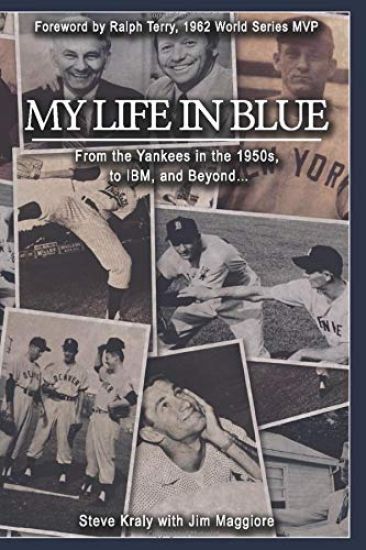
My Life in Blue: From the Yankees in the 1950s, to IBM, and Beyond: Steve Kraly with Jim Maggiore
Jim Maggiore; Steve Kraly
Createspace Independent Publishing Platform
2019
nidottu
Before becoming a member of the 1953 World Champion New York Yankees, Steve Kraly was a star pitcher for the Binghamton Triplets and an army veteran. After his professional baseball playing days were over, Steve went on to a long career at IBM, as well as becoming an official scorer for the Eastern League. This is his story, as told to noted baseball author Jim Maggiore, compete with Steve's memories of playing alongside such baseball legends as Yogi Berra, Whitey Ford, Ralph Houk, Mickey Mantle, and Ralph Terry. Steve was a housemate of Mickey Mantle during Mickey's first two years in professional baseball. As for Steve's initial scouting report on Mantle, Steve proved he was no scout; he thought that "Mantle bunted his way to .300."

Mining Natures Treasures with Jim and Dave: The Pocket
Jim Mellos
Createspace Independent Publishing Platform
2017
nidottu
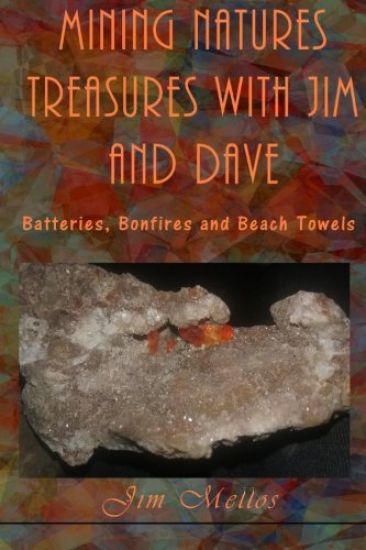
Mining Natures Treasures with Jim and Dave: Batteries, Bonfires and Beach Towels
Jim Mellos
Createspace Independent Publishing Platform
2017
nidottu

Tripping with Jim: Without Drugs (with a Few Exceptions)
Jim Adduci
Createspace Independent Publishing Platform
2017
nidottu
Tripping with Jim is a simple, honest story by a complex person. It's a life's journey of stupid decisions, and close calls, written with humor, insights, and never-ending optimism.Think of yourself as a hobo, and jump on the train of thought with Jim Adduci. You will go from state to state of mind. It will be fun, interesting, and thought provoking. Each trip is an experience in life. He will bring you to the places he's been, both physically and mentally, that made him who he is today, for better or worse.
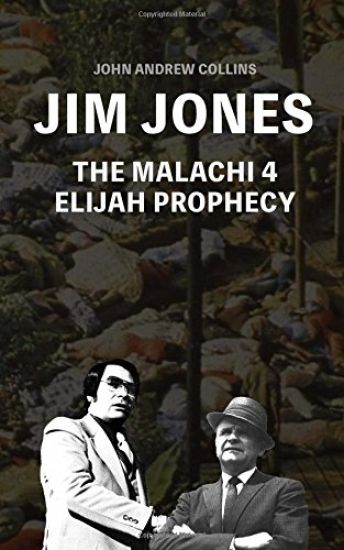
Jim Jones - The Malachi 4 Elijah Prophecy
John Andrew Collins
Createspace Independent Publishing Platform
2017
nidottu
When Reverend William Branham prophesied of God's blessing of Reverend Jim Jones ministry during a joint Latter Rain healing campaign in Indianapolis, Indiana, he had no idea what he had started. As Jones took his place in line as a "Malachi 4 Elijah Prophet," a deadly chain reaction ended in the deaths of over 900 people during what would become known as the Jonestown Massacre.Did this chain reaction start with William Branham's call for an Exodus during his time in the ministry with Jim Jones? Historical data that has now been made available to the public might hold the answers.
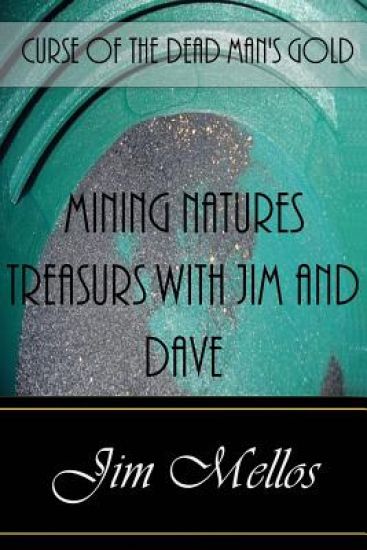
Mining Natures Treasures with Jim and Dave: Curse of the Dead Man's Gold
Jim Mellos
Createspace Independent Publishing Platform
2017
nidottu
It's a pirate's booty and an ingredient in microcircuits. It's been used to make jewelry since at least 4000 B.C. and to treat cancer only in recent decades. It's in the pot at the end of the rainbow and in the coating on astronaut visors. What's this element that bridges old and new - and myth and science - so seamlessly? Gold. This is what Dave and I were searching for. The gold was calling our names and we just had to respond. Would this be the day we strike it rich or will we strike out? Join us on another one of our wild adventures as we head out in search of the ever-popular GOLD.
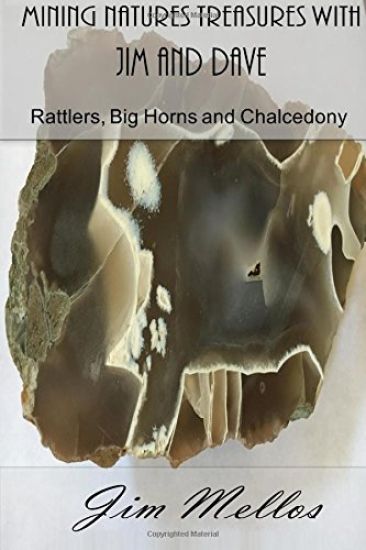
Mining Natures Treasures with Jim and Dave: Rattlers, Big Horns and Chalcedony
Jim Mellos
Createspace Independent Publishing Platform
2017
nidottu

Jim Vun Cannon: The Complete Interview: First Presidency Discusses the Remnant Church
Gospel Tangents Interview
Independently Published
2017
nidottu
Rick Bennett of Gospel Tangents sat down with Jim Vun Cannon, counselor in the First Presidency of the Remnant Church of Jesus Christ of Latter-day Saints. The Remnant Church was officially established in 2000 is a breakoff of the RLDS Church. We discussed similarities and differences between the Remnant Church as the LDS Church, Jim's conversion, beliefs about priesthood, women's roles, beliefs about the Book of Mormon and other scriptures, temples, and whether Joseph Smith Practiced polygamy. Transcripts of the interviews were previous published as a series of interviews. This edition combines the entire 2 hour interviews into a single book.
While lunching one day in Paris, long-time friends and collaborators John Armstrong and Paul Collins drew up a list of 49 random words that would become the subjects of a series of photographs. Armstrong shot in their native Canada, and Collins in France, where he has been living these past 20 years. When the 98 images are paired - which photographer took each one is never identified - they explore the blurred edges of North American and European culture, of the familiar and the exotic, of shared and individual experiences. The pairs of photos are augmented by a series of textual responses - some in English, some in French - to the 49 words. The passages act more as complements to the photos than as captions, providing an anecdotal context for the photographers and their project. The photographs were exhibited at Toronto's Robert Birch Gallery and the Art Gallery of Sudbury, Ontario, in summer 2002, and in Caen, France, and Erfurt, Germany, in 2003.
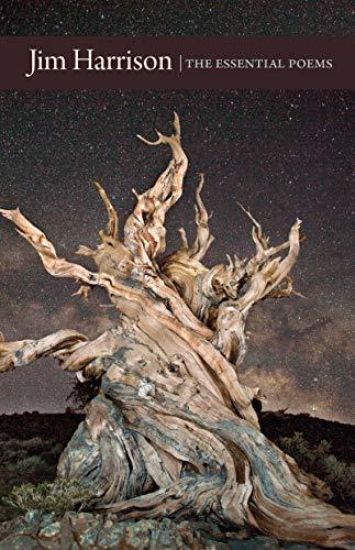
An untrammeled renegade genius... Here is a poet talking to you instead of around himself, while doing absolutely brilliant and outrageous things with language.--Publishers Weekly Starred Review in Booklist: " C]hoices of poems from each of Harrison's books are passionate and sharp... Of special note is a section from Letters to Yesenin, a book-length poem, and the title poem from The Theory and Practice of Rivers , which contains these echoing lines, 'I forgot where I heard that poems / are designed to waken sleeping gods.' Reading this essential volume, one might imagine that the gods are, indeed, staying up late, reading lights on, turning the pages." Jim Harrison: The Essential Poems is distilled from fourteen volumes--from visionary lyrics and meditative suites to shape-shifting ghazals and prose-poem letters. Teeming throughout these pages are Harrison's legendary passions and appetites, his meditations, rages, and love-songs to the natural world. The New York Times concluded a review from early in Harrison's career with a provocative quote: "This is poetry worth loving, hating, and fighting over, a subjective mirror of our American days and needs." That sentiment still holds true, as Jim Harrison's essential poems continue to call for our fiercest attention. Also included are full-color images of poem drafts--both typescripts and holographs--as well as the letter Denise Levertov sent to publisher W.W. Norton in the early 1960s, advocating for Harrison's debut collection. In his essay Poetry as Survival, Jim Harrison wrote, Poetry, at its best, is the language your soul would speak if you could teach your soul to speak. The Essential Poems is proof positive that Jim Harrison taught his soul to speak. In this unforgiving literary moment, we must deal honestly with Harrison's] life and work, as they are inextricable in a way that is not true of other poets...These poems bear-crawl gorgeously after a genuine connection to being, thrashing in giant leaps through the underbrush to find consolation, purpose, and redemption. In his raw, original keening he ambushes moments of unimaginable beauty, one after another, line after line...The Essential Poems demonstrates perfectly why we should turn to Harrison again. He lived and breathed an American confrontation with the physical earth, married himself to a universe of bodies and stumps and birds, did not try to shuck his grotesque masculinity and stared hard with his one good eye (the left was blinded when he was seven) at the inescapable, beckoning finger of death. --Dean Kuipers, LitHub "The Essential Poems provides a good introduction--or reintroduction--to the work of this singular writer... these pieces illustrate Harrison's range and his ease with various formats, from lyric poems to meditative suites to prose poems. They also spotlight his deep, rugged kinship with rural landscapes and the natural world, where 'the cost of flight is landing.'" --The Washington Post Jim Harrison's latest collection, The Essential Poems, contains...engaging and enlightening poems that] should be taught, learned, and loved. Remember this.--New York Journal of Books Had he been a chef, all the other foodies would have talked about how Jim Harrison dealt with big flavors. In his poems, they're all there -- love and death, remorse and longing, the rocket contrails of living. There's not a lot of small talk in The Essential Poems... this book grabs you by the collar and tells you in eleven hundred ways to wake up.--John Freeman, Executive Editor, Recommended Reading from Lit Hub Staff Jim Harrison had an appetite. He devoured the natural world with gusto and wrote about it with wild energy and sweetly caustic wit...Harrison was also a prodigious poet, and this thoughtfully curated collection The Essential Poems] showcases him at his best. Like his fiction, the poems observe the collision between civilization and the wildness outside our cities; they act like geocaches both harrowing and beautiful... Organized chronologically, the material here becomes a time line distilling Harrison's signature concerns.--Alta It is hard-boiled poetry, some of the best of its kind, and one is not surprised to know that Harrison has written very tough novels... His poetic vision is at the heart of it all.--Harper's

This collection arrives from the spirit world buoyant, its rowdy soul intact.-- Ra l Ni o, Booklist The ghazal, a poetic form rooted in seventh century Arabia, became popular in the United States through the translations of Rumi, Hafiz, and Ghalib. As a young poet, Jim Harrison became enamored with ghazals, and while he ignored most of the formal rules, within the energized couplets he discovered a welcome vehicle for his driving passions, muscular genius, and wrecking-ball rages. The year Outlyer & Ghazals appeared, The New York Times honored the book with inclusion on their coveted "Noteworthy Titles" list, provocatively noting that these poems were "worth loving, hating, and fighting over." Collected Ghazals gathers all of Harrisons's published ghazals into a single volume, accompanied by an "Afterword" by poet and noted ghazal writer Denver Butson, who writes that with this collection, Harrison's ghazals "are ours to witness again in all their messy, brave, honest, grieving, lustful, longing humanity." These are raucous, boozy, at times sexually explicit journeys beyond standard forms, often expressing a young poet's exuberance. Harrison wills us to follow him: 'When I slept in the woods I awoke before dawn / and drank brandy and listened to the birds until the moon / disappeared.' Closing with an illuminating afterword by poet Denver Butson, this collection arrives from the spirit world buoyant, its rowdy soul intact.--Booklist