Kirjojen hintavertailu. Mukana 12 016 292 kirjaa ja 12 kauppaa.

Kirjahaku

Etsi kirjoja tekijän nimen, kirjan nimen tai ISBN:n perusteella.

1000 tulosta hakusanalla Jim Scheeringa

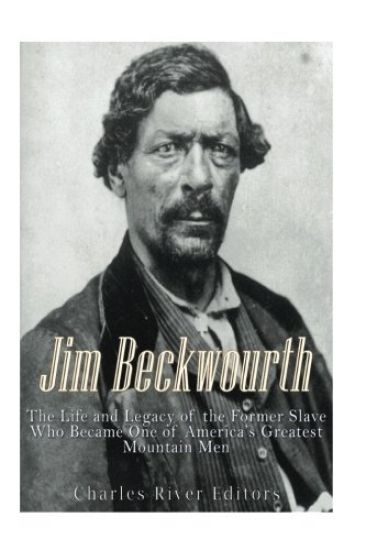
Jim Beckwourth: The Life and Legacy of the Former Slave Who Became One of America's Most Famous Mountain Men
*Includes pictures *Includes Beckwourth's quotes about his life *Includes online resources and a bibliography for further reading "Jim Beckwourth, who knew, said that though the Indian could never become a white man, the white man lapsed easily into an Indian." - Bernard DeVoto, The Year of Decision: 1846 Explorers, soldiers, and settlers of African-American heritage comprise an unfamiliar story to most students of American history. However, in the push westward, they were present in sufficient numbers to exert great influence on the nation's development. Among the earliest accounts is that of Isabel de Olvera, who settled in New Mexico around the year of 1600, and it is estimated that by 1750, 25% of Albuquerque's population shared discernible African ancestry. York, the well-known servant of Lewis and Clark, accompanied the legendary expedition under the auspices of the Jefferson administration, and Edward Rose traveled up the Missouri River in the same era. Within just a few years, Pio Pico became the governor of California, and George Bush became one of the first African-Americans to travel the Oregon Trail, opening that route to a flood of settlers over a 10-year period. In parallel with these individuals came a number of African-American frontiersmen who participated in the exploration of the Western terrain, said to have numbered in the dozens. Needless to say, such a career was an unusual destiny for those who "emerged from the system of slavery." Emancipation for an American slave generally involved a dangerous and illegal trek on foot toward the north, or through the Underground Railroad network operating between states east of the Mississippi. Given the illiteracy rates of the day, few tangible accounts of such journeys have survived, but one glaring exception is that of James Pierson Beckwourth, the only known African American mountain man to leave behind a detailed, if somewhat sensationalistic, account of his travels. In a journey spanning over half a century, Beckwourth tried his hand at virtually every line of work related to Western life. He served as a soldier, explored a vast range of territory as a mountain man, and worked as a scout and guide. In later years, he lived as an entrepreneurial merchant, professional card player, and as a skilled horse thief for both Indian tribes and the U.S. Army. Perhaps most unique of all was Beckwourth's relations with Native American tribes. Adapting himself to the culture of several tribes of the Plains and the Southwest, and employing a particular charm and prowess in battle, he was adopted by the Crow nation. In their society, Beckwourth rose to the level of War Chief, and he lived with the tribe for several years. Hailing from a largely anonymous slave culture, Beckwourth was in a perpetual search for personal fame throughout his life, and to some degree, he found it, thanks to the "autobiography" personally dictated to author T.D. Bonner, who recast the frontiersman's lasting legacy as that of a "black Daniel Boone." His resulting reputation thrived alongside famed Western characters such as Kit Carson, Jedediah Smith, Pierre Vasquez, and Jim Bridger. Jim Beckwourth: The Life and Legacy of the Former Slave Who Became One of America's Most Famous Mountain Men examines the legendary career of one of the most unique figures in the history of the American West. Along with pictures of important people, places, and events, you will learn about Jim Beckwourth like never before.

My Life in Blue: From the Yankees in the 1950s, to IBM, and Beyond: Steve Kraly with Jim Maggiore

My Life in Blue: From the Yankees in the 1950s, to IBM, and Beyond: Steve Kraly with Jim Maggiore

Jim Maggiore; Steve Kraly

Createspace Independent Publishing Platform
2019
nidottu
Before becoming a member of the 1953 World Champion New York Yankees, Steve Kraly was a star pitcher for the Binghamton Triplets and an army veteran. After his professional baseball playing days were over, Steve went on to a long career at IBM, as well as becoming an official scorer for the Eastern League. This is his story, as told to noted baseball author Jim Maggiore, compete with Steve's memories of playing alongside such baseball legends as Yogi Berra, Whitey Ford, Ralph Houk, Mickey Mantle, and Ralph Terry. Steve was a housemate of Mickey Mantle during Mickey's first two years in professional baseball. As for Steve's initial scouting report on Mantle, Steve proved he was no scout; he thought that "Mantle bunted his way to .300."
Tripping with Jim: Without Drugs (with a Few Exceptions)

Tripping with Jim: Without Drugs (with a Few Exceptions)

Jim Adduci

Createspace Independent Publishing Platform
2017
nidottu
Tripping with Jim is a simple, honest story by a complex person. It's a life's journey of stupid decisions, and close calls, written with humor, insights, and never-ending optimism.Think of yourself as a hobo, and jump on the train of thought with Jim Adduci. You will go from state to state of mind. It will be fun, interesting, and thought provoking. Each trip is an experience in life. He will bring you to the places he's been, both physically and mentally, that made him who he is today, for better or worse.
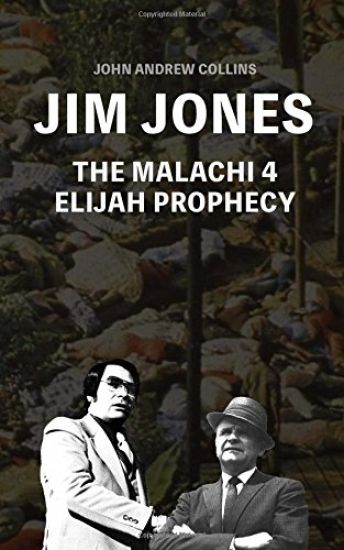
Jim Jones - The Malachi 4 Elijah Prophecy

Jim Jones - The Malachi 4 Elijah Prophecy

John Andrew Collins

Createspace Independent Publishing Platform
2017
nidottu
When Reverend William Branham prophesied of God's blessing of Reverend Jim Jones ministry during a joint Latter Rain healing campaign in Indianapolis, Indiana, he had no idea what he had started. As Jones took his place in line as a "Malachi 4 Elijah Prophet," a deadly chain reaction ended in the deaths of over 900 people during what would become known as the Jonestown Massacre.Did this chain reaction start with William Branham's call for an Exodus during his time in the ministry with Jim Jones? Historical data that has now been made available to the public might hold the answers.
Mining Natures Treasures with Jim and Dave: Curse of the Dead Man's Gold

Mining Natures Treasures with Jim and Dave: Curse of the Dead Man's Gold

Jim Mellos

Createspace Independent Publishing Platform
2017
nidottu
It's a pirate's booty and an ingredient in microcircuits. It's been used to make jewelry since at least 4000 B.C. and to treat cancer only in recent decades. It's in the pot at the end of the rainbow and in the coating on astronaut visors. What's this element that bridges old and new - and myth and science - so seamlessly? Gold. This is what Dave and I were searching for. The gold was calling our names and we just had to respond. Would this be the day we strike it rich or will we strike out? Join us on another one of our wild adventures as we head out in search of the ever-popular GOLD.
Jim Vun Cannon: The Complete Interview: First Presidency Discusses the Remnant Church
Rick Bennett of Gospel Tangents sat down with Jim Vun Cannon, counselor in the First Presidency of the Remnant Church of Jesus Christ of Latter-day Saints. The Remnant Church was officially established in 2000 is a breakoff of the RLDS Church. We discussed similarities and differences between the Remnant Church as the LDS Church, Jim's conversion, beliefs about priesthood, women's roles, beliefs about the Book of Mormon and other scriptures, temples, and whether Joseph Smith Practiced polygamy. Transcripts of the interviews were previous published as a series of interviews. This edition combines the entire 2 hour interviews into a single book.
Jim?>

Jim?>

John Armstrong; Paul Collins

Coach House Books
1998
pokkari
While lunching one day in Paris, long-time friends and collaborators John Armstrong and Paul Collins drew up a list of 49 random words that would become the subjects of a series of photographs. Armstrong shot in their native Canada, and Collins in France, where he has been living these past 20 years. When the 98 images are paired - which photographer took each one is never identified - they explore the blurred edges of North American and European culture, of the familiar and the exotic, of shared and individual experiences. The pairs of photos are augmented by a series of textual responses - some in English, some in French - to the 49 words. The passages act more as complements to the photos than as captions, providing an anecdotal context for the photographers and their project. The photographs were exhibited at Toronto's Robert Birch Gallery and the Art Gallery of Sudbury, Ontario, in summer 2002, and in Caen, France, and Erfurt, Germany, in 2003.
Jim Harrison: The Essential Poems

Jim Harrison: The Essential Poems

Jim Harrison

Copper Canyon Press
2019
pokkari
An untrammeled renegade genius... Here is a poet talking to you instead of around himself, while doing absolutely brilliant and outrageous things with language.--Publishers Weekly Starred Review in Booklist: " C]hoices of poems from each of Harrison's books are passionate and sharp... Of special note is a section from Letters to Yesenin, a book-length poem, and the title poem from The Theory and Practice of Rivers , which contains these echoing lines, 'I forgot where I heard that poems / are designed to waken sleeping gods.' Reading this essential volume, one might imagine that the gods are, indeed, staying up late, reading lights on, turning the pages." Jim Harrison: The Essential Poems is distilled from fourteen volumes--from visionary lyrics and meditative suites to shape-shifting ghazals and prose-poem letters. Teeming throughout these pages are Harrison's legendary passions and appetites, his meditations, rages, and love-songs to the natural world. The New York Times concluded a review from early in Harrison's career with a provocative quote: "This is poetry worth loving, hating, and fighting over, a subjective mirror of our American days and needs." That sentiment still holds true, as Jim Harrison's essential poems continue to call for our fiercest attention. Also included are full-color images of poem drafts--both typescripts and holographs--as well as the letter Denise Levertov sent to publisher W.W. Norton in the early 1960s, advocating for Harrison's debut collection. In his essay Poetry as Survival, Jim Harrison wrote, Poetry, at its best, is the language your soul would speak if you could teach your soul to speak. The Essential Poems is proof positive that Jim Harrison taught his soul to speak. In this unforgiving literary moment, we must deal honestly with Harrison's] life and work, as they are inextricable in a way that is not true of other poets...These poems bear-crawl gorgeously after a genuine connection to being, thrashing in giant leaps through the underbrush to find consolation, purpose, and redemption. In his raw, original keening he ambushes moments of unimaginable beauty, one after another, line after line...The Essential Poems demonstrates perfectly why we should turn to Harrison again. He lived and breathed an American confrontation with the physical earth, married himself to a universe of bodies and stumps and birds, did not try to shuck his grotesque masculinity and stared hard with his one good eye (the left was blinded when he was seven) at the inescapable, beckoning finger of death. --Dean Kuipers, LitHub "The Essential Poems provides a good introduction--or reintroduction--to the work of this singular writer... these pieces illustrate Harrison's range and his ease with various formats, from lyric poems to meditative suites to prose poems. They also spotlight his deep, rugged kinship with rural landscapes and the natural world, where 'the cost of flight is landing.'" --The Washington Post Jim Harrison's latest collection, The Essential Poems, contains...engaging and enlightening poems that] should be taught, learned, and loved. Remember this.--New York Journal of Books Had he been a chef, all the other foodies would have talked about how Jim Harrison dealt with big flavors. In his poems, they're all there -- love and death, remorse and longing, the rocket contrails of living. There's not a lot of small talk in The Essential Poems... this book grabs you by the collar and tells you in eleven hundred ways to wake up.--John Freeman, Executive Editor, Recommended Reading from Lit Hub Staff Jim Harrison had an appetite. He devoured the natural world with gusto and wrote about it with wild energy and sweetly caustic wit...Harrison was also a prodigious poet, and this thoughtfully curated collection The Essential Poems] showcases him at his best. Like his fiction, the poems observe the collision between civilization and the wildness outside our cities; they act like geocaches both harrowing and beautiful... Organized chronologically, the material here becomes a time line distilling Harrison's signature concerns.--Alta It is hard-boiled poetry, some of the best of its kind, and one is not surprised to know that Harrison has written very tough novels... His poetic vision is at the heart of it all.--Harper's
Jim Harrison: Collected Ghazals

Jim Harrison: Collected Ghazals

Jim Harrison; Denver Butson

Copper Canyon Press,U.S.
2020
pokkari
This collection arrives from the spirit world buoyant, its rowdy soul intact.-- Ra l Ni o, Booklist The ghazal, a poetic form rooted in seventh century Arabia, became popular in the United States through the translations of Rumi, Hafiz, and Ghalib. As a young poet, Jim Harrison became enamored with ghazals, and while he ignored most of the formal rules, within the energized couplets he discovered a welcome vehicle for his driving passions, muscular genius, and wrecking-ball rages. The year Outlyer & Ghazals appeared, The New York Times honored the book with inclusion on their coveted "Noteworthy Titles" list, provocatively noting that these poems were "worth loving, hating, and fighting over." Collected Ghazals gathers all of Harrisons's published ghazals into a single volume, accompanied by an "Afterword" by poet and noted ghazal writer Denver Butson, who writes that with this collection, Harrison's ghazals "are ours to witness again in all their messy, brave, honest, grieving, lustful, longing humanity." These are raucous, boozy, at times sexually explicit journeys beyond standard forms, often expressing a young poet's exuberance. Harrison wills us to follow him: 'When I slept in the woods I awoke before dawn / and drank brandy and listened to the birds until the moon / disappeared.' Closing with an illuminating afterword by poet Denver Butson, this collection arrives from the spirit world buoyant, its rowdy soul intact.--Booklist
Jim Harrison: Complete Poems

Jim Harrison: Complete Poems

Jim Harrison

Copper Canyon Press,U.S.
2022
sidottu
The Complete Poems by Jim Harrison (1937-2016) is the definitive collection from one of America's iconic writers. Introduced by activist and naturalist writer Terry Tempest Williams, this tour de force contains every poem Harrison published over his fifty-year career and displays his wide range of poetic styles and forms. Here are the nature-based lyrics of his early work, the high-velocity ghazals, a harrowing prose-poem "correspondence" with a Russian suicide, the riverine suites, fearless meditations inspired by the Zen monk Crazy Cloud, and a joyous conversation in haiku-like gems with friend and fellow poet Ted Kooser. Weaving throughout these 1000 pages are Harrison's legendary passions and appetites, his love songs and lamentations, and a clarion call to pay attention to the life you are actually living. The Complete Poems confirms that Jim Harrison is a talented storyteller with a penetrating eye for details, or as Publishers Weeklycalled him, "an untrammeled renegade genius... a poet talking to you instead of around himself, while doing absolutely brilliant and outrageous things with language."
Jim Crow America

Jim Crow America

University of Arkansas Press
2009
sidottu
This is an ideal resource on racism and segregation in American life. The term ""Jim Crow"" has had multiple meanings and a dark and complex past. It was first used in the early nineteenth century. After the Civil War it referred to the legal, customary, and often extralegal system that segregated and isolated African Americans from mainstream American life. In response to the increasing loss of their rights of citizenship and the rising tide of violence, the National Association for the Advancement of Colored People was founded in 1909. The federal government eventually took an active role in dismantling Jim Crow toward the end of the Depression. But it wasn't until the Lyndon Johnson years and all the work that led up to them that the end of Jim Crow finally came to pass. This unique book provides readers with a wealth of primary source materials from 1828 to 1980 that reveal how the Jim Crow era affects how historians practice their craft. The book is chronologically organized into five sections, each of which focuses on a different historical period in the story of Jim Crow: inventing, building, living, resisting, and dismantling. Many of the fifty-six documents and eighteen images and cartoons, many of which have not been published before, reveal something significant about this subject or offer an unconventional or unexpected perspective on this era. Some of the historical figures whose words are included are Abraham Lincoln, Marcus Garvey, Booker T. Washington, Richard Wright, Paul Robeson, Langston Hughes, Adam Clayton Powell, and Marian Anderson. The book also has an annotated bibliography, a list of key players, a timeline, and key topics for consideration.
Jim Blinn's Corner: A Trip Down the Graphics Pipeline

Jim Blinn's Corner: A Trip Down the Graphics Pipeline

Jim Blinn

Morgan Kaufmann Publishers In
1996
nidottu
For almost three decades eminent computer graphicist Jim Blinn has coupled his scientific knowledge and artistic abilities to foster the growth of the computer graphics field. His many contributions include the Voyager Fly-by animations of space missions to Jupiter, Saturn, and Uranus; The Mechanical Universe, a 52-part telecourse of animated physics; and the computer animation of Carl Sagan's PBS series Cosmos. In addition, Blinn, the recipient of the first SIGGRAPH Computer Graphics Achievement Award, has developed many widely used graphics techniques, including bump mapping, environment mapping, and blobby modeling.Blinn shares his insight and experience in "Jim Blinn's Corner," an award-winning column in the technical magazine IEEE Computer Graphics and Applications in which he unveils his most useful graphics methods and observations. This book, a compendium of 20 of the column's articles, leads you through the "graphics pipeline" offering a wealth of tips and tricks. It explores common graphics problems, many of which have never before been addressed.An invaluable resource for any graphics professionalIn his entertaining and inspirational style, Blinn examines a variety of topics to help computer graphics software and application developers recognize and solve graphics programming problems. Focusing on geometry and the graphics pipeline, he shares: easy to understand explanations of difficult concepts gleaned from years of teachinginteresting examples of tricky special cases that cause conventional algorithms to failhighly refined algorithms for clipping, viewing, lighting, and rendering
Jim Blinn's Corner: Dixty Pixels

Jim Blinn's Corner: Dixty Pixels

Jim Blinn

Morgan Kaufmann Publishers In
1998
nidottu
"All problems in computer graphics can be solved with a matrix inversion."—Jim BlinnJim Blinn is Back!Dirty Pixels is Jim's second compendium of articles selected from his award-winning column, "Jim Blinn's Corner," in IEEE Computer Graphics and Applications. Here he addresses topics in image processing and pixel arithmetic and shares the tricks he's uncovered through years of experimentation.Writing in the inimitable, engaging style for which he's famous, Jim's easy-to-understadn explanations and solutions make abstract concepts accessible to a broad audience. Dirty Pixels is an invaluable resource for anyone in the computer graphics field.Teapots and MoreJim's contributions to computer graphics include the Voyager Fly-by animations of space missions to Jupiter, Saturn, and Uranus; The Mechanical Universe, a 52-part telecourse of animated physics; and the computer animation of Carl Sagan's PBS series Cosmos. Jim developed many graphics techniques now in widespread use, among them bump mapping, environment mapping, and blobby modeling.
Jim Blinn's Corner: Notation, Notation, Notation

Jim Blinn's Corner: Notation, Notation, Notation

Jim Blinn

Morgan Kaufmann Publishers In
2002
nidottu
The third entry in the Jim Blinn's Corner series, this is, like the others, a handy compilation of selected installments of his influential column. But here, for the first time, you get the "Director's Cut" of the articles: revised, expanded, and enhanced versions of the originals. What's changed? Improved mathematical notation, more diagrams, new solutions. What remains the same? All the things you've come to rely on: straight answers, irreverent style, and innovative thinking. This is Jim Blinn at his best - now even better.
Jim Thorpe

Jim Thorpe

Rosemary Updyke

Pelican Publishing Co
1999
nidottu
The son of a Sac and Fox Indian father and a Potawatami Indian mother, Jim Wa-Tho-Huk Thorpe was born in Oklahoma in 1888. A natural athlete, he overcame family tragedies and hardships to become a star in three sports and win two Olympic gold medals.