Kirjojen hintavertailu. Mukana 12 016 292 kirjaa ja 12 kauppaa.

Kirjahaku

Etsi kirjoja tekijän nimen, kirjan nimen tai ISBN:n perusteella.

1000 tulosta hakusanalla John Perry

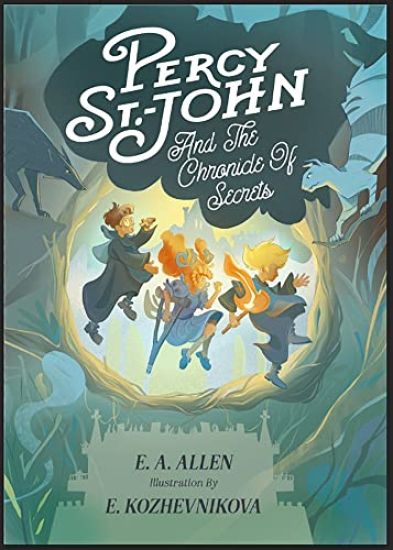
Percy St. John and the Chronicle of Secrets

Percy St. John and the Chronicle of Secrets

E.A. Allen; Evgeniya Kozhevnikova

Histria LLC
2023
sidottu
The adventures of Percy St. John - now in a Deluxe Illustrated Edition! An unbreakable cipher, a dead priest with expensive shoes, a hermit who has conversations with saints, an angry French girl, a guardian angel with attitude, a murderous master criminal, and a gaggle of angry demons might stop an ordinary fifteen-year-old safe-cracking genius, but not Percy St.-John. He’ s out to prove he did not steal a mysterious ancient book that may hold the key to mankind’ s greatest hope and greatest danger.
The Midnight Boy: A Percy St. John Novel
In the shadows of London's underbelly, a boy's relentless fight for survival sparks the rise of a legend... Orphaned by the murder of his father, rejected by his grandfather, and consigned to the harsh life of an orphanage, Percy St.-John's existence is marked by hardship. Under the cruel oversight of Reverend Mortimer Lovecraft, Percy endures a world filled with pain. When fate finally allows him to escape, Percy faces new challenges on the streets of London, where survival means scrounging for scraps and facing dangers at every corner. Hope appears when he finds shelter in the locksmith shop of Tobias Finermann and his kind granddaughter, Hannah. Under their care, Percy begins to rebuild his life. With the help of a mysterious Guardian Angel, he discovers a newfound fascination for locks and safes, unlocking skills that will change his future. But secrets linger in the shadows. As Percy settles into his new life, he and Hannah suspect that old Mr. Finermann is hiding something. Strange visitors and late-night outings hint at dark dealings that could place them all in danger. As Percy navigates these mysteries, he discovers that he might have a greater purpose than he ever imagined--a journey that will lead him to become The Midnight Boy.
John Locke

John Locke

Geraint Parry

Routledge
2003
sidottu
From earliest times Locke's writings have been the subject of controversy. An intellectual caught up in the politics of late 17th century England, his writings on politics reveal a man attempting to combine an analysis of the underlying principles of society with a deep commitment to a specific political stance and party. This study, first published in 1978 explains why Locke's vision of political life has continued to fascinate political thinkers of many different persuasions.
John Locke

John Locke

Geraint Parry

Routledge
2013
nidottu
From earliest times Locke's writings have been the subject of controversy. An intellectual caught up in the politics of late 17th century England, his writings on politics reveal a man attempting to combine an analysis of the underlying principles of society with a deep commitment to a specific political stance and party. This study, first published in 1978 explains why Locke's vision of political life has continued to fascinate political thinkers of many different persuasions.
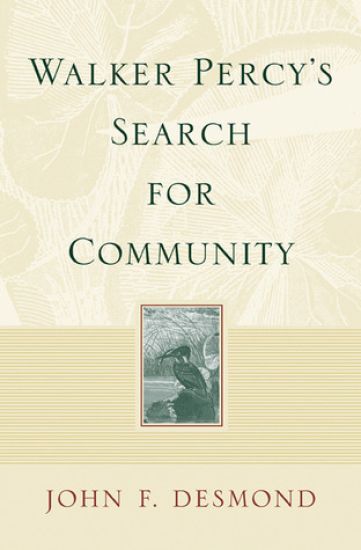
Walker Percy's Search for Community

Walker Percy's Search for Community

John F. Desmond

University of Georgia Press
2010
pokkari
In the first undertaking of its kind in Percy criticism, John F. Desmond traces—through Walker Percy's six published novels—the writer's central and enduring concerns with community. These concerns, Desmond argues, were grounded in the realism of such Scholastics as Aquinas and Duns Scotus—realism as updated by the semiotic theory of Charles Sanders Peirce, the American philosopher whose work Percy studied for more than forty years. Percy gleaned from Peirce the basic truth that humans are by nature relational beings, a truth reinforced by Percy's Catholic belief in mystical community.Desmond shows how Percy's theosemiotic outlook shaped each of his novels, from The Moviegoer (1961) to The Thanatos Syndrome (1987), and provided a foundation for his analysis of alienation, his critique of scientism, and his vision of community. Percy's vision of community extended from the flawed social world of modern America and Western society to the mystical community beyond time and place prophesied in the Hebrew-Christian scriptures. This vision grew more explicit as Percy's novelistic career unfolded and was of a piece with the ideas developed in his many essays and in his "self-help" parable, Lost in the Cosmos (1983).Percy saw himself as a witness to the collapse of scientific humanism in the face of consumerism, self-absorption, and violence. However, Desmond says, Percy also looked forward to a reconciliation of science, religion, and art. In one of his last public lectures, "The Fateful Rift: The San Andreas Fault in the Modern Mind," Percy called for a "new anthropology" based on a Peircean realism that accurately accounted for man's true nature as a wayfarer on a journey with others toward God. This call is echoed in the novels, in which, according to Desmond, Percy explores his vision of community "through representation of the shattered and deformed state of society and the searching of his protagonists, and through suggesting possibilities for healing their riven state."
General Percy Kirke and the Later Stuart Army

General Percy Kirke and the Later Stuart Army

John Childs

Bloomsbury Academic USA
2014
sidottu
General Percy Kirke (c. 1647-91) is remembered in Somerset as a cruel, vicious thug who deluged the region in blood after the Battle of Sedgemoor in 1685. He is equally notorious in Northern Ireland. Appointed to command the expedition to raise the Siege of Londonderry in 1689, his assumed treachery nearly resulted in the city’s fall and he was made to look ridiculous when the blockade was eventually lifted by a few sailors in a rowing boat. Yet Kirke was closely involved in some of the most important events in British and Irish history. He served as the last governor of the colony of Tangier; played a central role in facilitating the Glorious Revolution of 1688; and fought in the majority of the principal actions and campaigns undertaken by the newly-formed standing armies in England, Ireland and Scotland, especially the Battle of the Boyne and the first Siege of Limerick in 1689. With the aid of his own earlier work in the field, additional primary sources and a recently-rediscovered letter book, John Childs looks beyond the fictionalisation of Kirke, most notably by R. D. Blackmore in Lorna Doone, to investigate the historical reality of his career, character, professional competence, politics and religion. As well as offering fresh, detailed narratives of such episodes as Monmouth’s Rebellion, the conspiracies in 1688 and the Siege of Londonderry, this pioneering biography also presents insights into contemporary military personnel, patronage, cliques and procedures.
General Percy Kirke and the Later Stuart Army

General Percy Kirke and the Later Stuart Army

John Childs

Bloomsbury Academic
2015
nidottu
General Percy Kirke (c. 1647-91) is remembered in Somerset as a cruel, vicious thug who deluged the region in blood after the Battle of Sedgemoor in 1685. He is equally notorious in Northern Ireland. Appointed to command the expedition to raise the Siege of Londonderry in 1689, his assumed treachery nearly resulted in the city’s fall and he was made to look ridiculous when the blockade was eventually lifted by a few sailors in a rowing boat. Yet Kirke was closely involved in some of the most important events in British and Irish history. He served as the last governor of the colony of Tangier; played a central role in facilitating the Glorious Revolution of 1688; and fought in the majority of the principal actions and campaigns undertaken by the newly-formed standing armies in England, Ireland and Scotland, especially the Battle of the Boyne and the first Siege of Limerick in 1689. With the aid of his own earlier work in the field, additional primary sources and a recently-rediscovered letter book, John Childs looks beyond the fictionalisation of Kirke, most notably by R. D. Blackmore in Lorna Doone, to investigate the historical reality of his career, character, professional competence, politics and religion. As well as offering fresh, detailed narratives of such episodes as Monmouth’s Rebellion, the conspiracies in 1688 and the Siege of Londonderry, this pioneering biography also presents insights into contemporary military personnel, patronage, cliques and procedures.
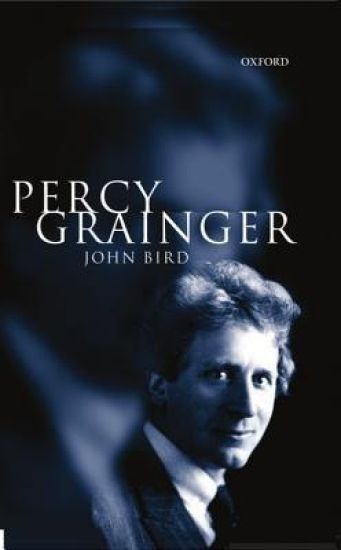
Percy Grainger

Percy Grainger

John Bird

Oxford University Press
1999
sidottu
This revised edition of John Bird's acclaimed biography of Percy Grainger gives a circumstantial account of the life and works of one of the strangest figures in 20th-century music. Included is a current discography and a selection of his seminal writings.
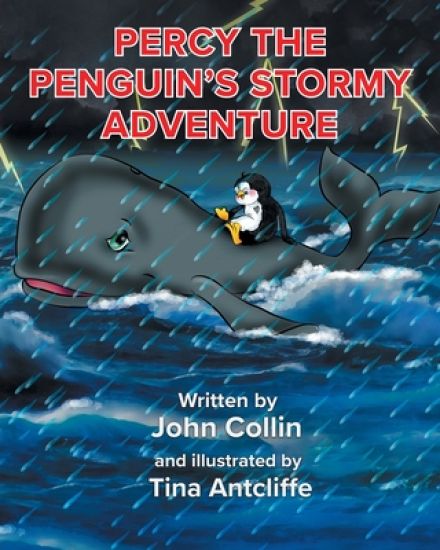
Percy the Penguin's Stormy Adventure

Percy the Penguin's Stormy Adventure

John Collin

Tellwell Talent
2022
pokkari
Follow the amazing adventure of Percy the penguin. After an unfortunate mishap, he battles against danger and adversity in his quest to get back home. It is a story about hope, friendship, kindness, determination and the importance of family. I hope you enjoy reading this book as much as I enjoyed writing it
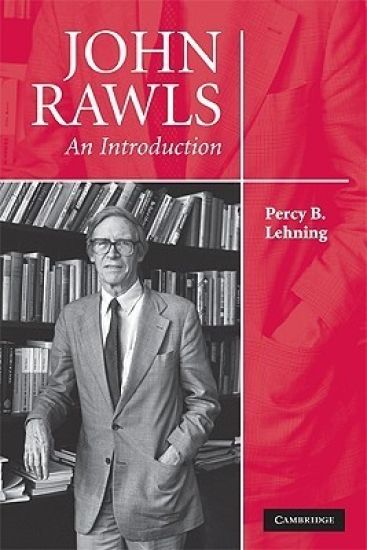
John Rawls

John Rawls

Percy B. Lehning

Cambridge University Press
2009
pokkari
What is a just political order? What does justice require of us? These are perennial questions of political philosophy. John Rawls, generally acknowledged to be one of the most influential political philosophers of the twentieth century, answered them in a way that has drawn widespread attention, not only from political philosophers, but from political scientists, economists, those in the field of public policy, and experts in jurisprudence. It is not only academics who have been inspired by Rawls' ideas; they have also influenced the theory of government and continue to play a role in actual public political debates. This introduction outlines Rawls' work on the theory of justice. Focusing on Rawls' own writings, from his first publication in 1951 to his final ones some fifty years later, Percy B. Lehning demonstrates how and why they can be considered as one consistent and coherent body of work.