Kirjojen hintavertailu. Mukana 12 016 292 kirjaa ja 12 kauppaa.

Kirjahaku

Etsi kirjoja tekijän nimen, kirjan nimen tai ISBN:n perusteella.

1000 tulosta hakusanalla Joyce Rodgers

James Joyce and the Revolt of Love

James Joyce and the Revolt of Love

J. Utell

Palgrave Macmillan
2012
sidottu
This study examines the representation of marital and extramarital relations in James Joyce's texts, with reference to context and to Joyce's biography. Utell claims that Joyce uses these relations to imagine a different kind of love, one based in a radical acceptance and a rejection of a utilitarian and sexually repressive stance towards marriage.
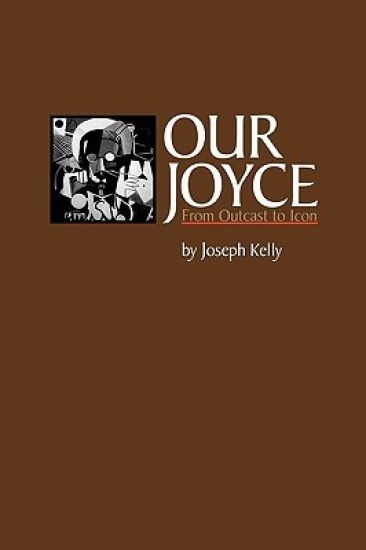
Our Joyce

Our Joyce

Joseph Kelly

University of Texas Press
1998
nidottu
James Joyce began his literary career as an Irishman writing to protest the deplorable conditions of his native country. Today, he is an icon in a field known as "Joyce studies." Our Joyce explores this amazing transformation of a literary reputation, offering a frank look into how and for whose benefit literary reputations are constructed. Joseph Kelly looks at five defining moments in Joyce's reputation. Before 1914, when Joyce was most in control of his own reputation, he considered himself an Irish writer speaking to the Dublin middle classes. When T. S. Eliot and Ezra Pound began promoting Joyce in 1914, however, they initiated a cult of genius that transformed Joyce into a prototype of the "egoist," a writer talking only to other writers. This view served the purposes of Morris Ernst in the 1930s, when he defended Ulysses against obscenity charges by arguing that geniuses were incapable of obscenity and that they wrote only for elite readers. That view of Joyce solidified in Richard Ellmann's award-winning 1950s biography, which portrayed Joyce as a self-centered genius who cared little for his readers and less for the world at war around him. The biography, in turn, led to Joyce's canonization by the academy, where a "Joyce industry" now flourishes within English departments.
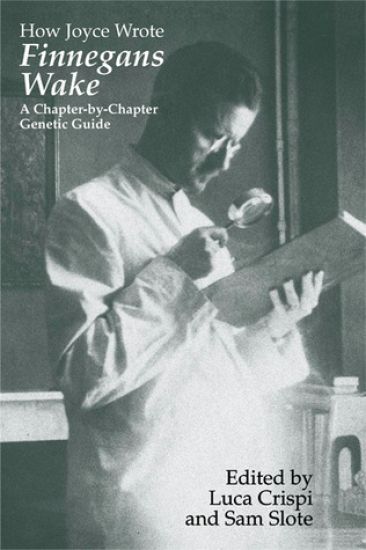
How Joyce Wrote "Finnegans Wake"

How Joyce Wrote "Finnegans Wake"

UNIVERSITY OF WISCONSIN PRESS
2007
sidottu
In this landmark study of James Joyce's "Finnegans Wake", Luca Crispi and Sam Slote have brought together fourteen other leading Joyce experts in a genetic guide to one of the twentieth century's most intriguing works of fiction. Each essay approaches "Finnegans Wake" through novel perspectives afforded by Joyce's preparatory manuscripts. By investigating a work through its manuscripts, genetic criticism both grounds speculative interpretations in an historical, material context and opens up a broader horizon for critical and textual interpretation. The introduction by Luca Crispi, Sam Slote, and Dirk Van Hulle offers a chronology of the composition of "Finnegans Wake", an archival survey of the manuscripts, and an introduction to genetic criticism. Then, the volume provides a chapter-by-chapter interpretation of "Finnegans Wake" from a variety of perspectives, probing the book as a work in progress. The fruit of more than two decades' worth of Wakean genetic studies, this book is the essential starting point for all future studies of Joyce's most complex and fascinating work.
How Joyce Wrote "Finnegans Wake

How Joyce Wrote "Finnegans Wake

University of Wisconsin Press
2008
nidottu
In this landmark study of James Joyce's ""Finnegans Wake"", Luca Crispi and Sam Slote have brought together leading Joyce experts to explore the genesis of one of the twentieth century's most intriguing works of fiction. Each essay approaches ""Finnegans Wake"" through novel perspectives afforded by Joyce's preparatory manuscripts. By investigating a work through its earlier drafts, genetic criticism grounds speculative interpretations in a historical, material context and opens up a broader horizon for critical and textual interpretation.The introduction by Luca Crispi, Sam Slote, and Dirk Van Hulle offers a chronology of the composition of ""Finnegans Wake"", an archival survey of the manuscripts, and an introduction to genetic criticism. Then, the volume provides a chapter-by-chapter interpretation of the Wake, probing the book as a work in progress. This book is the essential starting point for all future studies of Joyce's most complex and fascinating work.
Reading Joyce’s Ulysses

Reading Joyce’s Ulysses

Daniel R. Schwarz

Palgrave Macmillan
1991
nidottu
Reissued to commemorate the 100th anniversary of Bloomsday, Reading Joyce's 'Ulysses' includes a new preface taking account of scholarly and critical development since its original publication. It shows how the now important issues of post-colonialism, feminism, Irish Studies and urban culture are addressed within the text, as well as a discussion of how the book can be used by both beginners and seasoned readers. Schwarz not only presents a powerful and original reading of Joyce's great epic novel, but discusses it in terms of a dialogue between recent and more traditional theory. Focusing on what he calls the odyssean reader, Schwarz demonstrates how the experience of reading Ulysses involves responding both to traditional plot and character, and to the novel's stylistic experiments.
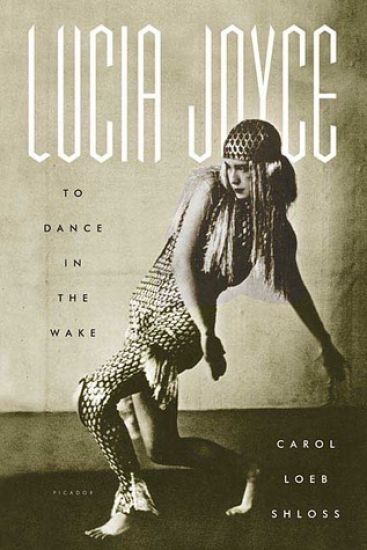
Lucia Joyce: To Dance in the Wake

Lucia Joyce: To Dance in the Wake

Carol Loeb Shloss

Picador USA
2005
nidottu
A portrait of the daughter of James Joyce challenges negative perceptions, describing the creative bond she shared with her father that prompted her participation in modern dance, her father's efforts to cure her complex mental illness, and her influence on the writing of Finnegan's Wake. Reprint. 10,000 first printing.
James Joyce and Trieste

James Joyce and Trieste

Peter Hartshorn

Praeger Publishers Inc
1997
sidottu
Much attention has been given to Joyce's life in Dublin and Paris, but his productive years in Trieste have not received the same attention. In a thoroughly documented account, Hartshorn presents a clear, accessible study of Joyce's love/hate relationship with the city, the work he produced there, and the influence of Trieste on his writing. The book begins with a brief overview of Trieste's history prior to Joyce's arrival in 1904, and follows Joyce's life there until World War I, a period in which he completed ^IDubliners^R and ^IA Portrait of the Artist as a Young Man^R, and began ^IUlysses^R. Joyce then departed for the safety of Zurich and the book concludes with his brief return of eight months to Trieste in 1919. Hartshorn has drawn from many previously untapped sources, providing a fascinating look at Joyce's Trieste years that no other Joyce biographer has yet to reveal.
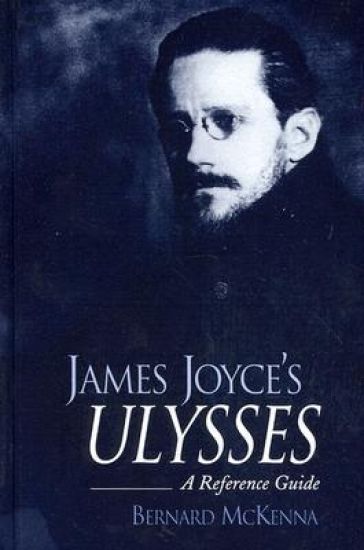
James Joyce's Ulysses

James Joyce's Ulysses

Bernard McKenna

Greenwood Press
2002
sidottu
Perhaps the most important literary achievement of the 20th century, Ulysses is also one of the most challenging. This reference introduces beginning readers to Joyce and his novel, removes some of the obstacles readers face when confronting his text, provides background information to facilitate understanding of the nuances of the book, and illuminates the critical dialogue surrounding his work. With the help of this guide, beginning readers will discover the rewards of reading the novel and find that they outweigh the potential obstacles to understanding Ulysses. To introduce readers to Joyce and his work, the volume begins with a short biography and a survey of the importance and cultural impact of Ulysses. Most beginning readers find it difficult to follow Joyce's plot, and so they abandon the text in frustration. Thus the book includes the most detailed available plot summary of Joyce's novel. The chapters that follow overview the novel's publication history; its historical and cultural contexts, including Modernism, Irish literature and history, and political and social trends; major themes and issues; Joyce's narrative art, including his character development, language, images, and style; and the academic and critical response to the work. The volume closes with a bibliographical essay.
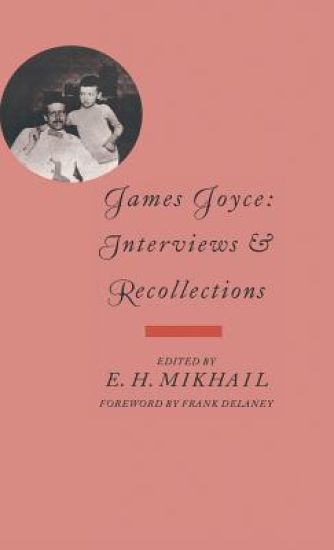
James Joyce

James Joyce

Frank Delaney

Palgrave Macmillan
1990
sidottu
This work attempts to provide a portrait of Joyce from many viewpoints, aiming at selecting those interviews and recollections that have not been reprinted as well as those that are not readily accessible. James Joyce was a self-centred man. Unlike Wilde and Behan, who were too busy living to write, Joyce, like O'Casey and Yeats, gave the totality of his life to his art. He did not find his diversion in his friends because of the exigencies of his work. However, he was not unsociable - he was capable of strong friendships and the number of people who knew him was enormous, as this collection tries to reflect.
James Joyce

James Joyce

Morris Beja

Palgrave Macmillan
1992
nidottu
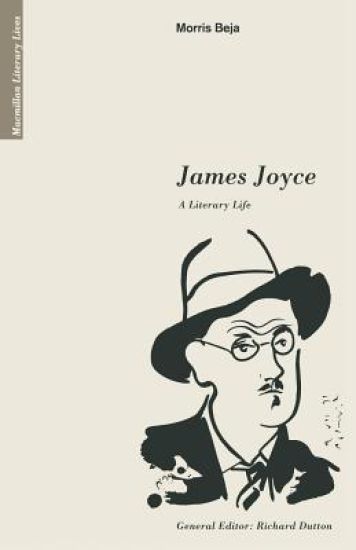
This series of books offers accounts of the literary careers of widely read British and Irish authors. Volumes follow the outline of the writers' working lives tracing the professional, publishing and social contexts which shaped their writing. This book is about the Irish author James Joyce.
James Joyce and the Russians

James Joyce and the Russians

Neil Cornwell

Palgrave Macmillan
1992
sidottu
This original three-part study examines Russia, Russians and their culture in Joyce's life and establishes a Russian theme running through his work as a whole, from the earliest writings to Finnegans Wake. It discusses contacts and parallels between Joyce and three Russian figures: Bely, Nabokov and Eisenstein (and, more briefly, Pasternak). Thirdly, it details the Soviet reception of Joyce from 1922 until publication of the first Russian Ulysses in 1989, as well as surveying Marxist approaches to Joyce. A full bibliography of Russian and western sources is included.
James Joyce and the Revolution of the Word

James Joyce and the Revolution of the Word

Colin MacCabe

Palgrave Macmillan
2002
sidottu
This second edition of Colin MacCabe's James Joyce and the Revolution of the Word reprints a classic critical text on Joyce and adds a wealth of new material which places the text in its political and historical context. The argument links politics and literature, sex and language, to provide an account of Joyce which places him continually in both Irish and European history.
James Joyce and the Revolution of the Word

James Joyce and the Revolution of the Word

Colin MacCabe

Palgrave Macmillan
2002
nidottu
This second edition of Colin MacCabe's James Joyce and the Revolution of the Word reprints a classic critical text on Joyce and adds a wealth of new material which places the text in its political and historical context. The argument links politics and literature, sex and language, to provide an account of Joyce which places him continually in both Irish and European history.
Reading Joyce’s Ulysses

Reading Joyce’s Ulysses

Daniel R. Schwarz

Palgrave Macmillan
1991
nidottu
Reissued to commemorate the 100th anniversary of Bloomsday, Reading Joyce's 'Ulysses' includes a new preface taking account of scholarly and critical development since its original publication. It shows how the now important issues of post-colonialism, feminism, Irish Studies and urban culture are addressed within the text, as well as a discussion of how the book can be used by both beginners and seasoned readers. Schwarz not only presents a powerful and original reading of Joyce's great epic novel, but discusses it in terms of a dialogue between recent and more traditional theory. Focusing on what he calls the odyssean reader, Schwarz demonstrates how the experience of reading Ulysses involves responding both to traditional plot and character, and to the novel's stylistic experiments.
James Joyce and Censorship

James Joyce and Censorship

Paul Vanderham

Palgrave Macmillan
1997
sidottu
James Joyce and Censorship is the first book to tell the fascinating story of the trials of Ulysses. Based on extensive archival research, it is also the first study of the trials to analyze their influence on the reception and composition of Ulysses in the context of Joyce's lifelong struggle with the censors, to evaluate their significance as an important turning point in the history of censorship, and to emphasize their relevance to contemporary debates regarding freedom of literary expression.
Re: Joyce

Re: Joyce

Palgrave Macmillan
1998
sidottu
Re: Joyce offers readers of James Joyce a significant collection of new essays from an international array of prominent and emerging Joyce scholars from around the world. Combining a wide range of theoretical approaches, this collection intervenes with current debates about Joyce's work and the place of Joyce in the academy, while addressing all principal areas of Joycean scholarship. In addition to this, the volume raises issues relevant to the study of Joyce in the context of modernism. Grouped thematically, the essays which comprise Re: Joyce offer all students of Joyce an exciting range of in-depth encounters with the pre-eminent writer of the twentieth century.
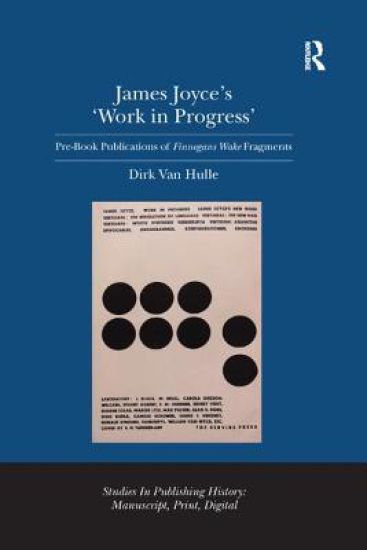
James Joyce's 'Work in Progress'

James Joyce's 'Work in Progress'

Dirk Van Hulle

Routledge
2019
nidottu
The text of Finnegans Wake is not as monolithic as it might seem. It grew out of a set of short vignettes, sections and fragments. Several of these sections, which James Joyce confidently claimed would "fuse of themselves", are still recognizable in the text of Finnegans Wake. And while they are undeniably integrated very skillfully, they also function separately. In this publication history, Dirk Van Hulle examines the interaction between the private composition process and the public life of Joyce's 'Work in Progress', from the creation of the separate sections through their publication in periodicals and as separately published sections. Van Hulle highlights the beautifully crafted editions published by fine arts presses and Joyce's encouragement of his daughter's creative talents, even as his own creative process was slowing down in the 1930s. All of these pre-book publications were "alive" in both bibliographic and textual terms, as Joyce continually changed the texts in order to prepare the book publication of Finnegans Wake. Van Hulle's book offers a fresh perspective on these texts, showing that they are not just preparatory versions of Finnegans Wake but a 'Work in Progress' in their own right.
James Joyce and Education

James Joyce and Education

Len Platt

TAYLOR FRANCIS LTD
2022
nidottu
James Joyce and Education is the first full-length study of education across the Joyce oeuvre. A new account of how the politics and aesthetics of the Joyce text is informed by historical contexts, it is the latest contribution to the growing contemporary debate about education, late modernism and literary innovation.This highly original account reads Dubliners, A Portrait of the Artist as a Young Man, Ulysses and Finnegans Wake in new and challenging ways. It produces the Joyce text as a complex and comic devotion to the representation of schooled education — an exemplification of the elitism that state schooling was historically designed to reproduce and a devastating undoing of the epistemologies it was designed to sustain. Chapters explore a range of themes, including Joyce and radical education, the impact of Nietzsche’s writing on Joyce and women and education.The book will appeal to researchers, scholars and postgraduate students in the fields of literature in education, pedagogy, Joyce scholarship and modernism.