Rural Health: A Framework for Understanding the Issues and Their Impact on Rural Populations examines the factors that affect health care access and health status of individuals who live in rural areas.The text employs a unique structure called the Rural Health Framework, a methodology created by the authors during their years of teaching rural health at the undergraduate and graduate level. This framework challenges students to collect data and facts about rural areas to help them better understand rural health issues. The book emphasizes the complexity of rural health, the interprofessional nature of rural health care, and the importance of appropriate health care interventions for rural populations.The opening chapter provides readers with an overview of rural health terms and concepts. Additional chapters explore how geographic, economic, sociocultural, demographic, and support factors can impact heath status, access, and outcomes. The final chapter features an array of rural health case assessments to help students connect theory to real-world practice.Offering students an innovative and essential approach, Rural Health is an exemplary resource for courses in nursing, public health, medicine, social work, nutrition, and allied health.
Rural Health: A Framework for Understanding the Issues and Their Impact on Rural Populations examines the factors that affect health care access and health status of individuals who live in rural areas.The text employs a unique structure called the Rural Health Framework, a methodology created by the authors during their years of teaching rural health at the undergraduate and graduate level. This framework challenges students to collect data and facts about rural areas to help them better understand rural health issues. The book emphasizes the complexity of rural health, the interprofessional nature of rural health care, and the importance of appropriate health care interventions for rural populations.The opening chapter provides readers with an overview of rural health terms and concepts. Additional chapters explore how geographic, economic, sociocultural, demographic, and support factors can impact heath status, access, and outcomes. The final chapter features an array of rural health case assessments to help students connect theory to real-world practice.Offering students an innovative and essential approach, Rural Health is an exemplary resource for courses in nursing, public health, medicine, social work, nutrition, and allied health.
Slavery was in many ways the fundamental institution in colonial Cuba, whose economy was based on the export of sugar from the slave-worked plantations. This volume presents a quantitative study of Cuban slavery from the late eighteenth century until 1880, the year slavery was formally abolished on the island. The core of this study is an examination of the yearly movement of slave prices and changes in the demographic characteristics of the slave market. Based on data from the notarial protocol records of the Archivo Nacional de Cuba, this book establishes precise price trends for slaves by age, sex, nationality, and occupation, and considers a number of other variables including the prices of coartados (slaves who had begun the process of buying their freedom) and the patterns of emancipation. Incorporating over 30,000 slave transactions from three separate locations in Cuba - Havana, Santiago, and Cienfuegos - this work comprises the largest extant database on any slave market in the Americas.
Slavery was in many ways the fundamental institution in colonial Cuba, whose economy was based on the export of sugar from the slave-worked plantations. This volume presents a quantitative study of Cuban slavery from the late eighteenth century until 1880, the year slavery was formally abolished on the island. The core of this study is an examination of the yearly movement of slave prices and changes in the demographic characteristics of the slave market. Based on data from the notarial protocol records of the Archivo Nacional de Cuba, this book establishes precise price trends for slaves by age, sex, nationality, and occupation, and considers a number of other variables including the prices of coartados (slaves who had begun the process of buying their freedom) and the patterns of emancipation. Incorporating over 30,000 slave transactions from three separate locations in Cuba - Havana, Santiago, and Cienfuegos - this work comprises the largest extant database on any slave market in the Americas.
In January 2012, the Department of Defense (DoD) announced plans for a large-scale reduction or drawdown of its military force, which could have unintended consequences for demographic diversity. The Office of Diversity Management and Equal Opportunity (ODMEO) in the Office of the Under Secretary of Defense (Personnel and Readiness) asked RAND to analyze how force reductions could affect the demographic diversity of the DoD workforce."
White County has been acquainted with loss since its very beginning. First formed in 1834, the county saw its first citizens, the Potawatomi, removed to Kansas in September 1838. As time went by, communities like Wyoming never developed, and others like Headlee died out. Numerous high schools, including Buffalo, Idaville, Round Grove, Wolcott and six others, disappeared with consolidation in the 1960s. Longtime businesses like Bartlett Ford, Ben Franklin Dime Store, Miller's Department Store, and Kentucky Fried Chicken are long gone. Manufacturers like Bryan's Manufacturing, RCA, and McGill Manufacturing have died out, and organizations like the Knights of Pythias, Monticello Jaycees, and the Moose have faded away.Authors W.C. Madden and Maria Salvo Benson lead a journey through vanished people and places of White County.
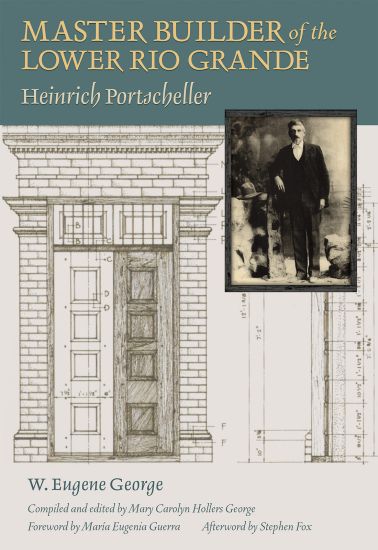
In 1865, Heinrich Portscheller emigrated to Mexico from his native Germany, perhaps motivated by a desire to avoid compulsory military service in the Austro-Prussian War. The scion of a well-known family of masons and master builders, he had the misfortune to disembark at Veracruz during the Franco-Mexican War. Portscheller and his traveling companion were impressed into the imperialist forces and sent to northern Mexico. Sometime following the Battle of Santa Gertrudis in1866, Portscheller deserted the army and eventually made a place for himself in Roma, a small town in Starr County, Texas.Over the next decades, Portscheller acquired a reputation as a master builder and architect. He brought to the Lower Rio Grande Valley his long heritage of Old World building knowledge and skills and integrated them with the practices of local Mexican construction and vernacular architecture. However, despite his many contributions to the distinctive architecture of Roma and surrounding places, by the mid-twentieth century he was largely forgotten.During nearly fift y years of historical sleuthing in South Texas and Germany, W. Eugene George reconstructed many of the details of the life and career of this important South Texas craft sman. Containing editorial contributions by Mary Carolyn Hollers George and featuring a foreword by Mari. Eugenia Guerra and a concluding assessment by noted architectural historian Stephen Fox, Master Builder of the Lower Rio Grande: Heinrich Portscheller at last permits a long-overdue appreciation of the legacy of this influential architect and builder of the Texas-Mexico borderlands.
This book provides students with a clear and concise guide to studying undergraduate courses in qualitative consumer research and ethnography. The authors present the major qualitative research approaches used in consumer and marketing research as well as practical procedures and theoretical aspects of research design, report presentation etc. In addition to that a weekly study guide, including comprehensive reading lists, completes the book.
Fr. W. v. Bissing; Walther Holtzmann; Frederick William Thomas; Alfons Maria Schneider; Karl August Eckhardt; Holger Pedersen; Enno Littmann; Kurt Latte; Rudolf Smend
Crime and violence inflict high costs on the private sector-costs that are rising globally, according to the World Bank's Enterprise Surveys, discussions with chambers and associations and the Bank's Country Partnership Strategies, which reference the losses in terms of gross domestic product (GDP). In Latin America and the Caribbean, for example, losses due to crime and violence have been estimated at 9 percent of GDP in Honduras, 7.7 percent in El Salvador and 3.6 percent in Costa Rica. In sectors such as clothing assembly, international purchasers can shift know-how and capital quickly to less violent destinations, while other sectors such as extractive industries are more likely to stay despite rising violence. Behind the statistics are human costs: lost jobs; shifting of businesses' working capital from productive uses to security firms; and an increase in contraband, fraud and corruption and 'rule of law' issues.In this book, original case studies from Brazil, Colombia, Jamaica, Mexico, Nepal and Rwanda illustrate the specific challenges to businesses and the coping mechanisms that firms and groups of firms have used successfully against crime and violence. The book's findings have implications for the private sector, governments and the World Bank's efforts to support both under difficult circumstances.
Margarita Espino Calderon; Maria G. Dove; Diane Staehr Fenner; Margo Gottlieb; Andrea Honigsfeld; Tonya W. Singer; Shawn M. Sinclair-Slakk; Ivannia Soto; Debbie Zacarian
It was a dark and stormy night in Santa Barbara. January 19, 2017. The next day’s inauguration drumroll played on the evening news. Huddled around a table were nine Corwin authors and their publisher, who together have devoted their careers to equity in education. They couldn’t change the weather, they couldn’t heal a fractured country, but they did have the power to put their collective wisdom about EL education upon the page to ensure our multilingual learners reach their highest potential. Proudly, we introduce you now to the fruit of that effort: Breaking Down the Wall: Essential Shifts for English Learners’ Success. In this first-of-a-kind collaboration, teachers and leaders, whether in small towns or large urban centers, finally have both the research and the practical strategies to take those first steps toward excellence in educating our culturally and linguistically diverse children. It’s a book to be celebrated because it means we can throw away the dark glasses of deficit-based approaches and see children who come to school speaking a different home language for what they really are: learners with tremendous assets. The authors’ contributions are arranged in nine chapters that become nine tenets for teachers and administrators to use as calls to actions in their own efforts to realize our English learners’ potential: 1. From Deficit-Based to Asset-Based 2. From Compliance to Excellence 3. From Watering Down to Challenging 4. From Isolation to Collaboration 5. From Silence to Conversation 6. From Language to Language, Literacy, and Content 7. From Assessment of Learning to Assessment for and as Learning 8. From Monolingualism to Multilingualism 9. From Nobody Cares to Everyone/Every Community Cares Read this book; the chapters speak to one another, a melodic echo of expertise, classroom vignettes, and steps to take. To shift the status quo is neither fast nor easy, but there is a clear process, and it’s laid out here in Breaking Down the Wall. To distill it into a single line would go something like this: if we can assume mutual ownership, if we can connect instruction to all children’s personal, social, cultural, and linguistic identities, then all students will achieve.
Sean Robson; Maria C Lytell; Matthew Walsh; Kimberly Curry Hall; Kirsten M Keller; Vikram Kilambi; Joshua Snoke; Jonathan W Welburn; Patrick S Roberts; Owen Hall; Louis T Mariano
This book provides a comprehensive introduction to the use of microethnographic discourse analysis for researching, theorizing, and reconceptualizing the uses of language and literacy in educational settings. The authors apply an ethnographic perspective to discourse analysis to emphasize how teachers and students use spoken and written language to construct knowledge, opportunities for learning, and social relationships. The authors demonstrate how microethnographic discourse analysis at different levels of scale can provide deeper understandings into the nuanced, complex social interactions and relationships that exist in and across educational contexts, including meaning-making, literacy practices, power relations, and the social construction of personhood. Each chapter offers philosophically and theoretically grounded principles for using microethnographic discourse analysis and example cases that reflect the principles presented. Ideal for researchers, teacher educators, and teachers, this essential text on discourse analysis, languaging, and literacy provides a grounding to further examine critical questions challenging educators.
This book provides a comprehensive introduction to the use of microethnographic discourse analysis for researching, theorizing, and reconceptualizing the uses of language and literacy in educational settings. The authors apply an ethnographic perspective to discourse analysis to emphasize how teachers and students use spoken and written language to construct knowledge, opportunities for learning, and social relationships. The authors demonstrate how microethnographic discourse analysis at different levels of scale can provide deeper understandings into the nuanced, complex social interactions and relationships that exist in and across educational contexts, including meaning-making, literacy practices, power relations, and the social construction of personhood. Each chapter offers philosophically and theoretically grounded principles for using microethnographic discourse analysis and example cases that reflect the principles presented. Ideal for researchers, teacher educators, and teachers, this essential text on discourse analysis, languaging, and literacy provides a grounding to further examine critical questions challenging educators.
U.S. Latino Literature is defined as Latino literature within the United States that embraces the heterogeneous inter-groupings of Latinos. For too long U.S. Latino literature has not been thought of as an integral part of the overall shared American literary landscape, but that is slowly changing. This dictionary aims to rectify some of those misconceptions by proving that Latinos do fundamentally express American issues, concerns and perspectives with a flair in linguistic cadences, familial themes, distinct world views, and cross-cultural voices. The Historical Dictionary of U.S. Latino Literature contains a chronology, an introduction, and an extensive bibliography. The dictionary section has cross-referenced entries on U.S. Latino/a authors, and terms relevant to the nature of U.S. Latino literature in order to illustrate and corroborate its foundational bearings within the overall American literary experience. This book is an excellent access point for students, researchers, and anyone wanting to know more about this subject.


![Les GE Missements de Koniespolski; Ou, Les Derniers Soupirs de La Liberte Polonaise [Being a Series of Letters by Koniecpolski]. Avec Un Re Sume Historique Du Dernier Partage Du Royaume de Pologne En 1794 ... Par J. M. Olivier-Poli.](/covers/9781249022015.jpg)