Kirjojen hintavertailu. Mukana 12 016 292 kirjaa ja 12 kauppaa.

Kirjahaku

Etsi kirjoja tekijän nimen, kirjan nimen tai ISBN:n perusteella.

1000 tulosta hakusanalla Michael D Butler

The A to Z of Witchcraft

The A to Z of Witchcraft

Michael D. Bailey

Scarecrow Press
2009
nidottu
A great deal has been written about the history of witchcraft, but much of what has been written is unreliable, exaggerated, or inaccurate. This problem is especially acute in regard to modern witchcraft, or Wicca, and its supposed connections to historical witchcraft in medieval and early modern Europe. The A to Z of Witchcraft provides a reliable reference source for both academics and general readers interested in the actual historical development of witchcraft in the western world. The focus of the dictionary is on Western Europe during the late-medieval and early modern periods, when the specific idea of diabolical witchcraft developed and when the so-called "great witch-hunts" occurred. Entries are also provided that deal with magic and witchcraft in the earlier Christian period and classical antiquity, as well as with the lingering belief in witchcraft in the modern world, and with the development of the modern, neo-pagan religion of witchcraft, also known as Wicca. For comparative purposes, some entries have been provided that deal with aspects and systems of magic found in other parts of the world that seem to bear some relation to the idea of witchcraft as it developed in Christian Europe. The regions dealt with are mainly Africa, along with such New-World practices as Voodoo and Santeria. Entries in the dictionary cover important people in the history of witchcraft, from the medieval inquisitors and early modern magistrates who developed the stereotype of the historical witch to the modern individuals who have developed the religion of Wicca. Also included are legal terms and concepts important to the prosecution of the supposed crime of witchcraft, and religious and theological concepts pertaining to the demonic elements that came to be associated with witchcraft, as well as more popular beliefs and aspects of common folklore and mythology that became attached to the developing idea of witchcraft. Geographic entries are also included, discussing the scope of witch-hunting in various reg
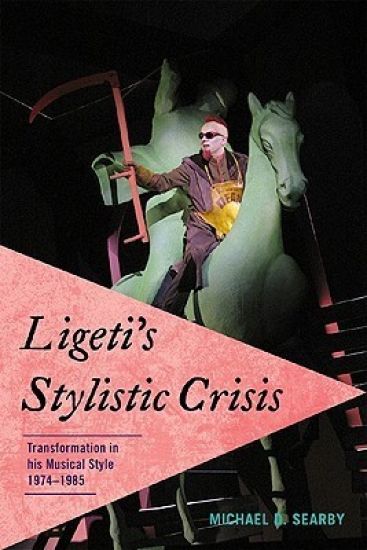
Ligeti's Stylistic Crisis

Ligeti's Stylistic Crisis

Michael D. Searby

Scarecrow Press
2009
nidottu
The Hungarian composer György Ligeti (1923-2006) was one of the most innovative and influential composers of the last 50 years. He was one of a number of Central and East European composers, including Witold Lutoslawski and Krzysztof Penderecki, who have created musical languages that combine elements of the modernism of the West with a more flexible attitude to compositional technique. Ligeti's Stylistic Crisis: Transformation in His Musical Style, 1974-1985 explores how Ligeti's compositional style completely transformed during and after the composition of his only opera Le Grand Macabre (1974-1977). Michael D. Searby examines Ligeti's music from 1974 to 1985 in detail, with a particular emphasis on Le Grand Macabre, analyzing the music and providing possible explanations for the stylistic and compositional changes, as well as considering the consequences for Ligeti's subsequent music. In this first English-language book to focus on Ligeti's most significant work, Le Grand Macabre, Searby investigates Ligeti's music and its relationship to tonality, looking at his return to tradition and use of quotation and pastiche in the opera, and considering the transformation of Ligeti's style and technique after the opera. The Horn Trio (1982) with its romantic phrase structure is also analyzed to demonstrate the radical change in the composer's stylistic approach. Searby also examines Ligeti's relationship with postmodernism, addressing the modernist versus postmodernist polemic as it pertains to Ligeti's works. Many musical examples support the discussion, and an appendix summarizing the opera and photographs from a recent production, as well as an extensive bibliography, add to this valuable reference.
Classic Salmon Fly Materials

Classic Salmon Fly Materials

Michael D. Radencich

Stackpole Books
2006
sidottu
Working with tinsels, feathers, silks, furs, wool, and threads Instructions from a master tier on all materials--traditional and modern--and how to use themBuilding on Tying the Classic Salmon Fly, which demonstrates techniques for tying even the most complicated fully dressed salmon flies, Classic Salmon Fly Materials provides an in-depth look at all the possibile ingredients and methods for tying these flies. Starting with the first elements, hook and thread, Radencich gives guidance on working with peacock or ostrich herl and adding body hackles, throat hackles, and collars. He explains which feathers are best suited to each type of hackle and how to fold a hackle and tie in a throat hackle. He then moves on to the most distinguishing element of a fully dressed classic salmon fly, the wings. A discussion of underwings and married and full-feather wings follows, with details on the advantages and disadvantages of each kind of feather. Radencich pulls it all together by giving complete instructions for tying the Carnegie, with expert advice on choosing the proper materials and methods.
Twenty Salmon Flies

Twenty Salmon Flies

Michael D. Radencich

Stackpole Books
2009
sidottu
2-hour DVD showing key techniques Appendix with 100 classic patterns Broad range of patterns and tying techniques from simple to complex Twenty Salmon Flies features in depth and detail the full range of classic salmon fly patterns from the simplest to the most complex. The twenty patterns together build on styles, types, materials, elements, and techniques. Learn to tie these twenty and you'll master the craft and the art of classic salmon fly tying.Each chapter successively presents patterns that are more and more complex. Chapter one introduces very simple Spey and Dee styles, strip wings with a few elements. Move on to simple upright wing flies, working with full feathers and married wing styles. A chapter focuses on flies with multiple body divisions and another is devoted to Traherne's exquisite (and challenging) Victorian classics. Once you've mastered these 20, you'll be able to tie any classic salmon pattern.Michael Radencich covers the classic patterns developed and fished throughout the nineteenth century and new patterns, modern variations developed in the last two decades. To further reinforce skills, Radencich has produced a two-hour DVD and has included an appendix of 100 patterns culled from his collection of sources. Whether you're a beginning classic salmon fly tier or more experienced with the classics, you'll find Radencich's newest book and DVD an inspiring and challenging reference."
Identifying Trees of the East

Identifying Trees of the East

Michael D. Williams

Stackpole Books
2017
pokkari
All-season field guide for identifying common trees of eastern NA This popular, field-tested guide for identifying trees in any season, not just when they are in full leaf, features 600 color photos and 200 line drawings showing bark, branching patterns, fruits, flowers, nuts, and overall appearance in addition to leaf color and shape. Accompanying text describes common locations and identifying characteristics. Covers every common tree in eastern North America, updated with the latest taxonomy and 130 range maps. Created for in-the-field or at-home use, this helpful guide includes an easy-to-use key to facilitate putting a name to a tree.
Bendectin and Birth Defects

Bendectin and Birth Defects

Michael D. Green

University of Pennsylvania Press
1998
pokkari
Benedictin was prescribed to more than thirty-five million American women from its introduction in 1956 until 1983, when it was withdrawn from the market. The drug's manufacturer, Merrill Dow Pharmaceuticals, a major U.S. pharmaceutical firm, joined a list of other companies whose product liabilities would result in precedent-setting litigation. Before it was over, the Benedictin litigation would involve 2,000 claimants over a fifteen-year period. Michael D. Green offers a comprehensive overview of the Benedictin case and highlights many of the key issues in mass toxic substances litigation, comparing individual and collective forms of litigation, and illustrating the misunderstandings between scientists and lawyers about the role of science in providing evidence for the legal system.
Do not Resist the Spirit's Call

Do not Resist the Spirit's Call

Michael D. Torre

The Catholic University of America Press
2013
sidottu
The relationship of God's grace and man's free will is one of the most disputed topics in the history of Catholic theology. At the time of the Counter-Reformation, a famous quarrel arose between Jesuit defenders of Molina and Dominican defenders of Bañez. This led to a series of Roman congregations on the ""aids of God's grace"" (de auxiliis), which looked into the matter but settled very little, beyond the pope declaring that neither position was heretical. Leo XIII's call to advance Thomism led to this quarrel resurfacing with renewed force in the first quarter of the twentieth century. Into this fray stepped a renowned Dominican of the University of Fribourg, Francisco Marín-Sola (1873-1932), whose published work on the development of Catholic doctrine had secured his fame among Catholic theologians. In three celebrated articles published in the Ciencia Tomista in 1925 and 1926, he presented a new and revised version of the Dominican position on this question. Marín-Sola suggested that his new version rightly developed the principles of Aquinas and was supported in major part, if only implicitly, by earlier Dominican commentators. Marín-Sola's position was instantly controversial, with some respondents decrying an abandonment of Dominican ideas and others declaring that Marín-Sola had resolved central objections and ended the quarrel of de auxiliis. In this book, Michael D. Torre makes Marín-Sola's articles available in English for the first time. The articles are preceded by an introduction on Marín-Sola and followed by a conclusion that traces the reception of his thought within the Catholic theological community. In Torre's afterword, he defends Marín-Sola's position as substantively the same as that of Aquinas.
God Is Love

God Is Love

Michael D. Torre

THE CATHOLIC UNIVERSITY OF AMERICA PRESS
2026
sidottu
This book dedicates three essays each to three different theological problems regarding the Holy Spirit: In God and for Us (The "Filioque" and "Uncreated Grace"); Thomas's Understanding (Not His Commentators) of the Relation between nature and sanctifying grace; and our ability (and that of the angels at their creation) in fact to resist God' grace and thus be the first cause of sin. This later problem is developed in an "excursus" on the way God moves the free will, one that takes into consideration much recent work on this issue and situates the essays' position in relation to it. The book ends with a brief epilogue on the credibility of God, again giving Thomas's account of this. The principal aim throughout is to understand the doctrine of Thomas Aquinas. It places his views in relation to three audiences: chiefly to the orthodox regarding the first issue; to Catholics in relation to the second; and to Protestants in relation to the third. Thus, its second aim is to join "ecumenical debate" about these matters. The essays were mostly written to be delivered orally, to an informed audience of philosophers and theologians., but one that consisted of "generalists" and serious students of Thomas, as well as of "professional" philosophers and theologians. All three of the debated issues discussed have generated an enormous amount of disagreement and debate, not a little of it being quite "technical." Thus, each issue would easily require a long and significant book to be addressed as it deserves. The essays do not do this, but they do indicate what Torre holds is the "directive line" of Thomas's thought that deserves to be defended and developed in each case, and, in each case, this line is held to be markedly different than many have thought it to be.
The Accidental System

The Accidental System

Michael D Reagan

Westview Press Inc
1999
nidottu
With the demise of the Clinton health care reform plan, the debate on health care changed but did not subside. From opinion pieces in newspapers to dinner-table conversations, the debate over whether the right to quality health care is a public right, akin to educating our children, or whether it is a private one, akin to life insurance, continues. In The Accidental System Michael Reagan shows that in the American political context, health care is neither exclusively a public right nor a private privilege. This insightful policy study provides students with an excellent demonstration of how public policy intersects with private markets.
Absolutely Small

Absolutely Small

Michael D. FAYER

Amacom
2018
nidottu
Absolutely Small presents (and demystifies) the world of quantum science like no book before.Physics is a complex, daunting topic, but it is also deeply satisfying?even thrilling. When liberated from its mathematical underpinnings, physics suddenly becomes accessible to anyone with the curiosity and imagination to explore its beauty. Science without math? It’s not that unusual.For example, we can understand the concept of gravity without solving a single equation. So for all those who may have pondered what makes blueberries blue and strawberries red; for those who have wondered if sound really travels in waves; and why light behaves so differently from any other phenomenon in the universe, it’s all a matter of quantum physics.This book explores in considerable depth scientific concepts using examples from everyday life, such as:particles of light,probability,states of matter,what makes greenhouse gases badChallenging without being intimidating, accessible but not condescending, Absolutely Small develops your intuition for the very nature of things at their most basic and intriguing levels.
The Signifying Creator

The Signifying Creator

Michael D. Swartz

New York University Press
2012
sidottu
For centuries, Jews have been known as the "people of the book." It is commonly thought that Judaism in the first several centuries CE found meaning exclusively in textual sources. But there is another approach to meaning to be found in ancient Judaism, one that sees it in the natural world and derives it from visual clues rather than textual ones. According to this conception, God embedded hidden signs in the world that could be read by human beings and interpreted according to complex systems. In exploring the diverse functions of signs outside of the realm of the written word, Swartz introduces unfamiliar sources and motifs from the formative age of Judaism, including magical and divination texts and new interpretations of legends and midrashim from classical rabbinic literature. He shows us how ancient Jews perceived these signs and read them, elaborating on their use of divination, symbolic interpretation of physical features and dress, and interpretations of historical events. As we learn how these ancient people read the world, we begin to see how ancient people found meaning in unexpected ways.
Entrepreneurial Teams as Determinants of of New Venture Performance
Using a multi-dimensional model of the author's own design, this study explores the effect of entrepreneurial team behavior on both organizational strategy and new venture performance. In line with recent research arguing that the entrepreneur may well be a group and not simply an individual, and to provide a much richer and more widely applicable model, this book examines the entrepreneurial team.
Protecting the Homeland 2006/2007

Protecting the Homeland 2006/2007

Michael d'Arcy; Michael E. O'Hanlon; Peter R. Orszag

Brookings Institution
2006
nidottu
"Immediately after September 11, the Brookings Institution began a comprehensive, multidisciplinary project focused on the key policy challenge of these dangerous times—assessing and improving homeland defense. That intense effort produced Protecting the American Homeland, and it continues in this important new book. In Protecting the Homeland 2006/2007, Brookings foreign policy experts analyze current homeland security concerns and the adequacy (or inadequacy) of current policies designed to address them. The authors present both the big picture and the smaller components of homeland security policy that make up the whole. They make specific recommendations on intelligence reform, science and technology policy and the protection of critical infrastructure within the United States. They also look ahead to consider what dangers we should anticipate and plan for, recommending policies that will work to that end. One of the strands running through Protecting the Homeland 2006/2007 is the need to ""stitch the seams"" in our homeland security blanket through greater integration and coordination. The authors emphasize that the U.S. federal government must work together with key partners who have been insufficiently integrated into American homeland security activities to date. These actors include foreign governments, state and local government, and the private sector, and the coordination must occur in several different areas (e.g. border protection, finance, technology, intelligence). The U.S. government should not—indeed, it cannot—do it alone. By its very nature, homeland security is a problem that defies the usual bureaucratic boundaries. Effective homeland security policy demands intense collaboration on new issues and between organizations that have not traditionally needed each other. This book is of interest and importance to journalists, analysts, policymakers, scholars, and citizens concerned with protecting their homeland against terrorism and related dangers. "
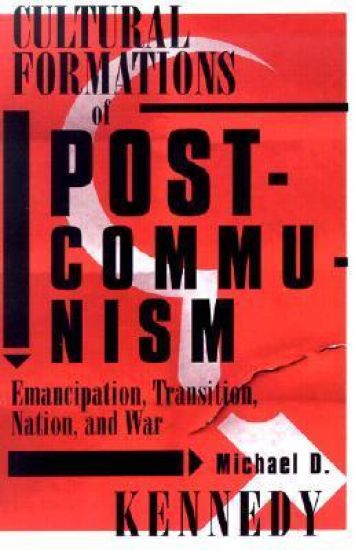
Cultural Formations Of Postcommunism

Cultural Formations Of Postcommunism

Michael D. Kennedy

University of Minnesota Press
2002
nidottu
A powerful exposition of how culture shapes social and political change."Transition" is the name typically given to the time of radical change following the fall of communism, connoting a shift from planned to market economy, from dictatorship to democracy. Transition is also, in Michael Kennedy’s analysis, a culture in its own right-with its own contentions, repressions, and unrealized potentials. By elaborating transition as a culture of power and viewing it in its complex relation to emancipation, nationalism, and war, Kennedy’s book clarifies the transformations of postcommunism as well as, more generally, the ways in which culture articulates social change. This ambitious work is, in effect, a nuanced critical-cultural sociology of change.Kennedy examines transition culture’s historical foundation by looking at the relationship among perestroika, Poland, and Hungary, and considers its structure and practice in the following decade across fields and nations. His wide-ranging analysis-of the artifacts of transition culture’s proponents, of interviews with providers and recipients of technical assistance in business across Eastern Europe, and of focus groups assessing the successes and failures of social change in Estonia and Ukraine-suggests a transition culture deeply implicated in nationalism. But this association, Kennedy contends, is not necessarily antithetical to transition’s emancipation. By reconsidering transition culture’s relationship to the Wars of Yugoslav Succession and communism’s negotiated collapse in Poland and Hungary, he shows how transition might be reconceived in terms of solidarity, freedom, and peace.Distinguished by its focus on culture, not only within particular nations but in the transnational community organized around transition, this book will help reframe the debate about postcommunist social change.
Queer Optimism

Queer Optimism

Michael D. Snediker

University of Minnesota Press
2008
nidottu
A new paradigm for queer theoryMichael Snediker offers a much-needed counterpoint to queer theoretical discourse, which has long privileged melancholy, self-shattering, incoherence, shame, and the death drive. Recovering the forms of positive affect that queer theory has jettisoned, Snediker insists that optimism must itself be taken beyond conventional tropes of hope and futurity and reimagined as necessary for critical engagement. Through fresh, perceptive, and sensitive readings of the poetry of Emily Dickinson, Hart Crane, Jack Spicer, and Elizabeth Bishop, Snediker reveals that each of these poets demonstrated an interest in the durability of positive affects. Dickinson, Snediker argues, expresses joy and grace as much as pain and loss, and the myriad cryptic smiles in Hart Crane’s White Building contradict prevailing narratives of Crane’s apocryphal literary failures and eventual suicide. Snediker’s ambitious and sophisticated study, informed by thinkers such as Winnicott, Deleuze, and de Man, both supplements and challenges the work of queer theory’s leading figures, including Judith Butler, Leo Bersani, Eve Kosofsky Sedgwick, and Lee Edelman. Queer Optimism revises our understanding of queer love and affiliation, examining Spicer’s serial collusion with matinee idol Billy the Kid as well as the critically neglected force of Bishop’s epistolary and poetic reparations of the drowned figure of Hart Crane. In doing so, Snediker persuasively reconceives a theoretical field of optimism that was previously unavailable to scrupulous critical inquiry and provides a groundbreaking approach to modern American poetry and poetics.
Contingent Figure

Contingent Figure

Michael D. Snediker

University of Minnesota Press
2021
sidottu
A masterful synthesis of literary readings and poetic reflections, making profound contributions to our understanding of chronic painAt the intersection of queer theory and disability studies, acclaimed theorist Michael D. Snediker locates something unexpected: chronic pain. Starting from this paradigm-shifting insight, Snediker elaborates a bracing examination of the phenomenological peculiarity of disability, articulating a complex idiom of figuration as the lived substance of pain’s quotidian. This lexicon helps us differently inhabit both the theoretical and phenomenal dimensions of chronic pain and suffering by illuminating where these modes are least distinguishable. Suffused with fastidious close readings, and girded by a remarkably complex understanding of phenomenal experience, Contingent Figure resides in the overlap between literary theory and lyric experiment. Snediker grounds his exploration of disability and chronic pain in dazzling close readings of Herman Melville, Emily Dickinson, Henry James, and many others. Its juxtaposition of these readings with candid autobiographical accounts makes Contingent Figure an exemplary instance of literary theory as a practice of lyric attention.Thoroughly rigorous and anything but predictable, this stirring inquiry leaves the reader with a rich critical vocabulary indebted to the likes of Maurice Blanchot, Gilles Deleuze, D. O. Winnicott, and Eve Kosofsky Sedgwick. A master class in close reading’s inseparability from the urgency of lived experience, this book is essential for students and scholars of disability studies, queer theory, formalism, aesthetics, and the radical challenge of Emersonian poetics across the long American nineteenth century.
Contingent Figure

Contingent Figure

Michael D. Snediker

University of Minnesota Press
2021
nidottu
A masterful synthesis of literary readings and poetic reflections, making profound contributions to our understanding of chronic painAt the intersection of queer theory and disability studies, acclaimed theorist Michael D. Snediker locates something unexpected: chronic pain. Starting from this paradigm-shifting insight, Snediker elaborates a bracing examination of the phenomenological peculiarity of disability, articulating a complex idiom of figuration as the lived substance of pain’s quotidian. This lexicon helps us differently inhabit both the theoretical and phenomenal dimensions of chronic pain and suffering by illuminating where these modes are least distinguishable. Suffused with fastidious close readings, and girded by a remarkably complex understanding of phenomenal experience, Contingent Figure resides in the overlap between literary theory and lyric experiment. Snediker grounds his exploration of disability and chronic pain in dazzling close readings of Herman Melville, Emily Dickinson, Henry James, and many others. Its juxtaposition of these readings with candid autobiographical accounts makes Contingent Figure an exemplary instance of literary theory as a practice of lyric attention.Thoroughly rigorous and anything but predictable, this stirring inquiry leaves the reader with a rich critical vocabulary indebted to the likes of Maurice Blanchot, Gilles Deleuze, D. O. Winnicott, and Eve Kosofsky Sedgwick. A master class in close reading’s inseparability from the urgency of lived experience, this book is essential for students and scholars of disability studies, queer theory, formalism, aesthetics, and the radical challenge of Emersonian poetics across the long American nineteenth century.
Guide to Coastal Fishes of Georgia and Nearby States

Guide to Coastal Fishes of Georgia and Nearby States

Michael D. Dahlberg

University of Georgia Press
2008
pokkari
The primary purpose of this book is to provide for identification of estuarine and coastal fishes that may be encountered by angling, seining, or trawling on the Georgia coast. Sport and commercial species are emphasized, but all groups occurring on the Continental Shelf are discussed. This book will be especially useful to ecologists who need to identify species in order to study community structure within the estuarine and coastal ecosystems. Information on habitats and seasonality will also aid scientists in collecting certain species for research projects.
The Exodus Itinerary Sites

The Exodus Itinerary Sites

Michael D. Oblath

Peter Lang Publishing Inc
2004
sidottu
The Israelite exodus from Egypt forms the foundational national origin narrative in the Hebrew Bible. Although it is a compelling and popular tale, only minimal supportive circumstantial evidence exists beyond the Bible. In this book Michael D. Oblath details the geographical context within which the Hebrew Bible was written. With this backdrop, he presents the geographical conceptualization of the exodus as described by the biblical sources. Within their references to the various exodus itinerary sites, these sources consistently locate the sites in proximity to known geographical locations. Oblath indicates that, within the geographical memory of the biblical sources, the presupposition of an exodus from Egypt is incorrect. Rather, the narrative describes events originating in the southern region of ancient Israel, between the Negeb and the Gulf of Elath.
Sporting Pedagogies

Sporting Pedagogies

Michael D. Giardina

Peter Lang Publishing Inc
2005
nidottu
Focusing on such varied sites as British cinema, global celebrity, racialized education policy, and Disney, "Sporting Pedagogies" illustrates how trans/national sporting cultures, intermediaries, and institutions actively work as pedagogical sites to hegemonically re-inscribe and re-present neo-liberal discourses on sport, culture, nation, and democracy throughout the ascendant global capitalist order. Written in the progressive tradition of Norman K. Denzin, Henry Giroux, Lawrence Grossberg, and Peter McLaren, Michael D. Giardina poignantly - and at times, devastatingly - captures the shifting terrain of social and political contestation and negotiation at play in the modern world. This book is a must-read for students in cultural studies, communications research, sport studies, and globalization.